
Compare Home Insurance Plans in Ohio
Find your best options in less than 2 minutes



What Does Home Insurance Cover for Lightning Damage?
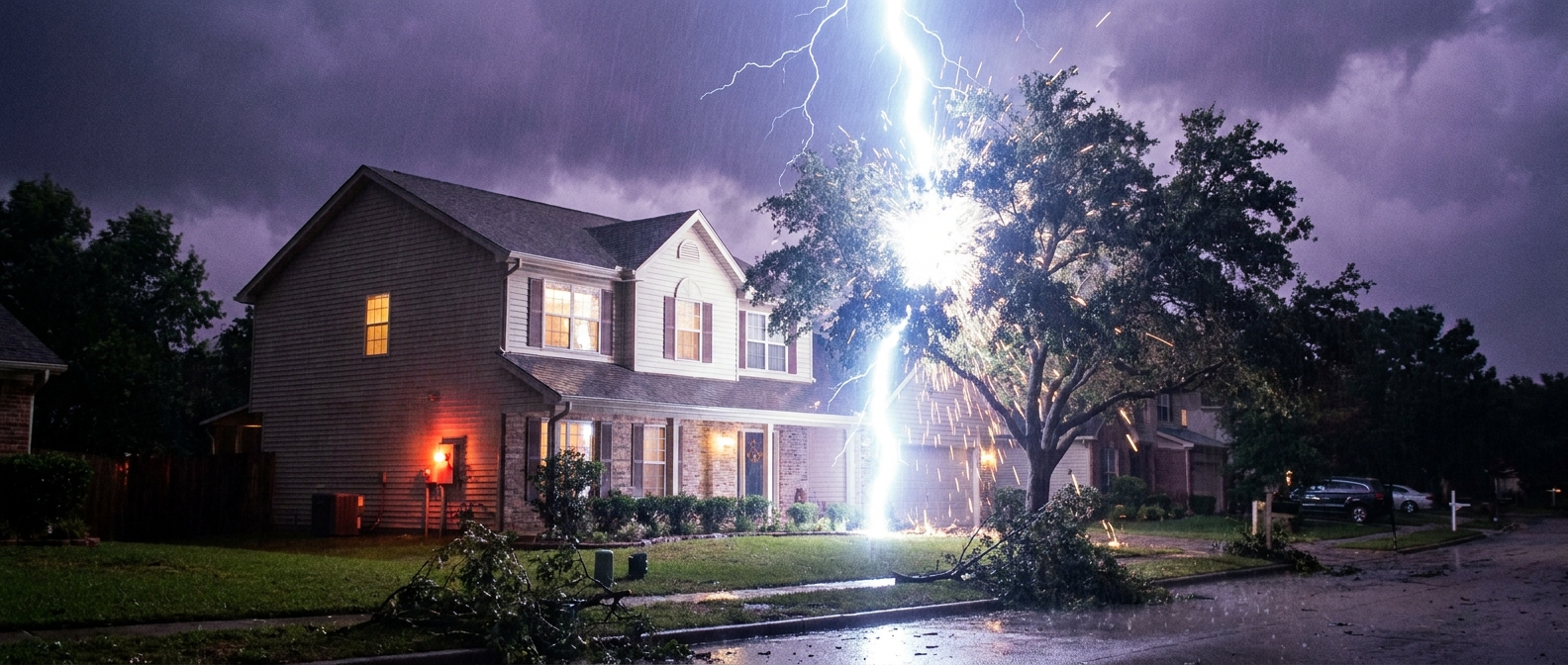
Lightning is one of the most explicitly covered perils in standard homeowners insurance, but that doesn't mean everything is automatically paid for. Most policies cover lightning as a named peril, meaning the policy lists lightning as a specific event it protects against. Coverage generally extends across four main areas:
- Dwelling Coverage (Coverage A): Repairs to your home's structure including roof, walls, wiring, electrical panel, and plumbing affected by heat or electrical surges.
- Other Structures (Coverage B): Detached garages, fences, sheds, or outbuildings struck by lightning.
- Personal Property (Coverage C): Electronics, appliances, and belongings damaged by a direct strike or resulting power surge.
- Loss of Use (Coverage D): Temporary housing and living expenses if your home becomes uninhabitable due to a lightning-caused fire or structural damage.
What's Included vs. What's Not
Not every lightning-related loss is treated the same. Here's a breakdown of what's typically covered under standard policies versus what may require additional coverage:
Electrical System Damage
A lightning strike can send tens of thousands of volts through your home's wiring in a fraction of a second. Standard homeowners policies typically cover the cost to repair or replace your electrical panel, wiring, outlets, and connected systems. However, pre-existing wiring issues or gradual deterioration are not covered. The damage must be sudden and directly caused by the lightning event. For more on how repairs to walls, roofs, and load-bearing systems are handled, see our guide on structural damage coverage.
Electronics and Power Surges
Standard personal property coverage does protect electronics damaged by a lightning-caused power surge, but the fine print matters. On mainstream HO-3 and HO-5 policies, damage from a lightning strike typically has no special sublimit, so your full personal property limit applies to affected electronics. Budget or restricted policies, however, often cap individual electronics categories at a few thousand dollars.
| Item Type | Typical Sub-Limit Per Item | Overall Category Cap |
|---|---|---|
| Computers & Laptops | $1,500 to $3,000 | $5,000 to $10,000 |
| Televisions | $1,500 to $3,000 | Included in above |
| Major Appliances | No universal cap | Subject to total personal property limit |
| Cameras / Audio Equipment | $1,500 to $2,500 | Included in electronics cap |
Another critical factor is how your policy values damaged items. Many base policies pay the depreciated Actual Cash Value of electronics, though you can usually add replacement-cost coverage so the insurer pays what it costs to buy a new equivalent item. If you own high-end gaming rigs, professional audio equipment, or a home theater system worth more than your policy's limits, a scheduled personal property endorsement (also called a floater or rider) lets you insure specific items at their full appraised value, often with no deductible and broader coverage.
For a deeper look at how surges (both lightning and non-lightning) are treated, review our full breakdown of power surge damage coverage.

Compare Home Insurance Plans in Ohio
Find your best options in less than 2 minutes
Lightning Damage by the Numbers
Lightning claims spiked sharply in 2025 after a temporary decline the year before. According to the Insurance Information Institute's June 2026 release and the 2026 LexisNexis U.S. Home Trends report:
- 61,986 lightning-related homeowners insurance claims were filed in 2025, an 11.6% increase from 55,537 in 2024
- $1.65 billion in total payouts, a 59.4% increase from 2024's $1.04 billion
- $26,616 average payout per claim nationally in 2025, up 42.8% from $18,641 in 2024
- Texas had the highest average cost per claim among the top states at approximately $60,382, more than double the national figure
- Florida led in total number of claims with 5,136, producing roughly $186 million in insured losses, followed by California (4,211 claims) and Texas (4,188 claims)
- The 2026 LexisNexis U.S. Home Trends report labeled fire and lightning "the defining perils of 2025," with loss cost up 76.8% and severity up 67.3% year over year
The dramatic climb in average payouts reflects the rising number of connected electronics in homes (smart TVs, home offices, EV chargers, solar systems) plus higher labor and materials costs for electrical repairs.

Protect your home with State Farm
Average Rate:
Homeowners who bundle and save with State Farm save an average of $1,000 per year!

You're in Good Hands® with Allstate
Average Rate:
Get comprehensive home coverage with flexible policy options.

Customize your home coverage
Average Rate:
Only pay for the coverage you need with personalized home insurance.

Smart coverage for your home
Average Rate:
Protect what matters most with award-winning home insurance.
How to File a Lightning Damage Claim
Speed and documentation are the two most critical factors when filing a lightning strike insurance claim. Follow these steps:
Step-by-Step Claim Process
1. Prioritize Safety First If there's fire, smoke, or structural instability, evacuate and call 911. A fire department report is valuable documentation and helps establish the cause of any resulting fire damage claim.
2. Document Everything Immediately Take photos and videos of all visible damage, including burn marks, damaged wiring, outlets, appliances, roofing, and other affected property before touching or moving anything.
3. Contact Your Insurer Right Away Most policies require prompt notification and may even have a time limit such as 30 or 60 days. Call, use the insurer's app, or file online as soon as possible.
4. Protect the Property from Further Damage Place tarps over roof holes or board up damaged windows. Most policies cover emergency temporary repairs, so keep all receipts.
5. Get an Electrician's Assessment For electrical and surge damage, hire a licensed electrician to inspect the home and provide a written report. A lightning affidavit is a written statement, usually signed under oath, in which a licensed electrician says they inspected the damage and believes lightning was the cause. This significantly strengthens your claim for indirect surges.
6. Gather Your Documentation Package
| Document | Why It Matters |
|---|---|
| Photos and videos of all damage | Core evidence of loss |
| Fire department report (if applicable) | Confirms fire cause |
| Licensed electrician's report / lightning affidavit | Validates electrical damage cause |
| Itemized list of damaged belongings with values | Supports personal property claim |
| Contractor repair estimates | Establishes cost of repairs |
| Receipts for emergency mitigation | Qualifies for reimbursement |
| NWS lightning-detection records for your address | Confirms a strike near your property |
7. Work With (or Challenge) the Adjuster The insurer will send an adjuster to assess the damage. If the settlement offer seems low, you can get independent contractor estimates and, for complex disputes, consider hiring a public adjuster or an attorney who specializes in property insurance claims. For a tactical, adjuster-focused breakdown, see our power surge claim checklist.
Preventing Lightning Damage to Your Home
Insurance pays for damage after it happens, but prevention can save you money, stress, and the inconvenience of a major claim. A layered approach is most effective.
Protection Options and Costs
A whole-house surge protector installed in 2026 typically costs about $200 to $500, with the national average around $300 and most jobs falling in a $70 to $700 range depending on panel compatibility and labor. If your panel is older or needs additional wiring work, the total cost can climb to $700 or more. Popular Type 2 devices from Eaton, Siemens, Square D, and Leviton are widely available for $80 to $180 for the unit alone, with an additional $100 to $300 in electrician labor for a straightforward install.
Point-of-Use Surge Protectors
For individual electronics, plug-in surge protectors are the most affordable layer of protection. Look for:
- A high joule rating (2,000+ joules is recommended for valuable electronics)
- UL listing for verified safety standards
- A built-in indicator light showing the unit is still providing protection
- Cost: $10 to $50 per unit
Equipment Breakdown Coverage: The Affordable Gap-Filler
For non-lightning surges (utility fluctuations, grid faults, brownouts), a standard policy often won't pay. That's where an equipment breakdown endorsement comes in. Equipment breakdown coverage typically costs $25 to $50 per year and usually carries a $500 per-occurrence deductible. Most endorsements provide up to $50,000 in coverage, with some preferred carriers offering up to $100,000. Learn more about adding equipment breakdown coverage to protect appliances and systems from electrical failure.
Additional Prevention Tips
- Keep trees trimmed and at least 10 feet from your home's structure (see our tree damage coverage guide for how storm-related tree damage is treated)
- Ensure your home's grounding system meets current electrical code
- Avoid using wired telephones or touching plumbing fixtures during active storms
- Install surge-protected power strips (not plain power strips) at every electronics station
- If lightning knocks out power for hours or days, review our guide on home insurance food spoilage coverage to know what's reimbursable
- Own an electric vehicle? Learn how EV chargers are covered after a lightning strike or surge event
- For AC compressor or condenser lightning damage, review our AC unit coverage guide
- Lightning can also crack chimney crowns and dislodge caps, so see our chimney damage guide if you have a masonry stack
Some insurers offer discounts for certified lightning protection systems, so ask your agent whether installing a UL-listed lightning rod system could lower your annual premium. Note that direct premium discounts for whole-house surge protectors specifically remain rare, though they may still help you avoid a deductible-triggering claim.
Frequently Asked Questions About Lightning Damage and Home Insurance
Does home insurance cover lightning damage to electronics?
Yes, standard homeowners insurance covers electronics damaged by a direct lightning strike or a lightning-caused power surge under personal property coverage. Most mainstream HO-3 and HO-5 policies apply the full personal property limit without a special electronics sub-limit, but budget policies may cap electronics coverage at $1,500 to $3,000 per item. If you own high-value electronics, consider adding a scheduled personal property endorsement to ensure full replacement value.
What is the deductible for a lightning damage claim?
Your standard homeowners insurance deductible applies to lightning damage claims, typically ranging from $500 to $2,500 depending on your policy. Since the 2025 national average lightning claim payout is $26,616, most claims will exceed the deductible by a wide margin. For smaller surge-related losses like a single damaged appliance, the payout after the deductible may be minimal.
Does home insurance cover power surges not caused by lightning?
Not always. Standard policies cover surges directly caused by a lightning strike, but surges from utility grid fluctuations, faulty wiring, or overloads are often excluded. Adding equipment breakdown coverage (about $25 to $50 per year) specifically addresses these mechanical and electrical failures with a separate $500 deductible and limits up to $100,000 with many carriers.
How long does a lightning damage insurance claim take?
Most lightning damage claims are resolved within 2 to 6 weeks, depending on complexity. Simple, well-documented claims with clear photos, an electrician's report, and itemized lists are processed faster. Claims involving fire damage, structural repairs, or disputed causation like ground surges can take longer, especially if a public adjuster or legal counsel gets involved.
Can I be denied a lightning damage claim?
Yes, claims can be denied for reasons such as lack of documentation connecting the damage to a lightning event, pre-existing damage or deferred maintenance, damage attributed to a non-covered surge source, or reporting delays that violate your policy's notice requirements. Combining NWS lightning-detection records for your address, an electrician's inspection identifying surge-specific failures, and photo evidence gives you the strongest case for approval.