
Compare Home Insurance Plans in Ohio
Find your best options in less than 2 minutes



What Triggers a Home Insurance Inspection?
Home insurance inspections aren't random. Insurers initiate them for very specific reasons, and understanding what puts you on the radar can help you prepare or potentially avoid unnecessary scrutiny.
Common triggers include:
| Trigger | Why It Matters |
|---|---|
| Applying for a new policy | Most new homeowners policies trigger at least some form of inspection |
| Switching insurance companies | New carrier needs to independently verify home condition |
| Policy renewal (every 3-5 years) | Routine risk reassessment to update coverage terms |
| Filing a claim | Insurer evaluates extent of damage and pre-existing conditions |
| No inspection in 10+ years | Risk data becomes too outdated to accurately price coverage |
| Significant home changes or renovations | Added structures or upgrades change the risk profile |
How Home Age, Value & Location Factor In
Three of the biggest inspection triggers are baked directly into your property's characteristics:
- Age of the home: Older homes face stricter requirements. In many states, homes 20-30+ years old trigger mandatory 4-point inspections covering the roof, HVAC, plumbing, and electrical systems. Florida's Citizens Property Insurance, the largest residential carrier in the state, still requires a 4-point on every property owner, dwelling, and mobile home application for a home more than 20 years old.
- Replacement value: High-value homes carry higher replacement costs, so insurers require more thorough assessments. High-value homes often receive a full interior and exterior inspection instead of a virtual review.
- Location and risk zone: Homes in hurricane, wildfire, or flood-prone areas face increased scrutiny for hazard-related conditions like roof integrity, drainage systems, and fire-resistant features.
If your home checks more than one of these boxes, expect an inspection to be part of the process. To understand how all these factors affect your premiums from the start, see how home insurance underwriting works.

Compare Home Insurance Plans in Ohio
Find your best options in less than 2 minutes
Can You Get Home Insurance Without an Inspection?
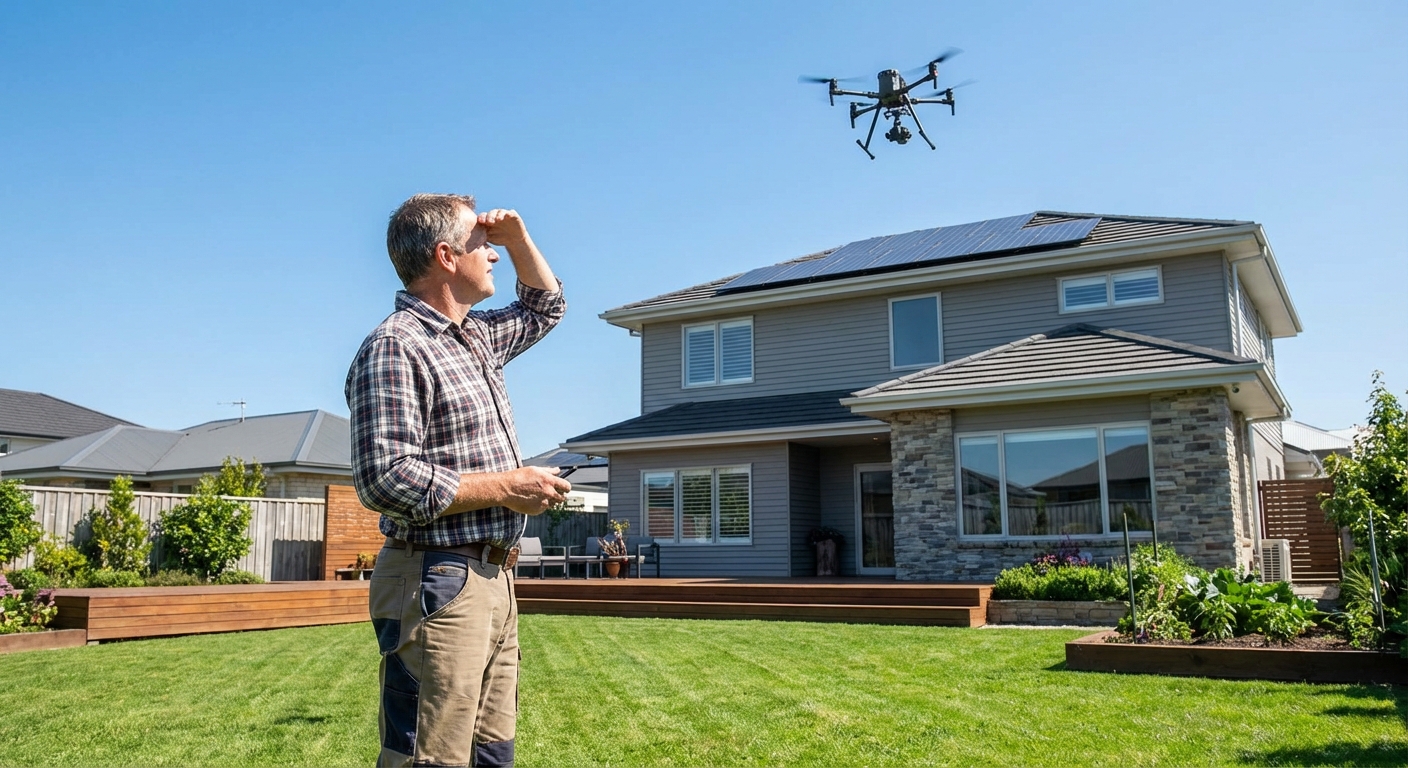
Getting homeowners insurance without any inspection is possible, and in many cases carriers will bind coverage first and inspect later, typically within 30 to 90 days after the policy is issued. That said, most insurers now conduct at least some form of property evaluation, whether in person, virtual, drone, or via satellite, before or shortly after binding coverage.
Situations Where You May Avoid a Traditional Inspection
- Newer homes (built within the last 10 years): Lower risk of structural or system failures means insurers are more likely to rely only on remote data or a drive-by review.
- Recent prior inspection on file: If you had an inspection within the last 12-24 months, a new carrier may accept that documentation in lieu of sending their own inspector.
- Staying with the same insurer: Renewing a long-standing policy with no claims history and no major changes is the most common scenario where an inspection gets skipped.
- Low-risk property profiles: Homes without red flags (good roofs, updated systems, standard value) are more likely to be issued coverage based on a questionnaire, satellite data, or self-reported details.
Carriers Known for Skipping Initial Inspections
Consumer-reported experience in 2026 suggests that carriers like Lemonade, Amica, Hippo, Safeco, Mercury, Farmers, Travelers, and (in some states) Allstate may skip an in-person inspection at binding. Mercury Insurance and Nationwide now use AI-powered guided photo and video tools (Nationwide via its Chrp platform) in place of a conventional in-person visit in many cases, and Orion180 uses a DIY assessment app. Online-first and direct-to-consumer carriers are the most likely to rely on remote underwriting or delayed inspections. Practices vary widely by home age, location, and risk profile, and any of these insurers may still send an inspector or use aerial imagery within the first 30 to 90 days.

Protect your home with State Farm
Average Rate:
Homeowners who bundle and save with State Farm save an average of $1,000 per year!

You're in Good Hands® with Allstate
Average Rate:
Get comprehensive home coverage with flexible policy options.

Customize your home coverage
Average Rate:
Only pay for the coverage you need with personalized home insurance.

Smart coverage for your home
Average Rate:
Protect what matters most with award-winning home insurance.
Virtual, Satellite & Remote Inspection Alternatives
The home insurance industry is undergoing a significant shift in how it evaluates properties. Carriers are moving toward AI-powered and virtual inspection tools that rely on drone imagery, satellite data, and homeowner-submitted photos or video reviewed by both AI and human experts. This is good news for homeowners who want faster coverage with less hassle.
How Virtual (DIY) Inspections Work
Virtual inspections allow homeowners to conduct self-service assessments using a smartphone or computer. Here's the typical process:
- You receive a link via email or text from your insurer
- A guided app walks you through photographing key areas (roof, HVAC, plumbing, electrical panels, exterior)
- Images are authenticated in real time to reduce errors, fraud, and delays
- AI analyzes the submitted images for risk factors like corroded pipes, deteriorating roofing, or outdated panels
- Results are sent to an underwriter, who may approve coverage, request repairs, or flag issues for follow-up
Who's Using Remote Inspection Technology?
| Method | How It's Used | Typical Application |
|---|---|---|
| Self-inspection apps | Homeowner uploads photos/videos through a secure portal | New policies and low-risk renewals |
| Satellite imagery | Aerial images assess roof and exterior conditions | Underwriting and renewal reviews |
| Drone flyovers | High-resolution roof and property photos in under 20 minutes | Post-storm reviews, roof age verification |
| AI photo authentication | Real-time verification of submitted media | Fraud prevention and image validation |
Satellite & Drone Inspections
Insurers are no longer waiting for you to invite them in. They're scanning your roof from space. Providers of fixed-wing aerial imagery now cover 85% to 90% of residential homes across the country with new photography at least annually. Vendors like CAPE Analytics feed those images to models (converting high-resolution imagery into structured underwriting data in as little as two seconds) that score roof condition, vegetation proximity, pools, trampolines, and unpermitted structures, and underwriters act on those scores. Certain Allstate subsidiaries have integrated aerial imagery into their underwriting through Roof Condition and Tree Overhang parameters that evaluate roof condition and the percentage of tree overhang affecting each insured property. Industry vendors estimate aerial imagery now replaces 60% to 80% of physical inspections in some carrier workflows.
For a deeper dive into this tech revolution, read about how AI is changing home insurance through drones and satellite imagery.
What Happens If an Inspection Reveals Issues?
A failed home insurance inspection doesn't always mean the end of your coverage, but it does mean you have decisions to make quickly. Insurers typically respond in one of three ways: continue your policy, modify it, or cancel it.
Possible Outcomes After a Problematic Inspection
- Coverage denial or cancellation: If hazards are too severe, the insurer may refuse to issue or renew the policy, sometimes with as little as 10-30 days' notice depending on state law.
- Policy with exclusions: The insurer may bind coverage but exclude specific high-risk areas, such as the roof or plumbing, until repairs are made.
- Required repairs with a deadline: Insurers commonly give homeowners around 30 to 60 days to make repairs and provide proof before the policy is dropped.
- Premium increase: Even without exclusions, discovered risks often result in higher rates.
Most Common Inspection Failures in 2026
- 🏚️ Roof damage: cracked, missing, or aging shingles, sagging, and roofs older than 15 to 20 years are the #1 failure reason (even if the roof "looks fine")
- ⚡ Electrical hazards: outdated wiring (knob-and-tube, aluminum, cloth), Federal Pacific Stab-Lok or Zinsco panels, open junction boxes
- 🚿 Plumbing problems: leaks, low water pressure, galvanized or polybutylene pipes
- 🏗️ Foundation issues: visible cracks (especially horizontal or stair-step), settling, bowed walls
- 💧 Water damage and mold: ceiling stains, attic moisture, poor ventilation
- 🌿 Safety hazards: overhanging trees, rotting decks, missing GFCI outlets, non-working smoke detectors
If your home's roof age is a concern, be sure to review home insurance and old roofs to understand what thresholds trigger the biggest red flags, and check out roof age eligibility rules for a carrier-by-carrier breakdown. Florida homeowners should also note that Citizens' 4-point form now requires updated photo documentation, including a temperature/pressure relief (TPR) valve photo on water heaters, expanded HVAC hazard questions, more detailed plumbing supplemental information, and additional documentation on any visible signs of roof leaks. Florida's Office of Insurance Regulation also released a revised Uniform Mitigation Verification Inspection Form (OIR-B1-1802 Rev. 04/26), which became mandatory for inspections conducted on or after April 1, 2026. National inspector training standards are rising too, with Florida's SB 638 increasing mandatory home inspector training from 120 to 200 hours.
If your inspection reveals serious issues that lead to a denial, you still have options. Learn about why home insurance gets denied and what to do next, including surplus lines (E&S) insurers and FAIR Plans.
Can You Refuse a Home Insurance Inspection?
Yes, you can legally refuse a home insurance inspection. Home inspections aren't government mandated, but they're almost always written into your policy as a condition of coverage. Decline one and you're looking at real consequences:
- Your insurer may increase your premium to compensate for the unverified risk
- They may issue a policy with broad exclusions for unverified areas
- In some cases, they may cancel or non-renew your coverage altogether
- Without an updated inspection report, the insurer may deny claims or pay less because they cannot verify the home's prior condition
- You may be pushed toward hard-to-insure home coverage through surplus markets, which are typically more expensive
Refusing a renewal inspection is especially risky. If your insurer treats the refusal as a red flag, it could result in a non-renewal, forcing you to find a new carrier under pressure. Texas homeowners have an important exception. Under the state's Voluntary Inspection Program, if you obtain a certificate of insurability (valid for three years), an insurer cannot refuse to sell or renew a policy because of your home's condition unless it re-inspects the property and describes the issues in writing. Texas also enacted HB 2067, which took effect for decisions made after January 1, 2026, and requires insurance companies to tell you in writing exactly why they declined, canceled, or non-renewed your policy.
Pros & Cons of Skipping a Home Insurance Inspection
Not all inspection-free situations are equal. Whether you're skipping because you qualify for it or actively trying to avoid one, here's an honest breakdown of what that means for your coverage and your wallet.
The bottom line: skipping an inspection is a short-term convenience that can create long-term financial exposure. A clean inspection report, on the other hand, can actually lower your premium by confirming the home's good condition. If cost is your concern, explore older home insurance strategies that don't require cutting corners on coverage.
It's also worth knowing that undetected issues found during a post-claim investigation can be used to dispute or deny your claim entirely. Regular home insurance maintenance reduces that risk significantly, especially as insurers increasingly rely on AI and aerial imagery to spot signs of neglect between inspections. If your carrier acts on an aerial photo, several states now give you clear rights to push back. California's AB 1559 (updated June 2026) bars insurers from basing adverse decisions on aerial images older than 180 days and requires insurers to provide the image on request. Louisiana bars insurers from using aerial images older than two years as the sole basis for cancellation or non-renewal, Georgia and Indiana require homeowners to see the images and generally get at least 60 days to fix the issue, and Connecticut mandates at least 60 days' written notice before non-renewal with a clear explanation. In most states, homeowners get a 30 to 60-day window to provide a contractor's report proving an aerial image is outdated or incorrect.
Frequently Asked Questions
Do all home insurance companies require an inspection?
No, not all insurers require a traditional in-person inspection. Newer homes, low-risk properties, or those with a clean prior inspection history may qualify for coverage with only an exterior review, satellite imagery check, or self-reported questionnaire. However, most major carriers in 2026 conduct at least some form of property evaluation, whether in-person, virtual, drone, or via satellite, before binding full coverage.
How long does a home insurance inspection take?
A standard in-person inspection typically takes 1 to 3 hours depending on the size and age of the home. Virtual or DIY inspections using a smartphone app generally take 30 to 45 minutes and can be completed at your convenience. Drone-based roof inspections are the fastest option, often wrapping up in under 20 minutes with real-time data delivered to the insurer.
Can I get home insurance if my house needs repairs?
Yes, but with caveats. Some insurers will bind a policy with exclusions for problem areas and give you around 30 to 60 days to make repairs. Others may deny coverage until the issues are resolved. If standard insurers won't cover your home, you may need to look into high-risk home insurance options like surplus lines (E&S) insurers or your state's FAIR Plan as temporary coverage.
What is a 4-point home inspection for insurance purposes?
A 4-point inspection is a limited inspection that focuses on four key systems: the roof, electrical, plumbing, and HVAC. It's commonly required by insurers for homes 20-30+ years old, particularly in states like Florida, and in 2026 a standalone 4-point runs about $75 to $175 nationally with most homeowners paying around $125. Insurers rely on 4-point inspections as a core underwriting tool that directly affects coverage decisions, not just a formality.
Does a home inspection affect my insurance premium?
Yes, it can go in both directions. If an inspection reveals issues like an aging roof or outdated wiring, your premium may increase or you may face exclusions. But if the inspection confirms your home is in great condition, it can actually help you secure lower rates. Passing a clean inspection is one of the strongest signals you can give an insurer that your property is a low-risk asset.