
Compare Home Insurance Plans in Ohio
Find your best options in less than 2 minutes



What Is Home Insurance Non-Renewal?
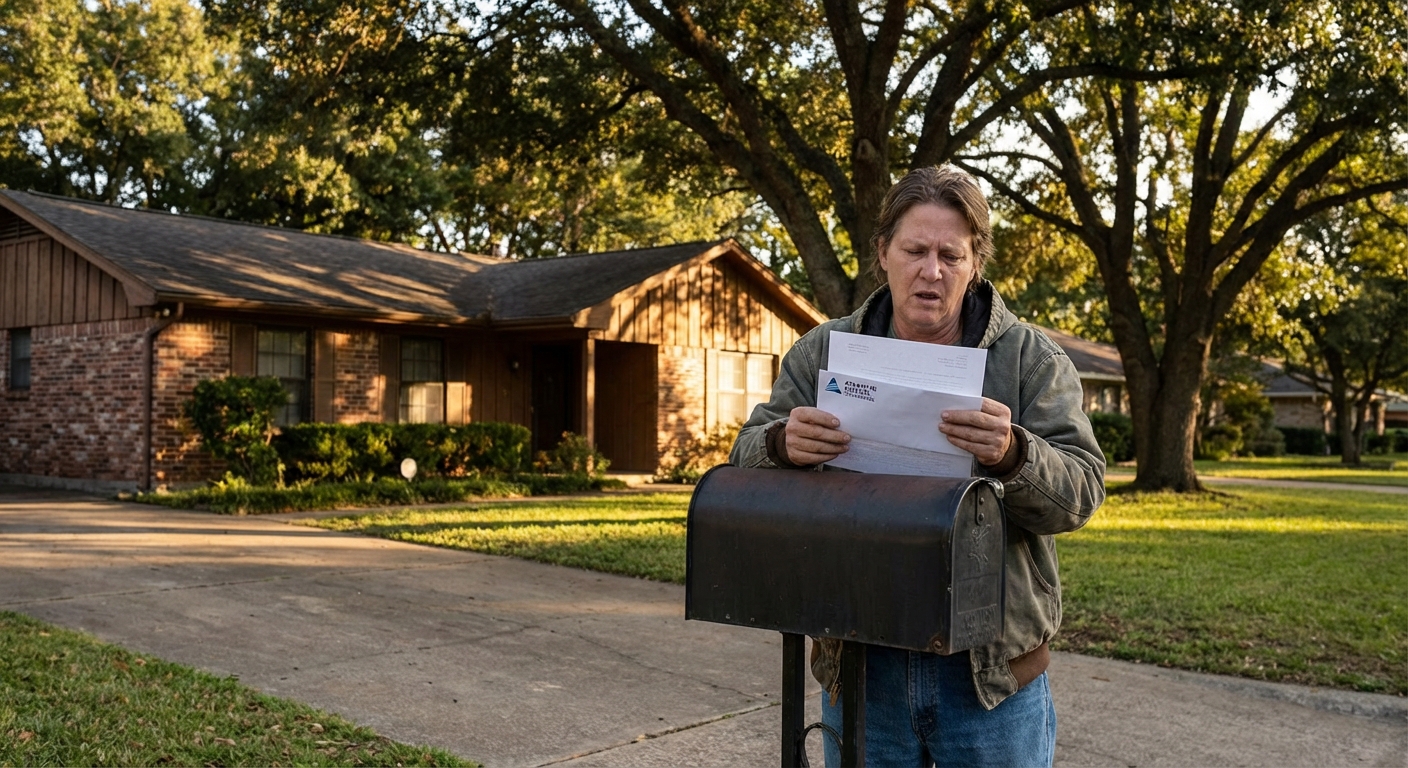
A home insurance non-renewal means your insurer has decided not to extend your policy once the current term ends. Unlike a mid-term cancellation, non-renewal lets your existing coverage run until the policy expiration date. At that point, you are no longer protected unless you've secured a new policy.
Receiving a non-renewal notice can feel alarming, but it's more common than most homeowners realize. The U.S. Treasury's Federal Insurance Office reports that the national weighted average non-renewal rate jumped from 1.36% to 2.05% in 2024, with 10 states now above the 2% threshold (up from just 2 states in 2023). According to NAIC data, more than 1.9 million U.S. homeowners received non-renewal notices in 2025 (a 47% jump from 2022), and the pace through the first half of 2026 is running roughly 20% higher than 2025. In high-risk ZIP codes, non-renewal rates run about 80% higher than in low-risk areas. The most important thing to understand is that you still have time, and options.
Cancellation vs. Non-Renewal: What's the Difference?
These two terms are often confused, but they are legally and practically very different.
| Cancellation | Non-Renewal | |
|---|---|---|
| When it happens | Mid-term (before policy expires) | At the end of the policy term |
| Common reasons | Non-payment, fraud, misrepresentation | Claims history, high-risk property, market exit |
| Impact on future coverage | Higher negative signal to new insurers | Less damaging than cancellation |
| Notice period | 10-30 days (non-payment); varies by state | Typically 30-120 days advance notice |
| Homeowner's coverage | Ends on cancellation date | Remains active until policy expiration |
Cancellation is reserved for more serious issues such as non-payment of premiums, fraud, or a material misrepresentation on your application. After the first 60-90 days of a policy, most states restrict when an insurer can cancel mid-term. Learn how to properly cancel a home insurance policy yourself if you're the one initiating the change.
Non-renewal is a business decision made at the end of your term. While still inconvenient, it is less damaging to your insurance profile than a mid-term cancellation and gives you more time to find alternative coverage. Learn more about home insurance underwriting to understand how insurers evaluate risk, and how non-renewal differs from a full denial.

Compare Home Insurance Plans in Ohio
Find your best options in less than 2 minutes
Common Reasons Your Home Insurance Was Non-Renewed
Understanding why you were non-renewed is the first step toward fixing the problem and securing new coverage. Here are the most frequent reasons insurers choose not to renew policies.
Too Many Claims
Filing multiple home insurance claims, particularly two or three in a three- to five-year window, flags your home as a high-cost risk. Even small claims can count against you. Non-weather-related claims (burst pipes, accidental fires, rodent damage) tend to raise more red flags than single large weather events. Your claims history is tracked in your CLUE report (more on that below), which future insurers will review. Notably, the five largest home insurers now fail to pay out on more than 44% of claims resolved, and even unpaid claims can still trigger premium hikes or non-renewal after a claim.
Roof Age and Property Condition
Old or damaged roofs are one of the leading causes of non-renewal. About 70% of major carriers now enforce a 15-20 year roof threshold, and may require proof of recent replacement before renewing. Learn more about roof age and insurance eligibility if your roof is aging. Florida law now prohibits non-renewal based on roof age alone if the roof is under 15 years old, though many carriers still refuse to write or renew when the roof is 15+ years.
In 2026, insurers are increasingly using AI-driven aerial inspections, drones, and satellite imagery to assess property condition without ever setting foot on your property. Some homeowners have been dropped for issues like moss on shingles, overhanging tree branches, or shadows that AI misinterprets as damage. Beyond the roof, issues like:
- Outdated electrical or plumbing systems
- Cracked foundations
- Overhanging tree branches
- Deferred maintenance or visible exterior damage
...can all trigger non-renewal, sometimes with only a short window to make repairs. Staying on top of home insurance maintenance requirements is now critical to avoiding a drop.
High-Risk Location
If your home sits in a wildfire zone, hurricane corridor, or flood-prone area, your insurer may decide the financial risk is simply too great, regardless of your personal claims history. Read our guide on high-risk home insurance options for specialty coverage. This is increasingly common in California, Florida, Texas, Louisiana, and now Colorado, Arizona, and parts of the Southeast, where catastrophic losses have forced major carriers to pull back. Reinsurance costs remain a major factor, even as U.S. property-catastrophe reinsurance prices have softened by about 16% year-to-date in 2026.
Dangerous Dog Breeds
Certain dog breeds classified as high-liability risks (such as pit bulls, Rottweilers, and Dobermans) can cause an insurer to non-renew your policy, especially if you acquired the dog mid-policy without disclosing it.
CLUE Report Issues
The Comprehensive Loss Underwriting Exchange (CLUE) report is a database maintained by LexisNexis that records up to seven years of your insurance claims history. New insurers will pull this report before agreeing to cover you. A pattern of frequent claims, even minor ones, can result in higher premiums, coverage exclusions, or outright denial.
Changing Market Conditions
Sometimes a non-renewal has nothing to do with you personally. Insurers routinely exit entire states, ZIP codes, or risk categories when losses become unsustainable. If your insurance company is leaving your state, even a perfect claims history won't save your policy. Carriers are increasingly using satellite imagery and AI to redraw risk maps by ZIP code, targeting specific micro-zones rather than exiting entire states.

Protect your home with State Farm
Average Rate:
Homeowners who bundle and save with State Farm save an average of $1,000 per year!

You're in Good Hands® with Allstate
Average Rate:
Get comprehensive home coverage with flexible policy options.

Customize your home coverage
Average Rate:
Only pay for the coverage you need with personalized home insurance.

Smart coverage for your home
Average Rate:
Protect what matters most with award-winning home insurance.
The 2026 Non-Renewal Landscape: What's Happening in High-Risk States
The home insurance landscape has shifted dramatically. What was once a niche concern for homeowners in disaster-prone areas has become a widespread financial issue affecting millions.
The Scale of the Problem
- California's FAIR Plan has grown to 696,562 policies as of June 2026 (up from 684,388 in March), with $768 billion in total exposure, a 242% increase since September 2022
- Growth is finally slowing: the California FAIR Plan added just 16,000 residential policies in Q1 2026 (a 2.4% quarterly increase), signaling the market may be starting to stabilize
- FAIR Plan rates in California are jumping 29.1% effective October 15, 2026 (scaled back from the 35.8% originally requested)
- The national average home insurance premium is projected to reach around $3,057 in 2026, a 4% increase after jumping about 12% in 2025
- In the highest-risk 20% of ZIP codes, average premiums are about 82% higher than in the lowest-risk ZIP codes
- Weiss Ratings data shows non-renewal rates across 15 disaster-prone states averaged 2.32% in 2024, nearly triple the 0.8% rate from 2018
- Florida has the most expensive home insurance in the country, with average annual premiums running roughly $7,100 to $9,400 depending on the source
State-by-State Snapshot
California: 3.18% of California homeowners were non-renewed in 2024, nearly four times the 2018 rate. State Farm, Allstate, and Farmers have stopped writing new policies or reduced their footprint in high-risk regions. The California FAIR Plan's approved 29.1% statewide rate increase takes effect October 15, 2026, following an initial 35.8% request. Learn more about the California home insurance crisis and your options.
Florida: Florida had the nation's highest non-renewal rate in 2024 at 3.35%, and in January 2026 alone, 59,610 Florida policies were non-renewed. One 2025 analysis projects roughly 200,000 Florida homeowners could receive non-renewal notices in 2026. Florida law requires 120 days' written notice with a stated reason for most residential property non-renewals. On the positive side, Florida's Citizens Property Insurance filed for an average 8.7% statewide rate decrease effective mid-2026, with cuts of 11-14% in South Florida counties.
Louisiana: Louisiana's non-renewal rate climbed from near zero in 2018 to nearly 3% in 2024, more than a five-fold increase, and average premiums have surged sharply over the past two years.
Texas: Under HB 2067, effective January 1, 2026, insurers must automatically provide a written explanation whenever they decline, cancel, or non-renew a home policy. The explanation must include a specific, factual basis and cannot rely on vague language like "no longer fits our appetite." Carriers must also submit quarterly reports to the Texas Department of Insurance summarizing non-renewal reasons by ZIP code, which TDI plans to publish for transparency. A separate TREC rule effective July 1, 2026 now requires home sellers to disclose if they've been unable to obtain homeowners insurance.
Spreading Beyond Traditional Hotspots: Non-renewal rates are surging in Arizona (2.97% in 2024, up 3.7x since 2018), the Carolinas, Alabama, Mississippi, Missouri, and even parts of the Midwest as severe convective storms and wildfire risk drive insurer pullbacks. For a full breakdown of state and federal changes, see our guide to 2026 home insurance legislation and reform.
What to Do When Your Home Insurance Is Non-Renewed
Receiving a non-renewal notice is stressful, but acting quickly and strategically can protect you from a dangerous coverage gap. Here's your action plan:
Step 1: Don't Let Coverage Lapse
Your current policy remains active until the expiration date. Use that window wisely. Maintaining continuous coverage is critical because a coverage lapse can trigger premium surcharges of 20-40% or more with new insurers. If your mortgage lender discovers you have no insurance, they can impose force-placed insurance, a policy that protects only the lender's interest, not yours, and typically costs 1.5 to 10 times a standard premium.
Step 2: Understand Why You Were Non-Renewed
Review your non-renewal notice carefully. In Texas, insurers must now provide a written reason automatically under HB 2067, and if you don't receive one you can file a complaint with the Texas Department of Insurance. In other states, you have the right to request a written explanation if one wasn't provided. Knowing the reason tells you whether it's fixable (like a roof replacement or removing a trampoline) or market-driven (insurer exit from your state).
Step 3: Pull Your CLUE Report
Request your free annual CLUE report from LexisNexis to see what claims history insurers will review. Dispute any errors you find, as inaccurate claims can unfairly elevate your risk profile and your premiums.
Step 4: Fix What You Can
If your non-renewal was triggered by property conditions, address the issues before applying for new coverage. Get a contractor's report documenting completed repairs. Upgrades to your roof, electrical panel, or plumbing can significantly improve your insurability. Many hard-to-insure homes become eligible again after targeted upgrades.
Step 5: Work With an Independent Insurance Agent
An independent agent has access to dozens of carriers, including specialty insurers who write policies for higher-risk homes. They can match you to underwriters who accept your risk profile rather than applying the blanket standards of a single carrier. If you're ready to shop, our guide to switching home insurance companies walks through the process.
Step 6: Know Your Backup Options
If standard carriers won't cover you, two key alternatives exist:
- State FAIR Plans: State-backed programs of last resort that guarantee coverage when private insurers won't. Available in 33 states plus D.C. Premiums are higher and coverage is more limited than standard policies, but they prevent a dangerous gap. Note that FAIR Plans typically cover only basic fire perils, so you may need a separate difference-in-conditions (DIC) policy for liability, theft, and water damage.
- Surplus Lines (E&S) Insurers: Non-admitted carriers like Lloyd's of London syndicates that specialize in high-risk properties. The E&S market has grown to over $140 billion in premium and now represents about 12% of all US P&C premium. They operate with more flexibility than standard insurers and can often cover homes others won't, at a premium.
Frequently Asked Questions
Can an insurance company legally refuse to renew my home insurance?
Yes. Insurers have the legal right to non-renew a policy for a wide range of reasons, including claims history, property condition, location risk, or a business decision to exit a market. However, they must provide advance written notice, typically 30 to 120 days depending on your state, and in many states they are required to give a reason. In Texas, under HB 2067 effective January 1, 2026, insurers must automatically provide a specific written explanation, not just vague language.
How long do I have to find new coverage after a non-renewal notice?
Your coverage remains active until your policy's expiration date, which gives you the full notice period to shop for a replacement. Notice periods typically range from 30 to 120 days. In California, insurers must give 75 days. In Florida, it's 120 days for residential property. In Texas, it's 60 days for policies issued or renewed in 2024 or later. Start shopping immediately upon receiving the notice to avoid a coverage lapse.
Will a non-renewal affect my ability to get home insurance elsewhere?
A non-renewal is generally less damaging to your insurance profile than a mid-term cancellation. However, new insurers will still review your CLUE report, which contains your claims history. If you were non-renewed due to too many claims, expect to face higher premiums or limited options. If the non-renewal was market-driven (your insurer leaving the state), it will have minimal impact on finding new coverage.
What is a FAIR Plan and should I use one?
A FAIR Plan (Fair Access to Insurance Requirements) is a state-administered insurance program designed to provide coverage to homeowners who cannot obtain it from private carriers. FAIR Plans are a legitimate safety net, but they typically offer more limited coverage at higher prices than standard policies. California's FAIR Plan, for example, covers only basic fire perils and is implementing a 29.1% rate hike effective October 15, 2026. They should be treated as a last resort while you work to address the risk factors that made you uninsurable in the standard market.
What home improvements can help me get insured again after a non-renewal?
Replacing an aging roof is the single most impactful upgrade, as roof condition is a primary underwriting factor for most carriers. Other improvements that boost insurability include upgrading to modern electrical panels (replacing knob-and-tube or aluminum wiring), replacing aging plumbing, installing storm shutters, adding a monitored security system, and removing liability risks like trampolines or certain dog breeds. Document all upgrades with photos and receipts, and a contractor's report can serve as proof for new insurers during underwriting.