
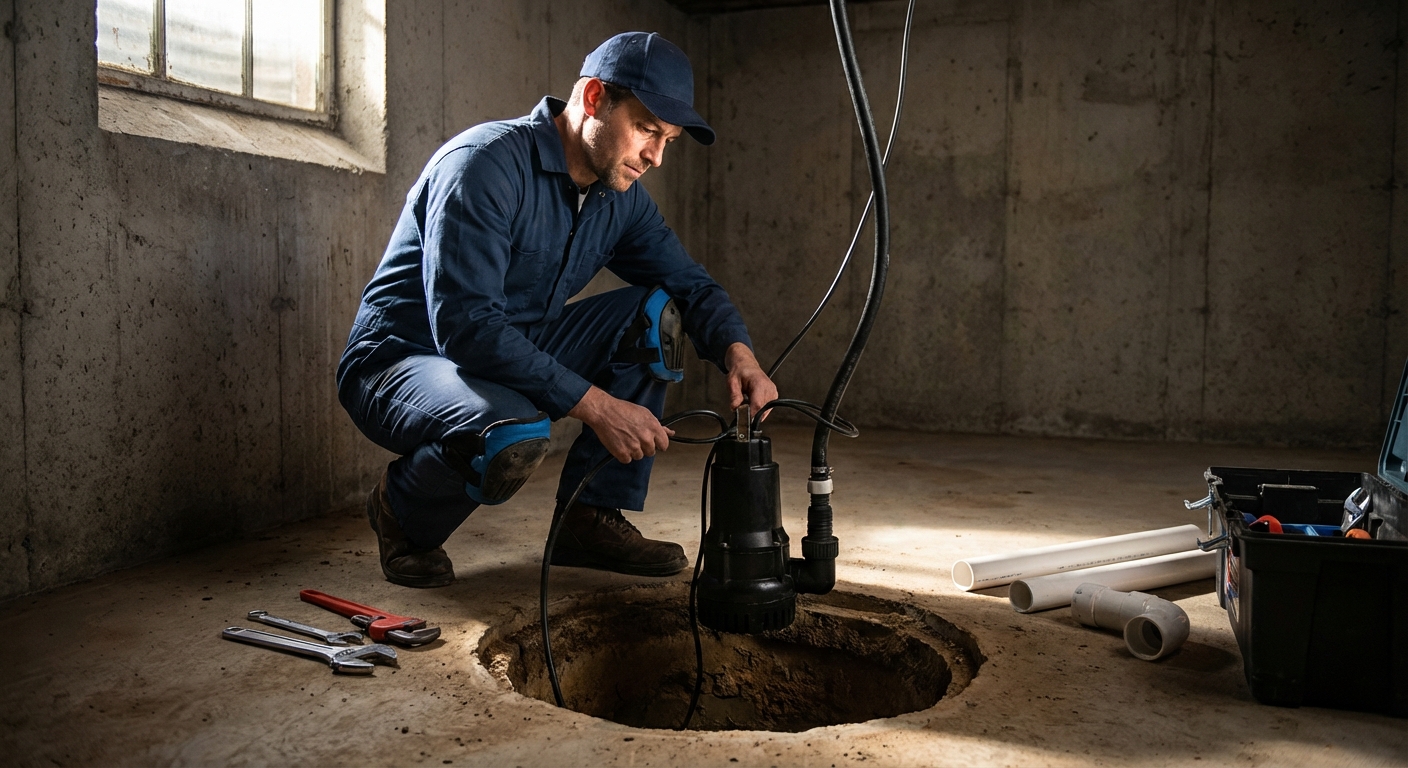
What Is a Sump Pump and Do You Need One?
A sump pump is a device installed in the lowest point of a basement or crawl space, typically inside a sump pit, that automatically detects rising water and pumps it out to a safe discharge location such as a storm drain or dry well. It activates via a float switch or sensor when water reaches a set level, protecting your home from flooding and costly structural damage.
Who Needs a Sump Pump?
Not every home requires a sump pump, but it's a smart investment if you check any of these boxes:
- You have a basement or crawl space that has experienced moisture, dampness, or flooding
- Your home sits in a high water table area where groundwater naturally seeps upward
- You live in a region with heavy seasonal rainfall or significant snowmelt
- You've noticed mold, mildew, or musty odors in your lower level (classic signs of ongoing moisture issues)
- Your foundation or basement floors show cracks or shifting from water pressure buildup
Homes without basements rarely need sump pumps. However, if you already have a unit that's aging or failing, don't wait. A malfunctioning pump can be just as dangerous as having no pump at all. Learn how to spot early warning signs with our sump pump maintenance checklist.

Find Trusted & Licensed Plumbers in Ohio
Get matched with companies for your specific needs
Types of Sump Pumps: Which One Is Right for You?
Choosing the right sump pump comes down to your home's water volume needs, basement layout, and budget. There are three primary types to consider, and 2026 buyer guides consistently favor submersible pumps as the primary unit for most homes, with pedestals treated as budget or niche choices.
Submersible vs. Pedestal Sump Pumps
Submersible pumps are the modern high-performance standard. Their sealed, submerged motors dissipate heat efficiently and are well-suited for cast iron construction models from brands like Zoeller and Liberty Pumps. Industry guides for 2026 point to a 1/2 HP cast-iron submersible as the best all-around choice for typical wet basements, with 3/4 HP recommended for heavy-rain or low-lying areas.
Pedestal pumps work well for lighter use scenarios, tight pits, or budgets. Because the motor sits above the water, repairs are easier and the motor often lasts longer, but they are noisier and less capable during serious flooding events.
Battery Backup Sump Pumps
A battery backup sump pump is a secondary pump that kicks in automatically when your primary pump fails or when the power goes out, exactly when you need protection most. The same storms that cause flooding commonly knock out power, making an AC-only primary pump useless right when you need it. Modern 2026 systems can also send smart phone alerts when the backup activates or the battery runs low.
| Feature | Primary Pump | Battery Backup Pump |
|---|---|---|
| Power Source | Standard AC electrical grid | Rechargeable 12V battery |
| Cost (system) | $120 to $280 unit cost | $200 to $900 total system |
| Flow Rate | Up to 4,200 GPH (high-end) | Around 2,500 GPH at typical head |
| Runtime | Continuous (while power is on) | 5 to 12 hours of pumping |
| Best For | Everyday water management | Power outages, primary pump failure |
| Maintenance | Annual inspection | Battery replacement every 3 to 5 years |
Water-powered backup pumps are a non-electric alternative that uses city water pressure to operate. They require no battery but do consume additional water, making them more practical in areas with reliable municipal water supply.
Sump Pump Installation: Process, Location & Permits
Step-by-Step Installation Overview
While professional installation is strongly recommended, understanding the process helps you know what to expect:
- Prepare the sump pit. The pit must have a hard, level bottom (concrete or brick, never bare earth) and measure at least 22 inches deep and 14 to 18 inches in diameter to allow the float switch to operate freely.
- Attach the adapter and discharge pipe. PVC primer and cement are applied to connect a male threaded adapter to new PVC piping, which is then threaded into the pump's discharge port.
- Test the float switch. Before proceeding, the pump is plugged in and the float is lifted manually to confirm activation.
- Drill a weep hole. A small 3/16-inch hole is drilled into the discharge pipe at a 45-degree angle to prevent air locking, which can cause pump failure.
- Attach the check valve. This prevents pumped water from flowing back into the pit. Code typically also requires a full-open isolation valve on the discharge side so the line can be serviced.
- Measure, cut, and connect pipes. The discharge line is measured, cut, deburred, and glued into place.
- Route the discharge line. PVC piping is run through the basement wall (sealed with silicone) and extended several feet away from the foundation. A PVC pipe increaser at the end spreads water flow to prevent erosion.
- Test the full system. Fill the pit with water to confirm the pump activates, moves water, and shuts off properly.
- Cover the pit. A sturdy lid is placed over the sump pit to protect the system and reduce radon risk.
For homes with new construction plumbing, sump pump infrastructure is typically planned during the early rough-in phase, making installation significantly easier.
Location Requirements
- The pump must be placed at the lowest point of the basement or crawl space
- The electrical outlet must be on a dedicated GFCI circuit, at least 4 feet off the floor
- The outlet must be within reach of the pump's power cord (typically 8 to 10 feet)
- The discharge line must route water several feet away from the foundation, never toward the house or into a sanitary sewer line (prohibited by code in most jurisdictions)
- Discharge typically must terminate on your own property and at least 5 feet from property lines
Do You Need a Permit?
Yes, in most jurisdictions, a permit is required. Sump pump installations involve plumbing, drainage modifications, and electrical work, all of which typically require permits and inspections. Most local codes are based on the International Residential Code (IRC) or International Plumbing Code (IPC) as adopted by your city or state. Key compliance steps include:
- Hiring a licensed plumber or contractor (required in many states for permit applications)
- Submitting project plans to your local building department
- Passing electrical and plumbing inspections before covering any work
- Ensuring GFCI outlet protection and dedicated circuit wiring
A like-for-like pump replacement plugged into an existing code-compliant receptacle may not require a permit, but a new installation with new wiring, plumbing, or piping almost always does. Non-permitted installations can lead to fines, insurance issues, and complications when selling your home.
Sump Pump Installation Cost Breakdown
What Does Sump Pump Installation Cost in 2026?
Based on 2026 cost data from Angi and This Old House, the total cost of sump pump installation typically ranges from $500 to $4,000, with most homeowners paying around $1,100 to $1,400 for a standard new installation. A simple replacement in an existing pit can land closer to $400 to $1,200.
| Installation Type | Estimated Cost Range |
|---|---|
| Replacement (existing pit) | $400 to $1,200 |
| New Installation (basement) | $800 to $2,000 |
| New Installation (crawl space) | $650 to $1,500 |
| Submersible Pump System | $1,200 to $3,000 |
| Pedestal Pump System | $800 to $1,500 |
| Battery Backup Addition | $200 to $900 |
| Dual Pump System | $2,000+ |
| Labor Only (hourly) | $45 to $200/hr |
Key Factors That Affect Your Cost
- New install vs. replacement. Replacing a pump in an existing pit is significantly cheaper than cutting a new pit into concrete.
- Pump type and horsepower. Submersible systems cost more than pedestal, and higher HP units run $1,600 to $2,500.
- Location access. Tight crawl spaces or complex drainage routing increase labor time and cost.
- Electrical work. If a dedicated GFCI circuit needs to be added, expect additional electrician costs.
- Regional pricing. Labor rates vary significantly. For example, Chicago homeowners typically spend $800 to $1,500, averaging around $1,100 per project.
If you run into an unexpected situation during installation, like discovering a cracked discharge line or deteriorating pipe, you may also need an emergency plumber, which can add $100 to $350/hr to your total. Homes with basement bathrooms may also have a sewage ejector pump that should be checked at the same time.
How to Choose the Right Size Sump Pump
Sizing your sump pump correctly is critical. An undersized pump won't keep up with water inflow, and an oversized pump will short-cycle, causing excess wear and noise. Don't size by the "max GPH" listed on the box, that figure is measured at zero head and is not realistic for your home.
Step 1: Calculate Your Gallons Per Minute (GPM) Need
For an existing pit, the most accurate method is to measure during heavy rain: shut the pump off, measure how many inches the water rises in one minute, and convert (a standard 18-inch basin holds roughly 1 gallon per inch of rise). Then multiply by a 1.25 to 1.5 safety factor to account for storm spikes and pump aging.
For new construction, estimate from house size and soil type:
| Soil Type | GPM per 1,000 sq ft | GPH for 2,000 sq ft Home |
|---|---|---|
| Sandy soil | 14 GPM | ~1,680 GPH |
| Dense clay soil | 8 GPM | ~960 GPH |
Step 2: Choose the Right Horsepower
| Horsepower | Best For | Approx. Capacity at 10 ft Head |
|---|---|---|
| 1/4 HP | Very small pits, infrequent water | Low, not ideal for most homes |
| 1/3 HP | Average homes, ≤10 ft TDH | 1,500 to 2,100 GPH |
| 1/2 HP | High water tables, 10 to 20 ft TDH | 1,800 to 3,600 GPH |
| 3/4 HP | Severe flooding, >20 ft TDH | 3,000+ GPH |
Most average-sized homes will be well served by a 1/3 HP submersible pump paired with a battery backup system. For homes with serious water intrusion history, upgrading to 1/2 HP is a worthwhile investment.
Step 3: Account for Total Dynamic Head (TDH)
TDH is the total resistance your pump must overcome, including:
- Vertical lift: distance from the water level in the pit to the discharge point
- Horizontal pipe run: total length of discharge piping
- Friction losses: from pipe fittings, elbows, and check valves (a single check valve in 1.25-inch pipe adds roughly 11.5 feet of equivalent length on its own)
A licensed plumber can calculate your TDH precisely and match it to a pump performance curve to ensure you get the right unit.
After installation, protect your investment with a regular maintenance routine (including quarterly float switch testing, annual cleaning, and battery backup checks) to keep your system reliable for years to come.
Frequently Asked Questions
How long does sump pump installation take?
A straightforward replacement in an existing pit can take 1 to 3 hours. A brand-new installation requiring a pit to be dug into a concrete basement floor typically takes 4 to 8 hours. Complex installations in crawl spaces or with battery backup systems may take a full day. A licensed plumber will give you a time estimate specific to your home's setup.
Can I install a sump pump myself?
Technically, a DIY pedestal pump installation in an existing pit is possible for experienced homeowners, and it can reduce costs to as low as $675. However, new installations involving concrete cutting, electrical wiring, and drainage routing are best left to licensed professionals. Improper installation can void your home warranty, fail code inspections, and lead to far more expensive water damage.
How often should a sump pump be replaced?
Most submersible sump pumps last 8 to 12 years with regular maintenance, while pedestal models typically run 5 to 7 years. Signs your pump needs replacing include unusual noises, visible rust or corrosion, the motor running continuously, or water remaining in the pit after a heavy rain. If your pump is approaching the 10-year mark, proactive replacement before storm season is wise.
Where does the sump pump discharge water go?
The discharge line routes pumped water away from your home through a pipe that exits the basement or crawl space wall and terminates several feet away from the foundation, typically into a yard, dry well, or storm drain. Never discharge into a sanitary sewer line, as this is prohibited by code in most jurisdictions and can overload municipal wastewater systems.
Does a sump pump affect my home insurance?
Having a functioning sump pump can positively impact your home insurance by demonstrating proactive flood prevention measures. However, standard homeowners policies typically do not cover sump pump failure or resulting basement flooding. You'll need a water backup or sump pump overflow endorsement, with limits often ranging from $5,000 to $25,000. For protection against rising water from outside, you also need a separate flood insurance policy. Always verify coverage details with your insurer before a loss occurs.