
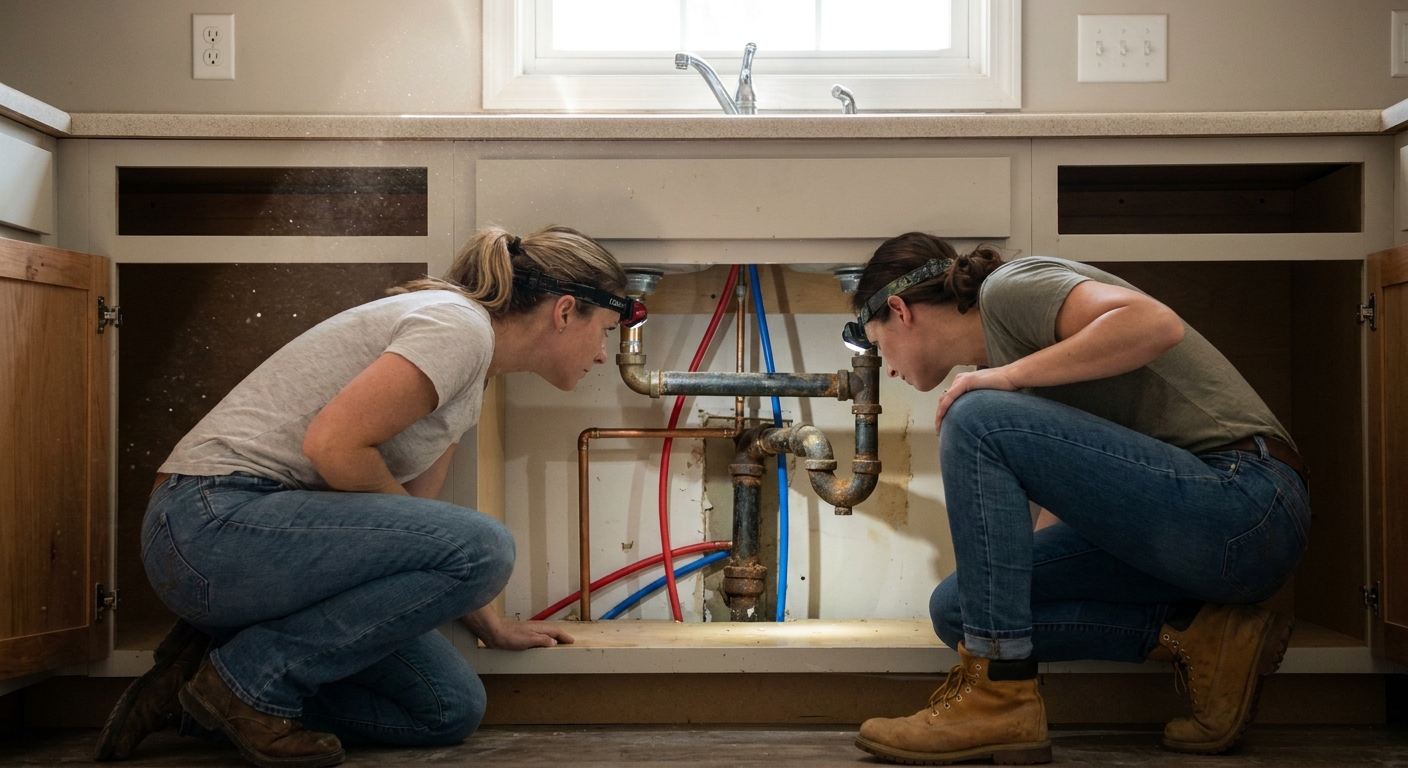
Plumbing Inspection Priorities: What to Evaluate Before You Buy
Before you finalize the purchase of any flip, plumbing deserves a dedicated evaluation — not just a general home inspection. A licensed plumber walking the property alongside your inspector can uncover issues that will either reshape your offer price or send you looking elsewhere. Here's where to focus your attention.
The Big-Ticket Risk Items
Start with the systems that carry the highest surprise-cost potential:
- Sewer line condition — A sewer camera inspection on any pre-1980 home is non-negotiable. Look for root intrusion, pipe collapse, offset joints, or old Orangeburg/clay materials. Full sewer line replacements can range from $5,000 to $25,000+, depending on length and access.
- Supply pipe material — Identify what the home is plumbed with. Galvanized steel, polybutylene (PB), and heavily corroded copper are the three materials that most often force a full repipe decision.
- Water heater age and condition — Units over 10–12 years old will get flagged by buyers' inspectors. Check for rust, improper venting on gas units, and missing T&P relief valve discharge lines.
- Slab leak indicators — Warm spots on floors, a water meter that spins with all fixtures off, or unexplained moisture are signs of a potentially costly slab leak.
Red Flags That Can Kill Your Margins
When multiple warning signs show up together, proceed with extreme caution:
| Red Flag | Estimated Cost Impact |
|---|---|
| Full sewer line replacement | $5,000 – $25,000+ |
| Complete repipe (PEX, 1,500 sf) | $6,500 – $12,000 |
| Slab leak repair (jackhammer access) | $2,000 – $10,000+ |
| Subfloor rot from long-term leak | $1,500 – $8,000+ |
| Polybutylene pipe removal & repipe | $7,000 – $15,000 |
For a deeper look at what a proper pre-purchase evaluation should include, see our guide on plumbing inspection before buying a house.

Find Trusted & Licensed Plumbers in Ohio
Get matched with companies for your specific needs
Repair vs. Replace: The Decision Framework Every Flipper Needs
The most important skill in plumbing for house flipping is knowing when a repair is enough and when only a full replacement will protect your investment. Use this four-point framework.
The Flipper's Repipe vs. Repair Decision Matrix
The Four Tests Before You Decide
1. Material Test — Is the existing piping a known problem material (galvanized, polybutylene)? If yes, assume full repipe and price it into your offer.
2. Symptom Test — Are plumbing issues isolated or system-wide? Rusty water at multiple fixtures, low pressure throughout, and leaks in different locations all point toward repiping.
3. Scope Synergy Test — Are walls already coming down for a kitchen or bath remodel? The incremental cost of repiping while open is far lower than doing it separately. Learn more about plumbing for kitchen remodel costs and timing.
4. Deal Math Test — Will the repipe cost ($7,500–$12,000 typically) be offset by a higher ARV or by eliminating likely buyer inspection credits? If yes, repipe. If not, document repairs and price accordingly.
For older homes where you're unsure what you're dealing with, our guide on old house plumbing problems walks through every common material failure and what it costs to fix.
Plumbing Upgrades: What Adds Value vs. What Doesn't
Not every plumbing upgrade earns back its investment. Here's how to distinguish between must-do improvements and budget-draining extras.
High-ROI Upgrades Buyers Expect
These are the baseline expectations in most U.S. markets for 2026. Skipping them will cost you more in inspection concessions than they cost to install.
| Upgrade | Typical Cost | Buyer Impact |
|---|---|---|
| New water heater (tank) | $1,200 – $2,500 | Removes a major inspection flag |
| Modern toilets (comfort height, WaterSense) | $150 – $400 each | High visual impact, low cost |
| Kitchen sink + pull-down faucet combo | $300 – $800 | Strong listing photo appeal |
| Bathroom faucet replacements | $100 – $300 each | Modernizes perceived value |
| Pressure-balanced shower valve + trim | $250 – $600 | Safety requirement in most codes |
| Braided stainless supply lines | $15 – $40 each | Inspection-proof, easy upgrade |
For a comprehensive breakdown of which fixtures deliver the best ROI, see our plumbing fixture upgrade guide.
Upgrades That Rarely Provide Sufficient ROI on a Flip
Consistent Finish Matters More Than Premium Fixtures
Buyers in most markets don't need luxury fixtures — they need consistent ones. Mismatched faucet finishes (chrome in one bath, brushed nickel in another) signal a rushed flip and reduce perceived quality. Choose one finish (brushed nickel or matte black are strong in 2026) and use it throughout all baths and the kitchen.
Budgeting, Code Compliance & Permits for Your Flip
Getting the financial and legal side of plumbing right is just as important as the physical work itself.
How to Budget Plumbing for a Flip
Use this percentage-based framework as your starting point when underwriting a deal:
| Property Type | Plumbing as % of Rehab Budget |
|---|---|
| Newer home (post-1990), cosmetic flip | 3% – 5% |
| Mid-age home (1960s–1990), moderate scope | 5% – 10% |
| Older home (pre-1960), heavy rehab | 10% – 15% |
Then layer on specific line items you've confirmed or suspect:
- New water heater: $1,200 – $2,500
- Full PEX repipe (1,500 sf home): $6,500 – $12,000
- Sewer line replacement (if needed): $5,000 – $20,000
- New bathroom rough-in: $6,000 – $12,000+
- Always add a 10–20% contingency to your plumbing line item on older homes
Permit Requirements You Cannot Skip
Unpermitted plumbing work on a flip creates serious liability — it can block your closing, trigger lender issues, and expose you to legal claims after the sale.
Plumbing work that almost always requires a permit:
- Installing new supply or drain lines
- Full or partial repipe
- Relocating any fixture (toilet, sink, tub)
- New bathroom or kitchen rough-in
- Water heater replacement (in most jurisdictions)
- Any work connecting to a municipal sewer
Work that often does NOT require a permit:
- Like-for-like fixture replacements (toilet swap, faucet replacement)
- Minor repairs to existing accessible lines
For a full breakdown of what requires a permit and what it costs, see our guide on plumbing permits — when required, how to apply, and typical costs.
Bringing Old Plumbing Up to Code
When you pull a permit and open walls, inspectors may require adjacent work to be brought up to current code — even if it wasn't part of your original scope. Common compliance items on older flips include:
- Adding missing vent stacks or correcting improper venting
- Installing pressure-balanced shower valves where there are none
- Replacing lead-soldered or galvanized water service lines
- Adding expansion tanks on closed water heating systems
For a complete reference on what inspectors flag and what it costs to correct, our plumbing code compliance guide covers the most common violations in older homes. Understanding whole house repiping costs ahead of time also helps you negotiate better with contractors.
Frequently Asked Questions
What plumbing issues must be fixed before selling a flipped house?
Any active leaks, code violations, improper venting, failed sewer lines, and unsafe water heater installations must be addressed before listing — these will be flagged on every buyer's inspection and can block financing on FHA or VA loans. Polybutylene piping is also a practical must-fix because many insurers won't cover homes with it, which can kill deals before closing. Issues that affect safety, habitability, or insurability are non-negotiable. Budget-level cosmetic repairs like dated faucets or older-but-functional fixtures are usually negotiable.
Should I always repipe when flipping an older house?
Not necessarily — it depends on the pipe material, current condition, your renovation scope, and the deal math. If you're already gutting walls for a kitchen and bath remodel and the house has galvanized steel supply lines, repiping while walls are open is usually the right call. However, if the existing copper or CPVC is in solid shape with no systemic issues, targeted repairs are often sufficient. Always run the numbers: will the repipe cost be recovered through a higher ARV or by avoiding buyer concessions?
What plumbing upgrades provide the best ROI on a house flip?
The highest-ROI plumbing upgrades are those that eliminate inspection friction rather than add luxury. A new water heater, modern WaterSense-certified toilets, a fresh kitchen sink and pull-down faucet, and pressure-balanced shower valves consistently deliver strong returns. These items are relatively inexpensive ($150–$2,500 each), photograph well in listings, and prevent buyers from requesting large repair credits. High-end upgrades like tankless water heaters only pencil out on mid-to-upper price point flips where comps support the added cost.
Do I need permits for plumbing work on a flip?
Yes — for anything beyond simple like-for-like fixture replacements, permits are required in virtually every U.S. jurisdiction. This includes repiping, relocating fixtures, adding bathrooms, replacing water heaters in most areas, and any new rough-in work. Skipping permits creates major problems: it can block your sale closing, cause lender underwriting failures, and expose you to liability after the sale. Always pull permits and schedule inspections before closing walls on any permitted plumbing scope.
How much should I budget for plumbing when flipping a house?
For a cosmetic flip on a newer home, budget 3–5% of your total renovation cost for plumbing. On a mid-age home (1960s–1990s) with moderate scope, plan for 5–10%. Heavy rehabs on pre-1960 homes can push plumbing to 10–15% or more of the total budget. Always add a 10–20% contingency specifically for plumbing on older properties, since hidden issues like slab leaks, corroded cast iron drains, and DIY patchwork are common discoveries once walls come down.