
Common Garbage Disposal Problems
Garbage disposals are among the hardest-working appliances in your kitchen, and when they fail, it can bring your kitchen routine to a halt fast. Understanding what's going wrong is the first step to fixing it quickly and affordably.
Garbage Disposal Humming But Not Grinding
If your disposal hums but won't grind, the motor is receiving power but the flywheel or impeller is physically stuck. This is almost always caused by a jam from hard or fibrous food items like chicken bones, celery strings, fruit pits, or even a dropped utensil. The motor strains against the blockage, producing that recognizable buzzing hum.
Left unaddressed, this can burn out the motor entirely, turning a $15 DIY fix into a full replacement.
Garbage Disposal Leaking
Leaks are one of the most location-specific problems with disposals. Where the leak originates tells you a lot about the cause:
| Leak Location | Likely Cause | DIY Fixable? |
|---|---|---|
| Top (sink flange) | Worn or cracked plumber's putty seal | Yes |
| Side (discharge pipe) | Loose pipe fitting or worn gasket | Yes |
| Side (dishwasher hose) | Cracked hose or loose clamp | Yes |
| Bottom (housing) | Internal seal failure or cracked unit | Usually No, replace unit |
Garbage Disposal Jammed
A jammed disposal shares many symptoms with the humming issue, because they're often the same problem. The flywheel simply can't rotate. Common culprits include:
- Fibrous vegetables: Celery, artichoke leaves, corn husks
- Starchy foods: Potato peels, pasta, rice (expand and pack tightly)
- Hard items: Bones, shells, fruit pits
- Non-food objects: Bottle caps, utensils, glass shards
If you hear grinding or rattling before the disposal stops working, a foreign object is likely the cause. Learn more about how food debris leads to kitchen sink clogs that compound disposal problems.
Garbage Disposal Not Turning On
When absolutely nothing happens, no hum and no sound, it's almost always a power issue:
- Tripped reset button – The small red or black button on the bottom of the unit
- Tripped circuit breaker – Check your electrical panel
- Unplugged unit – Check the outlet under the sink
- Motor overload – The internal thermal overload switch cut power to protect the motor

Find Trusted & Licensed Plumbers in Ohio
Get matched with companies for your specific needs
Garbage Disposal Repair Costs in 2026
Understanding the cost breakdown helps you avoid overpaying, and decide when a repair simply doesn't make financial sense. Repair pricing has nudged up about 5-10% since 2024 due to higher labor and parts costs.
Typical Repair Cost Ranges (2026)
| Repair Type | Estimated Cost |
|---|---|
| Reset / minor jam fix (DIY) | $0 |
| Diagnostic / service call | $75–$120 |
| Gasket or seal replacement | $20–$55 |
| Sink flange re-sealing | $30–$80 (DIY) / $150–$250 (pro) |
| Drain pipe leak repair | $100–$200 |
| Full professional repair (labor + parts) | $150–$450 |
| Average professional repair (2026) | $200–$330 |
According to 2026 cost guides, most homeowners pay between $150 and $331 for a typical garbage disposal repair, with simple jobs starting around $89 in labor.
Replacement Cost Ranges (2026)
| Unit Type | Installed Cost |
|---|---|
| Basic 1/3–1/2 HP | $200–$375 |
| Mid-range 3/4 HP | $325–$500 |
| Premium 1–1.5 HP | $500–$750+ |
| Ultra-quiet / 2 HP pro models | $750–$1,000 |
| National average total replacement (2026) | About $550 |
Professional plumbers typically charge $75–$150 per hour for disposal repair work in 2026, while installation labor often falls in the $50–$100 per hour range. Home Depot's installation service averages around $189 (with a $97–$339 range), labor only. For a full comparison of what installation involves, see our garbage disposal installation cost guide.
DIY Troubleshooting vs. Professional Repair
DIY Fixes You Can Handle
Step 1, Fix a Humming or Jammed Disposal
- Turn off power by unplugging the unit under the sink or shutting off the circuit breaker
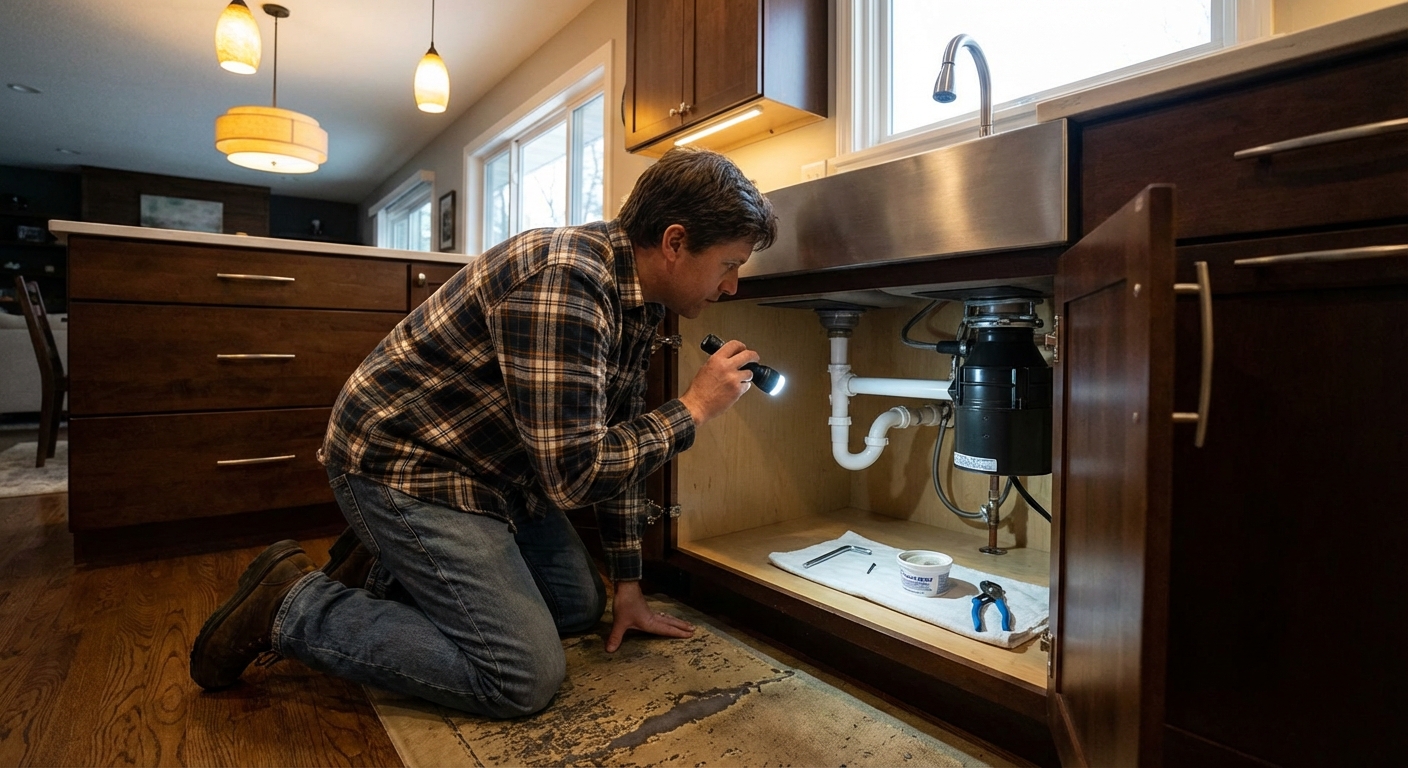
- Look inside with a flashlight; remove visible debris with needle-nose pliers or tongs (never your hand)
- Use an Allen wrench by inserting a ¼-inch hex/Allen wrench into the hex socket on the bottom center of the unit; turn back and forth until the impeller spins freely
- Wait 10 minutes, then press the reset button on the unit's bottom
- Restore power, run cold water, and test
Step 2, Fix a Leaking Sink Flange (Top Leak)
- Turn off power and place a bucket under the unit
- Loosen the mounting ring and remove the disposal from the flange
- From the top of the sink, loosen the flange bolts and remove the old flange
- Scrape away old plumber's putty
- Apply fresh plumber's putty around the flange edge, reinstall, and tighten bolts evenly
- Reattach the disposal and test
Step 3, Fix a Disposal That Won't Turn On
- Press the reset button firmly
- Check the outlet under the sink by plugging in another device to test it
- Check your home's circuit breaker panel for any tripped breakers
- If none of the above works, the motor may have failed and replacement is typically warranted
When to Call a Professional
For persistent drain-side issues that go beyond the disposal itself, a professional drain cleaning service may be needed to clear the line fully.
Repair vs. Replace: Making the Smart Call
When to Repair
- The unit is under 5–7 years old
- The issue is an isolated jam, loose connection, or minor gasket leak
- Repair costs are well under 50% of replacement cost
- No history of repeated breakdowns
When to Replace
- The unit is 10–15+ years old (the typical disposal lifespan)
- You're experiencing leaks from the bottom housing (internal seal failure)
- The motor has burned out or overheated repeatedly
- Repairs are needed multiple times in the past year
- There is visible rust or corrosion on the unit body
- Persistent odors return even after thorough cleaning
When a replacement does make sense, factor in whether a dishwasher plumbing connection needs updating at the same time. Many homeowners combine both projects to save on labor. And if your home uses a septic system, note that heavy disposal use can shorten your septic tank pumping intervals.
Top-Rated 2026 Brands to Consider
If you decide to replace, the most consistently top-rated brands in 2026 are InSinkErator (Badger and Evolution lines), Waste King, GE, Moen, and Frigidaire. Higher-HP, quieter models from these brands have become more affordable, with mid-range 3/4 HP units now widely available in the $130–$250 range for the unit alone.
Garbage Disposal Maintenance: Prevent Problems Before They Start
A well-maintained disposal can last 10–15 years based on 2026 industry data. These simple habits go a long way:
Daily Habits
- Run cold water before, during, and for 15–30 seconds after every use. It solidifies grease so it flushes cleanly rather than coating your pipes
- Feed scraps in small batches (about one cup at a time) to avoid motor overload
- Run the disposal regularly, even on days with minimal waste, to prevent rust and keep parts moving
Weekly Cleaning Routine
| Method | How To | Benefit |
|---|---|---|
| Ice cubes | Grind a cup of ice | Cleans and sharpens blades |
| Citrus peels | Grind lemon or lime peels | Freshens and deodorizes |
| Baking soda + vinegar | Pour ½ cup soda, then 1 cup vinegar; wait 15–30 min, flush with hot water | Breaks down buildup and odors |
| Dish soap + water | Run disposal with soapy water | General cleaning |
What to Never Put Down the Disposal
- ❌ Grease, fats, or oils
- ❌ Bones, fruit pits, or shellfish shells
- ❌ Fibrous vegetables (celery, corn husks, artichoke leaves)
- ❌ Starchy foods (potato peels, rice, pasta)
- ❌ Coffee grounds (accumulate as sediment)
- ❌ Non-food items of any kind
Staying on top of maintenance also protects the rest of your plumbing. Grease and food particles that bypass the disposal can cause kitchen sink clogs further down the line, and those can be significantly more expensive to clear. For deeper pipe issues, a drain cleaning service can use hydro jetting to restore full flow.
Frequently Asked Questions
How much does it cost to repair a garbage disposal in 2026?
Most garbage disposal repairs cost between $150 and $330 in 2026, with simple service calls starting around $89 for diagnostic and minor labor. Pressing the reset button or unjamming the impeller with an Allen wrench is free to do yourself. Plumber labor runs $75–$150 per hour, and replacement parts like gaskets and seals typically cost $20–$55.
Can I fix a leaking garbage disposal myself?
It depends on where the leak is coming from. Leaks at the top sink flange and side discharge pipe connections are very DIY-friendly and require only plumber's putty or tightening a fitting. Leaks from the bottom housing, however, indicate internal seal failure and generally mean it's time to replace the unit entirely.
Why is my garbage disposal humming but not working?
A humming disposal that won't grind is almost always jammed. The motor is running, but the flywheel is physically blocked. To fix it, turn off power, remove visible debris with pliers, insert a ¼-inch Allen wrench into the hex port on the bottom and manually rotate the impeller, then press the reset button and restore power. This resolves the issue in most cases.
How do I know if I should repair or replace my garbage disposal?
If your unit is under 7 years old and the problem is an isolated jam or minor leak, repair is almost always the right call. If the unit is over 10 years old, has a leaking or cracked bottom housing, a failed motor, or has required multiple repairs in the past year, replacement will save you more money in the long run. A good rule: if repair costs approach 50% or more of a new unit's price (about $275 on a typical $550 replacement), replace it.
How long should a garbage disposal last?
A well-maintained garbage disposal typically lasts 10 to 15 years, with 2026 industry sources putting the average at 10–12 years. Regular maintenance (running cold water with every use, cleaning weekly, and avoiding prohibited foods) is the single biggest factor in extending the lifespan of your unit. If your disposal is approaching the 10-year mark and starting to show problems, start budgeting for a replacement.