
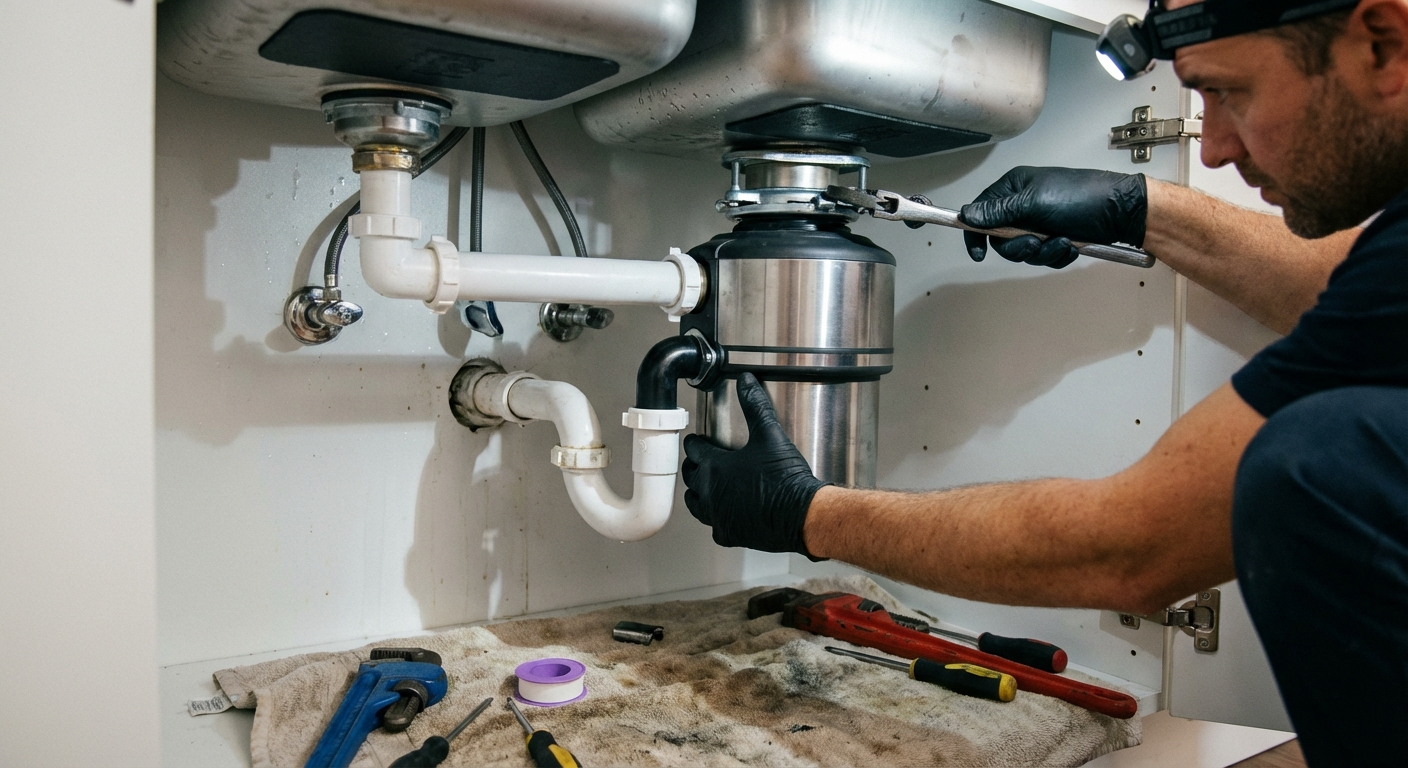
What Does Garbage Disposal Installation Cost?
Understanding the full cost of garbage disposal installation helps you budget smartly and avoid surprise charges. In 2026, most homeowners spend between $400 and $650 for a complete professional installation, with the national average landing right around $500 to $600 when you factor in the unit, labor, and supplies. Budget DIY swaps can come in as low as $250, while premium installs with new wiring can climb past $1,100.
Cost Breakdown
| Cost Factor | Typical Range |
|---|---|
| Unit (1/2 to 3/4 HP) | $90 to $450 |
| Labor (1 to 2 hours) | $50 to $245 |
| Flat install fee (home improvement stores) | $97 to $339 |
| Supplies & Mounting Hardware | $30 to $50 |
| Electrical Work (if needed) | $100 to $200+ |
| Plumbing Modifications | $50 to $150 |
| Permits (if required) | $50 to $500+ |
Key cost factors to be aware of:
- Unit quality: Entry-level disposals tested by Consumer Reports start around $63, while a reliable mid-range continuous-feed unit averages roughly $165. Premium stainless steel models can run $400 or more.
- Electrical work: If your sink area lacks a dedicated outlet or switch wiring, an electrician may need to add a GFCI-protected 120V, 15 to 20 amp circuit. This can add $100 or more to your total.
- Plumbing modifications: Replacing a sink flange, adding a drain tee fitting, or rerouting the P-trap can tack on additional labor and materials costs.
- Old unit disposal: Most professional flat-fee installations include removal and haul-away of the old unit, but always confirm before booking.
- Location and contractor overhead: Prices vary significantly by ZIP code. Add 13 to 22% for general contractor oversight, permits, or sales tax in some jurisdictions.

Find Trusted & Licensed Plumbers in Ohio
Get matched with companies for your specific needs
Sizing Guide: Choosing the Right Horsepower
Picking the right garbage disposal size is just as important as price. An underpowered unit will jam constantly, while an oversized one wastes energy and money.
Horsepower by Household Size
| Household Type | Recommended HP | Best For |
|---|---|---|
| Single person or couple | 1/3 HP | Light, occasional use with soft food scraps |
| Small family (2 to 4 people) | 1/2 HP | Everyday cooking, moderate food waste |
| Medium family (3 to 5 people) | 5/8 to 3/4 HP | Daily use, mixed scraps |
| Large family or heavy cooks (4+) | 1 to 1-1/4 HP | Frequent use, tougher waste like small bones |
For most homeowners in 2026, a 1/2 HP or 3/4 HP unit hits the sweet spot of price and performance. Step up to 1 HP only if you cook heavily or have a large household.
Before purchasing, measure your under-sink cabinet space. Units typically range 10 to 15 inches tall, 5 to 9 inches wide, and 6 to 13 inches deep. Higher horsepower models are physically larger and require more clearance around existing pipes.
Features to Consider
Noise Levels Quieter models use thicker insulation jackets around the grinding chamber. Look for terms like "SoundSeal," "sound shield," "quiet series," or "quiet collar" in the product specs. Premium units (3/4 HP and up) from brands like InSinkErator Evolution often include anti-vibration mounts and sound-dampening features that make a big difference in open-concept kitchens.
Grinding Stages Single-stage grinding is fine for light use, but multi-stage grinders found in mid-to-high-end models break food waste into finer particles, reducing jams and improving drain flow. InSinkErator's Evolution line uses MultiGrind technology with 2, 3, or even 4 stages, which is especially helpful for septic systems where fine particles matter.
Top Brands in 2026 InSinkErator (especially the Evolution series) and Waste King consistently lead Consumer Reports tests and professional reviews. InSinkErator dominates on noise reduction and multi-stage grinding, while Waste King offers strong value with high-RPM motors at lower price points.
Septic System Compatibility If your home uses a septic system, look for septic-safe disposals with multi-stage grinding, which produces finer particles your tank can handle better. Heavy disposal use can still accelerate how often you need to pump. Learn more about septic tank maintenance to avoid costly surprises like drain field replacement.
The Installation Process: Step-by-Step
Whether you're hiring a pro or going DIY, knowing what's involved helps you understand what you're paying for and spot any shortcuts a plumber might take.
How Long Does Installation Take?
An experienced DIYer replacing an existing unit can typically complete the job in 15 to 30 minutes. A first-time installation or one that involves new plumbing or electrical work can take 1 to 2 hours.
Step-by-Step Overview
- Turn off power at the circuit breaker to the disposal outlet before touching anything.
- Remove the old unit by loosening mounting screws, detaching the drain connection, and disconnecting wiring.
- Install the sink flange by applying plumber's putty around the drain opening, inserting the new flange, and securing the mounting assembly underneath.
- Prepare the disposal unit by removing the electrical cover plate, threading in the wire clamp, and connecting wires (black to black, white to white, bare to ground).
- Mount the disposal by lifting it into place, aligning the mounting tabs, and rotating clockwise until locked.
- Connect plumbing by attaching the discharge tube to the P-trap and drain arm using slip nuts.
- Test everything by restoring power, running cold water, switching on the disposal, and inspecting all connections for leaks.
Connecting Your Disposal to a Dishwasher
If you have a dishwasher, the connection is straightforward but easy to miss. Most modern codes (including the International Plumbing Code section 802.1.6) now require a deck-mounted air gap rather than just a high loop, though many local jurisdictions still allow a high loop alone. Check your local code before deciding.
- Knock out the dishwasher inlet plug on the side of the disposal using a hammer and flathead screwdriver, then retrieve it with needle-nose pliers.
- Slide the dishwasher's drain hose onto the inlet (or route it through an air gap fitting first) and tighten a hose clamp securely.
- If using a high loop, route the hose as high as possible under the countertop before dropping down to the disposal to prevent backflow.
- If your code requires an air gap device, mount it on the countertop and connect the dishwasher hose to the upper barb and the disposal to the lower barb.
For more detail on what's involved with kitchen plumbing connections, check out our guide on dishwasher plumbing installation.
DIY vs. Professional Installation
When to call a professional:
- Your sink has no existing disposal or outlet wiring
- You need a new dedicated electrical circuit installed
- The P-trap or drain lines need rerouting
- Your local code requires an inspected air gap install
- You're uncomfortable working near water and electricity simultaneously
If you do hire a plumber, always verify they're licensed and ask whether the quote includes removal of the old unit, all necessary hardware, and a leak test. Pairing a garbage disposal installation with other plumbing work, such as a dishwasher plumbing connection, can help reduce overall service call costs.
Maintenance Tips & FAQ
Keeping Your Disposal Running for Years
A well-maintained garbage disposal typically lasts 10 to 15 years, with industry groups like the Association of Home Appliance Manufacturers putting the average around 12 years. Premium units with good habits can exceed that range. Here's how to protect your investment:
- ✅ Always run cold water before, during, and for at least 30 seconds after using the disposal. Cold water solidifies grease so it grinds and flushes rather than coating pipes.
- ✅ Clean every 1 to 2 weeks with ice cubes and coarse salt to sharpen the grind ring and knock off debris. Follow with baking soda and vinegar periodically, let it fizz, then rinse.
- ✅ Run it regularly, even without food. Operation every few days prevents rust on internal metal components.
- ✅ Deodorize naturally by grinding citrus peels like lemon or orange every week or two.
- ❌ Never put these down the disposal: grease, oils, fibrous vegetables (celery, corn husks), starchy foods (potato peels, pasta, rice), coffee grounds, bones, or non-food items.
- ❌ Avoid chemical drain cleaners, which can damage internal components and splash back unsafely.
Common Problems to Watch For
| Problem | Likely Cause | Action |
|---|---|---|
| Humming, won't spin | Jam in grinding chamber | Use hex wrench to free manually |
| Slow draining | Buildup or partial clog | Clean with baking soda + vinegar |
| Leaking under sink | Loose connection or worn seal | Tighten fittings; check flange putty |
| Rattling or squealing | Loose part or foreign object | Inspect and remove debris |
| Persistent bad odor | Food residue buildup | Bi-weekly cleaning routine |
If problems become frequent, it may be time to weigh repair against replacement. Our guide on garbage disposal repair costs walks through typical repair pricing and the tipping point where a new unit makes more sense.
If your home is on a septic system, keep in mind that frequent disposal use can accelerate how often your tank fills. Check out our full guide on septic tank pumping schedules to stay ahead of potential issues.
Frequently Asked Questions
How much does it cost to install a garbage disposal in an existing sink? The total cost to install a disposal in an existing sink typically ranges from $400 to $650 in 2026, with the national average sitting around $500 to $600. If an outlet and switch are already in place, labor runs about $50 to $100 per hour with most jobs taking 1 to 2 hours. Going with a mid-range 1/2 HP unit and hiring a plumber averages around $525 all-in. DIY installation can reduce this to just the cost of the unit and any hardware.
What size garbage disposal do I need for my home? For a single person or couple with light use, a 1/3 HP model is sufficient and affordable. A family of two to four people doing daily cooking should look at a 1/2 HP unit, while households of three to five with moderate use benefit from 5/8 to 3/4 HP. Large families or heavy cooks may want 1 HP or higher. Always measure your under-sink cabinet before buying, as higher HP units are physically larger.
Can I install a garbage disposal myself? Yes, if you're replacing an existing unit and the outlet and switch wiring are already in place, DIY installation is very manageable and takes 15 to 30 minutes for most people. You'll need basic tools like a screwdriver, pliers, adjustable wrench, and plumber's putty. However, if you need new electrical wiring or plumbing modifications, hire a licensed plumber or electrician to ensure code compliance and avoid voiding your warranty.
Do I need an air gap to run a dishwasher with a garbage disposal? It depends on your local code. The International Plumbing Code requires a deck-mounted air gap for dishwashers draining into a disposal or sink tailpiece, but many local jurisdictions still allow a high loop alone. Even where a high loop is permitted, an air gap provides better backflow protection because it creates a true physical break in the drain line. Always check with your local building department before finalizing the install.
How long does a garbage disposal last, and when should I replace it? A well-maintained garbage disposal typically lasts 10 to 15 years, with an industry average of about 12 years. Signs it's time to replace include frequent jams the reset button can't fix, persistent leaking from the body of the unit, ongoing foul odors despite cleaning, or a motor that hums but won't grind. If your unit is over 10 years old and needs repeated repairs, replacement is usually more cost-effective than continued fixes.