
Compare Home Insurance Plans in Ohio
Find your best options in less than 2 minutes



What Is Water Backup Coverage and What Does It Protect Against?
Water backup coverage is an optional endorsement you add to your homeowners insurance policy that protects against damage caused by water or sewage backing up through your home's internal systems. It covers three main scenarios:
- Sewer backup: When municipal sewer lines become overwhelmed and sewage reverses course into your home through drains or toilets
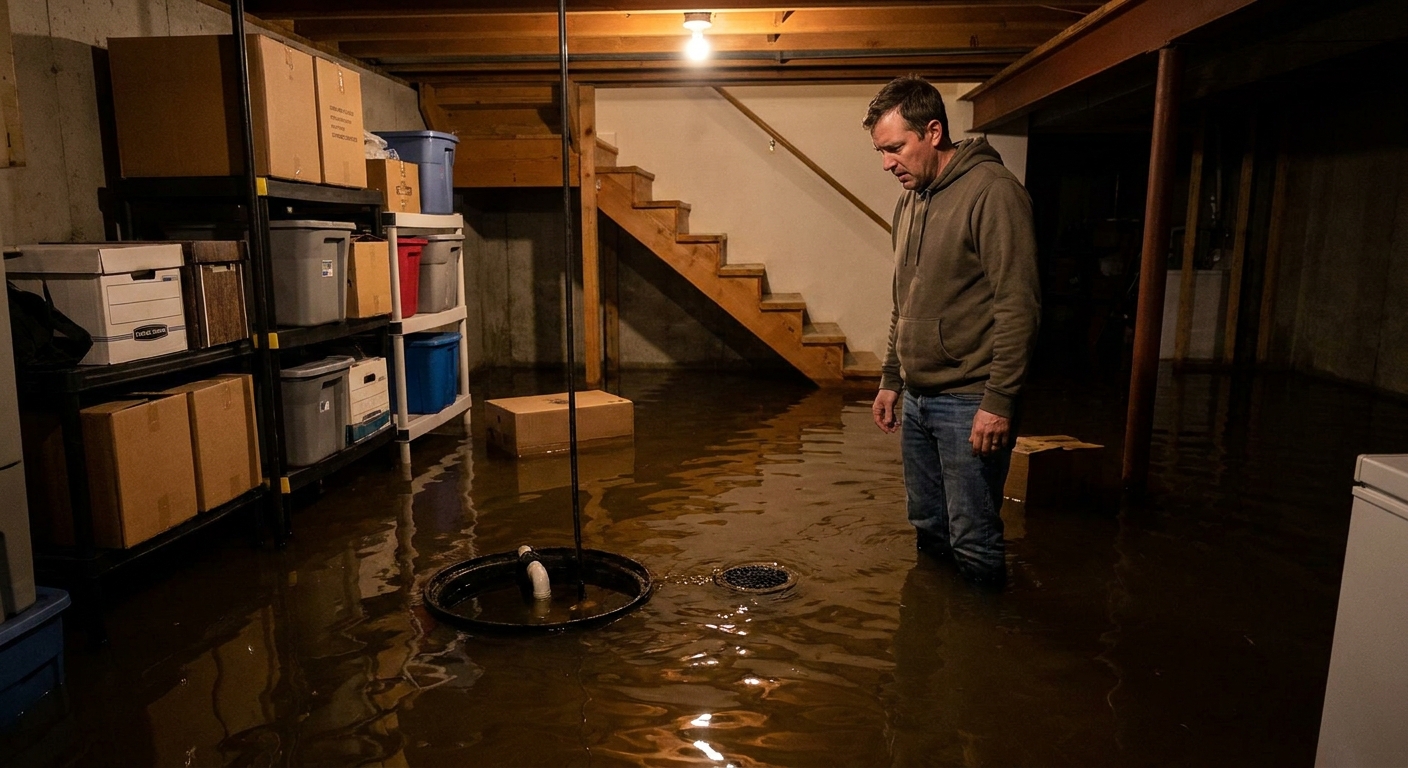
- Sump pump failure or overflow: When your sump pump malfunctions, is overwhelmed, or loses power during a storm, causing water to flood your basement
- Drain overflow: When household drains, floor drains, or internal plumbing back up and overflow into living spaces
When any of these events occur, the resulting damage can be both costly and disgusting. Water backup insurance typically pays for water removal and cleanup as well as construction materials, labor, and replacement costs for damaged items and structures. Typical payouts cover:
- Structural repairs to floors, walls, drywall, and cabinetry
- Replacement of damaged personal property (furniture, appliances, electronics)
- Professional water removal, cleaning, and sanitization services
- Mold remediation (depending on your policy)
- Additional living expenses if your home becomes temporarily uninhabitable
Why Standard Homeowners Insurance Excludes This Coverage
If you have a standard homeowners insurance policy, you might assume water damage is water damage, but insurers draw a sharp line. Standard policies are designed to cover sudden, accidental damage from within your home (like burst pipes, appliance leaks, or rain that enters through a storm-damaged roof). Sewer and drain backups, however, originate from external municipal system failures or mechanical breakdowns, which fall outside that scope.
Most standard homeowners policies explicitly exclude:
- Sewage backing up through drains or toilets
- Sump pump failures and overflow
- Septic system backups
- Any water that enters through a sewer or drain
This is why water damage coverage gaps catch so many homeowners off guard. The exclusion is buried in the fine print, and the damage can show up fast. Sewer backups are a growing problem in the United States because aging municipal waste systems are increasingly overwhelmed by heavier storms, which is why a water backup endorsement is the only way to fill this specific gap. For a broader view of what your standard policy will and won't pay for, see our guide on homeowners insurance and plumbing and this deeper look at what's covered vs. not covered for water damage.

Compare Home Insurance Plans in Ohio
Find your best options in less than 2 minutes
Water Backup Coverage vs. Flood Insurance: Key Differences
Many homeowners confuse water backup coverage with flood insurance. They both deal with water, but they cover completely different events. Here's how they compare:
The key distinction is the source of the water:
- Water backup coverage applies when water enters your home through its own internal systems (sewers, drains, and sump pumps).
- Flood insurance (typically through the NFIP or a private insurer) applies when external water from natural events like heavy rain, overflowing rivers, or storm surge floods your property.
It's also worth noting that NFIP flood insurance comes with coverage limits up to $250,000 for the structure and $100,000 for contents, while the average cost of water backup and sewer coverage may range from $50 to $250 per year, with limits from $5,000 to the full replacement cost of your home. If you live near water or in a flood-prone area, you may want both types of coverage since they address non-overlapping risks.
This is especially important right now because the NFIP is currently authorized only through September 30, 2026, and unless Congress passes another extension in the next several weeks, FEMA will lose the authority to issue new flood insurance contracts on that date. The program has been kept alive through 35 short-term reauthorizations since 2017, and it already spent 43 days in a full lapse during the autumn 2025 government shutdown before H.R. 5371 restored authority retroactive to October 1. The House NFIP Extension Act of 2026 (H.R. 5577) was placed on the Union Calendar in January 2026 and its Senate companion S. 2931 has been introduced, but as of August 2026 neither has reached a floor vote. Any renewed lapse would pause new and renewal NFIP policies and could disrupt real estate closings in flood zones until Congress acts again. Learn more in our basement flooding coverage guide to see how backup protection fits alongside flood insurance.

Protect your home with State Farm
Average Rate:
Homeowners who bundle and save with State Farm save an average of $1,000 per year!

You're in Good Hands® with Allstate
Average Rate:
Get comprehensive home coverage with flexible policy options.

Customize your home coverage
Average Rate:
Only pay for the coverage you need with personalized home insurance.

Smart coverage for your home
Average Rate:
Protect what matters most with award-winning home insurance.
Cost, Coverage Limits & Real-World Scenarios
How Much Does Water Backup Coverage Cost in 2026?
Water backup coverage remains one of the most affordable endorsements available, especially when you consider what it protects against. Industry data from Policygenius, Hanover, Grange, and The Zebra converges on a $30 to $250 annual range in 2026, with base $5,000 limits running roughly $30 to $70 per year and each additional $5,000 in coverage adding about $25 to $35. Current 2026 pricing from major carriers and industry data lands in this range:
| Coverage Limit | Estimated Annual Cost (2026) |
|---|---|
| $5,000 | $30 to $70/year |
| $10,000 | $50 to $150/year |
| $25,000 | $150 to $250/year |
| $50,000 to Full replacement cost | $200 to $350/year |
Costs vary based on your location, insurer, home's age, plumbing condition, and whether you have a basement. Homes with older plumbing or a history of flooding may pay toward the higher end, and base homeowners premiums have continued to rise into 2026, which can push endorsement costs slightly higher. Many carriers now offer limits from $5,000 up to the full replacement cost of your home for water backup and sump pump overflow coverage, which was uncommon just a few years ago. If you're already reviewing your policy, our service line coverage guide walks through the other underground endorsement worth pairing with this one.
Real-World Scenarios Where It Applies
Understanding when this coverage kicks in can help you gauge whether it's right for your home:
Scenario 1, Sump Pump Failure During a Storm: A heavy rainstorm knocks out power to your home. Your sump pump stops working, and water floods your finished basement, damaging drywall, carpet, stored electronics, and furniture. Without water backup coverage, you pay out of pocket. Average repair cost in 2026: $7,000 to $15,000 for Category 3 (sewage) basement cleanup, per HomeAdvisor's June 2026 cost guide, with severe finished-basement rebuilds reaching $18,000 or more.
Scenario 2, Tree Roots in the Sewer Line: Roots from a mature tree grow into your underground sewer lateral, cracking the pipe and causing raw sewage to back up into your basement floor drain. The cost to fix a sewer backup typically ranges from $2,000 to $10,000 for cleanup and restoration, with underlying plumbing repairs adding another $150 to $25,000 or more depending on severity. A service line endorsement may help cover the pipe repair, while water backup coverage handles the interior damage. Our sewer line coverage guide breaks down which carriers pair the two.
Scenario 3, Municipal Sewer Overflow: During a heavy rain event, the city's sewer system is overwhelmed and sewage backs up into your home through the toilet and floor drains. The city usually isn't liable. Your homeowners insurer is, but only if you have the water backup endorsement.
Also consider pairing water backup coverage with a service line endorsement or reviewing what a service line policy protects on the underground pipe itself, a common cause of basement flooding. Homes with septic systems should also review our septic system insurance guide.
Backwater Valves: Prevention That Can Lower Your Premium
One of the most effective ways to prevent a sewer backup is installing a backwater valve, a one-way check valve on your main sewer line that stops sewage from flowing back into your home when the municipal system overloads. It's also one of the few home upgrades that can directly reduce your insurance costs.
2026 Installation Costs
The cost of a sewer backwater valve installation typically ranges from $1,500 to $4,500, depending on the depth of the sewer line and the complexity of the excavation. In many U.S. markets, homeowners pay closer to $1,800 to $3,500 for a standard interior retrofit, and complex jobs in finished basements or with deep sewer lines can push totals toward $5,000 to $7,000. Simpler basement drain backflow preventers can be installed for as little as $200 to $1,000 where major excavation isn't needed. Installing a backwater valve costs around $500 during new home construction, but retrofitting an existing home typically ranges from $2,000 to $5,000 because contractors must excavate a section of the basement foundation to access the sewer line.
Insurance Discounts and Municipal Rebates
Many insurers treat a properly installed backwater valve as a risk-mitigation upgrade. Insurance providers commonly offer premium discounts of about 5% to 12% for homes with verified, functioning backwater valves, once you provide proof of professional installation. Some U.S. municipalities also offer rebates of up to $1,000 or more for qualifying homeowners in documented flood or backup-prone areas, and select programs in major metros go significantly higher, so it's worth checking with your city's public works department before hiring a plumber.
How to File a Water Backup Claim (and Tips to Get It Approved)
Step-by-Step Claim Process
If you experience a sewer or drain backup event, acting quickly and methodically will give your claim the best chance of approval:
- Stop the water source. Shut off your main water valve or call a plumber immediately. Do not use any drains or toilets until the backup is resolved.
- Document everything before cleanup. Take photos and videos of all damage from multiple angles. Include the affected area, damaged items, and the backup source (drain, sump pump, toilet).
- Create an inventory. List every damaged item with an estimated value. Keep receipts for emergency plumber visits, water removal services, and any immediate repairs.
- Contact your insurer within 24 to 48 hours. Report the claim by phone, app, or through your agent. Provide dates, a description of what happened, and your documentation.
- Work with the adjuster. An adjuster will be assigned to inspect the damage. Walk them through all affected areas and provide contractor estimates for repairs.
- Avoid premature mold cleanup. Allow your insurer to document any mold growth before you begin remediation, or it may not be covered.
Why Claims Get Denied
Understanding the top denial reasons helps you avoid them. Insurers most commonly reject water backup claims for these reasons:
- No endorsement on the policy. Sewer and drain backups are excluded unless you specifically purchased the add-on.
- Damage classified as gradual wear or neglect rather than sudden and accidental. Long-term leaks and deteriorated plumbing are common denial rationales.
- Disputes about the source of the water. Insurers may reclassify water as "surface water" or "flood" (which is excluded) rather than a covered sewer backup.
- Delayed reporting. Waiting too long to file can void coverage or allow additional damage that gets blamed on neglect.
- Poor documentation. Missing photos, plumber reports, or receipts can sink an otherwise valid claim.
Claim Tips That Make a Difference
- Prove the damage was sudden. Insurers may deny claims if they believe the damage resulted from neglect or a long-standing issue. Document that the event was unexpected.
- Hire certified restoration professionals. Use restoration contractors experienced with insurance claims. They often submit Xactimate estimates that align with insurer standards.
- Weigh the deductible. If your deductible is $2,500 and your damages are $3,000, filing may not be worth the risk of a premium increase. Use judgment on smaller claims.
- Keep all communications in writing. Email follow-ups after phone calls so you have a paper trail throughout the claims process.
Understanding what home insurance covers for plumbing can help you set the right expectations before filing.
Frequently Asked Questions
Is water backup coverage worth it in 2026?
For most homeowners, especially those with basements, older plumbing, or homes in areas prone to heavy rain, the answer is yes. The coverage typically costs $30 to $250 per year in 2026, while a typical sewer backup cleanup and restoration runs $2,000 to $10,000 nationally, and severe cases with finished basements can exceed $50,000. With water damage still ranking as one of the most common homeowners insurance claims (about 22.6% of all claims annually per Triple-I, and 31.1% of Q1 2026 property claim volume per Verisk) and municipal sewer systems aging, the cost-to-benefit ratio is difficult to beat.
Does water backup coverage include sump pump failure?
Yes, in most cases. Water backup endorsements typically cover damage caused by sump pump failure, overflow, or mechanical breakdown. However, the coverage usually does not pay to repair or replace the sump pump itself, it covers the resulting water damage to your home and belongings. Some insurers offer separate equipment breakdown coverage that can cover the pump motor itself, which is worth asking about when you add the endorsement.
How is water backup coverage different from flood insurance?
Water backup coverage protects against damage from internal system failures like sewers, drains, and sump pumps backing up into your home. Flood insurance covers external water events, such as rivers overflowing, storm surge, or heavy rainfall flooding the ground around your property. Neither covers what the other does, so high-risk homeowners often need both. Water backup is added to your homeowners policy, while flood insurance is a separate standalone policy through the NFIP (currently authorized only through September 30, 2026 and awaiting another reauthorization) or a private carrier.
How much water backup coverage do I need?
A good starting point is at least $10,000 in coverage, though $25,000 to $50,000 is often recommended for homes with finished basements or significant stored property. Sewage cleanup nationally averages about $5,000 in 2026 per water-damage restoration pricing data, with Category 3 (raw sewage) work running $14 to $20 per square foot, and costs rise sharply if mold develops or the entire basement needs to be gutted. Many insurers now offer limits up to full replacement cost, and the extra premium is often minimal compared to the risk.
Can my claim be denied even if I have water backup coverage?
Yes, it can. Common denial reasons include evidence of gradual neglect (like a sump pump that had been failing for months), inadequate documentation, delayed reporting, or damage the insurer classifies as flooding rather than a backup. Insurers may also deny mold remediation if they believe the homeowner had time to mitigate it but didn't. Following the claim filing steps above, documenting immediately, acting fast, and hiring certified pros, gives you the best chance of a successful payout.