
Compare Home Insurance Plans in Ohio
Find your best options in less than 2 minutes



What Home Insurance Actually Covers for Water Damage
Water damage is one of the most misunderstood areas of homeowners insurance. The golden rule is straightforward: standard policies cover sudden and accidental water damage that originates inside the home, but they do not cover flooding, gradual leaks, or maintenance-related problems. Knowing this distinction before disaster strikes can be the difference between a fully paid claim and a five-figure out-of-pocket expense. Water damage and freezing was the second most frequent type of homeowners insurance claim over the 2018 to 2022 period, with an average claim of $13,954, according to Insurance Information Institute data.
Covered: Sudden & Accidental Water Damage
Your standard HO-3 homeowners policy is designed to protect you from unexpected events, not foreseeable deterioration. Here's what typically falls under covered water damage:
| Covered Event | What's Paid | Common Conditions |
|---|---|---|
| Burst or frozen pipes | Structural damage + personal property | Home must be heated (min. ~55°F) |
| Appliance failures (washer, dishwasher, water heater) | Resulting water damage to structure/contents | Appliance itself usually not covered |
| Storm-damaged roof leak | Ceiling, insulation, flooring damage below | Must tie leak to a covered peril (wind, hail) |
| Accidental toilet/tub overflow | Structure and contents | Not caused by sewer backup |
| Mold from a covered event | Often capped at $1,000 to $10,000 | Must report and mitigate quickly |
Not Covered: The Most Common Water Damage Exclusions
This is where many homeowners are blindsided. The following scenarios are excluded from standard policies and require separate coverage or endorsements. For a full rundown, see our guide on common home insurance exclusions.
❌ Flooding from Outside
Rising water from rain runoff, overflowing rivers, storm surge, or any water that travels over the ground before entering your home is not covered by homeowners insurance. Period. You need a separate flood insurance policy, either through FEMA's National Flood Insurance Program (NFIP) or a private insurer.
NFIP policies still cap coverage at $250,000 for the structure and $100,000 for contents. The average cost of flood insurance in the U.S. is about $976 per year, or $81 per month, according to NerdWallet's analysis of 2026 NFIP rates. Higher-value homes may need excess or private flood coverage.
❌ Gradual Leaks & Long-Term Seepage
If a pipe has been slowly dripping behind a wall for months, or a leaky faucet has been rotting your cabinet floor, insurers will likely deny the claim as a maintenance issue. You're expected to inspect your home and address problems before they become catastrophic. See our guide on home insurance maintenance requirements to learn what insurers expect.
❌ Sewer & Drain Backup (Without Endorsement)
When a sewer line backs up into your basement or a floor drain overflows, that sewage water is explicitly excluded in most base policies. You must purchase a water backup endorsement to be protected.
❌ Foundation Seepage & Groundwater
Water seeping through foundation cracks due to hydrostatic pressure or saturated soil is treated as either a groundwater/seepage exclusion or a flood-type event. Neither is covered by a standard policy. Learn more about foundation damage coverage and where the limits apply.

Compare Home Insurance Plans in Ohio
Find your best options in less than 2 minutes
Closing the Gaps: Flood & Water Backup Coverage
Why Flood Insurance Is a Separate Policy
Homeowners insurance and flood insurance are fundamentally different products, and confusing them is an expensive mistake. Standard policies won't pay a cent for water that originates outside your home and travels over the ground. The flood insurance gap affects millions of homeowners, including those outside high-risk FEMA flood zones. According to 2026 private flood benchmarks, NFIP averages about $976 per year nationally, with high-risk zone averages around $1,114 per year and low or moderate risk zones averaging about $745 per year.
Key facts about flood insurance in 2026:
- Must be purchased as a separate policy. It is never bundled with homeowners coverage
- NFIP policies have a 30-day waiting period before taking effect
- If you have a government-backed mortgage in a high-risk flood zone, flood insurance is legally required
- NFIP's reauthorization is currently extended through September 30, 2026, so check with FEMA or a private insurer on availability in your area
- Basement flooding coverage is especially limited under both NFIP and standard policies
The Water Backup Endorsement: A Must-Have Add-On
One of the most valuable and affordable upgrades you can make to your homeowners policy is a water/sewer backup endorsement. The average cost of water backup and sewer coverage may range from $50 to $250 per year, with limits of coverage from $5,000 to the full replacement cost of your home. Some carriers offer entry-level coverage for as little as $40 per year for a $5,000 limit.

Protect your home with State Farm
Average Rate:
Homeowners who bundle and save with State Farm save an average of $1,000 per year!

You're in Good Hands® with Allstate
Average Rate:
Get comprehensive home coverage with flexible policy options.

Customize your home coverage
Average Rate:
Only pay for the coverage you need with personalized home insurance.

Smart coverage for your home
Average Rate:
Protect what matters most with award-winning home insurance.
How Water Damage Claims Are Evaluated in 2026
Sudden vs. Gradual: How Adjusters Decide
When you file a water damage claim, an adjuster will investigate one central question: Was this damage sudden and accidental, or did it develop gradually? Here's what they look for:
- Cause and timing. Was the source a one-time failure, or does evidence suggest weeks or months of leaking?
- Signs of neglect. Corrosion, staining, mold growth, or rotted materials that predate the event
- Maintenance history. Age of pipes, appliances, and roof; prior repair records
- Your actions. Did you act quickly to stop the damage and report it promptly?
Learn more about the specific seepage exclusion rules that many carriers now enforce after 14 days of gradual leaking.
The New AI-Driven Claims Process
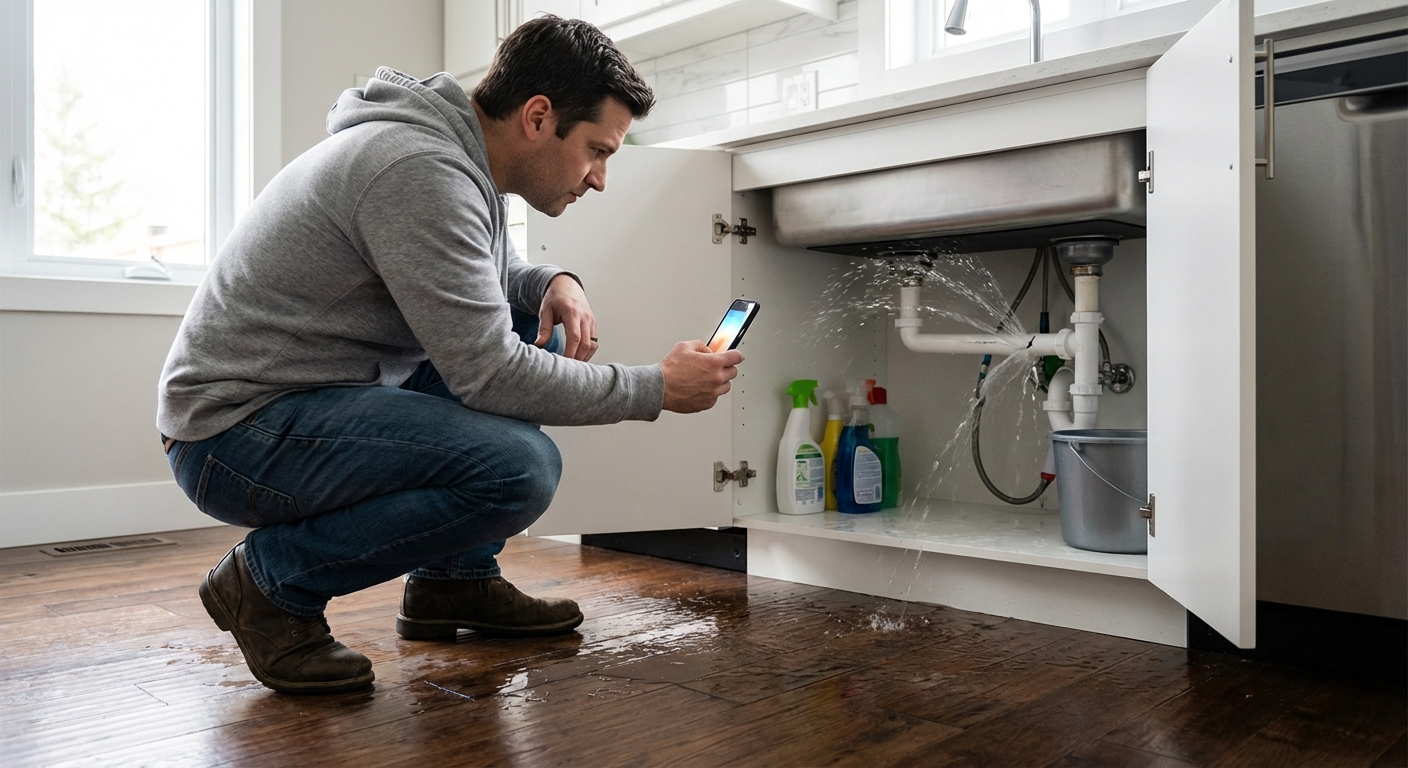
In 2026, most major insurers now use AI and computer vision to evaluate water damage claims, often through photo and video uploads from your phone. Modern claims systems use machine learning to automatically classify claims as weather-related vs non-weather water, estimate severity from images, and route the claim: straight-through processing for simple losses, adjuster review or field inspection for complex or high-severity ones. Industry data indicates straight-through processing across auto, homeowners, and commercial auto claims will exceed 65% by end of 2026. What this means for you:
- Faster decisions on simple claims, sometimes same-day payouts for clearly covered losses
- Fewer in-person inspections for small to mid-size losses, with adjusters relying on photos, drone imagery, and satellite views
- More scrutiny on cause, as AI cross-references weather data, prior claims, and image analysis to detect signs of gradual damage or fraud
- New water-specific risk scoring from tools like ZestyAI's Z-WATER, now approved in five states, which use computer vision on aerial imagery plus permit and infrastructure history to predict non-weather water losses
- Sensor data may be requested if you have smart leak detectors, since time-stamped logs can prove the suddenness of a loss
Documentation Checklist for a Water Damage Claim
Acting fast and documenting thoroughly is critical. Here's what you need:
| Documentation Type | Details to Capture |
|---|---|
| Photos & Video | Every affected room, close-ups of damage, the source (pipe, appliance, roof) |
| Written Timeline | When discovered, when reported, what steps you took |
| Plumber/Contractor Report | Written cause of loss, invoices, broken parts saved as evidence |
| Damaged Property Inventory | Item name, age, purchase price, serial numbers, photos |
| Repair & Mitigation Receipts | Emergency plumber, restoration company, dehumidifier rentals |
| Smart Sensor Logs | Timestamps showing when the leak started and how long it ran |
| Communication Log | Dates, adjuster names, claim numbers, summaries of all calls |
Preventive Measures That Protect Your Home and Lower Your Premium
Prevention is your best defense, both against water damage itself and against having a claim denied. Here are the most impactful steps in 2026:
Top 8 Preventive Actions
- Inspect pipes and appliance hoses annually. Replace rubber hoses with braided stainless steel; swap them out every 5 to 7 years
- Install smart water leak sensors under sinks, near water heaters, behind washers, and in basements
- Test your sump pump seasonally and install a battery backup for power outages
- Inspect your roof after every major storm and keep a record of repairs
- Clean gutters twice a year and ensure downspouts direct water away from your foundation
- Keep interior heat at 55°F minimum during winter, even when traveling
- Seal foundation cracks and ensure your yard grades away from the house
- Shut off the main water valve when leaving home for extended periods
Smart Home Discounts: New in 2026
A growing number of insurers now offer 5 to 15 percent premium discounts for homes with smart water leak detection systems. Automatic water shut-off devices like Flo by Moen and Phyn earn 5 to 15 percent premium discounts at participating carriers, with Hippo, Openly, Chubb, and Travelers running specific programs. Programs to know about:
- USAA Connected Home. Members who qualify for the Connected Home discount save an average of $133 per year on their homeowners insurance premium, or up to 8 percent, with the water leak discount requiring at least two smart water leak detectors enrolled and sharing data.
- Nationwide Smart Home. Nationwide's Smart Home program applies a 10% discount to water nonweather, water weather and theft coverages in California and a 5% discount to fire, a flat 5% on all perils in Washington, and pairs the discount with a free LeakBot water leak detection device.
- UPC Insurance tiered discounts. Level 1 offers a 5% discount for sensor-based leak detection with mobile alerts, Level 2 provides a 10% discount for a sensor-based system that automatically shuts off the main water supply, and Level 3 grants up to 15% for a flow-based system that monitors usage and auto-shuts the main.
- Amica and PURE. Both partner with Phyn, Flo by Moen, Leak Defense, and StreamLabs for premium credits and device subsidies on high-value homes
- State Farm. In some California ZIP codes, monitored leak detection is now required for coverage rather than just discounted
- Local utility rebates of up to $200 or 50 percent of device cost in some areas
Keep a Home Maintenance Log
One of the most overlooked claim defense tools is a simple maintenance log. Record dated notes and photos of every inspection, repair, and upgrade. If an insurer ever disputes whether damage was gradual or sudden, documented proof of routine maintenance supports your case and can mean the difference between a paid claim and a denial. Related coverage may also apply if the damage originated from your septic system or a covered mold event.
Frequently Asked Questions
Does homeowners insurance cover all water damage?
No. Homeowners insurance only covers water damage that is sudden and accidental and originates from inside the home or a covered peril like a storm. It does not cover flooding, gradual leaks, sewer backups (without an endorsement), foundation seepage, or damage caused by lack of maintenance. Many homeowners assume all water damage is covered, which is one of the most costly misconceptions in personal insurance.
Does home insurance cover a burst pipe?
Yes, in most cases. If a pipe suddenly bursts and damages your floors, walls, or personal property, your standard homeowners policy will typically pay for the resulting damage, but not for repairing the pipe itself. The key exceptions are frozen pipes in a home that wasn't properly heated, or burst pipes in a home that showed prior signs of neglect or deferred maintenance.
What's the difference between flood damage and water damage for insurance purposes?
Water damage (covered) comes from inside the home, like a burst pipe or appliance failure. Flood damage (not covered by standard homeowners insurance) refers to water that originates outside and travels over the ground before entering your home, such as overflowing rivers or heavy rainfall runoff. To cover flood damage, you need a separate flood insurance policy through the NFIP or a private insurer, with the NFIP averaging around $976 per year nationally in 2026.
How much does a sewer backup endorsement cost in 2026?
A water/sewer backup endorsement typically costs between $40 and $250 per year, with some carriers offering entry-level $5,000 coverage for as little as $40. Coverage limits generally range from $5,000 to $25,000 per occurrence, and some carriers now offer limits up to the full replacement cost of your home. Given that sewer backup cleanups average $3,000 to $15,000 (and severe cases can exceed $50,000), this endorsement is widely considered one of the best-value additions you can make.
What happens if my water damage claim is denied?
If your claim is denied, often because an insurer classifies the damage as gradual, maintenance-related, or flood-related, you have several options. First, request a written explanation of the denial and review it against your actual policy language. If the denial was based on aerial imagery or AI analysis alone, request a physical inspection. You can also hire a public adjuster or an attorney who specializes in insurance claims to advocate on your behalf. Maintaining strong documentation of maintenance and the incident itself is your best protection against unjust denials.