
Compare Home Insurance Plans in Ohio
Find your best options in less than 2 minutes



What Standard Home Insurance Does (and Doesn't) Cover for Sewer Lines
Your standard homeowners insurance policy is built around one central idea: sudden and accidental damage from a covered peril. Fire, lightning, windstorms, and vandalism are the kinds of events your policy was designed for. Sewer line failures almost never fit that mold.
In most cases, your standard homeowners policy will not cover sewer line repair or replacement. Standard homeowners insurance typically excludes damage to the underground sewer lateral outside your home when the damage comes from wear, roots, corrosion, or age. The pipe running from your home to the municipal sewer connection is your responsibility, and its most common failure modes are explicitly excluded from coverage.
The only scenario where a standard policy might pay out is if a covered peril directly causes the sewer line damage. For example, if a vehicle crashes into your yard and ruptures the line, or a tree falls and crushes an exposed section, your policy could respond under Coverage B (Other Structures), which is typically capped at 10% of your dwelling coverage limit.
Common exclusions under a standard homeowners policy include:
- Wear and tear, corrosion, or aging of pipes
- Tree root intrusion or clogs
- Ground movement, soil shifting, or settling
- Flooding, earthquakes, or poor maintenance
- Faulty installation or construction defects
In 2026, most residential sewer line replacements run $3,000 to $10,000, with per-foot pricing of $50 to $250 depending on method and access. Industry data pegs the national average around $3,319 for a typical residential lateral, though complex trenchless or deep excavation jobs regularly push $12,000 to $20,000. That makes this one of the most expensive uninsured repairs a homeowner can face. Learn more about what home insurance covers for plumbing to see other coverage gaps you may be exposed to.

Compare Home Insurance Plans in Ohio
Find your best options in less than 2 minutes
Sewer Backup Coverage vs. Sewer Line Coverage: What's the Difference?
This is where most homeowners get confused. There are actually two distinct types of sewer-related coverage, and they protect against completely different problems. Understanding this distinction could save you thousands of dollars.
Sewer Backup Coverage (Water Backup Endorsement)
Sewer backup coverage, sometimes called a water backup endorsement, protects against damage inside your home caused by sewage or wastewater that backs up through your drains, toilets, sump pump, or floor drains. Think of it as interior water damage protection.
This endorsement covers:
- Cleanup and remediation of sewage inside your home
- Damage to floors, walls, drywall, and personal belongings
- Temporary living expenses if your home becomes uninhabitable
It does not cover the actual repair or replacement of the underground pipe itself. In 2026, water backup endorsements typically cost $30 to $340 per year, with coverage limits between $5,000 and $25,000 depending on the carrier and your risk profile.
Sewer Line Coverage (Service Line Coverage Endorsement)
Sewer line coverage, also called service line coverage, is a separate endorsement that covers the physical repair or replacement of the underground utility lines on your property. This is the one that pays to dig up your yard, fix or replace the broken pipe, and restore your landscaping.

Protect your home with State Farm
Average Rate:
Homeowners who bundle and save with State Farm save an average of $1,000 per year!

You're in Good Hands® with Allstate
Average Rate:
Get comprehensive home coverage with flexible policy options.

Customize your home coverage
Average Rate:
Only pay for the coverage you need with personalized home insurance.

Smart coverage for your home
Average Rate:
Protect what matters most with award-winning home insurance.
How Service Line Coverage Endorsements Work
A service line endorsement is added directly to your existing homeowners insurance policy. It expands your coverage to include underground utility lines (including sewer, water, gas, electrical, cable, and telecom lines) that run between your home and the street connection.
What It Covers
When a covered line fails, this endorsement typically pays for:
- Excavation to access the damaged line
- Repair or replacement of the pipe
- Temporary repairs to prevent further damage
- Restoration of landscaping, driveways, or walkways disturbed during digging
- Additional living expenses if your home is temporarily uninhabitable
Coverage applies to causes that a standard policy would normally exclude. A service line endorsement may help pay for repairs if a covered line is damaged by blockage, bursting, or collapse, insects or rodents, growing tree roots, rust and corrosion, freezing, artificially generated electrical currents, or mechanical breakdown. These are, of course, the most common reasons sewer lines fail.
For a broader look at how these endorsements protect your property, see our guide on service line coverage for water and sewer lines.
2026 Costs and Coverage Limits
Pricing remains one of the best values in home insurance for consumers who understand what they need. Service line coverage typically costs $20 to $100 per year on top of your homeowners policy in 2026, with most quotes clustering between $30 and $60 annually for $10,000 to $25,000 in coverage. Deductibles are usually $500.
| Coverage Feature | 2026 Typical Range |
|---|---|
| Annual endorsement cost | $20 to $100/year |
| Per-occurrence coverage limit | $10,000 to $25,000 |
| Standard deductible | $500 |
| Excavation and landscaping | Typically included |
| Additional living expenses | Sometimes included |
For example, Liberty Mutual's service line endorsement offers a $12,000 coverage limit with a $500 per-occurrence deductible. American Family Insurance offers $10,000 in coverage with a $500 deductible for around $20 extra each year. Safeco commonly advertises around $30 per year for a comparable $10,000 limit, while Erie Insurance bundles service line coverage into its ErieSecure Plus (up to $10,000) and Select ($25,000) tiers.
For context, even a $7,800 sewer line repair would leave you paying only your $500 deductible with this endorsement in place. Given that the coverage often costs less than $50 per year, the return on investment is hard to argue with.
Which Insurers Offer It in 2026
Most major home insurers offer service line coverage as an add-on in 2026, including Allstate, American Family, Auto-Owners, Country Financial, Erie, Farmers, Farm Bureau, The Hanover, Hippo, Lemonade, Liberty Mutual, Mercury, Nationwide, Safeco, and State Farm. Progressive, Travelers, and Westfield also offer dedicated service line endorsements. Availability, limits, and coverage names vary by state, so check your declarations page for "Service Line Coverage" or "Buried Utility Lines." Some Florida insurers, such as Edison, only allow the endorsement when paired with Equipment Breakdown Coverage on an HO3 policy.
What Causes Sewer Line Damage and Who's Most at Risk?
Understanding why sewer lines fail helps you assess your own risk level and decide whether endorsement coverage makes sense for your home.
The Most Common Culprits
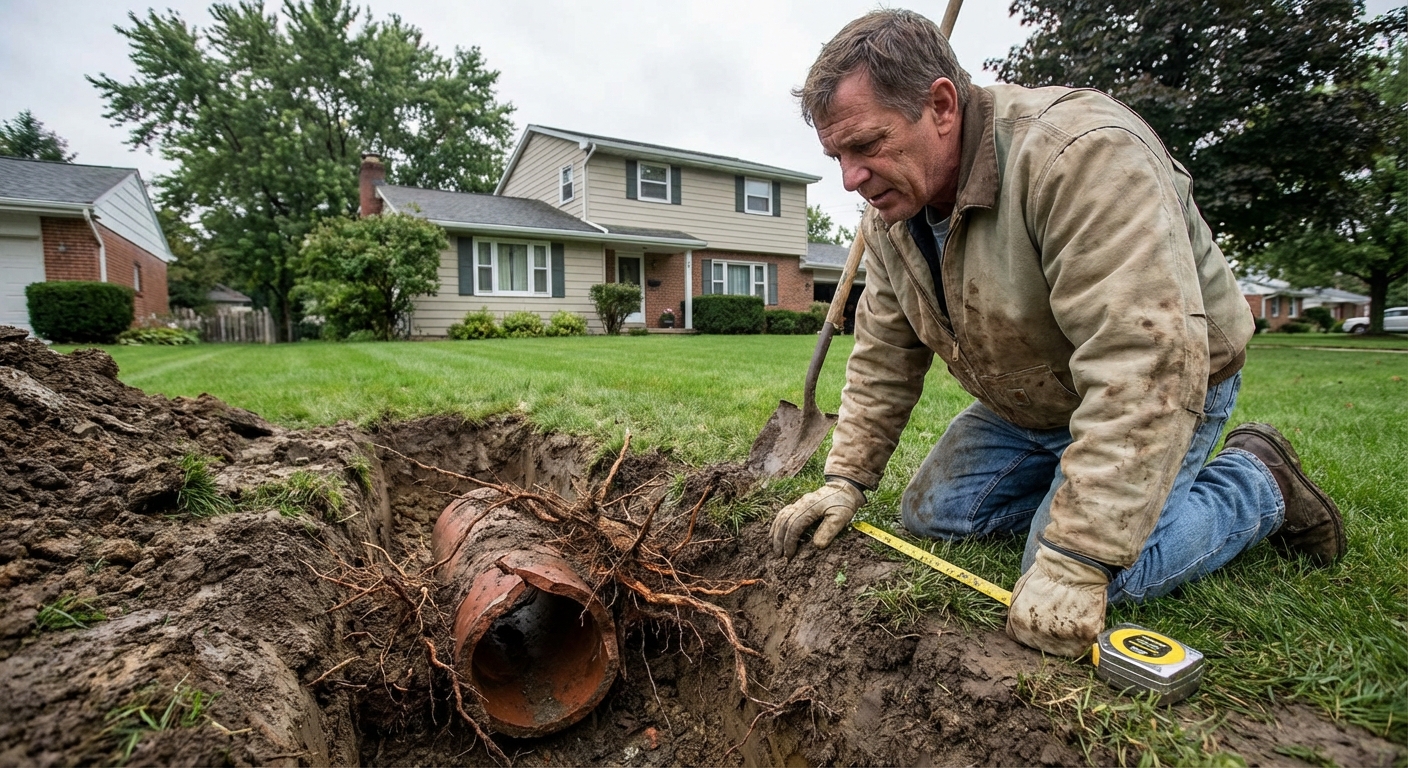
Tree Root Intrusion is the leading cause of sewer line damage. According to the U.S. Forest Service, tree roots account for more than 50% of all sewer blockages. Roots naturally seek moisture and can penetrate even tiny cracks or joints in underground pipes. Once inside, they expand rapidly, catching debris, restricting flow, and eventually cracking or collapsing the pipe entirely. Older homes with clay or cast iron pipes and mature trees nearby are especially vulnerable.
Aging and Pipe Deterioration is another major factor. Pipes made from clay, Orangeburg, or older cast iron materials corrode and decay over time. As these materials break down, they crack, collapse, or develop rough interior surfaces that trap waste and accelerate blockages. Recent industry data attributes roughly 55% of sewer line failures to roots, 25% to material deterioration, and 15% to soil shifting.
Ground Shifting and Soil Movement can cause pipes to sag, separate at joints, or crack outright. Freeze-thaw cycles, nearby construction vibrations, and seismic activity all contribute to soil movement that stresses underground pipes. Extreme weather across 2020 to 2026 has also increased surcharging events, worsening pressure on aging private laterals.
| Risk Factor | Highest Risk Homes |
|---|---|
| Pipe material | Clay, Orangeburg, or cast iron pipes |
| Home age | Built before 1980 |
| Landscaping | Mature trees near the home or sewer line |
| Location | Freeze-thaw climates, seismic zones |
| Soil type | Expansive clay soils or sandy/shifting soils |
Alternatives to Insurance Endorsements
If your insurer doesn't offer a service line endorsement, or you want additional protection, there are standalone options worth considering:
- Utility-sponsored service line warranties: Companies like Service Line Warranties of America partner with local utilities to offer sewer and water line protection plans, typically $6 to $13 per month.
- Home warranties: Broader service contracts that may bundle sewer line protection with in-home plumbing coverage. Dedicated home warranties with sewer line coverage average around $52 per month in 2026. Note that home warranties have waiting periods (typically 30 days) and specific exclusions.
These alternatives work best as supplements to, not replacements for, a proper homeowners insurance endorsement. If you're weighing your overall coverage strategy, our guide to septic system home insurance explains how these endorsements fit together with your standard policy for homes not on municipal sewer. Homeowners also facing basement or lower-level water risk should review our basement flooding insurance guide for related endorsements.
Frequently Asked Questions
Does homeowners insurance cover a collapsed sewer line?
Not under a standard policy. Collapsed sewer lines are almost always the result of aging, root intrusion, or ground movement, all of which are excluded from standard homeowners coverage. To be covered for a collapsed sewer line, you would need to add a service line coverage endorsement to your policy. Even then, coverage applies to lines on your property, not the municipal main under the street.
How much does it cost to add sewer line coverage to my homeowners policy in 2026?
A service line coverage endorsement typically costs between $20 and $100 per year in 2026, with most carriers charging around $30 to $60 annually for $10,000 to $25,000 in coverage. Given that a sewer line repair or replacement can easily cost $3,000 to $10,000, this is one of the most affordable and high-value endorsements available to homeowners. Some newer homes qualify for rates as low as $20 per year.
What's the difference between a sewer backup and a sewer line break?
A sewer backup occurs when wastewater flows backwards into your home through drains or toilets, causing interior water damage. A sewer line break refers to a physical failure of the underground pipe itself, often requiring excavation to repair. These are two separate problems that require two separate coverage endorsements: sewer backup coverage for interior damage and service line coverage for pipe repairs. You can learn more in our full water damage coverage guide.
Will home insurance cover tree root damage to my sewer line?
No. Tree root damage is explicitly excluded from standard homeowners insurance policies because it is considered a gradual, preventable issue rather than sudden and accidental damage. However, a service line coverage endorsement specifically includes tree root intrusion as a covered cause of loss, making it essential for homeowners with mature trees near their sewer line.
Are there coverage limits on service line endorsements?
Yes. Most service line endorsements have per-occurrence limits of $10,000 to $25,000, with deductibles typically set at $500. State Farm and American Family commonly cap coverage at $10,000, Liberty Mutual offers a $12,000 limit, and carriers like Travelers, The Hanover, and Erie's Select bundle offer higher limits up to $25,000. That may not be sufficient for complex repairs involving long pipe runs, deep excavation, or difficult soil conditions, so always review the policy limit and compare it against local repair cost estimates before choosing a plan.