
Compare Home Insurance Plans in Ohio
Find your best options in less than 2 minutes


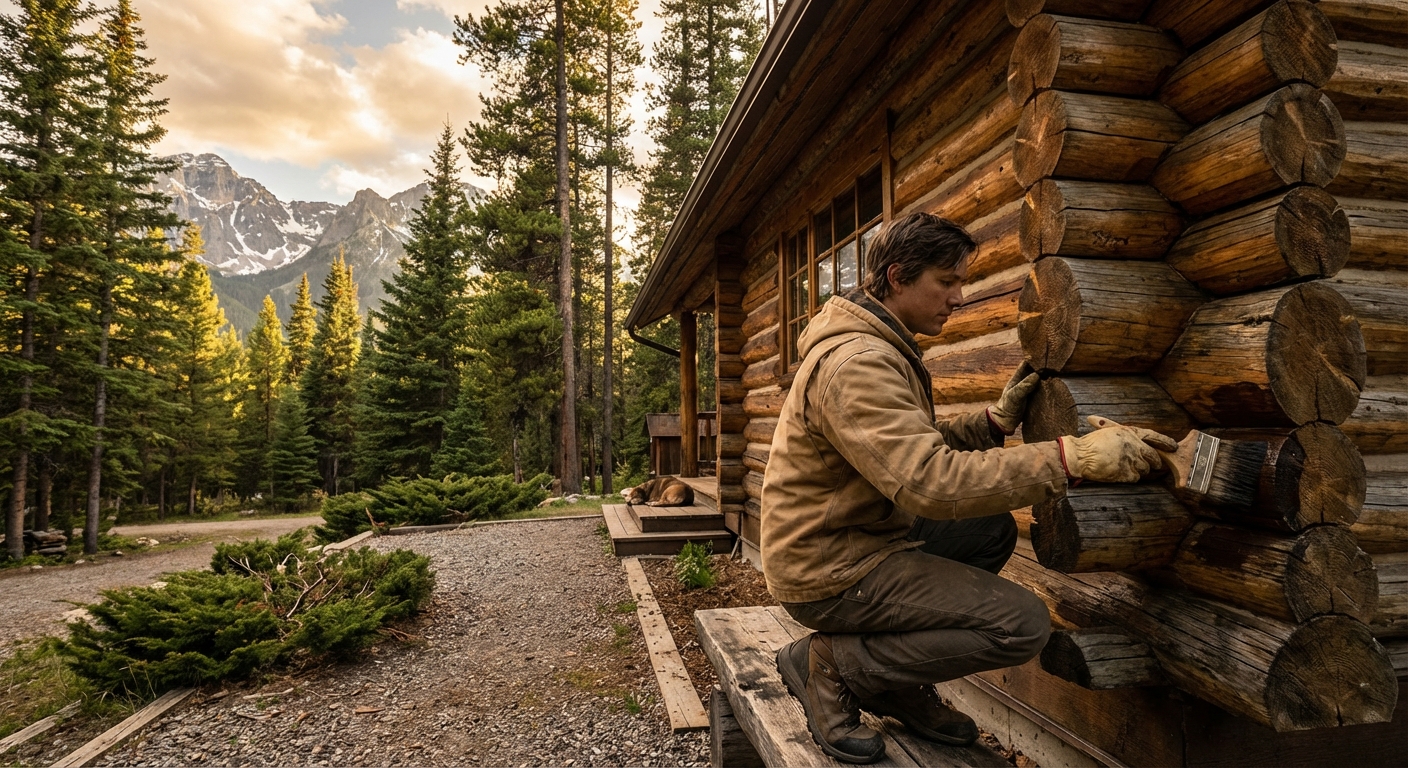
Why Log Home Insurance Costs More Than Standard Coverage
Log and timber frame homes are in a class of their own when it comes to construction, and insurers treat them that way. Unlike standard stick-built homes, log homes are built from specialty materials that cost significantly more to source, match, and install after a loss. That alone is enough to push premiums higher, but the cost differences run even deeper in 2026. Insurify data scientists project the average annual cost of home insurance will rise another 4%, to $3,057, by the end of 2026, following four consecutive years of rising premiums. Industry data indicates log home policies typically run 10% to 25% higher than a comparable stick-built home, and some insurers apply surcharges of 25% to 50% for remote, seasonal, or wildfire-exposed properties.
Specialty Construction & Higher Replacement Costs
The biggest driver behind elevated log home insurance premiums is replacement cost. When a log home sustains damage, replacing even a portion of it is a highly specialized job. Based on 2026 contractor data, individual sill-log replacement projects run $8,000 to $25,000 or more depending on the number of compromised logs and access difficulty, and full log home restoration lands at $12 to $30 per square foot of exterior wall.
Rebuilding an entire log home requires sourcing matched timber, hiring craftspeople who understand log construction, and accounting for the fact that aged, custom wood is nearly impossible to replicate perfectly. In 2026, log home rebuild costs range from $125 to $300 per square foot for typical builds, with custom handcrafted log homes reaching $500 per square foot or more. On average, log and timber frame homes cost 20 to 50% more to rebuild than comparable standard-frame homes of the same square footage. Log homes are generally more expensive to insure because they're constructed with expensive lumber or timber, and insurers consider them to be higher risk since they are often located in remote, hard-to-reach locations.
For a deeper look at how rebuild pricing works, see our guide on rebuild cost vs. home value and how construction cost inflation is impacting coverage.
Elevated Fire Risk
Logs are combustible, and that's an unavoidable fact. While thick solid logs actually have a slower initial ignition rate than thin stud framing, once they catch fire they burn longer and are far more difficult to extinguish. Insurers factor this in, particularly for homes in forested or mountainous areas where wildfire exposure is high.
This is compounded by the fact that most log homes sit in rural settings, often far from fire stations and hydrants. Insurers use fire protection class (FPC) ratings to measure a home's distance from emergency services, and rural log homes frequently land in the worst-rated categories, translating directly into higher premiums. In wildfire-prone states, log home premiums in high-risk zones have surged dramatically, and understanding wildfire coverage and costs is essential for owners in the western U.S. Learn more about how fire damage claims work before you need to file one.

Compare Home Insurance Plans in Ohio
Find your best options in less than 2 minutes
Finding Insurers Who Specialize in Log Homes
Standard home insurance carriers may technically offer coverage for log homes, but many use generic valuation tools that underestimate true replacement costs. A policy priced for a standard home could leave you tens of thousands of dollars short after a major loss.
Specialty Log Home Insurance Companies in 2026
A handful of companies specifically underwrite log and timber frame homes and understand the unique risks involved:
| Insurer | Specialty | Notable Feature |
|---|---|---|
| Log Homes Insurance (Roberts & Associates) | Log & timber frame homes in 44+ states | Builder's Risk during construction + dwelling coverage |
| National Real Estate Insurance Group (NREIG) | Log cabins, including rentals & vacant properties | CabinArmor program tailored to log construction and rental risks |
| OnGuard Insurance Services | Log cabin insurance through multiple carriers | Access to top-rated carriers that write log construction |
| Chubb / AIG Private Client | High-value log & custom homes | Guaranteed replacement cost available |
| State Farm / Farmers / USAA / American Family / Liberty Mutual / Nationwide / GEICO / Allstate | Log homes in lower-risk locations | Standard HO-3 with log home endorsements |
| E&S Carriers (Foremost, Openly, Westfield) | High-risk or hard-to-place log homes | Flexible underwriting for remote locations |
Some of the largest nationwide companies do offer policies for log and timber homes, such as State Farm, Farmers, USAA, and others, though some insurance companies may not offer coverage to log and timber homes. If a standard insurer declines to cover your log home or offers inadequate limits, an E&S insurer or specialty broker may be your best path to full coverage. Owners of higher-value custom builds should also review our guide to high-value home insurance, while owners struggling to find coverage should read about hard-to-insure home options.
Getting the Right Replacement Cost Coverage
When shopping for log home insurance, never settle for actual cash value (ACV) coverage. You want at minimum replacement cost value (RCV), and ideally extended replacement cost or guaranteed replacement cost coverage, which protects you even if rebuild costs exceed your policy's dwelling limit.
This matters especially for log homes because lumber inflation, tariff-driven material costs, and labor shortages can cause rebuild costs to spike sharply between the time you set your coverage limit and the time you actually need to file a claim. Understanding home insurance underwriting can help you present your log home in the best light, and using tools for calculating how much dwelling coverage you actually need is critical.

Protect your home with State Farm
Average Rate:
Homeowners who bundle and save with State Farm save an average of $1,000 per year!

You're in Good Hands® with Allstate
Average Rate:
Get comprehensive home coverage with flexible policy options.

Customize your home coverage
Average Rate:
Only pay for the coverage you need with personalized home insurance.
Smart coverage for your home
Average Rate:
Protect what matters most with award-winning home insurance.
Maintenance, Fire Prevention & Defensible Space
Insurers pay close attention to the condition and location of log homes. Neglected maintenance and poor fire preparation can result in higher premiums, coverage disputes, or even policy non-renewal.
Log Home Maintenance That Affects Insurability
Log homes require ongoing upkeep that standard homes simply don't. On average, log homeowners spend between $1,500 and $3,500 per year in log cabin maintenance costs (not including typical home maintenance costs like HVAC, plumbing, and electrical), but that can fluctuate depending on the age, size, and condition of the structure. More comprehensive restoration programs including inspection, touch-up staining, chinking repairs, cleaning, and weatherization can push annual budgets to $4,000 to $10,000. While insurers don't always mandate specific tasks in writing, demonstrating a solid maintenance record strengthens your position during underwriting, renewals, and claims.
Key maintenance responsibilities include:
- Chinking & sealing: The material between logs (chinking) prevents moisture intrusion and air infiltration. Touch-up work runs $3 to $8 per linear foot, while full removal and professional re-application costs $8 to $15 per linear foot. Neglected chinking leads to rot and structural damage, both of which insurers may deny claims for.
- Staining & sealing: Logs should be re-stained every 3 to 5 years to protect against UV damage, moisture, and wood-boring insects. In 2026, professional staining averages $1,200 to $2,400 per 1,000 square feet annually, with full exterior recoats on a 2,500 sq ft home running $3,500 to $5,500. Faded or cracked finishes are a red flag during insurer inspections.
- Annual inspections: Inspect logs each spring and fall for signs of rot, pest activity, cracking, and settling. Keep written records, as these can be invaluable if you ever need to dispute a denied claim. Professional log home inspections typically run $300 to $1,000 per visit.
- Roof maintenance: A well-maintained roof signals overall property health to underwriters and affects your premium tier. Learn more about how chimney and roof damage claims work.
For older log homes that haven't been maintained consistently, be aware that insuring an older home comes with its own set of underwriting hurdles, and log homes face even more scrutiny than standard aged properties.
Fire Prevention & Defensible Space
Because fire is the number-one risk insurers flag for log homes, proactive fire mitigation is one of the most impactful ways to lower your premiums and improve your insurability. In most wildfire-prone areas, California's Public Resources Code 4291 requires homeowners to maintain 100 feet of defensible space around the structure, and similar rules apply across many Western states. Insurers commonly offer premium discounts of 4% to 40% for properties that document compliance with wildfire mitigation standards, making mitigation one of the highest-ROI investments a log home owner can make.
Defensible Space Zones
| Zone | Distance | Action Required |
|---|---|---|
| Zone 0 (Immediate) | 0-5 feet | No combustible materials; replace wood mulch with gravel or pavers; clear roofs and gutters |
| Zone 1 (Lean, Clean & Green) | 5-30 feet | Remove dry brush, space trees 10+ feet apart, trim branches, move woodpiles out |
| Zone 2 (Reduced Fuel) | 30-100 feet | Grass ≤4 inches, thin vegetation, remove dead material, create horizontal/vertical spacing |
Additional Fire Prevention Steps That May Lower Premiums
- Install a Class A roof (metal, slate, or concrete tile), one of the most impactful upgrades for wildfire-zone discounts
- Add ember-resistant vents and screens to prevent ignition from flying embers
- Use tempered or multi-pane windows that resist heat fracture
- Apply fire-retardant treatments to exterior log surfaces
- Install and maintain smoke alarms on every floor and service chimney/flue annually
- Use thick logs (6+ inches) since these meet one-hour fire ratings per building codes and may qualify for underwriting credits
2026 California Wildfire Insurance Laws
Three wildfire-related bills, AB 888, SB 429, and AB 1, were signed in October 2025 and are in force from January 1, 2026 as part of a package of nine consumer-protection laws sponsored by the California Insurance Commissioner. AB 888 (California Safe Homes Act) funds fire-safe roofs and Zone Zero clearing, SB 429 supports the first publicly available wildfire loss catastrophe model, and AB 1 (Insurance and Wildfire Safety Act) requires regular updates to California's Safer from Wildfires insurance discount regulations. Log home owners in California should ask their carrier how their mitigation measures align with these discount frameworks.
Frequently Asked Questions About Log Home Insurance
Is log home insurance more expensive than regular home insurance?
Yes. Log home insurance typically costs 10% to 25% more than a standard homeowners policy, and some insurers apply surcharges of 25% to 50% for remote or wildfire-exposed properties. The primary reasons are higher replacement costs due to specialty materials and skilled labor, elevated fire risk from combustible wood construction, and the fact that most log homes are in rural areas far from fire stations. With the U.S. average homeowners premium projected to hit $3,057 in 2026, log home owners should expect to pay meaningfully more than a comparable stick-built home.
Can I use a standard HO-3 policy for my log home?
Some standard HO-3 insurers like State Farm, Farmers, USAA, Liberty Mutual, and American Family will write policies for log homes, but this is often not the best option. Generic policies tend to undervalue log home replacement costs, which can leave you severely underinsured after a major loss. If a standard insurer offers coverage, make sure the dwelling limit reflects true log construction replacement costs and consider adding an extended or guaranteed replacement cost endorsement. In many cases, a specialty high-risk home insurer will provide much better protection.
Does location affect my log home insurance rate?
Absolutely. Log homes in rural, forested, or mountainous areas face higher premiums due to greater distance from fire stations, exposure to wildfire, and limited emergency access. In 2026, California's FAIR Plan reached 696,562 policies and $768 billion in exposure by mid-year, with a 29.1% average rate increase taking effect on new and renewal policies starting October 15, 2026, while Nevada's new AB 376 law now permits insurers to exclude wildfire coverage entirely. Insurers use fire protection class ratings to assess this risk, and rural homes in the worst-rated categories may pay significantly more or struggle to find coverage from admitted carriers.
What maintenance do I need to do to keep my log home insured?
While policies rarely spell out a specific maintenance checklist, insurers evaluating log homes expect evidence of regular upkeep. This includes re-staining or sealing logs every 3 to 5 years, repairing chinking as needed, conducting annual pest and moisture inspections, and keeping the roof in good condition. Insurers may inspect the property and use its condition to determine premiums or even deny coverage. Keeping detailed records of all maintenance work is strongly recommended to support any future claims.
What is the biggest coverage mistake log home owners make?
The most common and costliest mistake is setting the dwelling coverage limit based on the home's market value or mortgage balance rather than its actual rebuild cost. Log homes cost 20 to 50% more to rebuild than standard homes, and standard online calculators don't account for custom log materials or specialized labor. Always get a professional appraisal by someone familiar with log construction, and opt for extended or guaranteed replacement cost coverage. Learn more about how much home insurance you really need to make the right call.
Is my log home covered if I only use it seasonally?
Not always. Standard homeowners policies can void or reduce coverage if the home is unoccupied for more than 30 to 60 days at a time, and many log cabins are used as vacation properties. If your log home is a second home or seasonal residence, you likely need a dedicated policy. Read our guide on seasonal home insurance for vacation properties and vacant home insurance coverage to understand the differences and avoid dangerous gaps.