
Compare Home Insurance Plans in Ohio
Find your best options in less than 2 minutes



What Is Excess & Surplus (E&S) Home Insurance?
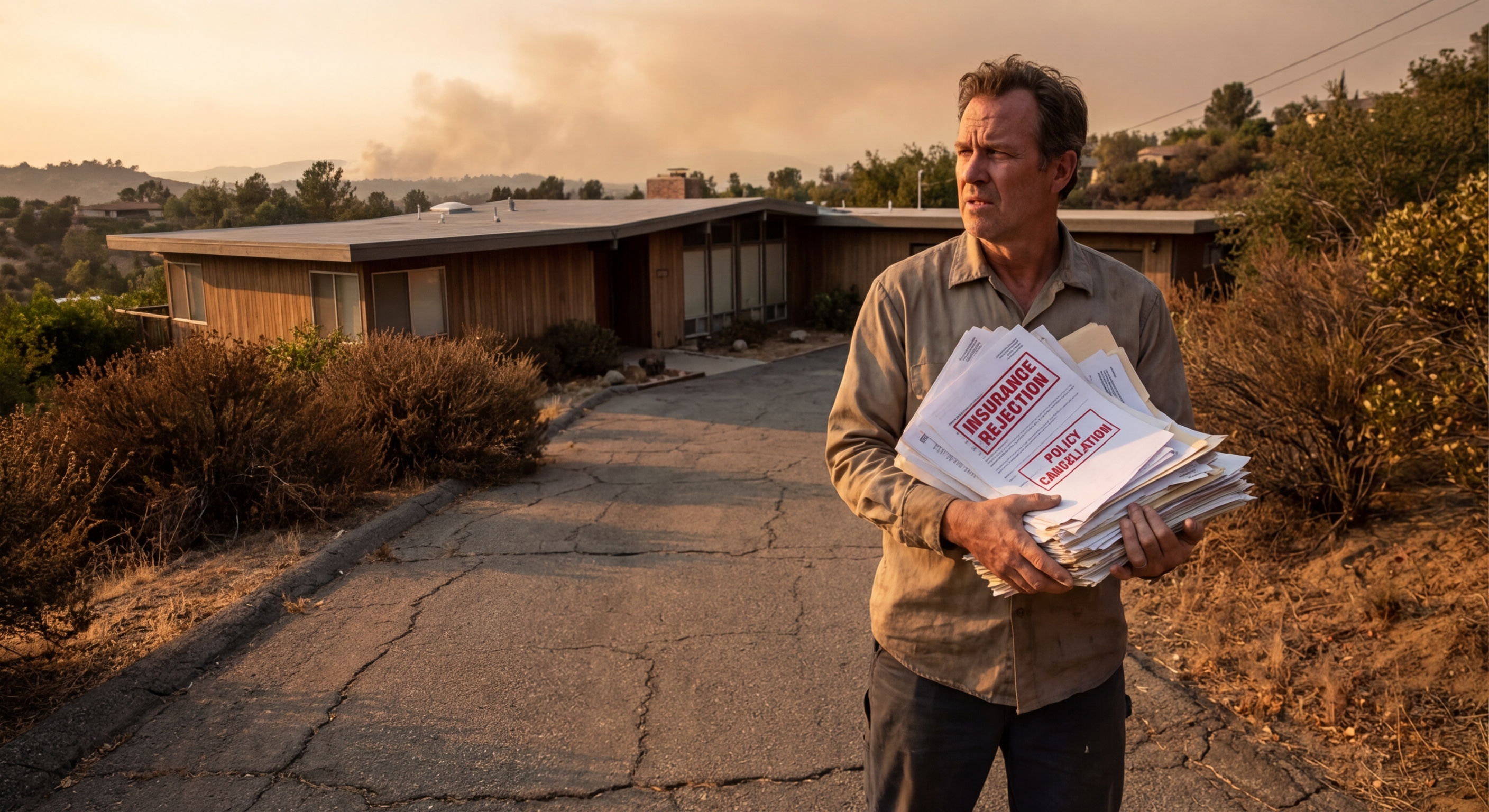
Excess and surplus (E&S) insurance, also called surplus lines or non-admitted insurance, is a specialized type of coverage designed for homes that standard insurance companies refuse to insure. When a property presents risks that are too high, too unusual, or too costly for traditional carriers to underwrite, E&S insurers step in as the market of last resort.
Unlike standard "admitted" insurers, E&S carriers are not licensed in your state in the traditional sense. Instead, they operate through licensed surplus lines brokers and are subject to far less state regulation. This gives them the flexibility to cover properties that would otherwise go uninsured, but it also comes with important trade-offs homeowners must understand.
Admitted vs. E&S Insurance: Key Differences
The single most important distinction between these two types of insurance is regulatory oversight. Admitted insurers must file their rates and policy forms with state regulators for approval, follow strict solvency rules, and participate in state guaranty funds. E&S carriers are not bound by most of these requirements.
Here's what that means in plain language:
- Rate regulation: Admitted carriers must justify every rate increase to state regulators. E&S carriers can price their policies however the market demands, which often means higher premiums for high-risk homes.
- Policy forms: Standard insurers use pre-approved, standardized policy language. E&S policies are custom-drafted, which can mean broader coverage in some areas but also unexpected exclusions.
- State guaranty fund: If an admitted insurer goes bankrupt, your state's guaranty fund covers your claims up to a set limit. E&S policyholders have no such safety net if their insurer becomes insolvent.
- Cancellation rules: Admitted carriers must give 30 to 65 days notice before canceling your policy. E&S carriers can cancel with as little as 5 days notice in some states.
For a broader look at how these coverage tiers compare, our guide on high-risk home insurance walks through every option available when standard carriers turn you down.

Compare Home Insurance Plans in Ohio
Find your best options in less than 2 minutes
Who Needs E&S Home Insurance?
E&S insurance is no longer a niche product. In California alone, surplus lines homeowners policies passed 300,000 in 2025, an unprecedented level for the state, up from roughly 50,000 in 2023. Nationally, some brokers now report that E&S products account for more than 16% of new homeowners placements in California, Florida, and Texas combined, up from under 2% in 2023. You may need an E&S policy if your home falls into one of the following categories.
High-Risk Property Types
| Property Type | Why Standard Carriers Decline |
|---|---|
| Wildfire zone homes (CA) | Catastrophic loss exposure |
| Coastal / hurricane-prone homes (FL, TX) | Extreme wind and storm surge risk |
| Homes with prior claims history | Pattern of losses signals ongoing risk |
| Older homes with outdated systems | Knob-and-tube wiring, galvanized plumbing |
| High-value / luxury properties | Replacement cost exceeds standard limits |
| Vacant or seasonal homes | Higher risk of theft, vandalism, damage |
| Homes with hazardous features | Trampolines, certain dog breeds, pools without fencing |
| Unique construction | Log cabins, dome homes, non-standard materials |
Understanding why some homes are hard to insure can help you identify which features on your property are most likely to trigger a decline from admitted carriers. See our guide on hard-to-insure homes for detail. If you've already been dropped, our guide on home insurance non-renewal explains your rights and next steps.
Homeowners Most Likely to Need E&S Coverage
- California homeowners in wildfire-prone areas after major insurers exited the market
- Florida residents facing sky-high premiums or non-renewals after hurricane seasons
- Texans in storm-prone or Gulf Coast areas
- Buyers purchasing a fixer-upper or distressed property
- Owners of historic homes or older homes built with non-standard materials
If your current insurer just dropped you, our guide on what to do when your insurer leaves covers your next steps in detail. You should also review common denial reasons to understand whether any fixable issues are pushing you into the surplus lines market.

Protect your home with State Farm
Average Rate:
Homeowners who bundle and save with State Farm save an average of $1,000 per year!

You're in Good Hands® with Allstate
Average Rate:
Get comprehensive home coverage with flexible policy options.

Customize your home coverage
Average Rate:
Only pay for the coverage you need with personalized home insurance.

Smart coverage for your home
Average Rate:
Protect what matters most with award-winning home insurance.
Why E&S Insurance Is Booming in California, Florida & Texas
The E&S market has exploded in recent years, and nowhere is that more visible than in the three largest states for catastrophic risk. E&S homeowners direct premiums written surged 29.5% to $4.14 billion in 2025, the third consecutive year of increases exceeding 20%. Meanwhile, the broader U.S. E&S market reached $105.31 billion in direct premiums written in 2025, but growth slowed to 7.8%, the lowest rate in eight years.
California: Wildfire Risk Is Reshaping the Market
Following devastating wildfire seasons, State Farm stopped writing new California homeowners applications in May 2023 and Allstate paused new business in November 2022. California homeowners in fire-risk areas now typically face three options: the state's FAIR Plan (a last-resort pool), the E&S market, or going uninsured.
Total surplus lines homeowners policies in California spiked past 300,000 in 2025, a level without precedent in the state's history. In the first half of 2025 alone, surplus lines homeowners transactions surged 119% year over year, with roughly 171,551 policies written compared to about 78,000 in the same period a year prior. What began as a rebound from pandemic-era disruption hardened into a structural shift by 2024, and by 2026 has become a full-scale realignment. Interestingly, the portfolio-wide wildfire exposure of California's E&S homeowners book has fallen sharply, from 0.44 on a standardized hazard metric in 2020 to just 0.20 in 2025, suggesting the E&S market is now absorbing more ordinary homes, not just extreme-risk properties.
The California FAIR Plan has grown just as dramatically, reaching roughly 696,562 policies with $768 billion in exposure by mid-2026, though quarterly growth slowed to just 2.4% in Q1 2026, down sharply from the 35,000 to 50,000 policies added each quarter through 2024 and 2025. Its approved 29.1% rate increase takes effect October 15, 2026. Encouragingly, Farmers eliminated its cap on new California homeowners policies in late 2025 and plans to directly market to about 300,000 consumers in wildfire-affected areas in 2026, while Travelers and other carriers have filed expansion plans under the state's Sustainable Insurance Strategy. For the latest, see our California wildfire insurance guide.
Florida: Hurricane Exposure Pushes Premiums Sky-High
Florida remains one of the most expensive U.S. states for homeowners insurance, but relief is finally arriving. Citizens Property Insurance, the state's insurer of last resort, cut homeowners multiperil rates by an average of 8.8% and wind-only rates by 5.5% effective July 1, 2026, the first personal-lines rate reduction since 2015. Some Broward County policyholders saw decreases as steep as 14.1%. High-risk coastal and barrier island properties still commonly land in the E&S or Citizens residual market, often paying $6,500 to $11,000+ per year depending on wind exposure. Florida surplus lines HO-3 policy counts also grew roughly 22% from 2024 to 2025, matching the pattern seen in California.
Texas: Storm Risk + Regulatory Pressure
Texas is now one of the top five most expensive states for home insurance. Consumer analyses place the Texas statewide average anywhere from $3,291 per Texas Department of Insurance filings to $4,915 per NerdWallet's 2026 data, with most $300,000-coverage policies landing between $3,400 and $4,500 per year. E&S carriers are heavily used in Gulf Coast wind zones and on repeatedly damaged properties. Coastal Texas E&S homeowners policies commonly run $5,000 to $10,000+ per year depending on wind and hail exposure, with some barrier-island properties running higher when separate TWIA windstorm coverage is layered on. For homes on or near the coast, our coastal home insurance guide explains how wind and hurricane deductibles can add thousands to your claim-time exposure.
What Does E&S Home Insurance Cost in 2026?
E&S insurance is almost always more expensive than standard admitted coverage, though the gap is narrowing in some markets. Here's why:
- Higher underlying risk: E&S covers properties that standard insurers rejected, meaning the statistical probability of a claim is greater.
- No rate regulation: E&S carriers can price freely without state approval, and smaller risk pools mean less diversification.
- Surplus lines taxes and fees: States charge a surplus lines tax typically between 1% and 6% of premium, plus stamping fees where applicable. California charges 3% plus a 0.18% stamping fee, Florida charges 4.94% plus a 0.06% service fee, and Texas charges 4.85% plus a 0.04% stamping fee. Alabama, Oklahoma, and South Carolina sit at the top of the range at 6%.
- Custom underwriting: Every E&S policy is individually underwritten, which takes more work and costs more to produce.
The 2026 national average for admitted homeowners insurance is roughly $2,490 to $3,057 per year depending on the source and coverage level, with Insurify projecting a further 4% rise by year-end 2026. For comparable E&S coverage on a high-risk home, expect to pay meaningfully more. That said, personal lines rate increases are moderating compared to the double-digit hikes of 2023 and 2024, and AM Best revised its 2026 E&S outlook to Stable on November 18, 2025 to reflect the shift toward softening rates and easing capacity constraints.
Also review common home insurance exclusions before you buy, since E&S policies often layer in additional exclusions beyond a standard HO-3 form.
Is E&S Insurance Reliable? Addressing Common Concerns
Many homeowners worry that an E&S policy from a non-admitted insurer won't be there when they actually need to file a claim. Here's what the data and industry experts say.
Do E&S Insurers Actually Pay Claims?
Yes. Reputable E&S carriers have strong track records of paying claims. According to the NAIC, the insolvency rate of surplus lines insurers is historically low thanks to state-based solvency monitoring, and surplus lines brokers are required to vet the financial stability of carriers before placing business with them. Many of the biggest names in E&S insurance, such as Lexington Insurance (an AIG company), Lloyd's of London syndicates, Tokio Marine HCC, and other specialty carriers, have decades of claims-paying experience. Recent data show U.S. insurers account for roughly three-quarters of total surplus lines premium, with Lloyd's syndicates and non-U.S. insurers making up the balance.
That said, vetting your carrier is essential. Always look for:
- A.M. Best rating of A- or better
- Listing on your state's list of eligible surplus lines insurers (California's LASLI list was last updated August 10, 2026)
- A licensed, experienced surplus lines broker placing your policy
Your home insurance underwriting profile also plays a role in which E&S carriers will accept your risk, so make sure your CLUE report and property records are accurate before applying.
The Bottom Line on Reliability
E&S insurance is a legitimate and necessary part of the insurance ecosystem. The risk is not that E&S carriers don't pay claims. It's that you have fewer legal safeguards if something goes wrong. If your admitted insurer mishandles your claim, you can file a complaint with your state insurance department and pursue regulatory recourse. With an E&S carrier, that recourse is more limited.
Homeowners who need coverage for vacant properties or seasonal second homes often end up in the E&S market as well, so the same vetting rules apply.
Frequently Asked Questions About E&S Home Insurance
What is the difference between admitted and non-admitted (E&S) home insurance?
Admitted insurers are fully licensed by your state, must follow state-approved rates and policy forms, and participate in the state guaranty fund that protects policyholders if the insurer becomes insolvent. Non-admitted (E&S) insurers operate outside that regulatory framework, with more flexibility in what they cover and how they price it, but policyholders give up those consumer protections in exchange. Both can pay claims effectively, but the safeguards protecting you differ significantly.
How do I know if I need E&S insurance in 2026?
You'll typically need E&S insurance if you've received declination letters from standard admitted insurers, if you live in a high-risk area like a California wildfire zone or a Florida hurricane corridor, or if your home has unique features that standard underwriting can't accommodate. With E&S homeowners premiums growing nearly 30% in 2025 and California surplus lines policies exceeding 300,000, more homeowners than ever are being placed in this market. Your best first step is working with a licensed surplus lines broker who can assess your situation.
Is E&S home insurance more expensive than regular homeowners insurance?
Yes, almost always, though the premium gap is narrowing in some markets as new capacity enters the E&S space. E&S policies cover higher-risk properties with less regulatory oversight, which means carriers price in more uncertainty. You'll also pay surplus lines taxes (typically 1% to 6% of premium) plus stamping fees, service fees, and broker fees not present in standard policies. In California specifically, the average assessed value of newly written surplus lines homes has fallen as more mainstream properties enter the surplus market.
Can I switch back to a standard admitted insurer after getting E&S coverage?
Yes, if your home's risk profile improves or market conditions change, you may be able to return to the admitted market. Farmers Insurance lifted its monthly cap on new California homeowners policies in late 2025 and plans to directly market to about 300,000 consumers in wildfire-affected areas in 2026. Travelers, Mercury, AAA/CSAA, and other carriers have also filed expansion plans under California's Sustainable Insurance Strategy. Home improvements like a fire-resistant roof, updated electrical, or defensible space around wildfire zones can also help.
What happens to my E&S policy if my insurer goes bankrupt?
Unlike admitted insurance, E&S policies are not backed by your state's guaranty fund. If your E&S carrier becomes insolvent while your policy is active, your unpaid claims may not be covered beyond whatever assets the carrier has. That's why it's critical to choose an E&S carrier with a strong A.M. Best financial strength rating (A- or better) and to work with a broker who vets carrier stability before placing your policy.