
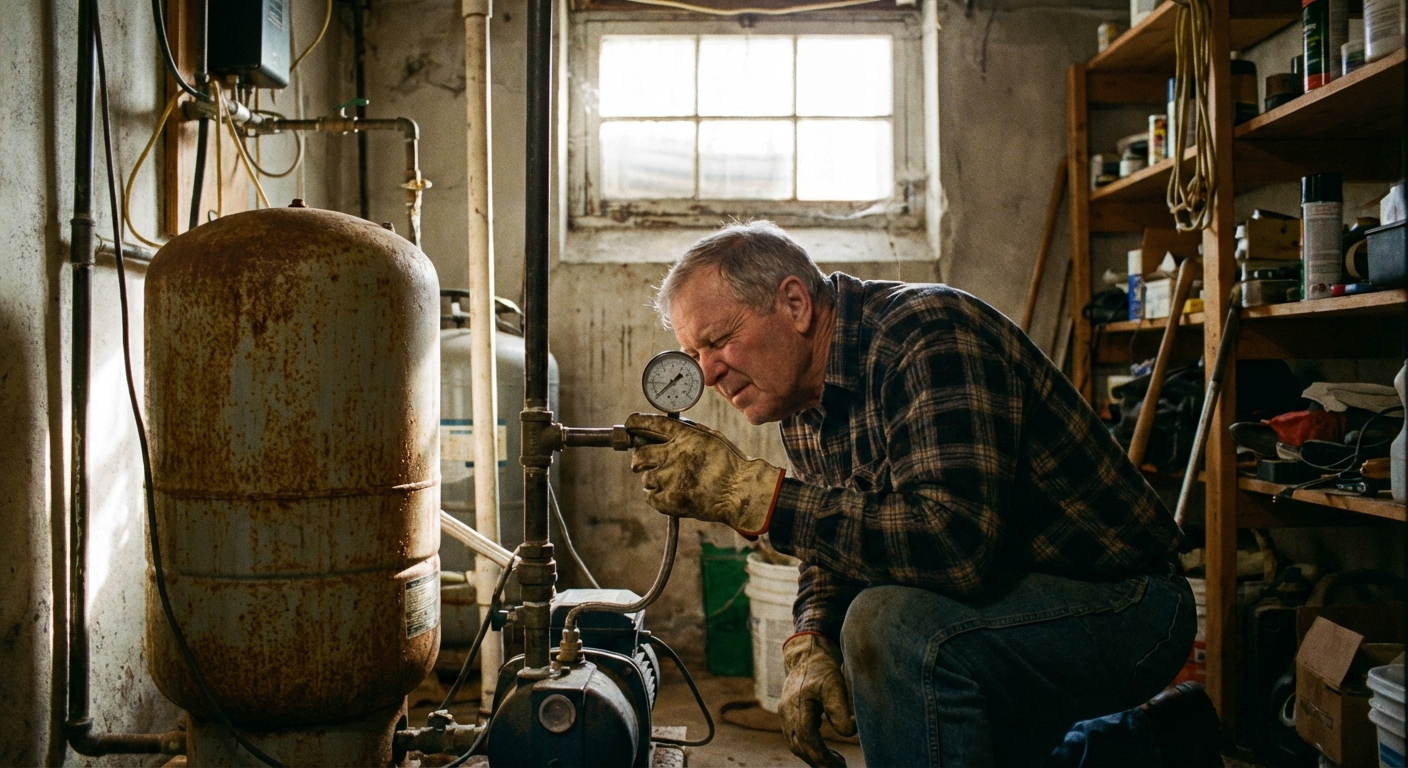
Common Well Pump Problems & What They Mean
Your well pump is the engine behind every drop of water in your home, so when something goes wrong, it's critical to identify it fast. Most failures fall into four clear categories, each with distinct causes and fixes. According to 2026 failure analysis data, about 67% of failed pumps showed reduced pressure 2 to 6 months before failure, giving homeowners a wide window to act.
No Water at the Faucet
Turning on a tap and getting nothing is alarming, but don't panic. It's often a simple electrical issue. Start by checking your circuit breaker for a tripped double-pole breaker labeled "well" or "pump." A faulty pressure switch or a burned-out motor are also leading culprits. If there's been a recent power surge or outage, that's almost always the first thing to investigate.
Low Water Pressure
Weak showers, slow-filling appliances, and sluggish faucets are all signs of low pressure. Causes include clogged pipes or filters, a malfunctioning pressure switch, sediment buildup, a declining water table, or an aging pump that's beginning to fail. Low water pressure issues aren't always related to the pump itself. Your entire plumbing system can contribute.
Short-Cycling (Pump Turning On and Off Rapidly)
Short-cycling happens when your pump kicks on and off in rapid succession. The most common cause is a waterlogged pressure tank. When the tank loses its air charge, the pump works overtime with no stored reserve, causing excessive wear and spiking energy bills. 2026 service data shows frequent cycling appears in roughly 58% of failures, typically 1 to 4 months before breakdown. A faulty pressure switch, plumbing leaks, or an undersized tank can trigger the same behavior.
Noisy Operation
Grinding, humming, or banging sounds from your pump or pressure tank signal mechanical wear. Failing bearings, worn impellers, or debris caught inside the system are common culprits. Air sputtering from faucets, where water comes out in bursts rather than a steady stream, usually means the pressure tank's air bladder is leaking.

Find Trusted & Licensed Plumbers in Ohio
Get matched with companies for your specific needs
Well Pump Troubleshooting: A Step-by-Step Guide
Before calling a professional, there are several checks you can safely perform yourself. Always turn off power at the breaker before inspecting wires or internal components.
Step 1: Check the Circuit Breaker & Power Supply
Locate your electrical panel and confirm the well pump breaker hasn't tripped. Flip it fully off, wait 30 seconds, then reset. Also check the power switch near the pressure tank.
Step 2: Inspect the Pressure Switch
The pressure switch is typically mounted on a pipe near the pressure tank. With power on briefly, tap it gently with the handle of a screwdriver. No response or visible burn marks means it likely needs replacement. This is a very affordable fix, usually $45 to $175 including labor in 2026.
Step 3: Test the Pressure Tank
Find the air valve (similar to a tire valve) on the top of the tank. Shut off water to the house, drain the lines, then test the air pressure. It should read 2 PSI below the pump's "cut-in" pressure (e.g., 28 PSI if the pump turns on at 30 PSI). If water sprays out when testing, the tank is waterlogged and needs to be drained, recharged, or replaced.
Step 4: Monitor the Pressure Gauge
With no water running, the gauge should read between 40 to 60 PSI. A reading that drops rapidly to zero every few seconds indicates short-cycling. A gauge stuck at zero with the pump running may point to a failed pump motor or a broken check valve.
Step 5: Check for Leaks & Clogged Filters
Inspect all visible pipes and fittings for drips. Install or clean a sediment filter if your water has been cloudy. A plumbing system-wide water pressure diagnostic can help identify whether the problem originates at the pump or elsewhere in your home.
Submersible vs. Jet Pump: Key Differences
Understanding which type of pump you have is essential for proper troubleshooting and repair decisions. The two most common residential types are submersible pumps and jet pumps.
Submersible pumps push water up from below, making them far more efficient and consistent at greater depths. Industry comparisons show submersibles often use only around 500 watts compared to 800 to 2,000 watts for jet pumps, cutting energy use roughly in half. Jet pumps use suction to pull water, which becomes increasingly inefficient beyond 25 feet. For most modern homes with deep wells, a submersible pump is the better long-term investment. If you ever experience a plumbing leak or water pressure drop alongside pump issues, consider that both systems may be involved.
Pressure Tank: The Unsung Hero
The pressure tank works alongside your pump to maintain steady water pressure and reduce the number of times the pump cycles on and off. A healthy pressure tank holds an air bladder that provides pressurized water reserves between pump cycles.
Signs your pressure tank is failing:
- Pump cycling on/off every few seconds
- Waterlogged tank (tank feels completely full/heavy)
- Air bladder rupture (water in the air valve)
- Pressure fluctuations throughout the day
Replacing a pressure tank typically costs $450 to $1,500 installed in 2026, depending on tank size and labor rates. A plumbing inspection can confirm whether the tank or the pump itself is the root cause.
Well Pump Repair Costs, Lifespan & When to Replace
Typical Repair & Replacement Costs (2026)
| Service | Average Cost Range |
|---|---|
| Pressure switch repair/replacement | $45 – $175 |
| Pressure tank replacement (installed) | $450 – $1,500 |
| Well pump repair (average) | $300 – $600 |
| Pump motor repair | $175 – $1,400 |
| Shallow jet pump replacement (installed) | $300 – $1,400 |
| Deep jet pump replacement (installed) | $800 – $2,200 |
| Submersible pump replacement (installed) | $1,000 – $2,800 |
| Constant-pressure pump replacement | $2,900 – $5,000 |
| Well inspection | $285 – $515 |
National 2026 data shows the average well pump replacement runs roughly $1,800 to $1,900, with a typical range of $975 to $2,825. Costs vary by region, well depth, labor rates, and required wiring or pipework. Always get at least 2 to 3 quotes.
How Long Does a Well Pump Last?
Most well pumps last 8 to 15 years, though high-quality submersible pumps with proper maintenance can stretch to 15 to 25 years. Jet pumps above ground typically fall on the shorter end, around 7 to 12 years, because they're exposed to surface conditions. Factors like water quality (hard water, sand, or sediment), daily usage demand, well depth, and electrical surges all affect how quickly a pump ages.
Repair vs. Replace: How to Decide
A good rule of thumb: if your pump is past the 10-year mark and you're facing a repair that costs more than half the price of a new unit, replacement is almost always the smarter financial move. Newer pumps are also more energy-efficient, which means long-term savings on your electric bill. 2026 data shows about 52% of failed pumps had higher-than-normal electricity bills in the months leading up to failure, so rising costs are an important warning sign.
If you're unsure about the scope of the issue, a professional plumbing inspection will confirm exactly what needs to be addressed. Similarly, if a sump or ejector pump is also part of your water management system, have it checked at the same time.
Well Pump Maintenance: 5 Tips to Extend Pump Life
Routine maintenance is the best way to avoid costly emergency repairs. Here's what every well owner should do:
- Schedule annual inspections. Have a licensed technician check the pressure tank, electrical connections, seals, and water quality once per year. High-usage households (large families, irrigation, livestock) should consider twice-yearly checkups.
- Monitor pressure monthly. Use a gauge to verify steady readings. Short-cycling or pressure swings are early warning signs.
- Test water quality every 6 to 12 months. Sediment, minerals, and contaminants wear down pump components faster than anything else.
- Protect against freezing and power surges. In cold climates, insulate pipes and use heat tape. Install a surge protector to defend the motor against lightning strikes and grid spikes.
- Keep a maintenance log. Document service dates, pressure readings, and any unusual behavior. This helps professionals diagnose issues faster and can improve resale value.
Frequently Asked Questions
How do I know if my well pump is failing?
The most common signs include no water at the faucets, significantly reduced water pressure, the pump cycling on and off rapidly, sputtering air mixed with water, and an unexplained spike in your electric bill. Strange grinding or humming sounds from the pressure tank area are also red flags. 2026 industry data shows roughly 73% of failures display warning signs 1 to 6 months in advance, so acting on early symptoms can prevent a complete breakdown.
What is the most common cause of well pump failure?
Electrical problems, including tripped breakers, a faulty pressure switch, or a burned-out motor, are among the most frequent causes of well pump failure. A waterlogged pressure tank is also extremely common and is often misdiagnosed as a pump problem. In areas with poor water quality, sediment and mineral buildup can clog the system and overstress the motor over time, accounting for sediment-related issues in about 28% of failures.
Can I repair my well pump myself?
Homeowners can safely perform basic troubleshooting steps like checking the circuit breaker, testing the pressure switch, and checking the pressure tank's air charge. However, submersible pump repairs require pulling the pump from deep underground, which involves high voltage and physical risk. This should always be handled by a licensed professional. Attempting DIY submersible repairs without experience can result in injury or cause more expensive damage.
How much does it cost to replace a well pump in 2026?
The national average to replace a well pump in 2026 is roughly $1,800 to $1,900, with most homeowners paying between $975 and $2,825 installed. Shallow jet pumps run $300 to $1,400, deep jet pumps cost $800 to $2,200, and submersible pumps typically run $1,000 to $2,800 installed. For deep wells over 150 feet or constant-pressure systems, total costs can exceed $5,000. Always get multiple quotes before committing.
How can I extend the life of my well pump?
The most effective ways to extend pump life include scheduling annual professional inspections, monitoring pressure monthly, testing water quality every 6 to 12 months, installing a sediment filter, and protecting pipes from freezing in cold climates. Adding a surge protector and avoiding excessive water usage that causes short-cycling also reduces wear significantly. With proper care, a quality submersible pump can last 15 to 25 years or more.