
Compare Home Insurance Plans in Ohio
Find your best options in less than 2 minutes



What Home Insurance Covers and What It Doesn't
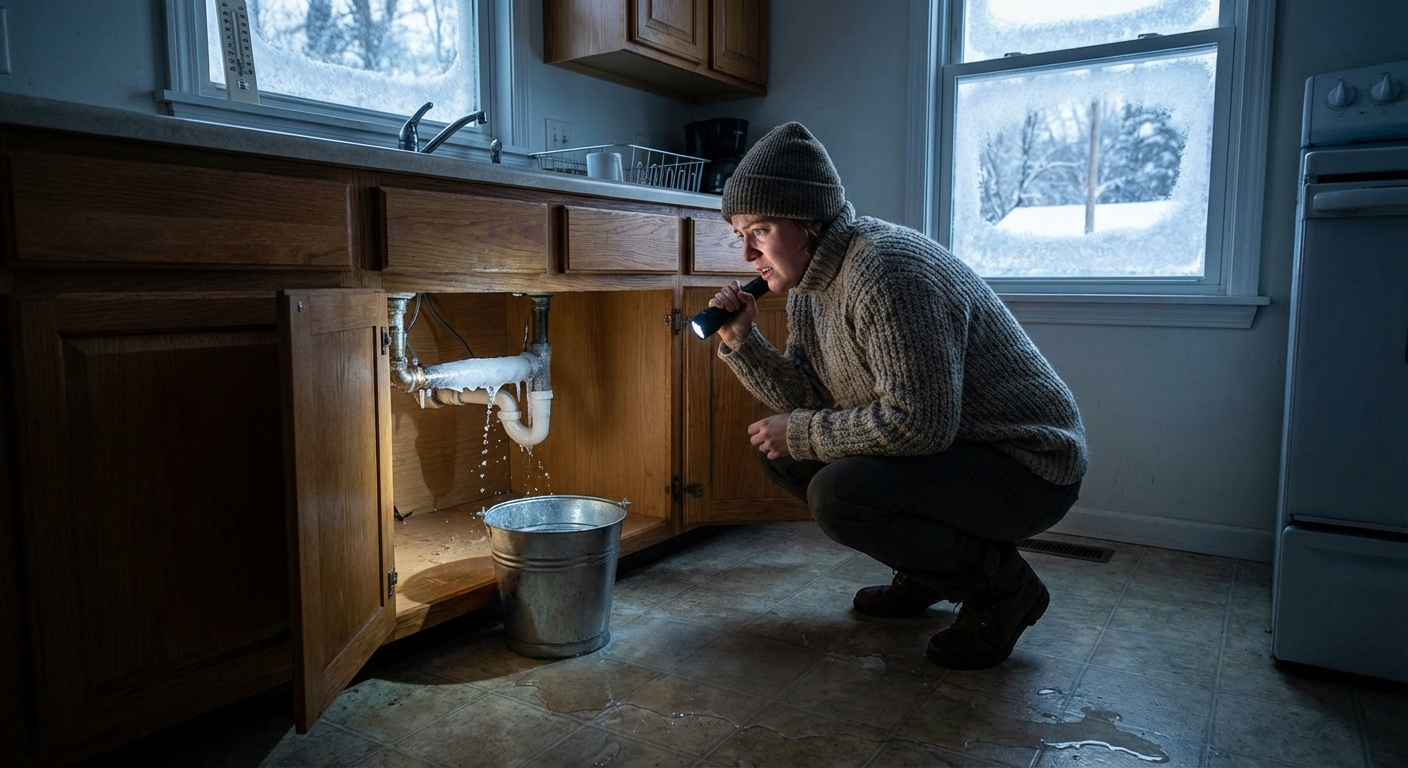
Standard homeowners insurance does cover burst pipe damage, but only under very specific conditions. The golden rule is this: the damage must be sudden and accidental. A pipe that freezes during an unexpected cold snap and bursts overnight is generally a covered event. A pipe that slowly corrodes over years and eventually gives out is not.
Here's a clear breakdown of what falls on each side of that line:
| Scenario | Covered? |
|---|---|
| Pipe bursts overnight during extreme cold | ✅ Yes |
| Frozen pipe bursts while home is occupied and heated | ✅ Yes |
| Water damage to walls, floors, and ceilings from burst pipe | ✅ Yes |
| Personal property damage (furniture, electronics) | ✅ Yes |
| Temporary housing while home is being repaired | ✅ Yes |
| Mold from covered water damage (up to policy limits) | ✅ Usually |
| Pipe repair or full replacement | ❌ No |
| Gradual leak or slow-dripping pipe damage | ❌ No |
| Burst pipe in a vacant/unheated home | ❌ Usually No |
| Flooding from outside the home | ❌ No |
| Sewer backup (without an endorsement) | ❌ No |
Most standard HO-3 policies cover the resulting damage from a burst pipe, including structural repairs and damaged belongings, but will not pay to repair or replace the pipe itself. Think of it this way: insurance covers the mess, not the cause.
Understanding what counts as water damage covered by home insurance is essential before you ever need to file a claim.

Compare Home Insurance Plans in Ohio
Find your best options in less than 2 minutes
The Sudden vs. Gradual Damage Distinction
This is the most critical concept in any burst pipe claim, and the #1 reason claims get denied. Recent 2026 industry data pegs the water-damage claim denial rate at roughly 14%, with gradual-leak exclusions cited as the most common reason.
Sudden and Accidental = Covered
Insurance is designed to protect against the unexpected. If a pipe bursts without warning due to freezing temperatures, internal pressure failure, or a freak accident, that qualifies as sudden and accidental damage. Your insurer will typically cover:
- Water extraction and drying
- Drywall, flooring, and ceiling repairs
- Damaged furniture, appliances, and electronics
- Hotel stays or rental costs if your home is uninhabitable
Gradual Damage and Neglect = Not Covered
Insurers hire adjusters specifically trained to spot signs of long-term neglect. One of the most frequent reasons insurers deny burst pipe claims is neglect, which often includes a failure to maintain heat in the home. If your pipe showed warning signs for weeks or months, such as rust stains, slow drips, or visible corrosion, and you didn't act, that's considered negligence. Common excluded scenarios include:
- Pipes that leaked slowly over months before bursting
- Damage caused by turning off the heat to save money in winter
- Old, corroded pipes (especially polybutylene pipes from 1978 to 1995)
- Pipes that burst in a home left vacant without winterization
This same sudden vs. gradual distinction applies broadly to common home insurance exclusions, a pattern worth understanding across all coverage types. It also affects how insurers evaluate broader plumbing coverage beyond just burst pipes.

Protect your home with State Farm
Average Rate:
Homeowners who bundle and save with State Farm save an average of $1,000 per year!

You're in Good Hands® with Allstate
Average Rate:
Get comprehensive home coverage with flexible policy options.

Customize your home coverage
Average Rate:
Only pay for the coverage you need with personalized home insurance.

Smart coverage for your home
Average Rate:
Protect what matters most with award-winning home insurance.
Vacant & Seasonal Homes: A Riskier Situation
If you have a vacation home, rental property, or simply leave town for an extended period, your standard policy may not protect you from burst pipe damage at all.
The 30 to 60 Day Rule
Most homeowners insurance policies include a vacancy clause, which limits or excludes coverage if the property is unoccupied for typically 30 to 60 consecutive days. Under standard ISO HO-3 policy language, once a home has been vacant beyond 60 consecutive days, insurers can eliminate coverage entirely for certain perils (including water damage, vandalism, glass breakage, sprinkler leakage, and theft) or reduce payment on other covered losses by 15%. Some insurers use even stricter windows, sometimes as short as 14 days for water leak coverage specifically.
What Seasonal and Vacant Homeowners Should Do
- Notify your insurer before leaving for extended periods
- Add a vacancy endorsement to your existing policy
- Switch to a dedicated vacant home policy (2026 averages around $4,200/year) if the property will be empty for months
- Require a caretaker or neighbor to inspect weekly and confirm heat is maintained
- Drain the plumbing system entirely and shut off water if the property won't be heated
Understanding these risks is also relevant when exploring sewer line coverage for your home, as vacant properties face additional underground pipe risks insurers won't cover by default.
How to File a Burst Pipe Claim (Step by Step)
Acting fast after a burst pipe is critical, both to minimize damage and to protect your claim. Here's exactly what to do:
Step 1: Shut Off the Water Immediately
The moment you discover a burst pipe, locate your main water shutoff valve and turn it off. Every minute water continues to flow compounds the damage, and an insurer can reduce your payout if they determine you failed to act quickly to mitigate losses.
Step 2: Document Everything Before Cleanup
Before you touch a single wet item, grab your phone and:
- Take wide-angle photos of every affected room
- Film a walk-through video narrating what you see
- Photograph the burst or frozen pipe itself
- Mark high-water lines with tape for reference
- Photograph all damaged personal property (furniture, appliances, electronics)
Step 3: Contact Your Insurance Company
Call your insurer's claims hotline as soon as possible. Have ready:
- Your policy number
- The date and time the damage was discovered
- A factual description of events (no speculation)
- Your contractor or plumber's contact info if already called
Ask specifically whether emergency mitigation costs (water extraction, drying equipment) are covered upfront.
Step 4: Mitigate, But Don't Make Permanent Repairs Yet
You must take steps to prevent additional damage (water extraction, drying out the space, preventing mold). However, do not begin permanent repairs until your adjuster has inspected the damage. Premature repairs can limit what the insurer will pay.
Step 5: Build Your Documentation File
| Document | Why It Matters |
|---|---|
| Photos & video of all damage | Establishes scope before cleanup |
| Plumber's written cause report | Confirms sudden/accidental nature |
| Contractor repair estimates (2 to 3) | Supports your settlement amount |
| Receipts for mitigation work | Reimbursable under most policies |
| Inventory of damaged belongings | Required for personal property claims |
| Log of all insurer communications | Protects against disputes |
Triple-I data shows that roughly 60% of denied water damage claims lack proper documentation, so this step is not optional.
Step 6: Review the Adjuster's Estimate Carefully
Don't accept the first offer without scrutiny. Compare it to your contractor estimates. If there's a significant gap, negotiate with documentation, or hire a public adjuster to advocate on your behalf.
Typical 2026 Payout Ranges
Payout amounts vary widely based on damage severity, your policy type (ACV vs. RCV), and how quickly you acted. The average U.S. household claim for water damage and freezing now sits between $12,500 and $14,000 nationally, with some 2026 datasets citing $13,954 per claim. Roughly 1 in 67 insured homes files a water or freezing damage claim each year, and severe multi-floor burst pipe claims can average $30,000 or more per Chubb's catastrophe data.
| Damage Level | Typical 2026 Payout Range |
|---|---|
| Minor, one room affected | $1,000 to $8,000 |
| Moderate, multiple rooms or floors | $4,000 to $27,000 |
| Severe, main line, whole home, mold | $10,000 to $75,000+ |
| National average (water damage & freezing) | ~$12,500 to $14,000 |
| Severe multi-floor burst pipe (Chubb data) | ~$30,200 |
Replacement Cost Value (RCV) policies generally pay significantly more than Actual Cash Value (ACV) policies, which factor in depreciation. If you're on an ACV policy, a 10-year-old hardwood floor won't be valued at what it costs to replace today.
Preventing Frozen Pipes and Protecting Your Coverage
Prevention isn't just smart homeownership, it's a condition of your insurance coverage. Insurers expect you to take reasonable steps to protect your pipes in winter. Failing to do so gives them grounds to deny your claim, and denial rates keep climbing. In 2025, Weiss Ratings found that 15 large U.S. home insurers closed at least 49.7% of claims with no payment, led by Mid-Century Insurance Co. of Texas (78.4%), Lemonade (64%), and Spinnaker (61%). USAA alone closed 51% of home insurance claims without a payment in 2025, and the industry weighted average sat above 41%. Following your policy's maintenance requirements is more important than ever.
The Minimum Temperature Rule
Most insurers require you to maintain a minimum indoor temperature during winter, even if you're away. State Farm and other major carriers recommend setting the thermostat to at least 55°F to keep pipes from freezing, and Chubb goes further, recommending 65°F for guest houses, outbuildings, and second homes. Turning the heat off entirely or setting the thermostat too low is considered negligence and is the single most common reason frozen pipe claims are denied.
If you'll be away from home for longer than a week and subfreezing temperatures are ongoing or in the forecast, consider shutting off the water at the main valve and letting a couple of faucets slowly drain on the lowest floor of the home.
Smart Leak Detectors Can Earn You a Discount
Insurers now actively reward homeowners who install smart water leak detection and automatic shutoff systems. A new 2026 program launched in July between Moen and Stand Insurance even ties active Flo Shutoff use directly to premium discounts, and can waive limited-water endorsement requirements for older homes. Typical 2026 credits include:
| Insurer / Program | Discount |
|---|---|
| Mercury Insurance (Flo by Moen) | 10% on portion of premium + $400 device credit |
| Moen + Stand Insurance (2026 program) | Direct premium reduction + endorsement relief |
| USAA Connected Home | Up to 8% (avg. $133/year saved) |
| Nationwide Smart Home | 5% to 10% on water/theft coverages |
| Farmers | 5% to 20% for qualifying devices |
| Allstate | Up to 5% for connected leak detectors |
| Amica | Partners with Phyn and Moen for premium credits |
| PEMCO (Moen partnership) | Preferred device pricing |
Sensor-only alerts typically earn around 3% to 5%, while whole-home systems with automatic shutoff (Flo by Moen, Phyn, FloLogic) can reach 10% to 15% off the water portion of your premium. In some California ZIP codes, State Farm now requires leak-detection devices, and non-compliance can lead to non-renewal.
Top Prevention Steps That Protect Your Coverage
If you do leave for an extended period, ask a trusted neighbor or property manager to check your home daily and confirm heat levels. Some insurers even require documented weekly inspections for seasonal properties.
The same maintenance discipline that protects your pipes matters if you're evaluating your basement flooding coverage or considering a water backup endorsement. Insurers reward proactive homeowners and penalize neglect across the board.
Frequently Asked Questions
Does homeowners insurance cover frozen pipe damage?
Yes, if the damage is sudden and accidental. If your pipes freeze and burst unexpectedly due to extreme cold and you've been maintaining your home properly (keeping the heat at or above 55°F, insulating pipes, etc.), your standard homeowners policy will typically cover the resulting water damage to your home's structure and belongings. The pipe repair itself is generally not covered. Coverage is usually denied if the freezing resulted from neglect, such as turning off the heat.
Will insurance cover a burst pipe in a vacant home?
Most standard policies will deny burst pipe claims in homes vacant for 30 to 60 or more consecutive days, and some carriers use even shorter windows. Vacancy clauses exist because unoccupied homes carry significantly higher risk, since there's no one to detect a problem early. If you have a vacation home or rental property that sits empty in winter, you need either a vacancy endorsement or a dedicated vacant home insurance policy. Draining the plumbing entirely before leaving is also strongly recommended.
What is the average insurance payout for a burst pipe in 2026?
Payouts range widely depending on the extent of damage. The national average for water damage and freezing insurance claims in 2026 sits between $12,500 and $14,000, with one widely cited figure of $13,954 per claim. Minor single-room damage typically results in $1,000 to $8,000 in coverage, while moderate damage across multiple rooms can yield $4,000 to $27,000. Severe multi-floor burst pipe claims average around $30,200 per Chubb's catastrophe data, and whole-home losses with mold can exceed $75,000.
What should I do first when a pipe bursts?
Your very first step should be turning off the main water shutoff valve to stop the flow of water. Every minute counts, and continued water flow multiplies damage and can lead to mold within 24 to 48 hours. After shutting off the water, document everything with photos and video before cleaning up, then call your insurance company immediately. Do not make permanent repairs until your adjuster has inspected the damage, as this can reduce your settlement.
Can I be denied for a burst pipe claim if I didn't maintain my pipes?
Yes, and it's one of the most common reasons claims are denied. Insurers expect homeowners to take reasonable precautions, which includes maintaining adequate heat, insulating exposed pipes, and addressing known issues promptly. In 2026, adjusters increasingly pull smart thermostat logs, and about 14% of water damage claims face partial or full denial (with gradual-leak exclusions the top cause). If the data shows heat was off or set too low, or the adjuster finds evidence of long-term corrosion or slow leaks, the insurer can deny the claim entirely.