
Compare Home Insurance Plans in Ohio
Find your best options in less than 2 minutes



When Home Insurance Covers Power Surge Damage
Most standard homeowners policies treat power surge damage as a personal property claim, meaning your insurer may pay to repair or replace fried electronics and appliances up to your policy limit and minus your deductible, provided the surge stems from a covered peril. The catch is that not every surge qualifies. Insurers care about the source of the spike, not just the resulting damage.
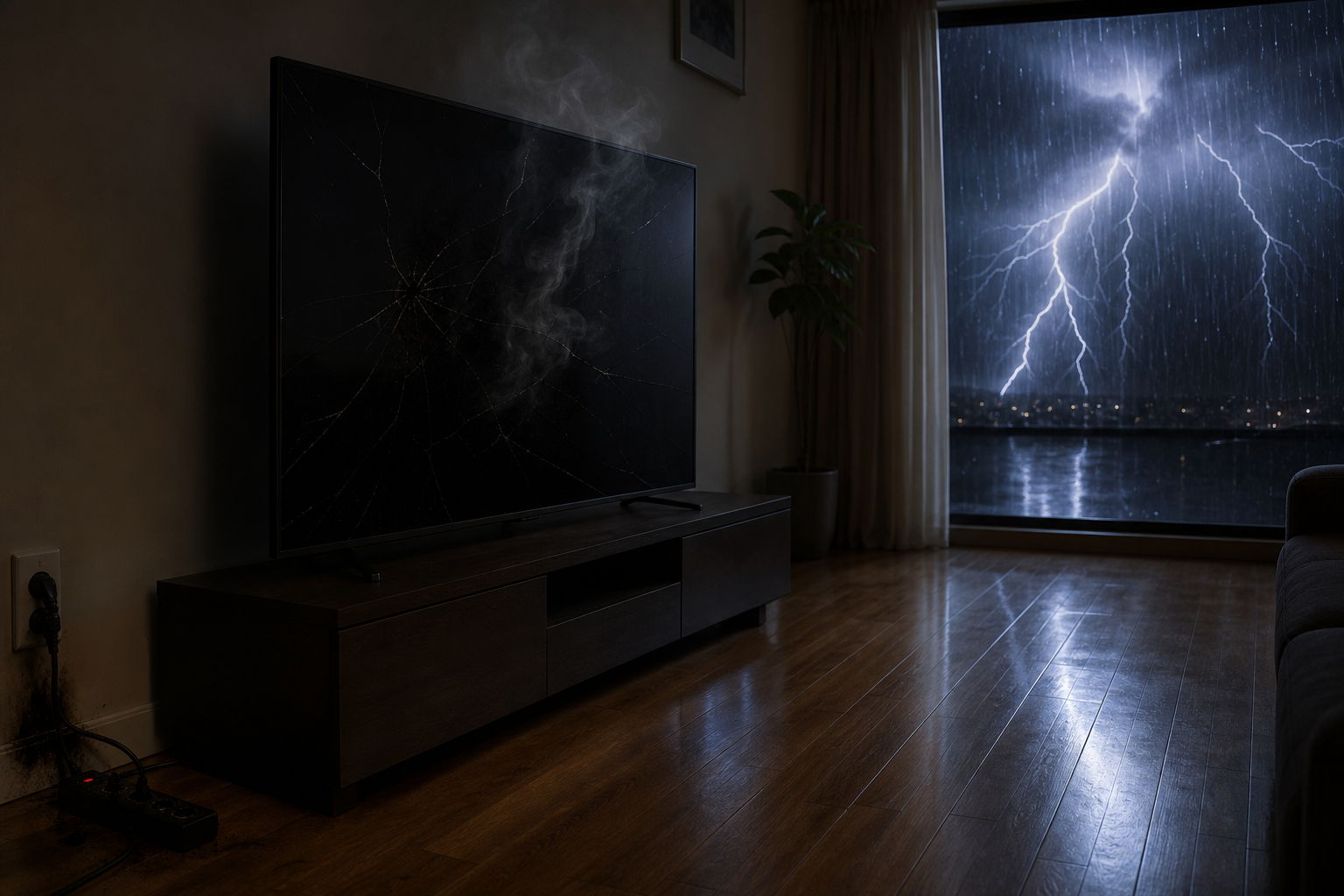
The clearest covered scenario is a lightning strike. Standard HO-3 policies treat a direct lightning strike that damages electronics as a covered peril, and many extend that coverage to the resulting power surge, though surge damage from utility malfunctions is often excluded. If lightning hits your home, a nearby transformer, or the utility lines coming into your house and the resulting surge kills your TV, gaming console, or refrigerator, personal property coverage generally kicks in.
Many carriers also extend coverage to what the industry calls "artificially generated electrical current," which is insurance jargon for a man-made surge. Most homeowners policies include some protection against sudden, accidental damage from man-made electricity, but insurers frequently exclude damage to the tubes, transistors, and other components inside your electronics. That component-level exclusion is a big deal for modern devices, and we'll come back to it.
For deeper background on the lightning side of the equation, see our full guide on lightning damage home insurance coverage.

Compare Home Insurance Plans in Ohio
Find your best options in less than 2 minutes
Covered vs Excluded: The Cause of the Surge Matters
Adjusters classify power surge claims based on cause of loss. Here's how the common triggers typically break down in 2026:
| Surge Source | Typically Covered? | Notes |
|---|---|---|
| Direct lightning strike | Yes | Classic covered peril; resulting fires also covered |
| Downed power line from windstorm | Yes | Tied to another covered peril |
| Utility transformer explosion | Often | Treated as artificially generated current by many carriers |
| Power restoration after outage | Sometimes | Depends on insurer wording |
| Overloaded outlets/circuits | No | Considered homeowner negligence |
| Old or faulty home wiring | No | Excluded as maintenance issue |
| Gradual damage from repeated small surges | No | Wear and tear exclusion |
Insurers typically exclude damage to tubes, transistors, and other components inside your electronics if an artificially generated current caused the surge. In plain English, even if your policy technically covers utility-caused surges, the fine print may exclude the very circuit boards that make your TV or fridge work.

Protect your home with State Farm
Average Rate:
Homeowners who bundle and save with State Farm save an average of $1,000 per year!

You're in Good Hands® with Allstate
Average Rate:
Get comprehensive home coverage with flexible policy options.

Customize your home coverage
Average Rate:
Only pay for the coverage you need with personalized home insurance.

Smart coverage for your home
Average Rate:
Protect what matters most with award-winning home insurance.
Equipment Breakdown Coverage: The Fix for Coverage Gaps
Equipment breakdown coverage is an optional endorsement that closes most of the holes standard homeowners policies leave open. In 2026 it typically costs $25 to $50 a year. Nationwide, for example, currently quotes about $39 to $45 per year depending on the state, while Tower Hill lists roughly $50 annually. Some state filings show costs as low as $29 to $30. The endorsement specifically targets sudden mechanical and electrical failures, including many power surge scenarios your base policy would deny.
Here's how it changes the math on a surge claim:
Most equipment breakdown endorsements now provide up to $50,000 in coverage, with some preferred carriers offering $100,000 or higher on high-end programs. The standard deductible is typically $250 to $500, which is usually less than the deductible on your base homeowners policy. The endorsement is especially valuable for high-end appliances and smart home gear, because it can replace tight per-item personal property limits with a large aggregate cap.
For a deeper dive on the endorsement itself, our guide to equipment breakdown coverage home insurance walks through what it costs and who benefits most. If you want to understand how it fits with appliance-specific claims, does home insurance cover appliances is a helpful companion read.
Electronics Sublimits and Personal Property Caps
There is no universal "electronics sublimit" for surge claims, but many policies impose functional caps that behave like one. Two limits typically apply at the same time:
- Overall personal property limit: usually 50% to 70% of your dwelling coverage
- Per-item or category cap: often $1,000 to $2,500 for electronics, with $1,500 being a common figure for portable devices like laptops and tablets
If a lightning-driven surge fries your 75-inch OLED that cost $2,800 and your policy applies a $1,500 per-item cap, that's the ceiling before depreciation. Add a $1,000 deductible, and you can see how quickly a claim shrinks.
Replacement Cost vs Actual Cash Value
The valuation method on your personal property coverage matters even more than the cap:
Under ACV, a six-year-old TV that originally cost $1,000 might be valued at just $140 to $200 after depreciation, even if replacing it today would cost $700 or more. If your policy defaults to ACV, upgrading to replacement cost coverage is one of the highest-value tweaks you can make. For high-value electronics that exceed your sublimit, ask about a scheduled personal property endorsement to lock in full coverage.
How to Document Fried Devices for a Successful Claim
Adjusters approve surge claims based on two things: proof of cause and proof of loss. Skimp on either and your claim gets reduced or denied. Work through this checklist as soon as it's safe.
Step 1: Preserve the Evidence
- Shut off power at the breaker to affected circuits if it's safe
- Do not throw away damaged items until the adjuster has inspected them
- Unplug any surviving electronics to prevent secondary damage from aftershocks
Step 2: Photograph and Video Everything
Capture close-ups of burn marks, melted plugs, scorched outlets, and tripped surge strips, plus wide shots of each room. Photograph model and serial number labels on every fried device before disposal.
Step 3: Build a Detailed Inventory
For each damaged item, record the brand, model, serial number, purchase date, original price, current replacement cost, and a description of the failure symptoms (won't power on, burning smell, dead screen, etc.).
Step 4: Prove the Cause
This is where many claims fall apart. You need objective evidence that a covered surge actually happened, not gradual equipment failure.
Step 5: File Promptly and Track Everything
Notify your insurer within the timeframe required by your policy (often within days). Submit a formal Proof of Loss with your inventory, photos, receipts, weather reports, utility logs, and the electrician's report. Keep a log of every call, email, and adjuster interaction.
For a step-by-step tactical playbook, our power surge insurance claim checklist walks through exactly what adjusters need to approve your payout. For related coverage on food loss during a surge-driven outage, see our guide on home insurance food spoilage coverage.
When to File a Claim vs Absorb the Cost
Filing a surge claim isn't always the right call, even when coverage clearly applies. Two factors usually decide it: your deductible and your claims history.
The national standard homeowners deductible in 2026 is still around $1,000, though policies commonly range from $500 to $2,500, and some carriers now offer options up to $5,000 or higher. Deductibles have been climbing fast. According to Matic's 2026 predictions report, the average home insurance deductible rose 22% in 2025, accelerating from a 15% increase in 2024, roughly a 40% cumulative jump in two years. If your total surge damage is $1,300 and your deductible is $1,000, you'll only net $300 after paying the deductible, and that small payout could still trigger a premium increase at renewal.
The impact on your rate isn't trivial either. On average, home insurance premiums rise 7% to 10% after a single claim, per the Insurance Information Institute, though certain claim types can push increases as high as 20% to 40% depending on your state, insurer, and history. A second claim within a few years often pushes increases into the 40% to 80% range. Even worse, the claim will sit on your CLUE (Comprehensive Loss Underwriting Exchange) report for the next seven years, following you to every insurer you shop with.
Use this rough decision framework:
| Situation | Recommended Action |
|---|---|
| Damage under 2x your deductible | Usually pay out of pocket |
| Damage 2x to 5x your deductible | Run the numbers on future premium impact |
| Damage over 5x your deductible | File the claim |
| Prior claims in past 3 years | Be extra cautious about filing small claims |
| Fire or structural damage involved | Always file |
Also weigh whether your fried appliance was old enough that ACV depreciation would leave you with a token payout. If a 10-year-old refrigerator has an ACV of $250 and your deductible is $1,000, there's nothing to file. For more on how rising home insurance deductibles change this math, our dedicated guide runs through the numbers. And if the surge fried your central AC or heat pump, our breakdown of home insurance AC unit coverage covers how HVAC claims play out under the same rules.
Frequently Asked Questions
Does home insurance cover a TV damaged by a power surge?
Yes, if the surge came from a covered peril like lightning, your personal property coverage typically pays to repair or replace the TV, minus your deductible and subject to any per-item cap. If the surge came from overloaded circuits, faulty wiring in your home, or certain utility work, the claim will likely be denied unless you carry equipment breakdown coverage. Replacement cost coverage will pay for a comparable new TV, while an actual cash value policy will only pay the depreciated value.
Are power surges from the utility company covered by homeowners insurance?
Sometimes, but not always. Many policies cover "artificially generated electrical current" from events like transformer explosions or grid switching, but some carriers exclude surges arising from utility maintenance work near your home. Even when the event is covered, insurers frequently exclude the internal tubes, transistors, and circuit boards inside your electronics. Equipment breakdown coverage is the most reliable way to close this gap.
What's the deductible for a power surge claim?
Your standard homeowners deductible applies, which in 2026 is typically $500 to $2,500, with $1,000 being the most common choice. Equipment breakdown endorsements often carry a separate, lower deductible of $250 to $500. Because deductibles are per claim, filing multiple small surge claims in a short period usually costs more than absorbing the losses out of pocket. Always compare the expected payout to your deductible before starting a claim.
Will filing a power surge claim raise my home insurance rates?
It can, and often significantly. A single home insurance claim typically pushes premiums up 7% to 10% on average, with some claim types driving increases of 20% to 40% depending on your state and insurer. The claim stays on your CLUE report for up to seven years, and filing multiple claims in a short window is far more damaging than one larger claim. For minor surge damage close to your deductible, absorbing the cost usually protects your long-term premiums.
How do I prove a power surge caused my electronics damage?
You need objective evidence of both the surge event and the resulting damage. Combine photos and videos of burn marks, melted components, and scorched outlets with a National Weather Service lightning report for the date, power quality logs from your utility, and a written cause-of-loss letter from a licensed electrician. This trio of documentation makes it much harder for an adjuster to argue that the damage came from wear and tear or negligence.