
Compare Car Insurance Rates in Ohio
See if you qualify for a lower rate in less than 2 minutes



Which Modifications Must Be Declared to Your Insurer
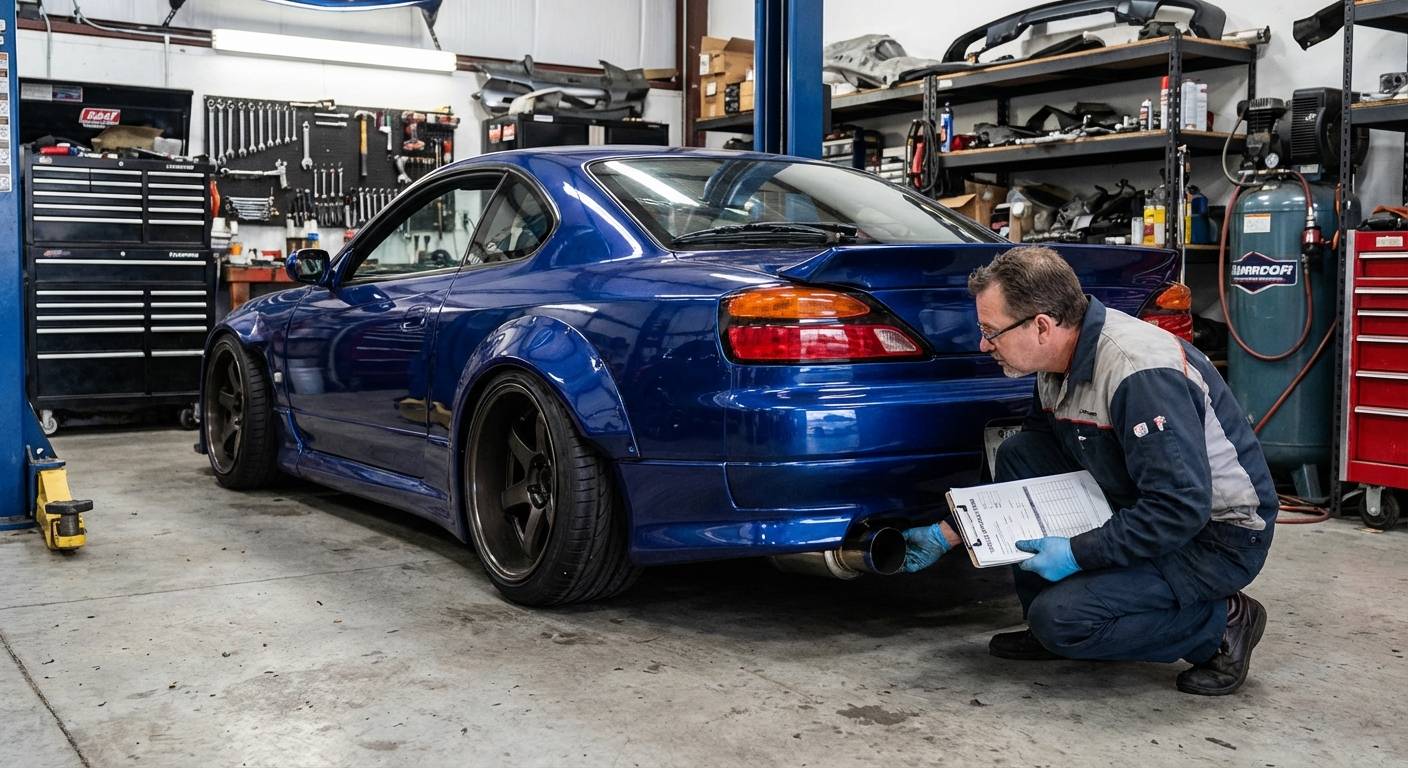
Whether you've added an aftermarket exhaust, dropped your suspension, or swapped in a turbocharged engine, one rule applies across the board: all modifications must be disclosed to your insurance company. Failing to report even a seemingly minor change can put your entire policy at risk.
Most major carriers, including State Farm, Geico, Progressive, Allstate, and Farmers, require a formal written modification disclosure form (often called a "Custom Parts and Equipment" or "Vehicle Modification Disclosure" form) signed and officially attached to your policy. A verbal mention over the phone, or even an email without written confirmation, is not sufficient. In the eyes of an insurer, a modification is any change made to the car that alters it from the manufacturer's standard factory specification, and this definition is deliberately broad. Carriers have continued tightening their modification underwriting through 2025 and into 2026, with California seeing some of the highest rates of claim denial and policy non-renewal for undisclosed modifications.
Here's a breakdown of the most common modification categories and how insurers view each:
| Modification Type | Examples | Risk Level to Insurer |
|---|---|---|
| Engine / Performance | Turbocharger, supercharger, ECU tune, engine swap | Very High |
| Suspension | Lowering springs, coilovers, lift kits | High |
| Body / Structural | Wide-body kits, roll cages, sunroof cuts | High |
| Wheels & Tires | Aftermarket rims, oversized tires | Medium |
| Exhaust | Cat-back, axle-back, performance headers | Medium-High |
| Cosmetic / Interior | Custom paint, audio systems, reupholstery | Low-Medium |
State Farm requires supplemental forms for any aftermarket parts totaling over $3,000 in value, with a broad definition that covers wheels, suspension, exhaust, lighting, and interior mods. Geico routes modified vehicle applications to high-risk divisions rather than denying coverage outright, which typically results in higher premium tiers compared to standard rates. The burden of identifying and documenting every non-stock component falls on you, even for modifications installed by a previous owner. Even optional extras chosen when buying a new car, such as upgraded alloy wheels, sport suspension packages, or premium sound systems, are treated as modifications and should be declared.
Modifications must also be street-legal. Any changes that violate Federal Motor Vehicle Safety Standards (FMVSS), local emissions laws, or noise ordinances can void your coverage entirely, regardless of whether they were disclosed. Learn more about custom parts and equipment coverage and how CPE endorsements protect your aftermarket upgrades.

Compare Car Insurance Rates in Ohio
See if you qualify for a lower rate in less than 2 minutes
How Modifications Impact Your Insurance Premiums
Not all modifications hit your wallet equally. Performance upgrades trigger the steepest premium increases because they signal greater accident risk and higher repair costs. Cosmetic changes tend to have a smaller impact, but they still add up. Combined modifications compound risks and costs, often pushing you into a high-risk underwriting pool.
Overall auto insurance rates have continued climbing slowly heading into the second half of 2026. National full-coverage averages now cluster between roughly $2,237 and $2,926 per year depending on methodology. Insurify's first-half 2026 analysis puts the annual average at $2,237, up 1% since the end of 2025, with the company projecting costs to keep rising slowly through year end. NerdWallet's 2026 analysis lists the national average at $2,356 per year, or about $196 per month, while Insurance.com pegs the figure at roughly $2,578 per year and Experian puts it as high as $2,926. Modified vehicles sit in a different risk category entirely, so the increases below apply on top of whatever base rate you'd otherwise pay. Understanding what affects your car insurance rates can help you anticipate the full cost impact before committing to a build.
Performance vs. Cosmetic Modifications
Here's what you can realistically expect when modifying your vehicle in 2026. Industry analysts and enthusiast publications report consistent patterns of applications being routed to high-risk divisions, premiums increasing 40 to 90 percent for disclosed modifications, and claims being denied entirely based on "material misrepresentation" clauses that most policyholders don't know exist in their contracts.
- Turbochargers and superchargers: A clearly performance-oriented turbo build often pushes premiums roughly 15-30% higher than stock on a mainstream car (about $335-$700 more per year on a typical policy). Heavily modified builds can go much higher, and some standard carriers will simply decline coverage.
- ECU tunes and engine remaps: Alone, a tune on an otherwise stock car generally adds around 10-20% to your premium ($225-$470/year on average). Stacked with intake, exhaust, or forced induction, the whole build gets reclassified.
- Suspension modifications: Mild street-oriented drops or coilovers typically add 5-15%, while aggressive track setups or large lift kits can push 10-25% or more, especially on already high-risk platforms. Vehicles lowered more than 1.5 inches from factory specs may trigger automatic documentation requirements.
- Body kits and structural modifications: Approximately 15-20% increase depending on the insurer and scale of the modification.
- Wheel and suspension combos (e.g., 22-inch rims plus a 2-inch drop): Compounded risk assessment; annual premiums for heavily modified daily drivers commonly reach $3,000-$6,000.
- Cosmetic mods (custom paint, spoilers, body kits): 5-25% increase depending on the insurer and vehicle value.
- Minor safety upgrades (upgraded brakes, anti-theft systems, GPS immobilizers, backup cameras): May qualify for discounts with select carriers.
Drivers in certain states face even steeper consequences. California has become one of the harshest markets for modified vehicle coverage, with agents reporting frequent claim denials for undisclosed modifications, particularly wheels more than 2 inches larger than stock or drops greater than 1.5 inches. Reviewing the types of car insurance coverage available to you can also help you identify which endorsements are worth adding to a modified vehicle policy.

Protect your car with Farmers
Average Rate:
Find coverage options that fit your budget.

The insurance savings you expect.
Average Rate:
Enjoy personalized policies, comprehensive coverage & more.

See how much you could save today!
Average Rate:
Drivers who switch their auto insurance and save with State Farm save $764 on average!

Safe Drivers Save with Allstate®
Average Rate:
Get rewarded with savings for having a clean driving record.
Aftermarket Parts Coverage vs. OEM: What's Actually Covered?
This is one of the most misunderstood areas of modified car insurance. Standard auto policies are built around OEM (Original Equipment Manufacturer) parts, the factory components your car shipped with. If you've replaced those with aftermarket upgrades, your standard policy may not cover their full value. Our guide to OEM parts coverage explains how factory-part guarantees differ from aftermarket protection, and for a broader look at what car insurance actually covers in a total loss scenario, see our dedicated guide.
Actual Cash Value vs. Agreed Value Policies
| Policy Type | How Value Is Calculated | Best For |
|---|---|---|
| Actual Cash Value (ACV) | Depreciated market value at time of claim using stock vehicle databases, rarely accounts for mods | Standard, unmodified daily drivers |
| Stated Value | You declare the value; insurer may still pay only ACV if disputed | Some collector cars |
| Agreed Value | You and insurer agree on a fixed payout upfront, documented with receipts and appraisals | Modified, custom, and collector vehicles |
For modified vehicles, agreed value policies are strongly recommended. With ACV coverage, your insurer's adjuster will reference comparable stock vehicles, completely ignoring the value of your aftermarket parts. In a total loss scenario, you could receive a payout thousands of dollars short of your actual investment.
Agreed value policies allow you to document and negotiate the inclusion of all modifications upfront, ensuring a full payout (minus your deductible) with no depreciation disputes. Many specialty insurers offer Custom Parts and Equipment (CPE) endorsements that extend coverage to aftermarket modifications. Coverage limits vary widely by insurer:
- Progressive: CPE coverage helps pay to repair or replace items you add to modify your car, like a stereo, navigation system, custom wheels, or even a paint job, and CPE coverage typically has a $5,000 limit.
- Elephant Insurance: Automatically includes $1,000 in CPE coverage when you carry comprehensive and collision, with the option to purchase up to $20,000, one of the highest CPE ceilings in the standard market.
- Allstate: Offers CPE as a customizable endorsement, commonly running about $102/year, with the specific dollar limit set on your declarations page rather than advertised publicly.
- Esurance: Up to $4,000 in CPE coverage.
- Hagerty: Guaranteed Value® (agreed value) coverage with $750 of comprehensive spare-parts coverage automatically included, plus the optional Cherished Salvage® endorsement that lets your client keep a modified vehicle after a covered total loss while still receiving the full Guaranteed Value payout.
If your vehicle is imported or features non-standard components, review our guide on insurance for imported vehicles to understand how grey-market and JDM cars are handled. For high-value builds, luxury and exotic car insurance offers a deeper look at agreed value coverage requirements.
Best Insurance Companies for Modified Cars
Not every insurer is equipped to handle heavily modified vehicles. Here are the top options available in 2026, ranging from major carriers with CPE add-ons to specialty insurers built specifically for enthusiasts.
Specialty / Collector Insurers
Major Carriers with Modification Coverage
| Insurance Company | CPE Coverage | Typical Max Limit | Notable Feature |
|---|---|---|---|
| Progressive | ✅ Yes | ~$5,000 (cars) | Nationwide availability; A+ financial rating; accident forgiveness available |
| Elephant Insurance | ✅ Yes | Up to $20,000 | Highest CPE ceiling among mainstream carriers; available in select states |
| Allstate | ✅ Yes | Set on declarations page | Flexible endorsements; ~$102/year add-on; receipts/photos required |
| Esurance | ✅ Yes | $4,000 | Basic mod protection; straightforward endorsement process |
| Farmers | ✅ Yes | Varies | Full documentation required; 35-70% premium increase for performance mods |
| Nationwide | ✅ Yes | Varies | Detailed documentation needed; typically 25-40% premium increase |
| SAFECO | ✅ Yes | Up to $5,000 | Custom equipment coverage with agreed-value terms for qualifying vehicles |
Not sure whether your current policy is working for your vehicle? Review our guide on car insurance endorsements to understand which add-ons provide the most value for your situation.
Consequences of Not Declaring Modifications
The risk of staying silent about your modifications is far greater than the cost of a higher premium. Failing to disclose modifications can invalidate your policy entirely, meaning your insurer could refuse to pay out on claims, and if you do not declare modifications and need to make a claim, your insurer could refuse to pay out entirely, void your policy as if it never existed, and charge you the full amount. Regulators and insurers report that claim denials and invalidated policies for undisclosed modifications have become more common in recent years, driven by stricter underwriting, better inspection tools, and improved data sharing between carriers. Here's what can happen when you file a claim on a policy with undisclosed modifications:
- Claim denial: Your insurer can refuse to pay for damages related to the undisclosed modification, even if the accident was not your fault. Aftermarket wheels, suspension changes, exhaust, or ECU tunes are easily spotted during claim inspections, and police reports noting aftermarket parts can trigger additional scrutiny.
- Full policy voidance: If you fail to disclose the true nature of your car's modifications, the insurer has the legal right to void your policy and treat it as if it never existed, and if this is the case, they will not pay out on any claim you make under the policy.
- Fraud classification: Non-disclosure can be treated as insurance fraud, potentially barring future coverage or leading to legal consequences. Some major insurers explicitly warn that not declaring modifications to your insurer, even accidentally, is usually considered fraud, which will result in your policy being declared void and claims denied.
- Out-of-pocket expenses: You'll be responsible for vehicle repairs, medical bills, and third-party damages with zero insurance support. If the insurer must pay a third party under statutory obligations, they can seek reimbursement from you.
- Permanent insurance record impact: A voided policy is flagged on industry databases and must be disclosed on future applications, often resulting in higher premiums or flat-out coverage refusals.
This applies even if you didn't install the modifications yourself. If you buy a used car that is already modified, you must still declare those existing modifications on your policy. A denied claim can be far more expensive in the long run than any premium increase, and understanding how car insurance premiums are calculated will help you evaluate whether the added cost of full disclosure is worth it (it almost always is).
Frequently Asked Questions
Do all car modifications need to be reported to insurance?
Yes, virtually any change from the manufacturer's original specifications should be disclosed to your insurer. This includes performance upgrades, cosmetic changes (custom paint, body kits), interior modifications (audio systems, seat replacements), and structural alterations. Even modifications installed by a previous owner must be reported, as the burden of disclosure falls on the current policyholder. Modifications must also be street-legal and comply with FMVSS and local emissions or noise regulations, since illegal modifications void coverage regardless of disclosure.
How much does modified car insurance cost compared to standard insurance?
The cost increase depends heavily on the type and extent of modifications, layered on a 2026 national full-coverage average that most sources place between roughly $2,237 (Insurify) and $2,578 (Insurance.com) per year. A single ECU tune typically adds 10-20% on top of your base rate, a turbo kit around 15-30%, and heavy combined builds can push premiums 40-100% above baseline. For heavily modified daily drivers with stacked upgrades, annual premiums often land in the $3,000-$6,000 range, especially when multiple modifications compound the risk assessment.
What is the best insurance for heavily modified cars?
For heavily modified vehicles, specialty insurers like Hagerty, Grundy, and American Collectors Insurance offer agreed value policies that fully account for your modifications. Among major carriers, Elephant Insurance stands out with CPE coverage purchasable up to $20,000, the highest ceiling among mainstream carriers. Progressive and Allstate are solid options for moderately modified vehicles, with Progressive offering roughly $5,000 in CPE for cars and Allstate offering flexible customizable limits through a policy endorsement.
What is the difference between agreed value and actual cash value for modified cars?
An agreed value policy locks in a pre-negotiated payout amount that you and your insurer agree on at policy inception, fully accounting for documented modifications with no depreciation applied at claim time. An actual cash value (ACV) policy pays out the depreciated market value of the vehicle using stock vehicle databases that don't account for aftermarket upgrades, which often results in a significantly lower payout on total loss. For any vehicle with meaningful modification investment, agreed value coverage is the clear choice, and specialty insurers like Hagerty and Grundy make the process straightforward with thorough documentation reviews.
Can my insurance be voided if I don't declare a modification?
Yes. If you file a claim and your insurer discovers undisclosed modifications, they can void your policy retroactively on the grounds of material misrepresentation. This means your current claim will be denied and all past coverage may be nullified, leaving you fully responsible for vehicle repairs, medical bills, and legal costs. You'll also be required to disclose the voided policy on any future insurance applications, which can make obtaining affordable coverage very difficult going forward. Non-disclosure can even be classified as fraud by some carriers, with potential legal implications beyond the claim denial itself.