
Compare Car Insurance Rates in Ohio
See if you qualify for a lower rate in less than 2 minutes



Understanding Salvage Title Vehicles
A salvage title is a permanent designation placed on a vehicle's title when an insurance company declares it a total loss. This happens when the cost to repair the damage exceeds a specific threshold of the vehicle's pre-damage value. Total loss thresholds vary significantly by state — for example, Colorado and Texas use a 100% threshold, Florida, Minnesota, Missouri, and Oregon use 80%, while many states cluster around 75%. Many other states, including California, Arizona, Illinois, Massachusetts, New Jersey, and Washington, use a Total Loss Formula (TLF) instead of a fixed percentage. Oklahoma's Senate Bill 1920 passed both chambers — the Senate 48-0 on February 23, 2026, and the House on May 6, 2026 — raising its threshold from 60% to 70%, effective November 1, 2026.
Vehicles earn salvage titles through various types of damage including collisions, floods, fires, hail damage, vandalism, or theft recovery. Once an insurance company determines that repairs would cost more than the vehicle's worth, they brand the title as "salvage." At this point, the vehicle cannot legally be driven on public roads until it undergoes proper repairs and passes state inspection requirements.
The distinction between salvage and rebuilt titles is crucial for insurance purposes. A salvage title indicates the vehicle is currently unfit for the road, while a rebuilt title means the car has been repaired and inspected by state authorities. This difference directly impacts your ability to secure insurance coverage. Learn more about how insurers decide whether to repair or total your vehicle.
Insurance Coverage Options and Limitations
What Coverage Can You Actually Get?
When it comes to insuring vehicles with problematic titles, the coverage landscape varies dramatically based on title status. Salvage title vehicles cannot be insured at all — no liability, no comprehensive, no collision. Insurance companies view these vehicles as unfit for road use and refuse to write policies until the title status changes. Learn more about salvage title car insurance costs and what to expect.
Once a vehicle receives a rebuilt title after repairs and inspection, insurance becomes available but with significant restrictions. Most insurance companies will offer liability coverage for rebuilt title vehicles. This covers damages or injuries you cause to others but provides no protection for your own vehicle.
Full coverage — which includes comprehensive and collision insurance — is harder to obtain for rebuilt titles. Many insurers offer only liability coverage, and those that do provide full coverage often impose strict documentation requirements and additional underwriting scrutiny. Understanding what full coverage car insurance actually includes will help you evaluate what you're missing.
Coverage Payout Limitations
Even when you secure comprehensive and collision coverage for a rebuilt title vehicle, expect significantly reduced claim payouts. Insurance companies typically pay 20–40% less than they would for an identical clean-title vehicle. This reflects the lower market value of rebuilt title cars and the insurer's uncertainty about pre-existing damage.
Insurance companies may also require extensive documentation for any claims, including original repair receipts, before-and-after photos from the rebuild process, mechanic statements, and vehicle inspection reports. This additional scrutiny can slow down the claims process significantly. Understanding how total loss claims work can help you set realistic expectations before buying.

Compare Car Insurance Rates in Ohio
See if you qualify for a lower rate in less than 2 minutes
Which Insurance Companies Cover Rebuilt Title Vehicles
Major Insurers That Offer Coverage
Several well-known insurance companies provide coverage for rebuilt title vehicles, though availability varies by state and individual circumstances. State Farm, GEICO, and American Family are among the most consistently cited major insurers for full coverage on rebuilt title vehicles — though all operate on a case-by-case basis with strict documentation requirements. Progressive also offers coverage at the insurer's discretion with additional underwriting review. Allstate and Mercury are additional options worth exploring, though these tend to be more limited to liability-only coverage.
For liability-only coverage, a broader group of carriers — including Farmers, USAA (for military members and families), Nationwide, and The Hartford — are available options, though availability varies by state. Specialty and non-standard auto insurers like The General, National General, Kemper, and Gainsco often offer more flexible coverage options. It's important to call insurers directly rather than relying on online quote tools, as many online systems cannot handle rebuilt title applications properly.
| Insurance Company | Liability Coverage | Full Coverage Availability | Notes |
|---|---|---|---|
| State Farm | Yes | Yes (limited) | Requires certified mechanic inspection |
| GEICO | Yes | Yes (case-by-case) | Among lowest rates reported; requires documentation |
| Progressive | Yes | Case-by-case | Requires additional documentation |
| American Family | Yes | Yes (case-by-case) | Verified for rebuilt title full coverage |
| Allstate | Yes | Limited | More commonly liability-only |
| Mercury | Yes | Limited | State availability varies |
| USAA | Yes | Limited | Military members only; rarely offers comp/collision |
| The General | Yes | More flexible | Specializes in non-standard risks |
| National General | Yes | More flexible | Non-standard market specialist |
Working With Independent Agents
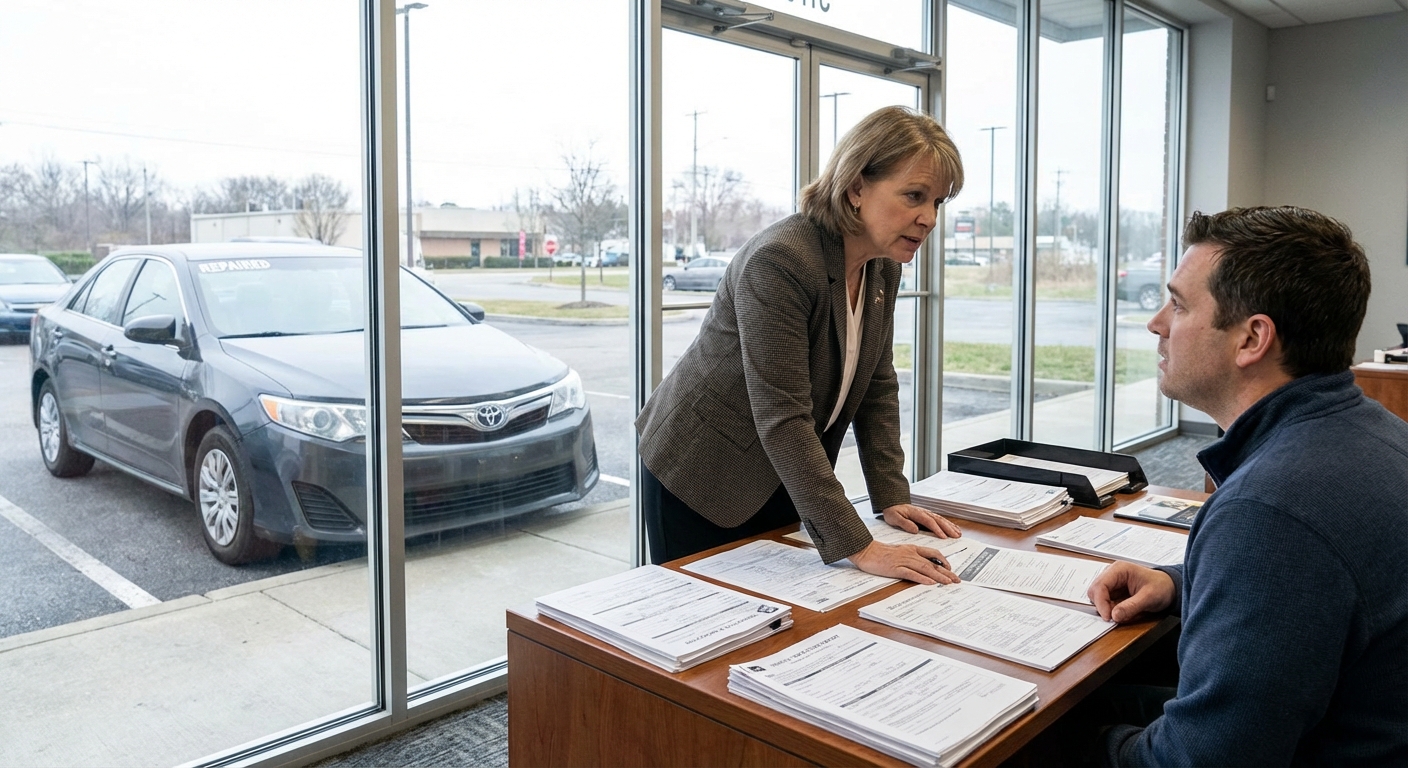
Finding insurance for a rebuilt title vehicle often requires extra effort. Working with an independent insurance agent can significantly improve your chances of securing comprehensive coverage. These agents represent multiple insurance companies and can shop your application across various carriers simultaneously.
Independent agents understand which insurers are most receptive to rebuilt title applications in your specific state. They can also help you prepare the necessary documentation beforehand, streamlining the application process and improving approval odds. This is a situation similar to securing high-risk car insurance, where working with the right agent makes a real difference. You may also want to review what to look for when shopping for car insurance to compare policies on an apples-to-apples basis.

Protect your car with Farmers
Average Rate:
Find coverage options that fit your budget.

The insurance savings you expect.
Average Rate:
Enjoy personalized policies, comprehensive coverage & more.

See how much you could save today!
Average Rate:
Drivers who switch their auto insurance and save with State Farm save $764 on average!

Safe Drivers Save with Allstate®
Average Rate:
Get rewarded with savings for having a clean driving record.
Cost Considerations and Rate Increases
How Much More Will You Pay?
Insurance premiums for rebuilt title vehicles typically cost 20–40% more than comparable clean-title cars in 2026. This surcharge reflects the insurer's increased risk from potential hidden damage and the difficulty in accurately valuing the vehicle. For context, 2026 national average full-coverage premiums vary by source: Bankrate cites $2,697/year, Experian reports $2,932/year, and NerdWallet places the figure at $2,317/year — putting the realistic range at roughly $2,300–$2,900 annually. Add the 20–40% rebuilt title surcharge on top of that baseline, and you could pay $2,760–$4,060 per year for equivalent full coverage — an additional $460–$1,160 annually depending on the source and your insurer. Liability-only coverage tends to see smaller increases (around 10–20%), while full coverage premiums rise more sharply when available at all.
Beyond the premium increase, you'll face reduced payouts if you need to file a claim. When you file a total loss claim, insurers base their payment on the vehicle's actual cash value — which is significantly lower for rebuilt titles. This creates a situation where you're paying more for coverage that provides less financial protection. If your insurance payout isn't enough to cover your loss, knowing your options ahead of time can save you from a costly surprise.
Hidden Costs Beyond Premiums
Insurance isn't the only area where rebuilt title vehicles cost more. You'll need to factor in the initial inspection costs to convert from salvage to rebuilt status, which can range from $100 to $500 depending on your state. Many states require certified mechanic repairs, adding labor costs that can exceed standard body shop rates. Note: Texas eliminated mandatory vehicle safety inspections as of January 2025, though VIN verification and documentation requirements for rebuilt titles remain in place.
Gap insurance is typically unavailable for rebuilt title vehicles across most insurers and lenders. Since rebuilt titles have significantly lower resale values — typically 30–50% below comparable clean-title vehicles — you could easily owe more than the car is worth if it's totaled again. To reduce this financial exposure, consider a larger down payment or a shorter loan term. Because gap insurance requires comprehensive and collision coverage as a prerequisite — coverage that's already limited for rebuilt titles — most rebuilt title buyers simply can't access it. Learn more about new car replacement insurance as a potential alternative if you're financing a newer vehicle.
If you're leasing or financing any vehicle, lenders almost always require comprehensive and collision coverage — which may be impossible to obtain for a rebuilt title. This limitation often forces rebuilt title buyers to pay cash, tying up capital that could otherwise be invested elsewhere.
Salvage vs. Rebuilt Title: What's the Difference?
Title Status and Road Legality
The difference between salvage and rebuilt titles represents the progression from a damaged vehicle to a potentially roadworthy car. A salvage title is assigned when an insurance company declares a vehicle a total loss — based on your state's total loss threshold or total loss formula. At this stage, the car cannot be legally driven, registered, or insured in any state.
A rebuilt title is issued after a salvage vehicle has been properly repaired and passed state-mandated safety inspections. This designation indicates the vehicle has been restored to a roadworthy condition and can be legally driven, registered, and insured — though with the limitations discussed throughout this article. If you're ever in the position of having your own vehicle declared a total loss, understanding what happens after a total loss can help you navigate the process. You may also want to explore the total loss buyback process if you're considering keeping your vehicle after a settlement.
The conversion process from salvage to rebuilt involves substantial work. Owners must document all repairs, often using certified mechanics, and the vehicle must pass rigorous inspections verifying that all safety systems function properly. Some states also require VIN verification to ensure the vehicle hasn't been assembled from stolen parts.
Inspection and Documentation Requirements
Converting a salvage title to rebuilt status requires meeting specific state requirements that vary significantly across jurisdictions. Most states mandate that repairs be completed by licensed mechanics or body shops, with detailed documentation of all parts used and work performed. Inspection fees typically range from $100 to $500, though this varies by state.
State inspections typically examine critical safety components including frame integrity, brake systems, steering mechanisms, lighting, and emissions controls. Inspectors verify that airbags are properly installed and functional, and that no salvaged parts from other vehicles compromise safety.
Required documentation for the rebuilt title application usually includes the original salvage title, detailed repair receipts showing parts and labor, before-and-after photographs of the damage and repairs, mechanic certification statements, and proof of ownership. Insurance companies often request copies of these same documents before issuing a policy.
Long-Term Title Implications
Once a vehicle receives a salvage or rebuilt designation, that brand remains on the title permanently. There's no way to remove the designation regardless of repair quality. This permanent stigma affects resale value, insurance costs, and buyer perception for the life of the vehicle.
Rebuilt title vehicles typically sell for 30–50% less than equivalent clean-title vehicles, and this depreciation persists even after professional repairs and inspections. When selling, you're legally required to disclose the title status to potential buyers. Failure to disclose can result in legal liability and potential fraud charges.
Is Buying a Salvage or Rebuilt Title Vehicle Worth It?
Financial Analysis: Running the Numbers
Determining whether a salvage or rebuilt title vehicle makes financial sense requires careful calculation. Start with the purchase price discount — typically 30–50% below comparable clean-title vehicles. Then factor in repair costs if you're buying a salvage title, inspection fees, and the 20–40% insurance premium increase.
Consider the reduced insurance claim payouts, which effectively mean you're self-insuring a portion of the vehicle's value. If the car is worth $10,000 but insurers would only pay $6,000–$8,000 in a total loss, you're absorbing $2,000–$4,000 of uninsured risk. This hidden cost can wipe out the initial savings if you experience another major accident.
Long-term ownership costs also include significantly reduced resale value when you eventually sell. Rebuilt title vehicles sell for 30–50% less than clean-title equivalents. If you bought at $10,000 but can only sell for $6,000 while a clean-title equivalent would fetch $12,000, you've lost $6,000 compared to buying clean-title initially. You can use the repair vs. total loss guide to understand how these calculations are made.
When Rebuilt Titles Might Make Sense
Despite the challenges, rebuilt title vehicles can work for specific situations. If you're mechanically inclined and can personally verify repair quality, you reduce the risk of hidden damage. Buying a rebuilt title vehicle as a secondary car that you can afford to replace eliminates the insurance coverage pressure.
Vehicles with rebuilt titles from minor damage like hail or cosmetic collision damage present less risk than flood-damaged or frame-damaged vehicles. If you can review the original damage photos and insurance estimates, you can better assess whether the salvage designation reflects superficial or serious structural issues.
Cash buyers who don't need comprehensive coverage face fewer obstacles. If you're comfortable with liability-only insurance and have emergency funds to replace the vehicle if totaled again, the insurance limitations become less prohibitive. Our guide on when full coverage makes sense for lower-value vehicles may help inform your decision.
Alternatives to Consider
Before committing to a salvage or rebuilt title vehicle, explore alternatives that might provide better value. Certified pre-owned vehicles offer warranties and peace of mind while selling at discounts compared to new cars.
Older clean-title vehicles in the $5,000–$10,000 range often provide better overall value than comparable rebuilt title cars. While they may have higher mileage, their clean titles ensure normal insurance costs, better resale values, and easier financing options. Review the best car insurance companies for 2026 to compare providers and find the best rate for whatever vehicle you choose. You might also consider whether dropping full coverage on an older clean-title vehicle saves more than pursuing a rebuilt title route.
Frequently Asked Questions
Can you get full coverage insurance on a salvage title vehicle?
No, you cannot get any insurance coverage on a salvage title vehicle. Insurance companies will not write policies for salvage title cars because they're considered unfit for road use. You must first repair the vehicle and convert it to a rebuilt title through your state's inspection process. Even then, comprehensive and collision coverage for rebuilt titles is limited — State Farm, GEICO, and American Family are currently among the most cited full-coverage options, but documentation requirements are strict.
How much more expensive is insurance for rebuilt title cars?
Insurance for rebuilt title vehicles typically costs 20–40% more than comparable clean-title cars in 2026. The national average full-coverage premium currently ranges from approximately $2,317 (NerdWallet) to $2,932 (Experian) annually, meaning a rebuilt title surcharge could push your annual cost to $2,760–$4,060 or more depending on your insurer and state. Additionally, if you file a claim, payouts are usually 20–40% lower than clean-title vehicles due to reduced market value. The combination of higher premiums and lower claim payments significantly increases your total cost of ownership over time.
Which insurance companies will insure rebuilt title vehicles?
For full coverage, State Farm, GEICO, and American Family are currently the most consistently cited major insurers for rebuilt title vehicles, though availability is case-by-case and state-dependent. Progressive also offers coverage at its discretion with additional underwriting review. For liability-only coverage, a broader group of carriers including Farmers, USAA, Nationwide, and The Hartford are options depending on your state. Specialty insurers like The General, National General, and Kemper often offer more flexible coverage for non-standard vehicles. Always call insurers directly — online quote tools often can't handle rebuilt title applications properly.
What's the difference between salvage and rebuilt title for insurance purposes?
Salvage title vehicles cannot be insured, registered, or legally driven on public roads. A rebuilt title indicates the vehicle has been repaired and passed state safety inspections, making it eligible for insurance coverage. For insurance purposes, this distinction is critical — salvage means zero coverage options, while rebuilt means limited coverage availability with 20–40% higher premiums. The conversion from salvage to rebuilt requires documented repairs, state inspections, and formal approval before any insurer will consider writing a policy.
Is it worth buying a salvage or rebuilt title vehicle given the insurance limitations?
Buying a salvage or rebuilt title vehicle rarely makes financial sense when you factor in all costs. While purchase prices are 30–50% lower, you face 20–40% higher insurance premiums, 20–40% reduced claim payouts, limited full coverage availability, and 30–50% lower resale values. These factors often eliminate the initial savings entirely. Rebuilt titles might work for cash buyers comfortable with liability-only coverage who have emergency funds to replace the vehicle, but most consumers find better value with clean-title alternatives in the same price range.