
Compare Car Insurance Rates in Ohio
See if you qualify for a lower rate in less than 2 minutes



What Is Custom Parts and Equipment (CPE) Coverage?
Custom parts and equipment (CPE) coverage is an optional endorsement you add to your existing auto insurance policy. It protects permanently installed aftermarket modifications, meaning things that were not part of your vehicle's original factory configuration. Standard comprehensive and collision coverage is designed to restore your car to its pre-accident factory condition, which means all those upgrades you paid for out of pocket are left completely unprotected without CPE.
Think of CPE as a financial safety net for the money you've invested in personalizing your vehicle. Whether you've dropped $3,000 on a custom audio system or $5,000 on a lift kit and off-road wheels, a standard policy simply won't reimburse you for those parts after a covered loss. For a broader look at how aftermarket changes affect your overall policy, see our guide on modified car insurance.
CPE cannot be purchased as a standalone policy. It generally requires that you already carry both comprehensive coverage and collision coverage. Many standard policies include a small automatic limit of roughly $1,000 to $2,000 for aftermarket parts, but that leaves a significant gap for enthusiasts with more invested in their builds. Choosing genuine parts is also important, so read our OEM parts coverage guide if you want factory-original replacements written into your policy.

Compare Car Insurance Rates in Ohio
See if you qualify for a lower rate in less than 2 minutes
Which Modifications Require CPE Coverage?
Not every upgrade requires special coverage, but most aftermarket additions not installed by the original manufacturer do. Below is a breakdown of the most common modification categories that fall under CPE:
| Modification Type | Examples | Covered by CPE? |
|---|---|---|
| Audio & Electronics | Aftermarket stereos, subwoofers, custom speakers, nav systems | ✅ Yes |
| Wheels & Tires | Custom rims, oversize off-road tires, chrome wheels | ✅ Yes |
| Suspension & Structural | Lift kits (under 4 inches), lowering kits, roll bars | ✅ Yes |
| Exterior Appearance | Custom paint, wraps, spoilers, body kits, decals | ✅ Yes |
| Interior Upgrades | Racing seats, custom upholstery, aftermarket dash kits | ✅ Yes |
| Performance Parts | Turbochargers, exhaust upgrades, cold-air intakes | ✅ Yes (if legal) |
| Utility Add-ons | Camper shells, bed liners, winches, LED light bars | ✅ Yes |
| Safety Devices | Anti-theft systems, backup cameras (aftermarket) | ✅ Yes |
| Illegal Modifications | Nitrous oxide systems, emissions-tampering parts | ❌ No |
| Temporary/Portable Items | Snow plows, removable cargo accessories | ❌ No |
| Suspension Over 4 Inches | Extreme lift kits beyond insurer height limits | ❌ No |

Protect your car with Farmers
Average Rate:
Find coverage options that fit your budget.

The insurance savings you expect.
Average Rate:
Enjoy personalized policies, comprehensive coverage & more.

See how much you could save today!
Average Rate:
Drivers who switch their auto insurance and save with State Farm save $764 on average!

Safe Drivers Save with Allstate®
Average Rate:
Get rewarded with savings for having a clean driving record.
Why Standard Policies Exclude Aftermarket Parts
Standard auto insurance policies are priced and structured around your vehicle's Actual Cash Value (ACV), which is the depreciated market value of the car as it rolled off the factory floor. Insurers base this valuation on the original manufacturer's equipment (OEM) specifications, not on what you've personally added.
Here's why this matters:
From the insurer's perspective, they never priced your policy to account for those upgrades. Adding a $4,000 custom paint job or $2,500 audio system significantly increases the vehicle's replacement value. Without CPE, you bear that financial risk entirely.
How CPE Endorsements Work
Adding CPE to your policy is straightforward, but there are a few important mechanics to understand before filing a claim.
Adding the Endorsement
You can request CPE coverage from your insurer at any time, whether purchasing a new policy or mid-term. You'll typically need to:
- Disclose all modifications to your insurer with descriptions and declared values
- Complete a formal Vehicle Modification Disclosure or Custom Equipment Schedule form. Verbal conversations alone are not sufficient; written disclosure must be signed and attached to your policy
- Choose a coverage limit that reflects the total value of your aftermarket parts (commonly $5,000, $10,000, or $20,000, with some specialty carriers going up to $50,000)
- Pay an additional premium based on the declared value of your mods. Industry rule of thumb in 2026 is roughly 10% of your total modification value per year
- Provide documentation such as receipts, photos, or appraisals at the time of adding coverage
Coverage Limits by Insurer (2026)
Coverage limits and structures vary widely across providers. Here's the current 2026 landscape:
| Insurer | Included by Default | Max CPE Limit | Notes |
|---|---|---|---|
| Progressive | First $1,000 via comp/collision | Standard $5,000 limit | Confirmed for 2026; motorcycle CPE auto-includes $3,000 with option up to $30,000 |
| Elephant Insurance | $1,000 auto-included | Up to $20,000 | Highest mainstream limit; excludes lifts over 4 inches |
| Esurance | Not included | Up to $4,000 | Endorsement must be requested at policy start |
| Allstate | Not included | Varies by state | Approximately $102/year add-on; receipts & photos required |
| State Farm | Not included | Varies by state | Now requires supplemental disclosure forms for aftermarket parts totaling over $3,000 |
| American National | Up to $2,000 included | Varies | Included when you carry comp/collision |
| Nationwide | Not included | Varies | Detailed disclosure required |
| Safeco | Not included | Up to ~$5,000 | Suitable for modified daily drivers |
| Hagerty | $750 spare parts included | Custom (agreed value) | Guaranteed Value® policy; Vehicle Under Construction adds 10%/quarter up to $25,000 |
| Grundy | Agreed value, zero deductible | Up to 150% of agreed value on total loss | Unlimited mileage; zero deductible in most states |
| American Collectors | Agreed value | Personalized underwriting | Up to 6% annual inflation guard, no depreciation |
2026 Market Update: According to Insurify's Mid-Year 2026 Auto Report (updated August 11, 2026), the national full-coverage average is $2,237 per year ($186/month), up 1% since the end of 2025, with Insurify projecting a year-end national average of about $2,242. NerdWallet reports $2,356/year ($196/month), ValuePenguin/LendingTree reports $2,496/year ($208/month), and Experian pegs it at $2,926/year ($244/month). Modified vehicles typically carry elevated premiums on top of that baseline, so a specialty insurer like Hagerty, Grundy, or American Collectors may offer stronger overall protection and better pricing than a standard CPE add-on.
How Claims Are Paid
When a covered event (collision, theft, vandalism, fire) damages your modifications, your insurer will assess the custom parts separately. Payouts are generally based on Actual Cash Value (ACV), meaning depreciation is applied, unless your policy specifies Replacement Cost Value (RCV). Specialty insurers like Hagerty and Grundy use an agreed value (or Guaranteed Value®) approach that locks in a pre-negotiated payout with no depreciation disputes. You'll pay your deductible, and the insurer covers the rest up to your CPE limit.
Documentation, Costs & Performance Mod Impact
Documentation Required for CPE Claims
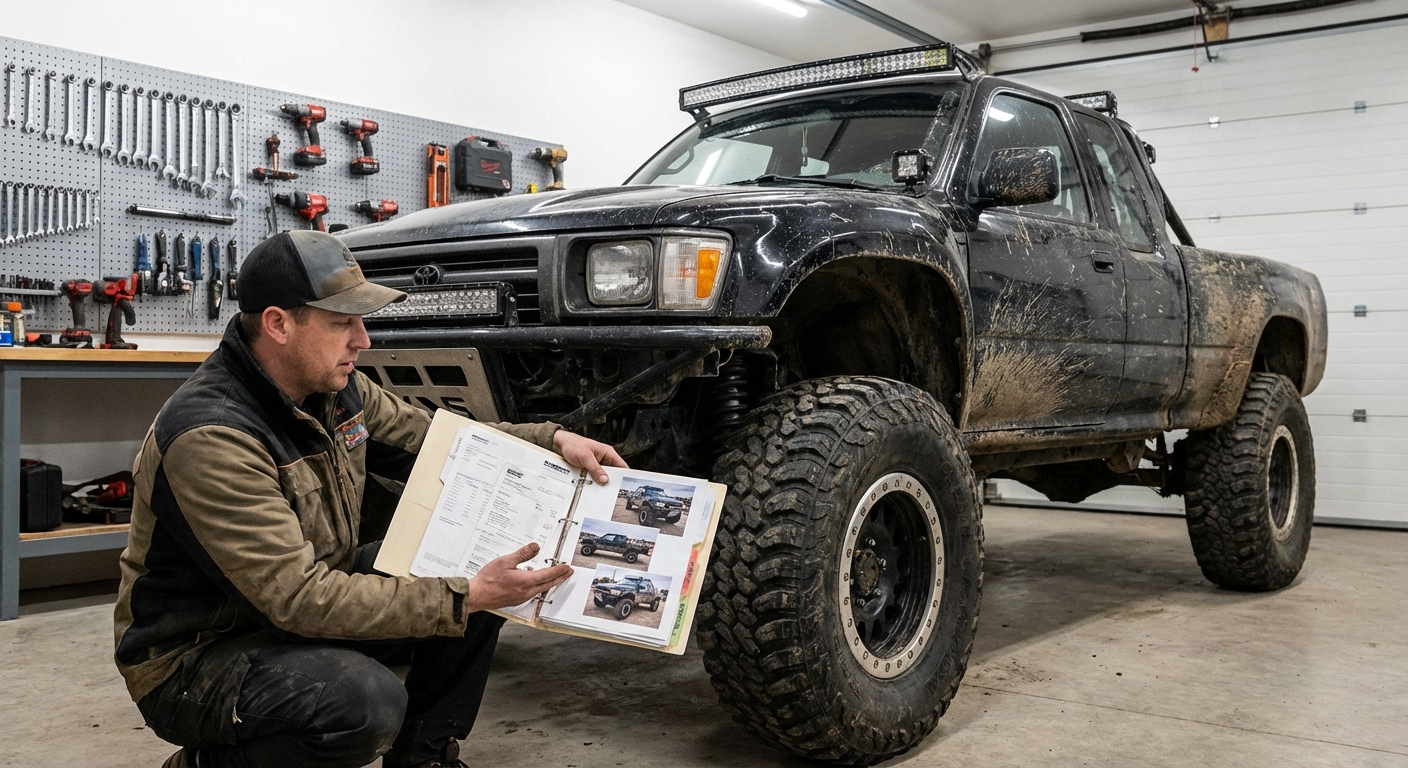
The most common reason CPE claims are denied or underpaid is insufficient documentation. Modifications are not legally considered disclosed through conversations alone. You must submit a written Vehicle Modification Disclosure or Custom Equipment Schedule form, have it signed, and obtain written confirmation that it has been formally attached to your policy file. Many insurers now enforce a strict "if it's not declared, it's not covered" rule for custom equipment, and several 2026 state laws (including Texas HB 2067, effective January 1, 2026) now require insurers to provide written explanations when they deny or cancel a policy. To protect yourself, gather and store the following before any incident occurs:
- 📄 Original purchase receipts for all aftermarket parts, including dates and purchase prices
- 🔧 Professional installation invoices with labor costs, work orders, and shop details. DIY installs may not be covered by all insurers
- 📸 Before-and-after photos of every modification from multiple angles, ideally date-stamped
- 🔢 Serial numbers for electronics, audio equipment, and high-value components
- 📋 Professional appraisals for high-value upgrades like custom paint or audio builds
- 🗂️ Modification log, a spreadsheet with part names, part numbers, dates, and installer info
- ✅ Written policy confirmation that your CPE endorsement and all disclosures are on file
- 🚔 Police report if the loss involves theft, burglary, or vandalism
Keep both digital and physical copies of all documents in a secure location. Most 2026 carriers now allow direct upload to online claim portals, so scanned receipts and digital photos speed up the claims process considerably. If your car is stolen or vandalized, thorough documentation is what separates a full payout from a denied claim.
What Does CPE Coverage Cost in 2026?
CPE is one of the most affordable endorsements available. Industry guidance for 2026 puts the extra premium at roughly 10% of your total insured modification value per year, though it can range from about 5% to 15% depending on the insurer and coverage limit. Here's a realistic cost breakdown:
| Coverage Limit | Estimated Annual CPE Cost |
|---|---|
| Under $2,000 | $20 to $60/year |
| $5,000 limit | $20 to $120/year |
| $10,000 limit | $50 to $250/year |
| $20,000+ limit | $120 to $500+/year |
Recent 2026 industry data puts Allstate's custom parts coverage at approximately $102/year (about $8.50/month) on average as an add-on. Hagerty offers additional spare-parts coverage above its included $750 baseline, and its Vehicle Under Construction feature automatically raises your Guaranteed Value® by 10% per quarter (up to $25,000) while your build is in progress. Specialty policies from Hagerty, Grundy, or American Collectors are typically priced based on the full declared modification value, making them ideal for high-value builds exceeding $10,000 to $15,000.
Do Performance Mods Raise Your Base Insurance Rates?
Yes, and this is a critical point that many car enthusiasts overlook. CPE covers the value of your custom parts, but performance modifications can raise your base insurance premiums because they alter the vehicle's risk profile. Insurers often classify heavily modified vehicles as higher-risk due to elevated speed potential, accident likelihood, costlier repair parts, and theft appeal. According to reporting from Dub Magazine in December 2025 and follow-up 2026 coverage, US insurance agents have described applications being routed to high-risk divisions with premiums climbing 40-90% for disclosed modifications, and claims being denied entirely under "material misrepresentation" clauses when mods were not properly documented.
Here's how different modification types affect your rates in 2026:
Recent 2026 industry data shows a turbocharger typically pushes premiums up by roughly 25% to 40% at most US carriers, with the most aggressive market datasets reporting increases from 50% up to 132% when combined with other performance upgrades. Combined heavy builds routinely push increases past 40 to 100%. If your build is extensive, specialty insurers like Hagerty, American Collectors, or Grundy may offer better pricing and broader protection than a standard carrier's CPE add-on. Hagerty, for example, covers high-horsepower builds, hot rods, custom cruisers, and imports with upgrades under its Guaranteed Value® policy structure and can accommodate vehicles modified to more than 900 horsepower with additional underwriting. For collector-grade vehicles, our classic car insurance guide covers your options in more depth. Enthusiasts with imported or JDM builds should also review insurance for imported vehicles. And if you've adapted your vehicle for accessibility, see our guide on insurance for adaptive vehicles.
Frequently Asked Questions (FAQ)
Does standard "full coverage" auto insurance cover aftermarket parts?
No. Standard full coverage (which includes liability, comprehensive, and collision) only restores your vehicle to its factory OEM condition. Aftermarket modifications and custom upgrades are not included unless you add a CPE endorsement. Most standard policies limit aftermarket coverage to $1,000 to $2,000 at best, even with comprehensive and collision in place, leaving a substantial gap for enthusiasts with more invested. Our guide on full coverage car insurance breaks these gaps down further.
What's the difference between CPE coverage and a specialty modified car policy?
A CPE endorsement is added to a standard auto policy and covers specific aftermarket parts up to a chosen limit. A specialty modified car policy, offered by carriers like Hagerty, Grundy, or American Collectors, is a completely separate type of policy designed for heavily modified, classic, or collector vehicles, often providing agreed-value coverage with no depreciation disputes. Grundy even advertises up to 150% of agreed value on total-loss claims. If your modifications exceed $10,000 to $15,000 in total value, a specialty policy may offer stronger overall protection and better pricing than a standard CPE add-on.
Can I add CPE coverage after I've already made modifications?
Yes, in most cases you can add CPE mid-policy term. However, insurers may require documentation of the parts and their current condition at the time of adding coverage, and some may not cover pre-existing damage to modifications. It's best to add CPE before or immediately after making any aftermarket changes, and always submit a formal written Vehicle Modification Disclosure form (not just a verbal conversation) to ensure your coverage is properly on file.
Will my CPE claim be paid at replacement cost or actual cash value?
This depends on your specific policy language. Most standard CPE endorsements pay out at Actual Cash Value (ACV), meaning depreciation is factored in. Some insurers offer Replacement Cost Value (RCV) as an upgrade, which pays what it would actually cost to replace the part new. Specialty insurers like Hagerty and Grundy use agreed value policies that lock in a pre-negotiated payout with no depreciation disputes. Always confirm which method your policy uses before assuming full reimbursement.
What happens if I don't tell my insurer about my modifications?
Not disclosing modifications is a serious risk. If you file a claim and your insurer discovers undisclosed modifications, especially performance upgrades, they can deny the claim under a "material misrepresentation" clause and potentially cancel your policy altogether. In some states, this could also impact your ability to obtain coverage elsewhere. Remember, verbal conversations are not enough. Written disclosure forms must be completed, signed, and formally attached to your policy to be legally valid.