
Compare Car Insurance Rates in Ohio
See if you qualify for a lower rate in less than 2 minutes



How Hybrid Car Insurance Compares to Gas and EV Coverage
Hybrid vehicles fall into a coverage category that sits between traditional gas cars and full electric vehicles. You don't need a special policy type. State-minimum liability, collision, and comprehensive all work the same way. What changes is the pricing.
Hybrid car insurance costs about $2,554 per year on average, roughly 7% to 14% more than insuring a comparable gas-powered vehicle. Hybrids generally cost 5% to 15% more to insure than comparable gas-powered vehicles, primarily because of their higher purchase price, specialized repair components, and the cost of trained technicians.
By contrast, full EVs pay a much steeper premium. In 2026, the average monthly cost to insure a gas-engine car is about $185, but that number jumps to roughly $263 for EVs, making them about 42% more expensive to insure on average. Hybrids land comfortably in the middle.
| Vehicle Type | Average Annual Full Coverage (2026) | vs. Gas Car |
|---|---|---|
| Gas-only | ~$2,218 to $2,513 | Baseline |
| Standard hybrid | ~$2,554 to $2,956 | +5% to 15% |
| Plug-in hybrid (PHEV) | ~$2,900 to $5,185 | +10% to 25% |
| Full EV | ~$3,159 to $3,780 | +42% to 49% |
For a deeper look at pure-electric rates, see our full electric vehicle insurance guide.

Compare Car Insurance Rates in Ohio
See if you qualify for a lower rate in less than 2 minutes
Why Hybrids Sometimes Cost More (and Sometimes Less)
Insurers weigh several conflicting factors when pricing a hybrid policy. Understanding what pushes rates up (and what pulls them back down) helps you shop smarter.
What pushes hybrid premiums up
- Specialized parts and labor. Hybrid powertrains combine an internal combustion engine with an electric motor and inverter. Fewer shops are certified to repair them, and OEM parts cost more than conventional replacements.
- Battery replacement risk. In calculating comprehensive and collision coverage rates, insurers must account for the substantial cost of battery replacement. A traction battery can run several thousand dollars even in a mainstream Toyota or Honda hybrid.
- Higher MSRP. Hybrids typically sticker $2,000 to $4,000 above their gas twins, and higher vehicle value directly increases comp and collision premiums.
- Tariff pressure on parts. The 25% Section 232 tariffs on imported auto parts have added meaningful cost to every claim, and hybrids lean heavily on imported components.
What pushes hybrid premiums down
- Lower annual mileage. Hybrid buyers often drive fewer miles or commute in urban areas, which reduces accident exposure.
- Safer driver demographic. Hybrid owners skew older, more educated, and more risk-averse (traits insurers price favorably).
- Advanced safety tech. Toyota Safety Sense 3.0, Honda Sensing, and similar ADAS packages are standard on most modern hybrids.
- Fuel-savings mindset. Drivers focused on efficiency tend to accelerate and brake more gently, which shows up in telematics scores.

Protect your car with Farmers
Average Rate:
Find coverage options that fit your budget.

The insurance savings you expect.
Average Rate:
Enjoy personalized policies, comprehensive coverage & more.

See how much you could save today!
Average Rate:
Drivers who switch their auto insurance and save with State Farm save $764 on average!

Safe Drivers Save with Allstate®
Average Rate:
Get rewarded with savings for having a clean driving record.
Green Vehicle Discounts: Do They Still Exist in 2026?
Yes, but they've become more selective. Not every insurer still advertises a dedicated "hybrid discount," and the ones that do often bundle it under a broader "green," "alternative-fuel," or "fuel-efficient" label. Here's what's actually available in 2026.
| Insurer | Discount | Notes |
|---|---|---|
| Travelers | ~10% | Sometimes called a green, alternative-fuel, or fuel-efficient discount |
| GEICO | Up to 25% | Availability varies by state, plus 5% extra with full coverage |
| Farmers | 5 to 10% | 10% green vehicle discount currently limited to California residents |
| Nationwide | 3 to 5% | Often bundled through SmartRide telematics |
| USAA | Varies | Military-only, but competitive base rates |
| Liberty Mutual | 5 to 10% | Green vehicle credit, availability varies |
| The Hartford | ~5% | Often requires home policy bundle |
Most sources agree you can generally save between 5% and 10% with a hybrid vehicle discount at companies like Farmers, Liberty Mutual, and Travelers, though specific discount amounts vary by insurer and state.
State Farm and Progressive have largely phased out standalone hybrid discounts, but both still price hybrids competitively because the underlying loss data supports lower rates. If you don't see a "green" line item on your quote, check whether the base rate is already discounted. For more discount strategies, see our guide on how to lower car insurance.
Hybrid Battery Coverage: What Insurance Actually Pays For
This is where hybrid owners get tripped up most often. Your comprehensive and collision coverage do cover the hybrid battery, but only in specific scenarios.
The good news: most batteries used in hybrid-electric vehicles are covered under a warranty for a minimum of eight years or 100,000 miles, and federal law requires automakers to ensure EV and hybrid batteries for at least that long. Manufacturer warranty picks up the wear-and-tear side that insurance won't. For a deeper dive into what's covered and what isn't, read our car insurance battery coverage guide.
Plug-In Hybrid (PHEV) Considerations
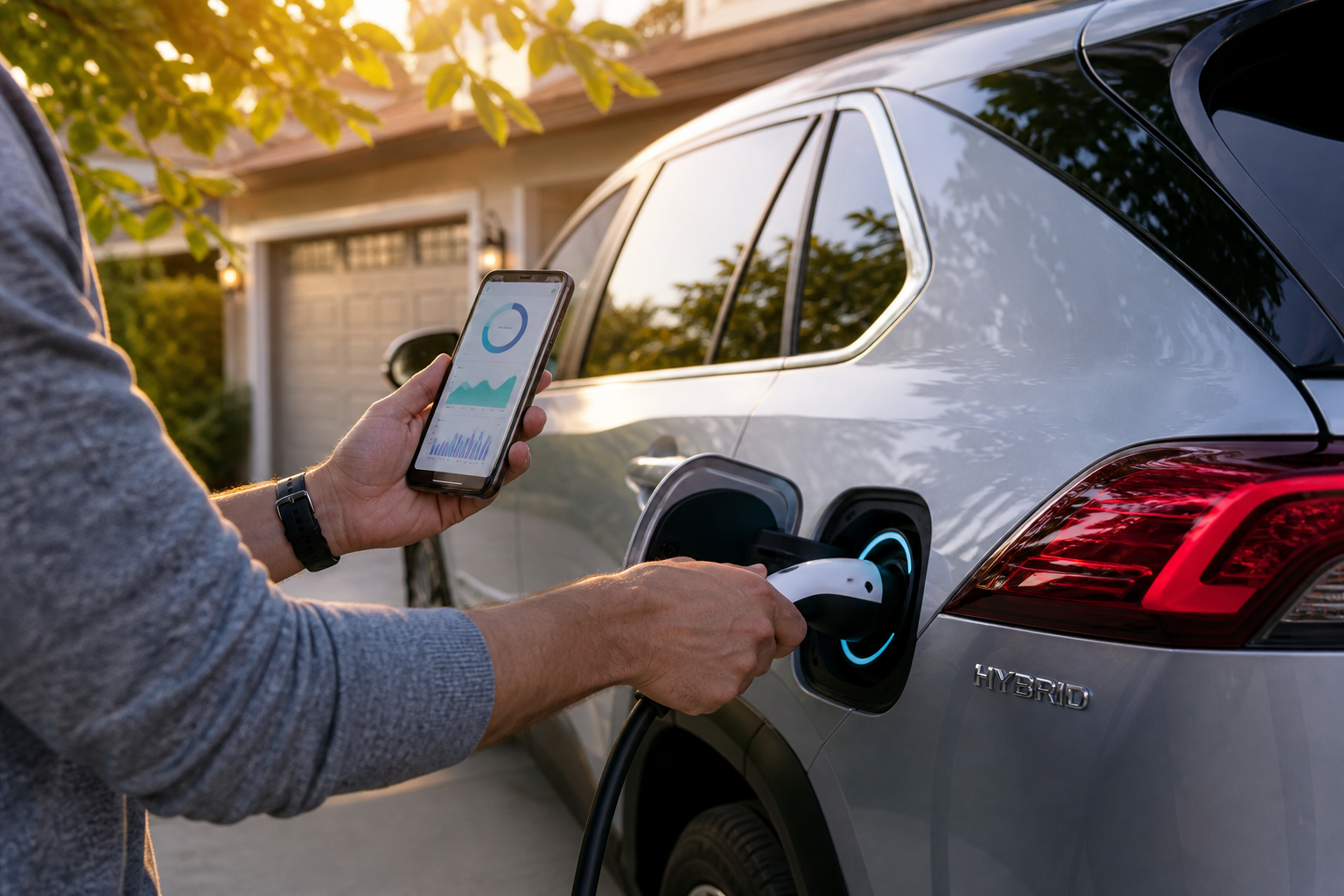
PHEVs like the Toyota RAV4 Prime, Prius Prime, Ford Escape PHEV, and Jeep Wrangler 4xe sit between standard hybrids and full EVs. They plug in, run on electricity for 20 to 40 miles, then switch to hybrid mode. Insurance treats them accordingly.
Plug-in hybrids carry the highest average rates among electrified vehicles, roughly $5,185 per year for full coverage and $2,634 for minimum, though the top-end figure is skewed by luxury PHEVs in the dataset. Standard hybrids average $2,956 per year for full coverage, slightly below the pure EV average. A more realistic mainstream PHEV runs 5% to 12% above a comparable gas car.
Key PHEV coverage questions to ask your agent:
- Is the traction battery covered under comprehensive for theft, fire, and vandalism?
- Are charging cables covered if stolen from your garage or damaged in a break-in?
- Does the policy cover a home wall charger (Level 2 EVSE) if it's damaged by fire or a storm?
- Is there an exclusion for leased batteries (rare on U.S. PHEVs, but check)?
Best Insurers for Prius, Camry Hybrid, and RAV4 Hybrid
Because rates vary by ZIP code and driver profile, the "best" carrier depends on your situation. But nationwide 2026 rate data points to a clear top tier for the three most popular hybrids.
Toyota Prius
USAA is the cheapest insurer for Prius owners, with an average monthly premium of about $75. Among non-military options, GEICO offers the most affordable Toyota Prius insurance on average, with full coverage costing around $173 monthly and annual rates near $2,076 (or $1,072 for minimum coverage).
Top picks: USAA (military), GEICO, State Farm, Travelers.
Toyota Camry Hybrid
The Camry became hybrid-only starting with the 2025 model year, so hybrid pricing now reflects the mainstream Camry rate. USAA (~$93 to $138/mo), Erie (regionally ~$108), State Farm ($103 to $174), and GEICO ($131 to $164) are the strongest performers. See our full Toyota Camry insurance cost breakdown for model-year details.
Toyota RAV4 Hybrid
Annual full coverage for hybrids ranges from $2,499 for a Toyota RAV4 Hybrid up to $4,802 for a Chevrolet Corvette E-Ray, according to Carinsurance.com. The RAV4 Hybrid is one of the cheapest hybrids to insure in America. Top picks: USAA, GEICO, Travelers, Erie (where available). For broader Toyota rate context, see our guide on how much it costs to insure a Toyota.
For context on how vehicle type shapes pricing more broadly, check out our overview of car insurance by vehicle type and the most and least expensive cars to insure in 2026.
Frequently Asked Questions
Is hybrid car insurance more expensive than gas car insurance in 2026?
Yes, but only slightly. Hybrids cost about 5% to 15% more than comparable gas vehicles, averaging around $2,554 per year for full coverage versus roughly $2,218 to $2,513 for gas cars. The gap comes from higher MSRPs, specialized repair labor, and battery-related parts costs. It's much narrower than the 42% premium EV owners pay.
Do insurance companies still give hybrid or green vehicle discounts in 2026?
Some do, but fewer than a decade ago. Travelers, GEICO, Farmers, Nationwide, USAA, Liberty Mutual, and The Hartford still offer hybrid or green vehicle discounts ranging from 5% to 25%, though availability and amounts vary by state. State Farm and Progressive have largely dropped standalone hybrid discounts but still price hybrids competitively at the base rate.
Does car insurance cover hybrid battery replacement?
Only if the battery is damaged by a covered peril such as a collision, fire, theft, flood, or vandalism. Normal battery degradation, capacity loss, and age-related failure are excluded because they're considered wear and tear. Your factory warranty (typically 8 years or 100,000 miles, longer in California) covers those failures instead.
Are plug-in hybrids (PHEVs) more expensive to insure than standard hybrids?
Yes, PHEVs typically cost 5% to 12% more than a comparable gas car and often a bit more than a standard hybrid. The larger battery, more complex dual powertrain, and higher vehicle value all push premiums up. You should also confirm that charging cables and home wall chargers are covered under your comprehensive policy.
What is the cheapest insurance company for a Toyota Prius or RAV4 Hybrid?
USAA is the cheapest overall for eligible military families, averaging roughly $75 per month for a Prius. Among widely available carriers, GEICO, Travelers, State Farm, and Erie (regionally) consistently deliver the lowest rates for popular Toyota hybrids. Always get at least three quotes because rates for the exact same driver can vary by hundreds of dollars.