
Compare Car Insurance Rates in Ohio
See if you qualify for a lower rate in less than 2 minutes



What Is a Supplemental Car Insurance Claim?
A car insurance supplemental claim, commonly called a "supplement," is a formal revision to your original repair estimate submitted to your insurer after additional damage is discovered during the repair process. It's not a new claim. It's an addendum to your existing one, and it's far more common than most drivers realize.
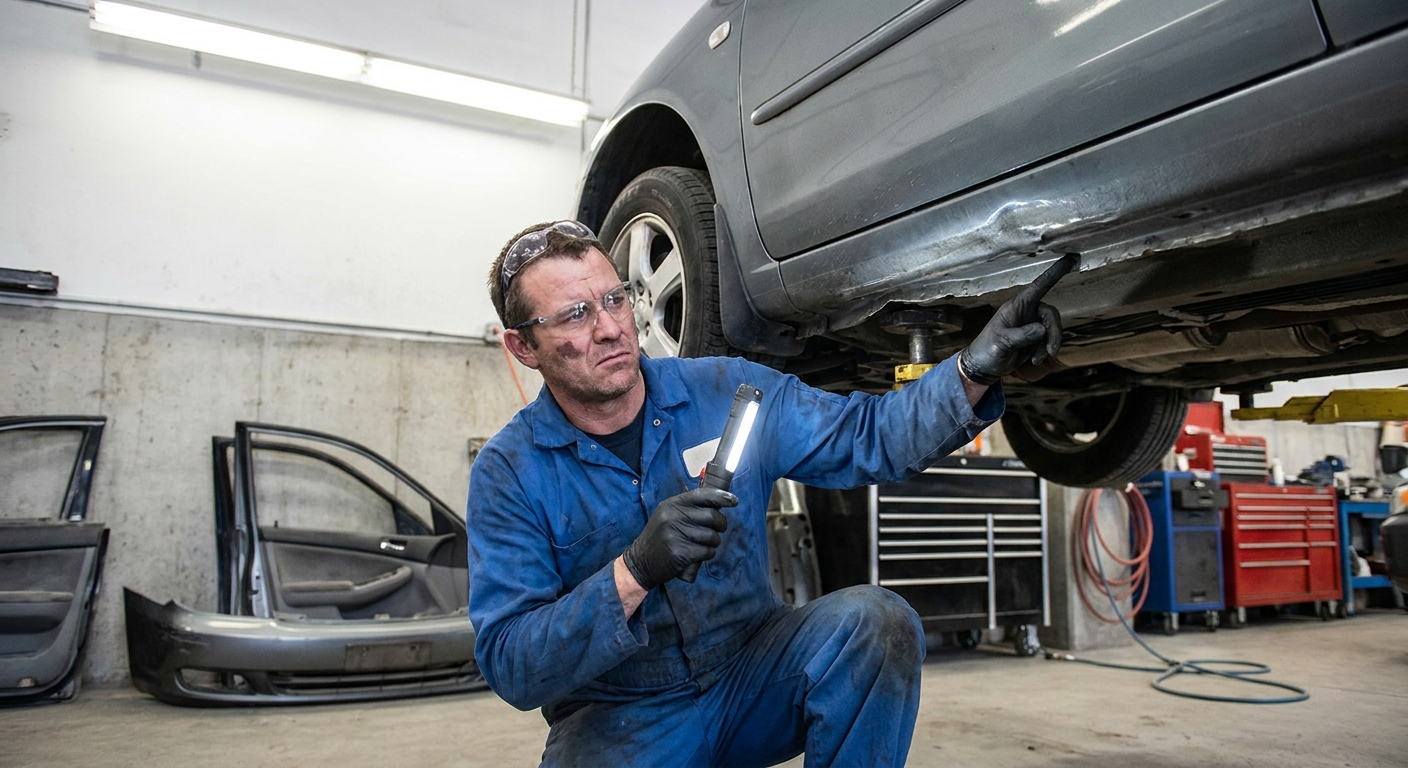
When your vehicle is damaged in an accident, an adjuster (or an AI-driven photo tool) performs an inspection and generates an initial estimate. That estimate is based only on what can be seen at the time. Once a repair shop begins work and starts disassembling the vehicle, damage that was previously hidden behind panels, bumpers, or trim often comes to light. The supplemental claim is how that newly discovered damage gets covered.
Major insurers now treat supplements as a routine, expected part of modern claims handling. State Farm, for example, provides a dedicated B2B Supplement Dashboard where repair shops can submit supplement requests, view estimate versions, track approved amounts, and receive payment via electronic funds transfer. Understanding the supplemental process is important because it directly impacts how much your insurer pays and whether your vehicle is fully restored to pre-accident condition. You can learn more about how insurance companies assess car damage to better understand where the initial estimate comes from and why it often falls short.

Compare Car Insurance Rates in Ohio
See if you qualify for a lower rate in less than 2 minutes
How Initial Estimates Miss Hidden Damage
Initial insurance estimates are inherently limited. Adjusters, and even AI-powered photo estimating tools (which per CCC's Crash Course 2026 report now account for 26.4% of all repairable claim inspections in 2025, up 0.8 points year over year), can only evaluate what's visible on the surface. Until a technician physically removes bumpers, fenders, door panels, and other components, the full picture of damage remains incomplete. With the average total cost of repair climbing to $4,818 in 2025 (a 1.7% year-over-year increase per CCC), and bodily injury severity up 10.3% year over year, the dollars at stake in a missed supplement are meaningful.
Common Types of Hidden Damage
Here are the most frequently discovered types of hidden damage that trigger a supplemental claim:
| Damage Category | Examples | Why It's Hidden |
|---|---|---|
| Structural / Frame | Unibody bends, frame cracks, mounting bracket damage | Covered by outer panels; requires disassembly |
| Mechanical Systems | Suspension, steering, exhaust, cooling components | Internal stress not visible until parts are removed |
| Electrical & Safety | Wiring harnesses, ABS sensors, airbag modules, ADAS cameras | Shielded behind trim, dashboards, and covers |
| Interior Components | Seat frame damage, child seat anchors, steering column | Concealed under upholstery and interior trim |
| Splash Shields & Deflectors | Air deflectors, underbody shields | Located underneath the vehicle |
Modern vehicles make this problem even more pronounced. Advanced Driver Assistance Systems (ADAS), including lane departure sensors, collision avoidance cameras, and radar modules, are embedded throughout the vehicle and require recalibration or replacement after many types of collisions. Per Protech Automotive Solutions and Caliber Insights data, ADAS calibration is now needed on roughly 65% of collision repairs as we enter 2026, but calibrations appear on only 28.3% of all repairable estimates (35.6% of DRP estimates) per CCC, or 34.7% per Enlyte's 2026 Envision Trends Report. That gap means most calibration work becomes a supplement, and with the average calibration line item running approximately $485 to $688 per event, missed calibrations can quickly add hundreds of dollars per system to your out-of-pocket costs. Learn more about ADAS calibration and car insurance coverage to understand what your policy should pay.

Protect your car with Farmers
Average Rate:
Find coverage options that fit your budget.

The insurance savings you expect.
Average Rate:
Enjoy personalized policies, comprehensive coverage & more.

See how much you could save today!
Average Rate:
Drivers who switch their auto insurance and save with State Farm save $764 on average!

Safe Drivers Save with Allstate®
Average Rate:
Get rewarded with savings for having a clean driving record.
The Supplemental Claim Process: Step by Step
The good news is that the supplemental claim process is well-established. Repair shops deal with supplements regularly, and most major insurers have moved to digital, portal-driven workflows for handling them. Here's how it typically works:
Step 1: Hidden Damage Is Discovered During Disassembly
Once repairs begin and the vehicle is taken apart, the technician identifies damage that wasn't visible during the initial inspection. Many shops now perform a formal "blueprinting" or teardown step early in the process specifically to surface hidden damage before parts are ordered.
Step 2: The Shop Documents Everything
Your repair shop will photograph all newly discovered damage from multiple angles, prepare an updated parts and labor breakdown, and write a detailed explanation of why the additional repair is necessary and how it relates to the original accident. This documentation is critical. Insurers use it to determine whether to approve the supplement.
Step 3: The Supplement Is Submitted to the Insurer
Most supplements are now submitted digitally. Large carriers use dedicated B2B portals (like State Farm's Supplement Dashboard), while others accept supplements via secure upload, email, or through the shop's estimating platform (CCC ONE, Mitchell, Audatex). Payment is often issued via EFT, which speeds up turnaround.
Step 4: The Insurer Reviews and Responds
The adjuster evaluates the submission. They may request additional photos, schedule a reinspection, or approve the supplement as submitted. Once approved, the insurer updates the total claim payout (minus your deductible) and either pays the shop directly or issues you a revised check. Learn more about how claim adjusters work and what to expect during their review.
Step 5: Repairs Are Completed
With the supplement approved, the shop orders any additional parts and completes the remaining repairs. Be aware that supplement reviews can add days or even weeks to your repair timeline depending on the complexity of the findings and current parts availability, which remains tight due to ongoing 25% Section 232 tariff pressure and supply chain constraints.
How Long Does a Supplement Take to Approve?
Timelines vary based on your state's insurance regulations, the complexity of the supplement, and your specific insurer. Here's a general breakdown:
| Scenario | Typical Timeline |
|---|---|
| Simple supplement (minor parts/labor) | 1 to 7 days |
| Standard supplement with reinspection | 7 to 21 days |
| Complex supplement (structural or ADAS damage) | 21 to 60 days |
| Disputed supplement requiring negotiation | 30 to 90+ days |
Most states apply their general "unfair claims practices" rules to supplements, requiring insurers to acknowledge submissions within 10 to 15 days and reach a decision within 30 to 45 days of receiving all needed information. California mandates a 15-day acknowledgment window under 10 CCR § 2695.5(e), requires investigation to begin within 15 days, and requires acceptance or rejection within 40 days of proof of claim under 10 CCR § 2695.7(b), with payment of undisputed amounts due within 30 days of settlement. Texas Chapter 542 sets a 15-business-day acknowledgment window, requires a decision within 15 business days after receiving all requested items, and mandates payment of approved amounts within 5 business days (with 18% interest penalties for late payment). Washington requires 10 days to acknowledge and 15 days to complete the claim, and 2026 amendments to WAC 284-30-330 make failing to promptly pay any undisputed portion of a claim an unfair practice, which directly benefits policyholders waiting on supplements.
What to Do If Your Insurer Denies a Supplement
A denied supplement is frustrating, but it doesn't have to be final. Understanding your rights and knowing how to push back can make a significant difference in the outcome.
Your Rights During the Supplemental Claim Process
- Right to a written explanation: Insurers are required to provide a written denial explaining their reasoning, tied to specific policy language. A Texas law effective January 1, 2026, now mandates that insurers automatically provide written explanations for any declined or reduced payment.
- Right to a fair investigation: Insurers must conduct a thorough and unbiased review of all submitted evidence.
- Right to appeal: All major insurers have an internal appeals process that you can use before escalating.
- Protection against bad faith: Insurers who deny valid claims without reasonable basis may be acting in bad faith, which can carry significant legal penalties. In May 2026 the Indiana Court of Appeals revived a $3 million bad faith award against Erie Insurance, ruling that policy limits do not cap bad faith damages. California's 2026 Bornoff v. State Farm decision also reversed summary adjudication and restored a policyholder's bad faith claim based on the insurer's handling delays.
You can learn more about your options in our guide to fighting a denied car insurance claim.
Steps to Take After a Denial
- Request a detailed denial letter. If the denial is vague, demand a written explanation citing specific policy language.
- Get an independent estimate. Have a second repair shop inspect the vehicle and submit their own assessment of the additional damage.
- File a formal appeal. Submit a written appeal to the insurer with all supporting documentation: photos, technician notes, parts invoices, and independent estimates.
- Contact your state's insurance commissioner. State DOI recoveries continue to set records: Kansas Insurance Commissioner Vicki Schmidt announced $56.7 million recovered for Kansans in 2025, Maryland recovered more than $53.5 million in the first half of 2026 alone, and California returned $183 million to consumers through Department investigations per its January 2026 announcement. Filing a formal complaint puts real regulatory pressure on your insurer.
- Invoke the appraisal clause. Many auto policies include an appraisal clause that allows both parties to hire independent appraisers to resolve valuation disputes. Texas SB 458 (effective January 1, 2026, with finalized TDI rules under 28 TAC 5.9800 to 5.9806) now requires every personal auto policy issued, delivered, or renewed in Texas to include a binding appraisal provision, and Illinois HB 4160 was signed August 7, 2026 as Public Act 104-0767 (effective July 1, 2027).
- Consult a public adjuster or attorney. For large or complex supplements, a licensed public adjuster can negotiate on your behalf. If bad faith is suspected, an attorney can pursue additional remedies through car insurance dispute resolution.
For a deeper look at your options after a dispute, read our full guide on how to dispute a car insurance settlement.
Frequently Asked Questions
Can I request a supplemental claim after repairs are already completed?
In most cases, you should file a supplement before the additional repair work is completed. Once repairs are done, it becomes much harder to document and verify the damage. However, if hidden damage was discovered and documented during the repair process with photos and technician reports, you may still be able to submit a supplement after the fact. Contact your insurer as soon as possible if this situation applies to you.
Does filing a supplemental claim raise my insurance rates?
A supplemental claim is part of the same underlying claim as your original repair, so it does not count as a separate claim on your record. However, the original accident claim itself may still affect your rates at renewal. On average, rates go up about 45% after an at-fault accident per LendingTree's January 2026 analysis (roughly $1,031 more per year, with California hitting 70.7%), regardless of whether a supplement was filed.
Can I choose my own repair shop for a supplemental claim?
Yes. You have the legal right to choose any licensed repair shop, even if your insurer has a preferred Direct Repair Program network. If your chosen shop discovers additional damage and submits a supplement, your insurer is obligated to review and respond to it. Choosing an experienced shop familiar with the supplement process and your insurer's portal can make a significant difference in the outcome.
What if the supplement covers more than my policy limits?
If the total cost of repairs (original estimate plus the supplement) exceeds your coverage limits, you will be responsible for the difference out of pocket. In some cases, the total repair cost may exceed the vehicle's actual cash value, at which point the insurer may declare the car a total loss instead of continuing with repairs. With CCC reporting total loss frequency at a record 23.1% in 2026 (23.9% for non-comprehensive claims), this scenario is increasingly common.
How do I know if my repair shop submitted a supplement on my behalf?
Your repair shop should notify you any time they discover additional damage and plan to submit a supplement. You have the right to review and approve any changes to the repair scope before the shop proceeds. Ask your shop for regular status updates and request copies of all supplement documentation submitted to your insurer. You can also check directly with your insurer's claims representative or through the claim reimbursement tracking portal to confirm submission and review status.