
Compare Car Insurance Rates in Ohio
See if you qualify for a lower rate in less than 2 minutes



Telematics and Usage-Based Insurance: Driving the Future of Pricing
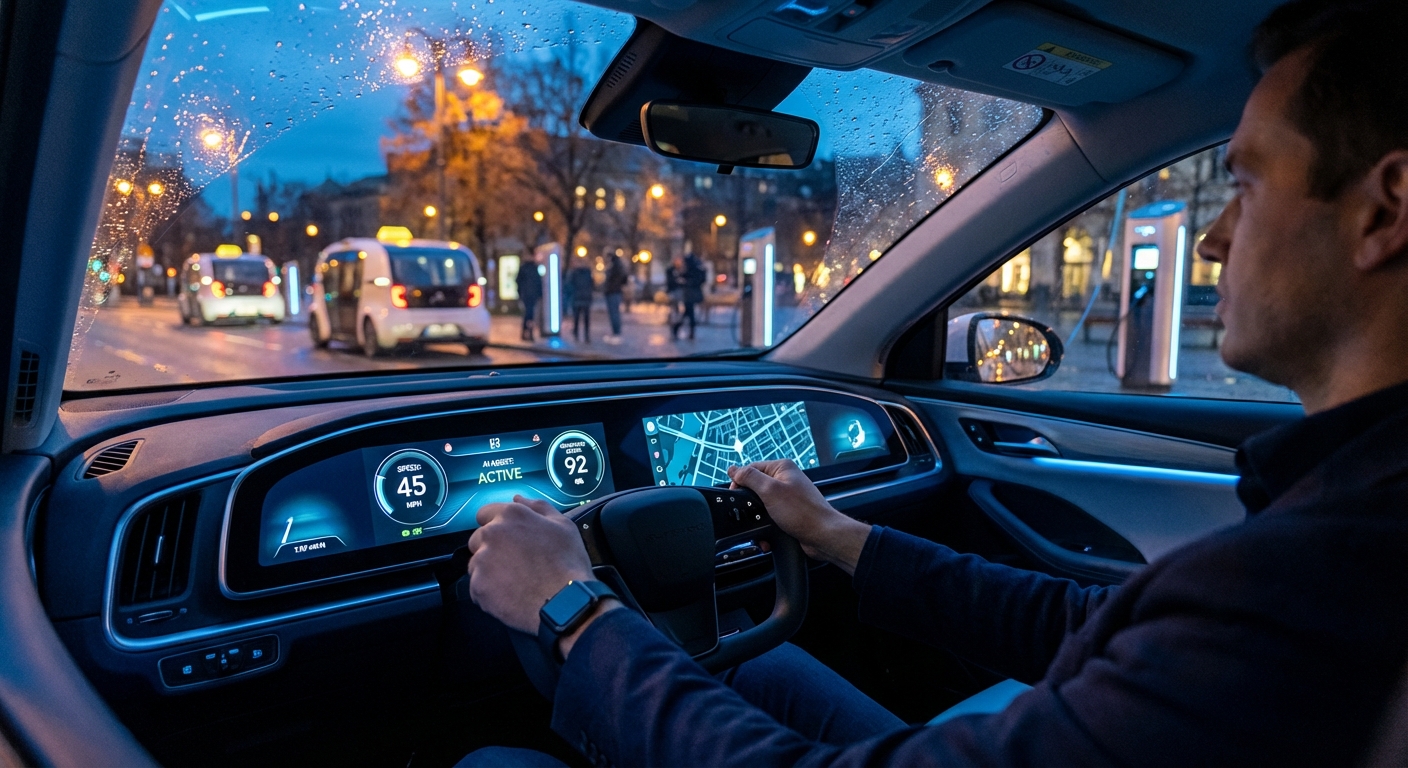
The days of one-size-fits-all car insurance premiums are fading fast. Telematics, the real-time collection of driving behavior data such as speed, hard braking, cornering, and mileage, is now at the center of how insurers assess risk and set rates. Usage-based insurance (UBI) programs reward careful drivers with lower premiums, while higher-risk drivers pay rates that more accurately reflect their habits.
UBI adoption is accelerating rapidly in 2026. Analyst estimates for the global insurance telematics market cluster between roughly $5.5 billion and $7.7 billion in 2026, growing at 17% to 22% annually and on track to more than triple by the mid-2030s. Measured by active policies, one industry estimate puts the global telematics insurance market at roughly 278 million active premiums in 2026, up from 216 million in 2025. North America continues to lead adoption, with Progressive, Allstate, State Farm, Liberty Mutual, and Nationwide anchoring the space, and UBI programs now reach more than 20 million policyholders in North America alone.
The delivery model is also shifting fast. Smartphone-based telematics is now the fastest-growing enrollment channel, and OEM-embedded connectivity in new vehicles is making enrollment nearly frictionless. Together, these two channels drive the majority of new UBI enrollments, with old-school OBD-II dongles still contributing but declining as a share of new sign-ups.
Beyond personal savings, telematics is reshaping the entire car insurance underwriting process by giving insurers richer, more accurate risk pools, which over time can lower overall market costs. Regulatory agencies are watching closely, however, with growing scrutiny on how collected data is used and whether telematics-based pricing introduces new forms of discrimination.

Compare Car Insurance Rates in Ohio
See if you qualify for a lower rate in less than 2 minutes
AI in Underwriting and Claims: Speed Meets Accuracy
Artificial intelligence is arguably the most transformative force in the car insurance industry right now. Industry surveys show 76% to 77% of insurers now run AI in at least one function, but only about 7% have achieved enterprise-wide deployment, meaning most firms operate with pockets of high automation rather than fully AI-run pipelines. NAIC data shows 88% of auto insurers already use or plan to use AI/ML models, and a WTW survey found that while just 16% currently use AI to augment human underwriting, 60% of insurers plan to prioritize it by 2028.
Where AI is fully deployed, the results are dramatic. Straight-through processing on simple auto claims has jumped from 10 to 15% up to 70 to 90%, resolution times have dropped from about 30 days to 7.5 days (a 75% speed-up), and claims handling costs have fallen 30% to 40%. Simple physical damage claims can now be processed in 24 to 48 hours, and FNOL-to-triage time has fallen from 4 to 8 hours down to under 5 minutes at carriers running agentic workflows. AI fraud detection delivers 35% to 40% improvements in hit rates, and 65% of carriers plan to scale AI agents in claims processing during 2026.
Underwriting has seen equally sharp gains. For standard risks, underwriting timelines have collapsed from 3 to 5 days down to roughly 12 to 15 minutes at leading carriers, and about 59% of carriers now automate at least part of claims intake. Machine learning and predictive analytics are used by 74% of insurers for pricing and risk assessment.
For consumers, AI-driven insurance pricing means faster service and potentially fairer premiums. Safe young drivers, for example, can now pay less based on actual behavior rather than age-based statistics alone. The rise of AI-powered claims automation is also changing how quickly you get paid after an accident.

Protect your car with Farmers
Average Rate:
Find coverage options that fit your budget.

The insurance savings you expect.
Average Rate:
Enjoy personalized policies, comprehensive coverage & more.

See how much you could save today!
Average Rate:
Drivers who switch their auto insurance and save with State Farm save $764 on average!

Safe Drivers Save with Allstate®
Average Rate:
Get rewarded with savings for having a clean driving record.
EV and Autonomous Vehicle Insurance: New Technology, New Challenges
Electric Vehicle Insurance: Costly but Narrowing
Electric vehicles are on the road in record numbers, and while insuring them still costs more than covering a traditional gas-powered car, the gap is finally narrowing. According to Insurify's 2026 data, the average annual EV premium is roughly $3,159 per year, about 42% more ($941 higher) than the $2,218 average for a gas vehicle. MoneyGeek pegs full-coverage EVs at approximately $3,281 per year, while The Charge Port's national average lands at $3,150. Encouragingly, when the comparison is limited to the nine top-selling EVs (mostly newer 2024-and-later models), the gap shrinks to just 18%, the largest single-year compression in four years.
| Cost Driver | Why It Matters |
|---|---|
| Battery repair/replacement | Lithium-ion packs can exceed $15,000; minor damage can total a vehicle |
| Specialized technicians | EV-certified mechanics are scarce, raising labor costs and repair times |
| High vehicle value | EVs average higher value than comparable gas cars, increasing insured value |
| Cybersecurity vulnerabilities | Electronic control units and charging ecosystems create new claim exposures |
| Advanced safety systems | Sensors and cameras are costly to repair, even in minor collisions |
Model choice matters enormously. Mainstream EVs like the Chevrolet Silverado EV, Hyundai Ioniq 5, and Subaru Solterra can be insured for under $2,000 per year, while luxury EVs like the Audi e-tron and top-trim Teslas can push $4,000 to $10,000 annually. For a full breakdown by model, see our guide on Tesla car insurance cost by model and how the aging vehicle fleet is affecting coverage decisions.
Some automakers, including Tesla, GM, and Rivian, are cutting out the middleman by offering their own insurance products. These car manufacturer insurance programs use real-time vehicle data to price premiums, and safe drivers can save significantly compared to traditional insurers.
Autonomous Vehicle Insurance: Liability in Limbo
Self-driving cars present one of the most complex liability puzzles in insurance history. The SELF DRIVE Act (H.R. 7390) was introduced by Rep. Bob Latta on February 5, 2026 and cleared the House Subcommittee on Commerce, Manufacturing, and Trade on a 12-11 vote on February 10, 2026. As of August 2026, the bill remains stuck at the full House Energy and Commerce Committee stage, has not received a floor vote, and has no Senate companion. Committee leadership has signaled it plans to keep pushing the bill forward, likely as part of a broader surface transportation reauthorization package.
Importantly, SELF DRIVE focuses on federal safety regulation and preemption, not detailed liability rules. It leaves licensing, registration, and insurance requirements at the state level, so liability continues to be determined case-by-case through state laws and product liability precedents.
| SAE Level | Description | Primary Liable Party |
|---|---|---|
| Level 2 | Partial Automation (e.g., Tesla Autopilot) | Human driver |
| Level 3 | Conditional Automation | Human + System (shared) |
| Level 4 | High Automation (e.g., Waymo) | Operator/Manufacturer |
| Level 5 | Full Automation | Manufacturer/System |
State-level regulations vary dramatically. For a comprehensive breakdown, read our full guide on software-defined vehicle risks and how ADAS technology is affecting car insurance rates.
Digital-First Insurers, Direct Models, and Regulatory Shifts
The Rise of Direct-to-Consumer Insurance
The way Americans buy car insurance is changing dramatically. After years of double-digit premium hikes, more consumers are shopping their coverage than at any point in recent history. A recent J.D. Power study found that 33% of drivers plan to switch insurers in 2026, the highest rate since 2018. The direct-to-consumer channel continues to outpace exclusive-agent and independent-agent channels in year-over-year growth, and embedded insurance at the point of vehicle purchase is accelerating with millennials and Gen Z. Price dominates decision-making, with roughly two-thirds of shoppers ranking it as their top factor.
Whether you go direct or through an agent, it always pays to compare. Review what affects car insurance rates to understand which factors carry the most weight, and check our tips on how to lower car insurance. Flexible options like on-demand pay-as-you-go coverage are also gaining traction with low-mileage drivers.
Regulatory Changes Reshaping the Market
State legislatures and regulators continue to reshape auto insurance pricing and coverage:
- Higher minimum coverage requirements: California moved to 30/60/15 in 2025, and New Jersey completed the second phase of P.L.2022, c.87 on January 1, 2026, raising minimum bodily injury liability to $35,000 per person and $70,000 per accident, matching uninsured/underinsured motorist limits, and $25,000 property damage. Hawaii also moved to 40/80/20 in 2026.
- Florida no-fault status: Contrary to earlier expectations, Florida's PIP repeal did not happen in 2026. SB 522 (and its House companion HB 769) died in committee when the legislature adjourned on March 13, 2026, meaning Florida drivers still must carry the same $10,000 PIP and $10,000 PDL minimums. Reform proposals are expected to return in 2027.
- Consumer protections: Louisiana implemented new transparency rules effective January 2026, so a first lapse in coverage cannot trigger a rate increase and cancellation notice periods doubled to 60 days. Texas now requires written reasons for policy declines and cancellations.
- AI oversight: The NAIC continues to develop AI governance frameworks in 2026 to ensure fairness and transparency in pricing models, while Colorado's insurance-specific AI rule requiring disparate impact testing is already active.
- Tariff pressure: The 25% Section 232 tariff on imported auto parts (active since May 2025) is still working its way through repair invoices. USMCA-qualifying parts remain exempt, and bilateral deals with the EU, Japan, and South Korea have reduced rates to 15% for those origins, but most other imported parts still carry the full 25% duty. The American Property Casualty Insurance Association estimates the tariffs could add 2.7% to auto repair claims costs, translating to roughly $3.4 billion in additional personal auto premiums. Learn more about how auto tariffs are driving up car insurance costs.
- Rate stabilization: After a roughly 6% national drop in 2025, Insurify's mid-year 2026 report shows premiums up 1% in the first half of the year, with the average full-coverage premium landing near $2,237 and projected to end 2026 around $2,242. The Zebra pegs the 2026 average at $2,256. However, that headline hides significant state-level variation: rates rose in 27 states in the first half of 2026 and are projected to rise in 32 states by year-end. The Zebra projects the largest 2026 increases in New Jersey, Nevada, California, New York, and Washington, D.C., while 11 states saw decreases from 2025 to 2026, with Florida seeing the largest drop (and some drivers even receiving refunds). BLS data also shows auto insurance prices actually fell 2.0% in June 2026, the steepest monthly drop since at least mid-2024, hinting at short-term easing. If tariff-driven parts inflation fully hits rate filings, Insurify warns the 2026 increase could jump from 1% to about 4%.
Pricing is also becoming more sharply risk-based. Clean-record drivers are seeing relative stability, while DUI, teen, and minimum-coverage premiums continue to climb faster than average. That is why the gap between standard and high-risk pricing is widening, and why understanding the affordability picture in your state matters more than ever.
Frequently Asked Questions
Q: What is usage-based insurance and how much can I save? Usage-based insurance (UBI) tracks your driving behavior, including speed, braking, mileage, and time of day, through an app or embedded vehicle system and uses that data to set your premium. Safe, low-mileage drivers can save anywhere from 10% to 40% annually compared to standard rates. Programs are widely available from major insurers including Progressive, State Farm, Allstate, Nationwide, and GEICO, whose parent carriers dominate the North American UBI market. The tradeoff is sharing detailed driving data with your insurer, so it is worth reviewing privacy policies before enrolling.
Q: Why is electric vehicle insurance so much more expensive? EV insurance costs more primarily because of the high cost of battery repair and replacement (packs can exceed $15,000), the limited availability of EV-certified technicians, and the higher average value of electric vehicles. Even minor accidents can result in a total loss due to battery damage, and parts supply chains remain strained in many regions. In 2026, Insurify data shows EV drivers pay an average of $3,159 per year versus $2,218 for gas cars (about 42% more), though the gap narrows to just 18% among the top-selling EV models as repair networks mature.
Q: Who pays for damages if a self-driving car causes an accident? Liability in autonomous vehicle accidents depends on the level of automation, the cause of the crash, and the state where it occurred. In fully autonomous modes (Level 4 to 5), manufacturers and software developers are typically the primary liable parties under product liability law. In semi-autonomous situations requiring human oversight, the driver or vehicle owner may share fault. The SELF DRIVE Act (H.R. 7390) is still stuck at the House Energy and Commerce Committee as of August 2026 and focuses on safety regulation, not liability, so most rules continue to be set by state law and case-by-case legal precedent.
Q: Is buying car insurance directly online better than using an agent? It depends on your situation. Direct-to-consumer and digital-first insurers often offer faster quotes, lower overhead costs, and convenient telematics discount programs. However, a licensed agent provides personalized guidance that can help you avoid coverage gaps, especially for complex situations like owning an EV, having a unique vehicle, or running a rideshare side hustle. For straightforward coverage needs, going direct can save both time and money, but always compare at least 3 to 5 quotes regardless of channel.
Q: How are new regulations changing what I pay for car insurance in 2026? New Jersey's minimum liability jumped to 35/70/25 on January 1, 2026, and Hawaii moved to 40/80/20, which will nudge premiums higher for minimum-coverage drivers in those states. Contrary to widespread expectations, Florida's PIP repeal did not pass in 2026 (SB 522 died in committee), so the state's no-fault system remains intact. Section 232 tariffs on auto parts continue to create upward pressure on repair costs, and the NAIC is rolling out AI governance frameworks that could affect how insurers use data to price your policy. Overall, national rates are stabilizing at around 1% growth after a 6% drop in 2025, but state-level impacts vary widely, so it is worth reviewing what affects car insurance rates in your area.