
Compare Car Insurance Rates in Ohio
See if you qualify for a lower rate in less than 2 minutes



The Most Common Reasons Car Insurance Companies Cancel Policies
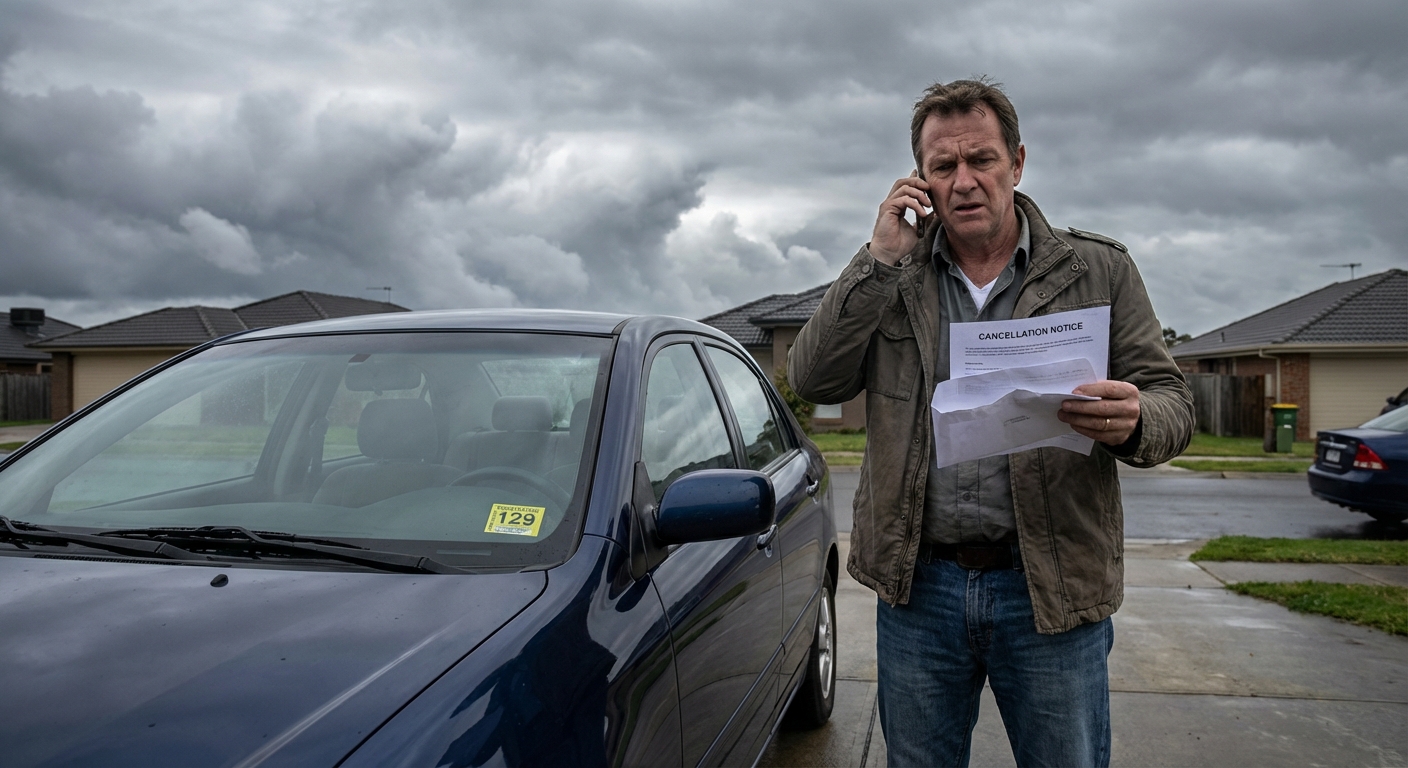
Few things are more alarming than receiving a notice that your car insurance has been cancelled. But insurance companies don't cancel policies arbitrarily. There are specific, legally recognized reasons they're permitted to do so. Understanding those reasons is the first step toward protecting yourself.
Non-Payment of Premium
Non-payment is the single most common trigger for a car insurance cancellation. Industry sources including Forbes Advisor, Policygenius, Insurify, Bankrate, and GEICO consistently identify missed or late premium payments as the leading cause of cancellations in 2026. If you miss a payment and don't catch it within your grace period, your insurer can terminate your policy. Even autopay failures (due to an expired card or low bank balance) count. A non-payment cancellation can raise your future premiums significantly, with lapses under 30 days averaging around an 8 to 12% rate increase, while lapses over 30 days can push premiums up by 22 to 35% or more. Learn more about car insurance grace periods and how much time you actually have to make a late payment before cancellation kicks in.
Fraud or Material Misrepresentation
If an insurer discovers you provided false information on your application, such as your garaging address, the number of drivers in your household, or prior accidents, they can cancel immediately. This applies to fraudulent claims as well. Intentional misrepresentation is one of the few reasons a company can cancel a policy at any time, even well into the policy term. If you're worried about being turned down by future carriers, our guide on being denied car insurance walks through what to do next.
License Suspension or Revocation
A suspended or revoked driver's license gives your insurer grounds to cancel your policy mid-term. This is especially common after DUI convictions, accumulating too many demerit points, or serious traffic violations. Be aware that adding a suspended driver to your policy without notifying your insurer can also trigger a cancellation. If you're navigating a suspension now, review our guide on car insurance after license suspension for SR-22 requirements and reinstatement steps.
High-Risk Violations
Multiple speeding tickets, a DUI, reckless driving, or being convicted of a serious moving violation all signal elevated risk to insurers. After the initial 60 to 90-day underwriting window, insurers in most states can only cancel mid-term for a narrow set of reasons, but high-risk violations qualify. According to 2026 data from LendingTree, a single DUI conviction raises average annual premiums by 74.5% nationally, from about $2,130 to $3,716, an extra $1,585 a year. ValuePenguin's 2026 analysis puts the national average increase closer to 88% ($208 to $391 per month for full coverage), while NerdWallet's 2026 study shows a 90% average full-coverage increase (about $2,113 more per year). Hardship License After DUI reports an 80% national average with state increases ranging from about 28% in Hawaii to over 300% in North Carolina and California. North Carolina drivers see the steepest increase at roughly 284 to 330%, followed by Hawaii at around 241% and California at 190%. Michigan drivers frequently see rates jump about 150 to 182% on a 7-year lookback.
Too Many Claims
Filing multiple claims in a short period, especially at-fault accidents, paints you as a high-risk policyholder. While a single claim rarely results in cancellation, a pattern of frequent claims (such as three at-fault claims within 24 months) often leads to non-renewal or mid-term cancellation depending on your state's laws. Drivers with a recent at-fault accident typically see a 20 to 45% rate increase for standard accidents and 40 to 60%+ for severe or injury-related claims, generally lasting three to five years.
Unauthorized Drivers or Unreported Policy Changes
Allowing non-listed drivers to regularly use your vehicle, or failing to update your policy for mid-term changes such as a new address or newly licensed household member, can violate your policy terms and trigger cancellation. Failing to disclose rideshare or delivery driving is another increasingly common reason for cancellation in 2026. Always notify your insurer of any significant changes to your household or vehicle usage.
Company-Side Decisions
Insurers sometimes cancel or non-renew policies for reasons entirely outside your control, such as exiting a specific region or adjusting their underwriting capacity. This type of cancellation does not harm your insurance record. If a company exit forces you to switch, learn about what to do when your insurance company leaves your state so you don't inadvertently create a costly gap.

Compare Car Insurance Rates in Ohio
See if you qualify for a lower rate in less than 2 minutes
Cancellation vs. Non-Renewal: What's the Difference?
These two terms are often confused, but they carry very different legal meanings and have different impacts on your insurance future.
What Is a Policy Cancellation?
A cancellation terminates your coverage before your policy's expiration date. This is the more severe of the two actions. After the first 60 to 90 days of a new policy, most states restrict when an insurer can cancel you mid-term to a short list of qualifying reasons (nonpayment, fraud, license revocation, and similar events). A cancellation creates an immediate coverage gap, is typically reported to your state's DMV, and generally remains on your motor vehicle record for 3 to 5 years, while your CLUE (Comprehensive Loss Underwriting Exchange) claims history report retains related information for up to 7 years under LexisNexis retention rules.
What Is a Non-Renewal?
A non-renewal simply means your insurer has decided not to extend your policy when it expires at the end of your current term. Your coverage continues through the full policy period, so there's no mid-term disruption. Non-renewals are less restricted for insurers and can happen for reasons like a high claims history, the insurer exiting your area, or underwriting changes. If you're facing a non-renewal, review your options in our switching guide before your term ends.
State Notice Requirements
Insurance companies are legally required to provide advance written notice before cancelling or non-renewing your policy. The timeframes vary by state but generally follow these patterns:
| Reason for Cancellation | Typical Notice Period |
|---|---|
| Non-payment of premium | 10 to 15 days |
| Fraud or misrepresentation | 20 to 30 days |
| Other qualifying reasons (first 60 to 90 days) | 20 to 45 days |
| Non-renewal (any reason) | 30 to 60 days |
Several important state-level updates are now in effect for 2026:
- Texas HB 2067 (effective January 1, 2026) requires insurers to automatically provide a written explanation for any declination, cancellation, or non-renewal decision on a home or auto policy. No consumer request is needed. Insurers must also submit periodic reports to the Texas Department of Insurance (TDI). The baseline 10-day advance notice for personal auto non-payment cancellations remains unchanged.
- Louisiana Act 476 (effective January 1, 2026) prevents insurers from raising premiums or adding surcharges based on a policyholder's first lapse in coverage if the lapse is 90 days or less. If you maintain continuous coverage for five consecutive years, the next lapse is treated as a new "first lapse." Louisiana's baseline auto cancellation notice remains 30 days. Insurers that violate the rule must refund the excess premium charged.
- Texas TDI §5.7015 amendments (effective September 1, 2026) require insurers to refund any unearned premium on a strictly pro-rata basis within 15 business days of the cancellation effective date.
- New York and Pennsylvania each require advance written notice for cancellations and non-renewals, with timing that varies by reason and policy type. Pennsylvania drivers must also report a cancellation to PennDOT within a defined window to avoid a registration suspension.
Always check your state's Department of Insurance website for the exact requirements.

Protect your car with Farmers
Average Rate:
Find coverage options that fit your budget.

The insurance savings you expect.
Average Rate:
Enjoy personalized policies, comprehensive coverage & more.

See how much you could save today!
Average Rate:
Drivers who switch their auto insurance and save with State Farm save $764 on average!

Safe Drivers Save with Allstate®
Average Rate:
Get rewarded with savings for having a clean driving record.
Your Rights and How to Appeal a Car Insurance Cancellation
Being dropped doesn't mean you're out of options. Policyholders have meaningful legal protections, and knowing them can save you money and stress.
Your Core Rights
- Written notice with reason: Your insurer must provide a written explanation of exactly why your policy is being cancelled. As of January 1, 2026, Texas mandates this explanation be automatically provided under HB 2067, with no consumer request needed.
- Premium refund: If you prepaid your premium and the insurer cancels mid-term, you're entitled to a refund for the unused portion of your coverage. The method used (pro-rata vs. short-rate) affects how much you get back. Learn more about short rate vs pro rata cancellation so you know what to expect.
- Right to appeal: You can formally dispute a cancellation through your state's insurance department.
- Bad faith protection: If your insurer cancels without proper notice or valid legal grounds, you may have a bad faith insurance claim, which could entitle you to additional compensation.
How to Appeal a Cancellation
Step 1: Contact your insurer immediately. Ask for a full written explanation of the cancellation reason, whether reinstatement is possible, and what the deadlines are. For non-payment cancellations, paying the overdue balance (plus any reinstatement fees) is often all it takes. Reinstatement typically involves paying outstanding balances, covering reinstatement fees (commonly $25 to $50, up to $150 at some carriers), and signing a no-loss statement certifying that no accidents or losses occurred during the lapse. Review the full car insurance reinstatement process to understand your eligibility.
Step 2: Gather documentation. If you believe the cancellation is unfair or based on incorrect information, collect all relevant records including payment receipts, correspondence, your original application, and any claim records.
Step 3: File a complaint with your state insurance department. If your insurer won't reverse the decision and you believe the cancellation was improper, file a formal complaint. Your state's Department of Insurance can investigate and intervene. If you were denied a policy outright, our guide on reconsideration after a denial walks through the appeal process.
Step 4: Consult an attorney if needed. If a bad faith cancellation has caused financial harm, a licensed insurance attorney can help you explore legal remedies.
What Happens Next: Consequences and Finding New Coverage
Whether you successfully appeal or need to start fresh, understanding the fallout from a cancellation is critical to protecting your financial future.
Consequences of a Policy Cancellation
A cancellation doesn't just leave you uninsured. It follows you. Here's what to expect based on the latest 2026 rate data:
| Coverage Gap Duration | Estimated Rate Impact |
|---|---|
| Less than 30 days | ~8 to 12% higher premiums |
| 30+ days | ~22 to 35% higher premiums |
| 45 to 60 days | Up to 35 to 48% higher premiums |
| At-fault accident involved | 20 to 60% rate increase for 3 to 5 years |
| DUI or serious violation involved | 74 to 90% national avg. ($3,716 to $4,461/yr) |
Cancellations typically stay on your motor vehicle record for 3 to 5 years, while your CLUE report (governed by LexisNexis retention rules) can retain adverse claims information for up to 7 years. During the first 3 years, you'll likely be flagged as high-risk by standard insurers. Your state's DMV may also be notified, which can trigger registration suspension or other penalties. Understanding the full scope of a car insurance lapse can help you plan your next steps.
Steps to Find New Coverage After Cancellation
- Try reinstatement first. Contact your original insurer, since reinstatement is usually cheaper and faster than a new policy. Grace periods are typically 10 to 30 days depending on your carrier, and the process is often completed same-day or within 1 to 3 business days once payment and a no-loss statement are submitted.
- Shop multiple insurers. Get quotes from at least five companies. Standard carriers like Progressive, State Farm, and Travelers are known to price high-risk drivers more competitively than many rivals after a DUI. Our full switching guide walks through the process.
- Consider state-assigned risk plans. If standard insurers deny you coverage, every state has an assigned risk pool that provides the minimum required coverage.
- Look into non-owner policies if you don't own a vehicle but need to maintain continuous coverage to avoid rate penalties from a gap on your record.
- Check your consumer reports for errors. Inaccuracies in your driving record or CLUE report can cause unwarranted cancellations or rate increases. Review and correct any errors before shopping for new coverage.
| Insurer | Strength for High-Risk Drivers | 2026 Notes |
|---|---|---|
| State Farm | Cheapest full coverage post-DUI per InsureMojo | ~$192/mo ($2,304/yr) full coverage post-DUI |
| Progressive | Top-rated for DUI/DWI per WSJ Buyside & CNBC | Strong SR-22 acceptance, ~$2,551 to $3,533/yr |
| Travelers | Best cheap high-risk pick per MoneyGeek & MarketWatch | ~$3,181/yr full coverage, high-risk friendly |
| GEICO | Consistently competitive high-risk rates | ~$2,372/yr high-risk avg per AutoInsurance.com |
| USAA | Cheapest high-risk (military-eligible only) | ~$2,486 to $2,664/yr for eligible drivers |
| National General | Cheapest DUI minimum coverage per MoneyGeek | ~$703 to $741/yr min coverage post-DUI |
| Erie | Great for drivers with two accidents per Forbes | ~$3,017/yr where available |
| Dairyland | Nonstandard specialist; fast SR-22 filing | Sentry Insurance brand for hard-to-insure |
| Direct Auto | Best for hard-to-insure/budget shoppers | Pay-weekly options available |
| The General | Fast approval for cancellations & lapses | App-based quoting |
Rates are averages based on 2026 industry comparison data; actual quotes vary by state, record, and vehicle. For a deeper dive, see our high-risk car insurance guide.
Frequently Asked Questions
Can my insurance company cancel my policy at any time?
Not exactly. During the first 60 to 90 days of a new policy, insurers generally have more flexibility to cancel while they complete underwriting. After that initial period, most states restrict mid-term cancellations to a short list of legal reasons: primarily nonpayment, fraud or misrepresentation, serious license violations, and unauthorized drivers. You should always receive written notice in advance, with the specific reason and effective date clearly stated. Texas now requires this explanation to be provided automatically in writing, effective January 1, 2026 under HB 2067.
How much notice does my insurance company have to give before cancelling?
Notice requirements vary by state, but most require 10 to 15 days for non-payment cancellations and anywhere from 20 to 45 days for other reasons. Non-renewals typically require 30 to 60 days' advance written notice. Under Texas HB 2067 (effective January 1, 2026), insurers must automatically provide a written explanation for any cancellation or non-renewal. Always check your state's Department of Insurance website for the most current rules.
Will a car insurance cancellation affect my ability to get new insurance?
Yes. A cancellation, especially for reasons like fraud, DUI, or repeated claims, will be flagged on your motor vehicle record for 3 to 5 years and can appear on your CLUE report for up to 7 years. Many standard insurers will still cover you, but at higher rates. DUI convictions typically result in premium increases of 74 to 90% nationally per LendingTree, ValuePenguin, and NerdWallet, with North Carolina rates spiking around 284 to 330% and California and Michigan rates roughly doubling. In severe cases, you may need to use a non-standard or high-risk insurer like Dairyland, Direct Auto, National General, or The General, or your state's assigned risk pool, until your record improves.
What's the fastest way to fix a cancellation due to non-payment?
Contact your insurer immediately and pay the outstanding balance along with any applicable reinstatement fees (typically $25 to $50, sometimes up to $150). Most companies allow reinstatement within a 10 to 30-day window after cancellation, and once payment is received, the process is often completed same-day or within 1 to 3 business days. You'll likely need to sign a no-loss statement certifying that no accidents or losses occurred during the lapse period. Louisiana's Act 476 (effective January 1, 2026) also prevents insurers from automatically hiking your rate after a qualifying first lapse of 90 days or less.
Is there a difference between being cancelled and being non-renewed?
Yes, and it matters significantly. A cancellation ends your coverage mid-term, creating an immediate gap and being reported to your DMV. A non-renewal simply means your insurer won't extend coverage when your current term ends, so your coverage remains active until then, giving you time to find a new policy without a gap. Non-renewals are generally less damaging to your insurance history. If you want to switch proactively, learn more about how to cancel car insurance to avoid creating a new gap before your replacement policy is in place.