
Compare Car Insurance Rates in Ohio
See if you qualify for a lower rate in less than 2 minutes



How Car Insurance Automatic Renewal Works
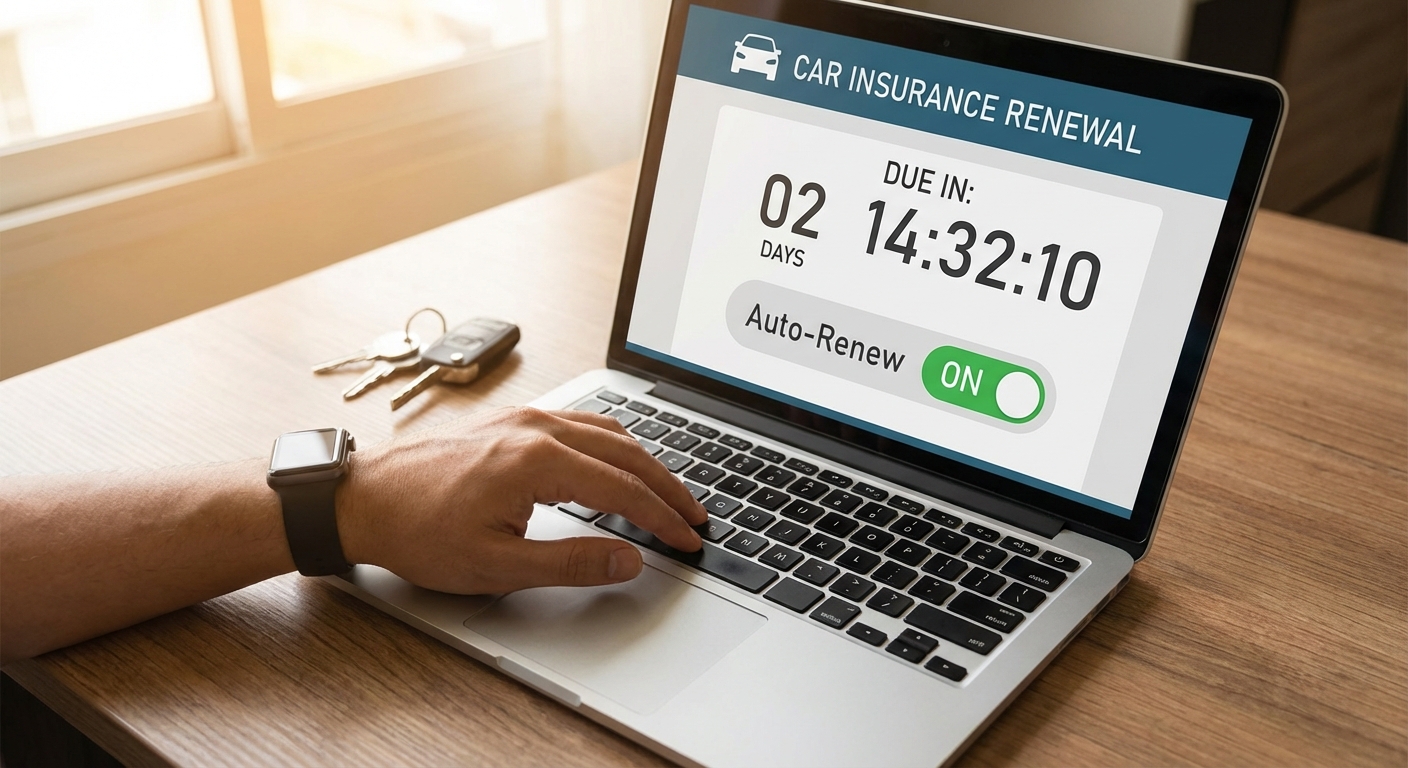
Car insurance automatic renewal means your policy rolls over into a new term, typically 6 or 12 months, without any action required from you. If you don't contact your insurer to cancel or make changes before the current term ends, the policy automatically renews and your coverage continues uninterrupted.
Your insurer will send a renewal notice via email or mail roughly 30 to 45 days before your expiration date. This notice outlines any changes to your premium, updated coverage details, available discounts, and instructions on how to make changes or cancel. Understanding when your car insurance expires, including the exact time of day your coverage ends, is just as important as knowing your renewal date.
If you have auto-pay set up on your policy, your new premium is automatically charged to your linked bank account or credit card on the renewal date. No manual payment needed.
What Is Auto-Pay and How Does It Connect to Renewal?
Auto-pay and auto-renewal are related but separate features. Auto-renewal keeps your policy active. Auto-pay handles the payment automatically when renewal happens. Here's how they work together:
| Feature | What It Does | Can You Have One Without the Other? |
|---|---|---|
| Auto-Renewal | Renews your policy for a new term automatically | Yes, you can manually pay at renewal |
| Auto-Pay | Charges your payment method automatically | Yes, but enrollment in both is common |
| Both Enabled | Coverage continues plus payment is processed hands-free | Most common setup for convenience |
Autopay discounts vary widely by insurer and state in 2026. Third-party comparison analyses put State Farm's, Geico's, Progressive's, and Allstate's automatic payment discounts at up to about 10%, while Liberty Mutual is frequently cited up to 15%. Because availability differs by state, always confirm the exact percentage with your carrier. Learn more about car insurance payment methods to understand how payment plans work and where savings opportunities exist.
Renewal Notice Requirements & State Laws
Insurers are legally required to notify you before your policy auto-renews. The exact timeline varies by state, but most states require a minimum of 30 days' advance notice. Some states mandate 45 or even 60 days for circumstances such as non-renewal or significant rate increases.
Key Notice Requirements by Scenario
| Scenario | Typical Notice Requirement |
|---|---|
| Standard auto-renewal | 20-30 days before expiration |
| Non-renewal by insurer | 30-60 days (varies by state) |
| Significant rate increase | 30-45 days in most states |
| Mid-term cancellation by insurer | 10-20 days (usually for nonpayment) |
The regulatory landscape has continued to evolve throughout 2026. The FTC's "Click to Cancel" Negative Option Rule was vacated by the U.S. Court of Appeals for the Eighth Circuit on July 8, 2025, due to procedural flaws (specifically the FTC's failure to conduct a required economic analysis before enacting the rule). The FTC has actively worked to revive it: on January 30, 2026 the FTC submitted a draft Advance Notice of Proposed Rulemaking (ANPRM) to OIRA, formally publishing it in March 2026, and the public comment period closed April 13, 2026. As of August 2026, the FTC is still reviewing feedback with no replacement rule proposed in final form. Legal analysts expect the new rulemaking process to take multiple years.
In the meantime, the FTC continues to enforce similar requirements under ROSCA (the Restore Online Shoppers' Confidence Act), which mandates clear disclosure and easy cancellation for services signed up online, along with Section 5 of the FTC Act, which prohibits unfair or deceptive practices around cancellation "dark patterns."
Several states have their own strong auto-renewal protections that remain fully in force:
| State | Effective Date | Key Requirement |
|---|---|---|
| California (AB 2863) | July 1, 2025 | Annual reminders; express consent; cancel through the same channel used to sign up |
| New York | November 5, 2025 | Renewal reminders 15-45 days before renewal or cancellation deadline |
| Massachusetts (940 CMR 38) | September 2, 2025 | Bans negative option billing without consent; strict data-pass protections |
| Connecticut (SB 3 / PA 25-44) | July 1, 2026 | Annual auto-renewal reminders, expanded cancellation channels, private right of action |
Connecticut's updated auto-renewal law took effect July 1, 2026 and requires businesses to send annual reminders for consumer agreements with automatic renewal or continuous-services provisions. The reminder must explain the service, the renewal charges, and how to prevent renewal or terminate service. The law also expands cancellation options (including a website link, reply-by-email option, and prominently displayed phone number) and bars businesses from making cancellation harder than sign-up. Important note for drivers: Connecticut's auto-renewal law generally targets consumer subscription and service agreements, and car insurance renewals in that state continue to follow insurance-specific statutes (including a 60-day non-renewal notice under Conn. Gen. Stat. § 38a-323).

Compare Car Insurance Rates in Ohio
See if you qualify for a lower rate in less than 2 minutes
The Pros and Cons of Car Insurance Auto-Renewal
Letting your car insurance auto-renew is convenient, but it's not always the smartest financial move. Here's a balanced breakdown to help you decide.
A lapse in car insurance coverage, even for a single day, can result in fines, license suspension, and significantly higher premiums down the road. Insurers report lapses to the DMV, which can trigger license or registration suspension and may require SR-22 filing as proof of high-risk insurance for up to 3 years in most states. In that sense, auto-renewal is a genuine safety net.
However, loyalty to one insurer doesn't always pay off. Long-term policyholders are frequently subject to a car insurance loyalty penalty, where insurers gradually raise rates for customers who rarely shop around, knowing they're less price-sensitive. Consumer Federation of America research shows long-term customers pay roughly 20% to 32% more than new customers for equivalent coverage, and the overpayment tends to grow with tenure:
| Years with Same Insurer | Estimated Annual Overpayment |
|---|---|
| 1-3 years | ~$287/year |
| 4-6 years | ~$624/year |
| 7-10 years | ~$1,043/year |
| 10+ years | ~$1,456/year |
These figures represent how much more long-term customers may pay compared to a new customer quoted for identical coverage. To see how your 6-month vs 12-month policy affects how often your rates can change, check out our guide on policy term length.
When to Shop for Better Rates Before Renewal
The ideal window to compare car insurance quotes is 20 to 30 days before your renewal date. According to LendingTree's survey of nearly 2,000 U.S. drivers, 92% of switchers saved money, with a median savings of $461 per year. This window gives you time to:
- Receive and review your renewal notice with updated pricing
- Gather quotes from at least 3 competing insurers
- Select and bind a new policy
- Cancel your existing policy without a coverage gap
Experts recommend reviewing your car insurance policy checklist at least once per year, and renewal time is the perfect trigger. According to the LexisNexis Q2 2026 Insurance Demand Meter (released August 17, 2026), 47.2% of auto policies-in-force had been shopped at least once in the prior 12 months, just shy of Q1's all-time high of 47.3%. Quarterly year-over-year shopping growth slowed to 1.4%, down from 3.2% in Q1, but consumers continued shopping at near-record levels. Here are the top situations when you should absolutely compare rates before auto-renewing:
If you do find a better deal elsewhere, make sure your new policy is active before canceling the old one to avoid a coverage gap. You can also review what to expect in our 2026 car insurance renewal guide before making any decisions. For drivers looking to reduce their premium regardless of switching, our guide on how often to switch car insurance walks through the optimal shopping cadence.

Protect your car with Farmers
Average Rate:
Find coverage options that fit your budget.

The insurance savings you expect.
Average Rate:
Enjoy personalized policies, comprehensive coverage & more.

See how much you could save today!
Average Rate:
Drivers who switch their auto insurance and save with State Farm save $764 on average!

Safe Drivers Save with Allstate®
Average Rate:
Get rewarded with savings for having a clean driving record.
How to Opt Out of Car Insurance Auto-Renewal
Stopping your car insurance auto-renewal is straightforward. Here's a step-by-step approach:
Step-by-Step: Canceling or Opting Out
Step 1: Review your renewal notice Open your renewal notice as soon as it arrives. Note the expiration date, new premium amount, and any instructions for opting out or canceling. Even though the FTC's Click to Cancel rule was vacated in 2025 and the new rulemaking is still underway, state laws and ROSCA still require insurers to make cancellation instructions reasonably accessible, especially for policies purchased online.
Step 2: Secure replacement coverage first If you're switching insurers, bind your new policy before canceling the old one. Even a single-day insurance gap can have serious consequences, including being denied coverage for a claim, facing fines, or seeing your future premiums spike significantly. Our step-by-step guide to canceling car insurance walks through the full process, including how pro-rata and short-rate refunds work.
Step 3: Contact your current insurer You can opt out or cancel via:
- Phone: Call your insurer or local agent with your policy number
- Online portal or app: Log into your account and toggle off auto-renewal or submit a cancellation
- In writing: Send a written cancellation request and request written confirmation in return
Step 4: Cancel auto-pay separately Turning off auto-renewal does not automatically stop your auto-pay. Disable your scheduled payment in your account settings or notify your insurer directly to avoid being charged.
Step 5: Confirm cancellation in writing Request an email or written confirmation with your cancellation effective date. Also check your bank or credit card statements in the weeks following to ensure no charges were processed.
If your insurer is the one choosing not to renew your policy, they are required to provide advance notice, typically 30 to 60 days depending on your state. In that case, review your options promptly and begin shopping for a new policy right away. If you're considering switching insurers entirely, review our guide on switching car insurance companies for timing tips and pitfalls to avoid.
Frequently Asked Questions
What happens if I miss the opt-out deadline before my car insurance auto-renews?
If your policy auto-renews before you had a chance to cancel, you typically have a short window to cancel without penalty. Contact your insurer immediately and ask about their cancellation policy for newly renewed terms. In most cases, you can still cancel and receive a prorated refund for unused premium, though some insurers may apply a short-rate cancellation fee. Acting quickly is key, and the sooner you reach out, the more options you'll have.
Can my car insurance rate increase when it auto-renews?
Yes, your premium can change at each renewal period. National full-coverage averages in August 2026 range from about $2,237 (Insurify) to $2,441 (MarketWatch) per year, with The Zebra reporting a 3% year-over-year increase to $2,256 and NerdWallet at $2,356. Insurify also projects rates will climb in 32 states by year-end, pushing the national average to about $2,242. Always read your renewal notice carefully to catch any pricing shifts before the new term begins.
Does auto-pay and auto-renewal mean the same thing?
No, they are two separate features. Auto-renewal means your policy coverage rolls over into a new term automatically, while auto-pay means your premium payment is automatically charged to a linked bank account or card. You can have auto-renewal without auto-pay (and pay manually at renewal), or auto-pay without auto-renewal, though most policyholders enable both together for convenience. If you cancel auto-renewal, remember to also cancel your auto-pay to prevent unwanted charges.
How far in advance should I shop for car insurance before my renewal?
The optimal window is 20 to 30 days before your renewal date. This gives you enough time to receive your renewal notice, compare quotes from multiple insurers, select a new policy, and cancel your existing coverage without creating a gap. LendingTree data shows 92% of switchers save money, with a median savings of $461 per year. Shopping too early or too late can lead to pricing that shifts before your start date or too few options to compare effectively.
Will canceling my auto-renewal affect my grace period?
Canceling auto-renewal itself does not affect your grace period, and your coverage remains active until the policy expiration date. However, if you cancel mid-term or stop making payments without a replacement policy in place, you could be driving without coverage. Most insurers offer a grace period of roughly 3 to 30 days for missed payments depending on the carrier, but coverage rules during that window vary by insurer and state. If your policy has already lapsed, our guide on what to do after car insurance lapses walks through the immediate next steps. Always confirm the exact terms with your insurer before assuming you're still covered.