
Compare Car Insurance Rates in Ohio
See if you qualify for a lower rate in less than 2 minutes



Step 1: Stop Driving and Contact Your Insurer Immediately
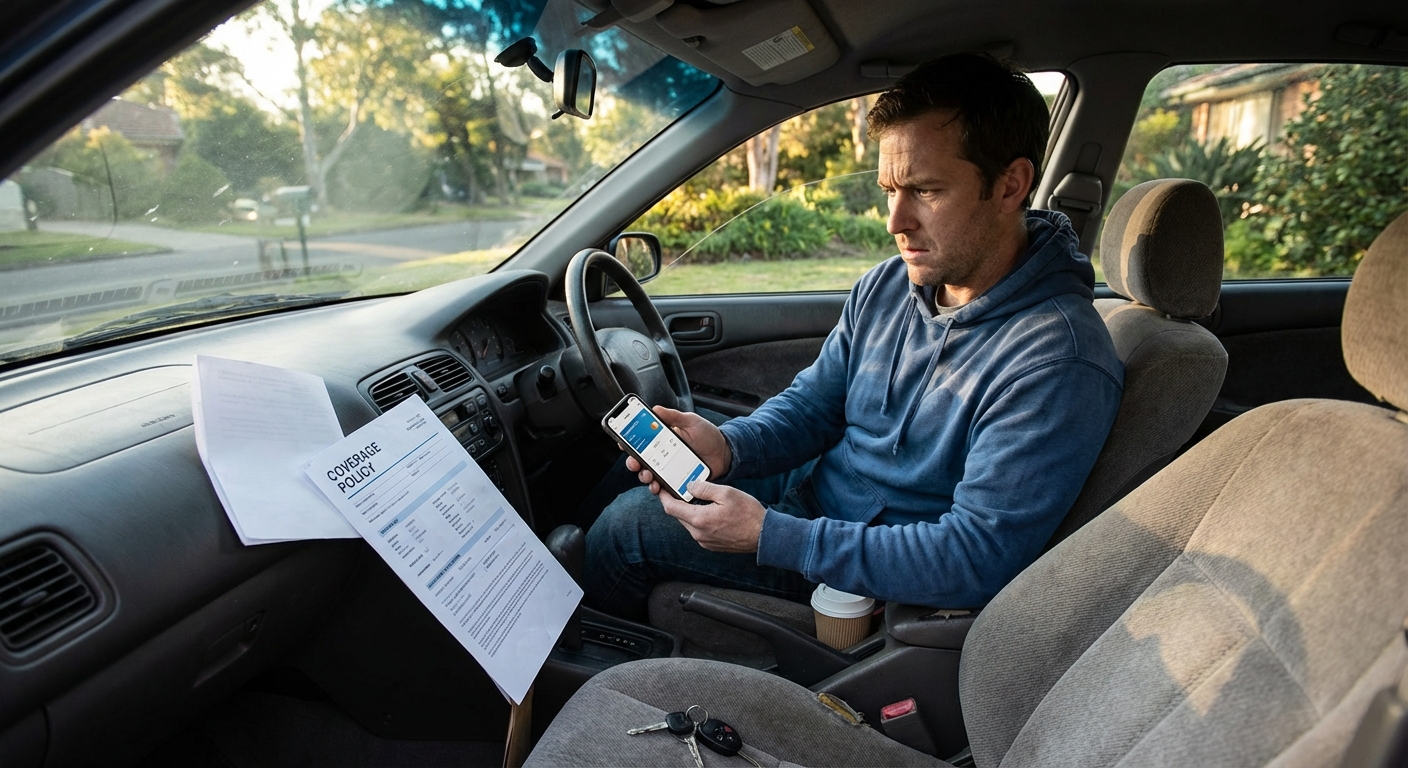
The moment you realize your car insurance has lapsed, stop driving. This is the most important step you can take. Operating a vehicle without valid insurance is illegal in nearly every U.S. state, and the consequences of being caught are severe.
Once you've parked the car, call your insurance company right away. Have your policy number ready and ask these specific questions:
- What is the exact lapse date? Confirm when your coverage ended.
- Why did the policy lapse? Was it a missed payment, non-renewal, or cancellation?
- Is a grace period still active? Most insurers offer a grace period of 3 to 30 days after a missed payment before officially canceling your policy.
- Am I eligible for reinstatement? Find out if you can restore your existing policy rather than starting from scratch.
Understanding Grace Periods
Most auto insurance companies offer a grace period ranging from 3 to 30 days. During this window, your coverage may still be technically active, giving you time to make a missed payment without an official lapse hitting your record. However, grace periods are not guaranteed by law in every state. Learn more about how late payments affect your policy so you know exactly where you stand.
| Insurer | Late Payment Grace Period |
|---|---|
| Allstate | Up to 30 days (payment rolls to next month; late fees apply) |
| State Farm | ~10 to 15 days |
| Progressive | ~10 to 20 days (state notice required) |
| GEICO | ~9 days (plus ~14-day cancellation notice window) |
| Liberty Mutual | ~5 days |
| Nationwide | ~3 to 5 days |
Important: Even if you're within the grace period, you may not be covered for claims in some states. Always check your specific policy terms or call your insurer directly to confirm your exact window. State law often sets the minimum notice period for non-payment cancellation, typically 10 to 20 days, and many insurers align their grace period to that statutory window.

Compare Car Insurance Rates in Ohio
See if you qualify for a lower rate in less than 2 minutes
Step 2: Reinstate or Replace Your Policy
Once you know your situation, you have two paths forward: reinstatement or getting a new policy.
Option A: Reinstate Your Existing Policy
If you're within the grace period, or your insurer allows late reinstatement, you can typically restore your coverage by:
- Paying all outstanding premiums owed since the lapse date
- Paying any reinstatement fee (typically $25 to $50, though some insurers charge up to $150)
- Signing a "no-loss" statement (ACORD 37) confirming no accidents or claims occurred during the gap
Reinstatement is the preferred option because it may preserve your original coverage date, retain your existing discounts, and avoid a new application process. Most digital insurers can process reinstatement instantly upon payment, while phone or agent-based carriers typically take 1 to 5 business days. Learn more about the car insurance reinstatement process to understand exactly what to expect.
Option B: Shop for a New Policy
If reinstatement isn't available, either because too much time passed or your insurer won't allow it, you'll need to find new car insurance coverage immediately. When shopping, be upfront about your lapse. Lying on an application is fraud and can result in denied claims.
Steps to get a new policy fast:
- Compare quotes from multiple insurers online
- Choose the soonest possible start date (same day if available)
- Get digital proof of insurance right away

Protect your car with Farmers
Average Rate:
Find coverage options that fit your budget.

The insurance savings you expect.
Average Rate:
Enjoy personalized policies, comprehensive coverage & more.

See how much you could save today!
Average Rate:
Drivers who switch their auto insurance and save with State Farm save $764 on average!

Safe Drivers Save with Allstate®
Average Rate:
Get rewarded with savings for having a clean driving record.
Short Lapse vs. Long Lapse: Why the Gap Duration Matters
Not all lapses are created equal. A 24-hour gap is a very different situation from a 30-day or 90-day lapse, both in terms of consequences and how insurers treat you going forward.
Even a single day of lapsed coverage can trigger rate hikes, and the impact grows fast with the length of the gap. Based on 2026 ValuePenguin/Quadrant Information Services and MoneyGeek analyses, a lapse of 30 days or fewer typically adds about 8% to 11% to your premiums, while a gap of 31+ days can push increases to an average of 22% to 35% or more. Insurance.com data shows a 45-day lapse can push premiums up as much as 22%, and state-specific data from Texas shows increases of 25 to 35% for 31 to 60 day gaps and 50%+ for 90+ day lapses. Long lapses of 60 to 90+ days often force drivers into non-standard markets, where base rates are substantially higher.
Here's how current average annual full coverage rates compare based on 2026 data from Insurify, ValuePenguin, NerdWallet, and Experian:
| Coverage Type | Avg. Annual Rate (No Lapse) | Avg. Annual Rate (After Short Lapse) | Avg. Annual Rate (After Long Lapse 31+ Days) |
|---|---|---|---|
| State Minimum | ~$624 to $1,572/year | ~$675 to $1,745/year | ~$845 to $2,120/year |
| Full Coverage | ~$2,237 to $2,926/year | ~$2,415 to $3,250/year | ~$3,020 to $3,950+/year |
Louisiana Act 476 (effective January 1, 2026): This law prohibits insurers from raising premiums or adding surcharges based on a policyholder's first lapse in liability coverage, provided that lapse is 90 days or fewer. Insurers also cannot deny a new application or force a driver to switch companies solely because of a lapse. After maintaining 5 consecutive years of continuous coverage following a lapse, the "first lapse" protection resets. Insurers may still remove continuous-coverage discounts (which does not count as a "surcharge" under the law), but they cannot add a new surcharge based solely on that first qualifying lapse. Louisiana's Department of Insurance Bulletin 2026-01 also requires insurers to refund any excess premium collected in violation of the rule.
Your vehicle registration may also be impacted if your state's DMV is notified of a coverage gap, as roughly 34 states now use real-time or near-real-time electronic verification systems in 2026. The good news: most lapses stop significantly affecting your rates after you maintain 12+ months of continuous coverage and rebuild your insurance history.
The Real Consequences of Driving Without Insurance
Choosing to drive while your insurance is lapsed is a gamble that simply isn't worth taking. The legal and financial consequences can be devastating.
Legal Penalties
Driving uninsured is illegal in 49 states plus D.C. (New Hampshire is the only exception). If you're pulled over or involved in an accident with a lapsed policy, you can expect:
- Fines from $75 to $5,000+ depending on your state and whether it's a first or repeat offense
- License suspension of 30 to 365 days for a first offense, and up to several years for repeats
- Vehicle impoundment, which adds towing and storage fees on top of fines
- SR-22 filing requirements, which can follow you for 1 to 3+ years and significantly raise your premiums
- Court appearances and possible misdemeanor charges in states like Georgia, Massachusetts, Wisconsin, and West Virginia
Here's a snapshot of updated 2026 penalties across key states:
| State | First Offense Fine | Additional Consequences |
|---|---|---|
| California | $100 to $200 base (assessments push total higher) | Possible vehicle impoundment; 1-year license suspension if uninsured in an accident |
| New York | $150 to $1,500 + civil penalty | Up to 15 days jail possible; mandatory suspension |
| Texas | $175 to $350 + $250/yr surcharge for 3 years | SR-22 required; repeats up to $1,000 |
| Florida | License, plates & registration suspended | $150 to $500 reinstatement fee; SR-22 typically required |
| Virginia | $500 uninsured motorist fee | License suspension; SR-22 (or FR-44) required |
| Delaware | $1,500 to $3,000 | Possible DL suspension |
| Hawaii | $500 to $5,000 | Suspension; jail possible on repeats; SR-22 often required |
| Idaho | $75 (1st offense) | Up to $1,000 for repeats; possible suspension |
| Oregon | Fines + 1-year SR-22 (SB 840) | Automatic accident suspension repealed; 3-year SR-22 still applies if uninsured in a crash |
| New Jersey | $300 to $1,000 (1st offense) | License suspension; community service; 35/70/25 minimums as of Jan 2026 |
SR-22 Consequences After a Lapse
If you're already required to carry an SR-22, a lapse is especially damaging. When your policy lapses, your insurer is legally required to file an SR-26 cancellation notice with your state DMV, which can trigger automatic license suspension with no grace period. Worse, your entire SR-22 filing period typically resets, meaning if you were 2 years into a 3-year requirement, you may have to start over from day one.
SR-22 filing fees typically run $15 to $50, but the resulting annual premium can be significant for high-risk drivers. Learn more about insurance lapse penalties and what to expect with car insurance after a license suspension.
Note: Oregon SB 840 (effective January 1, 2026) shortened SR-22 requirements to 1 year for uninsured-driving convictions that did not involve an accident, and eliminated the automatic 1-year license suspension for uninsured drivers involved in crashes (though a 3-year SR-22 still applies in those cases). Ohio HB 29 similarly shortened SR-22 requirements to 1 year for many non-compliance and 12-point suspensions.
Financial Risks
Beyond legal fines, driving uninsured leaves you personally liable for all damages and injuries if you cause an accident. Without liability coverage, you could face:
- Lawsuits for property damage or bodily injury
- Out-of-pocket medical bills (yours and others')
- Wage garnishment if a court rules against you
- Bankruptcy in extreme cases involving serious accidents
Louisiana's 2026 "No Pay, No Play" reforms raised the amount uninsured drivers cannot recover from $15,000 to $100,000 for both bodily injury and property damage, even if the other driver was at fault. If you're struggling to afford coverage, explore options for keeping insurance while unemployed rather than letting your policy lapse entirely. You can also review when your policy expires to avoid accidental gaps. Policies typically end at 12:01 AM on the expiration date, catching many drivers off guard.
Frequently Asked Questions
Can I reinstate car insurance after it lapses?
Yes, in many cases you can reinstate a lapsed car insurance policy, but it depends on your insurer and how long the policy has been lapsed. Most insurers allow reinstatement within the grace period (typically 3 to 30 days) by paying overdue premiums and a reinstatement fee that commonly ranges from $25 to $50 (some charge up to $150). Digital insurers can often restore coverage instantly upon payment, while agent-based carriers may take 1 to 5 business days. If your insurer denies reinstatement, you'll need to apply for a new policy right away.
What happens if I get pulled over with a lapsed insurance policy?
If you're pulled over while driving with lapsed insurance in 2026, you face fines ranging from about $75 to over $5,000, license suspension (typically 30 to 365 days for a first offense), vehicle impoundment, and potentially an SR-22 (or FR-44) filing requirement for 1 to 3+ years. The severity depends on your state and whether it's your first or a repeat offense. Some states like New York, Hawaii, and Wisconsin treat certain offenses as misdemeanors with potential jail time. Always carry current proof of insurance to avoid this situation, and review penalties for driving without insurance in your state.
How long does a car insurance lapse affect my rates?
A car insurance lapse typically impacts your premiums for 3 to 5 years, though the effect fades over time as you build a record of continuous coverage. Short lapses (30 days or fewer) add about 8 to 11% on average, while gaps of 31+ days average around 22 to 35% and can climb to 40 to 50%+ for lapses over 90 days. Shopping around with multiple insurers can help you find better rates even with a lapse on your record. Learn more about continuous coverage and why it matters long-term.
Is there a grace period after my car insurance lapses?
Grace periods vary widely by insurer and state. Most auto insurers offer a window of roughly 3 to 30 days after a missed payment before officially canceling your policy. For example, GEICO offers around 9 days (plus a roughly 14-day cancellation notice window), State Farm about 10 to 15 days, Progressive around 10 to 20 days, and Allstate allows payments to roll to the next month with a late fee. Nationwide's window is much shorter at 3 to 5 days, and Liberty Mutual tends to be around 5 days. Check your policy's specific grace period terms directly with your insurer.
What's the difference between a car insurance lapse and a cancellation?
A lapse typically occurs when coverage ends due to a missed payment and is often temporary. It can usually be reversed through reinstatement within a grace period of up to 30 days. A cancellation occurs when either you or the insurer formally terminates the policy, which can be harder to reverse and may involve a required notice period. Insurers can cancel policies for reasons beyond missed payments, such as fraud, license suspension, or too many claims. Understanding the difference matters because cancellations can be more damaging to your insurance history and harder to recover from than a simple payment lapse.