
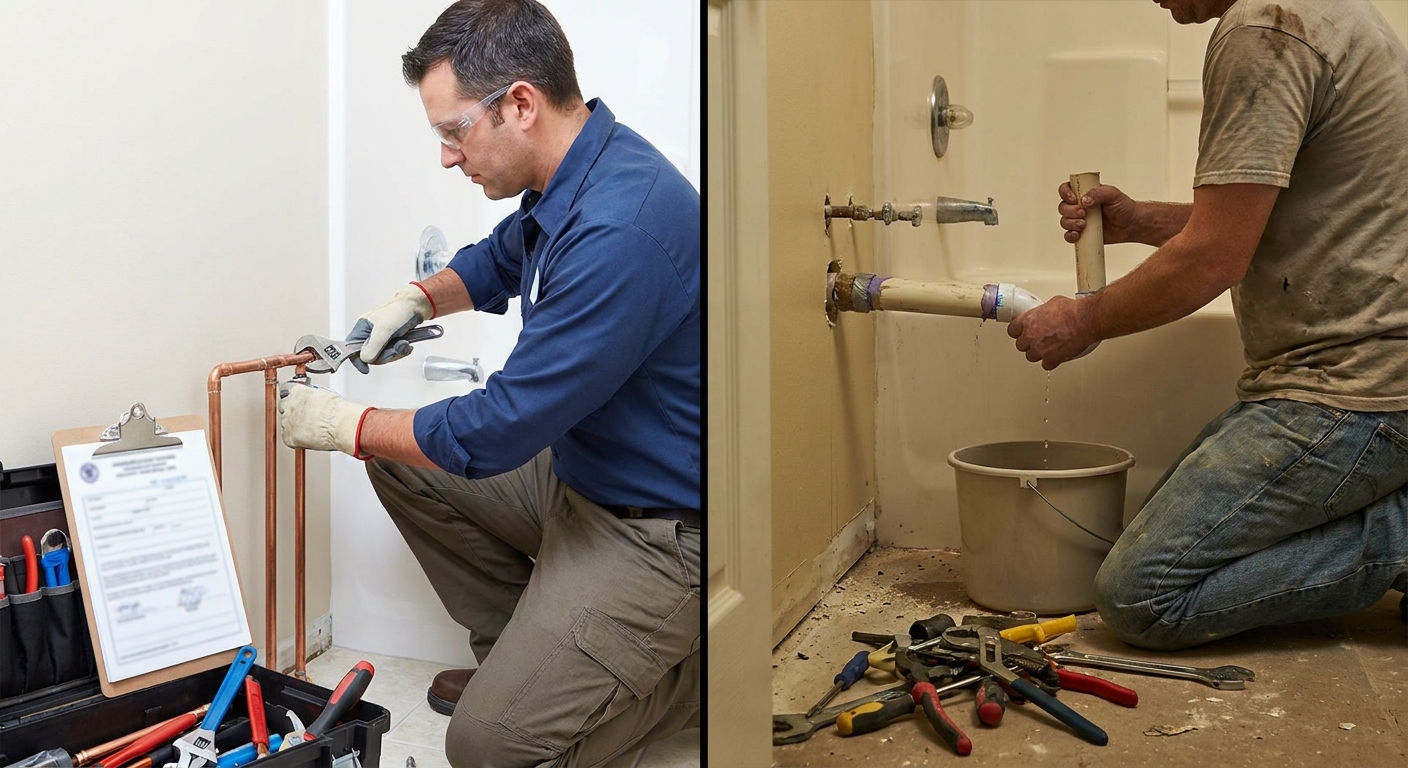
What Separates a Licensed Plumber from an Unlicensed One?
A licensed plumber has cleared a series of significant hurdles before ever setting foot in your home. Most states require a combination of documented apprentice hours (typically 6,000–8,000 hours), classroom instruction, and written trade exams covering plumbing codes, safety, and system design. The journey typically progresses through three recognized levels: apprentice, journeyman, and master plumber. Each level unlocks greater responsibility — and it's usually a master plumber who can legally operate a business, pull permits, and take full accountability for the work performed.
An unlicensed plumber has none of these verified credentials. They may have some practical experience or none at all. There is no standardized knowledge baseline, no code training requirement, and no licensing body watching over them. They are, in every meaningful sense, operating without a safety net — and that net also protects you.
Learn more about what licensing levels actually require and why each stage matters for your protection as a homeowner.
Licensing Requirements Vary — But All States Have Standards
The U.S. does not have a single national plumbing license. Instead, licensing is governed at the state — and sometimes city — level. About six states (including Kansas, Missouri, New York, Pennsylvania, Nebraska, and Wyoming) delegate licensing entirely to local municipalities. However, "no statewide license" does not mean no license is required. Cities like New York City have notoriously strict requirements for Licensed Master Plumbers.
In states that do issue licenses, requirements typically include:
| License Level | Typical Experience Required | Exam Required? | Can Pull Permits? |
|---|---|---|---|
| Apprentice | 0–2 years (supervised) | No | No |
| Journeyman | ~4 years / 6,000–8,000 hrs | Yes | Limited |
| Master Plumber | Journeyman + 1–5 years | Yes (advanced) | Yes |
| Plumbing Contractor | Qualifying master + business docs | Yes (business law) | Yes |
Most states also require licensed plumbers to carry general liability insurance and, if they have employees, workers' compensation coverage. Some states also mandate a surety bond. These aren't paperwork formalities — they are your financial shields when something goes wrong.

Find Trusted & Licensed Plumbers in Ohio
Get matched with companies for your specific needs
The Real Costs of Hiring an Unlicensed Plumber
Hiring an unlicensed plumber might seem like a way to cut costs, but the financial consequences that follow can be staggering. Here's where the "savings" disappear:
Insurance Claims Can Be Denied
Most homeowners insurance policies contain language requiring that work on the home be performed by properly licensed contractors and in compliance with local building codes. When an unlicensed plumber installs a water line that later bursts and floods your basement, your insurer may investigate the origin of the damage. If they discover the work was unlicensed — and almost certainly unpermitted — they can deny the claim entirely.
Even if your policy doesn't explicitly exclude unlicensed work, insurers have broad latitude to dispute claims tied to code violations. The result: you're left paying out of pocket for water damage, mold remediation, structural repairs, and the cost to redo the plumbing correctly.
Additionally, unlicensed plumbers almost never carry their own liability insurance. If the worker is injured on your property, you could be deemed the de facto employer — making you liable for their medical bills and lost wages.
Voided Warranties on Fixtures and Appliances
Manufacturers of water heaters, boilers, dishwashers, and plumbing fixtures routinely require installation by a licensed professional as a condition of their warranty. If an unlicensed worker installs your new $1,200 water heater and it fails six months later, the manufacturer can legally void the warranty based on improper installation. Understanding what your plumbing warranty actually covers — and what voids it — can save you from this trap entirely.
Code Violations and Fines That Stick to You
Unlicensed plumbers routinely perform work that doesn't meet local building codes — because they haven't been trained to know the difference. Common violations include:
- Incorrect pipe sizing or materials
- Missing or improper venting on drains
- No backflow prevention devices
- Improperly installed or unvented gas appliances
- Missing pressure relief valves on water heaters
These plumbing code violations are your problem once the work is done. Fines for unpermitted or non-code work can reach $5,000 or more in many jurisdictions, and you may be ordered to tear out finished walls, have the plumbing professionally redone, and pay for re-inspection — all at your expense.
Safety Hazards You Can't See Until It's Too Late
Beyond the financial damage, unlicensed plumbing work creates genuine physical dangers that can threaten your family's health and safety.
Gas Leaks and Carbon Monoxide Risk
Many plumbers also install and connect gas lines for water heaters, dryers, and stoves. An unlicensed worker may use incorrect pipe sizing, improper fittings, or incomplete seals. Natural gas leaks can accumulate in enclosed spaces and ignite — causing fires or explosions. Poorly vented gas appliances can produce carbon monoxide, an odorless, colorless gas that kills. Emergency repair of a gas leak can cost $200–$800+, while fire or explosion damage can easily exceed $50,000.
Water Contamination Through Cross-Connections
Properly licensed plumbers are trained in backflow prevention — protecting your drinking water from contamination. Unlicensed workers may inadvertently create cross-connections between potable and non-potable water lines. This allows bacteria, chemicals, or sewage to backflow into your home's drinking water supply. Sewage cleanup alone can cost $2,000–$10,000, and mold remediation from chronic hidden leaks typically runs $2,000–$15,000 or more.
Structural Damage from Hidden Leaks
Poorly soldered joints, under-tightened fittings, and incorrect drain slopes create slow leaks inside walls, floors, and ceilings. These go undetected for months — rotting wood framing, attracting termites, and causing floors to sag. Structural repairs caused by hidden water damage can cost $5,000–$30,000+ depending on severity.
Permit Problems, Home Value, and How to Verify Your Plumber
What Happens When You Try to Sell Your Home
Unpermitted plumbing work is a ticking time bomb for home sellers. In most U.S. states, sellers are legally required to disclose known unpermitted work and material defects to buyers. When a buyer's home inspector finds evidence of non-professional plumbing — wrong materials, improper venting, DIY-style joints — it appears in the inspection report. This can:
- Scare off buyers entirely
- Trigger price reductions or repair credits at closing
- Cause appraisal issues that delay or kill the loan
- Force retroactive permitting, which requires opening walls for inspection
Understanding when plumbing permits are required — and the real consequences of skipping them — is essential knowledge for any homeowner planning to sell. Buyers in 2026 are savvy; their agents routinely pull municipal permit histories and compare them to listing claims. If your listing says "updated plumbing" but city records show no permits were ever pulled, expect tough negotiations or a failed deal.
Major unpermitted plumbing work can cost you thousands in closing credits or require expensive remediation before the sale can proceed. A licensed plumber doing the work right the first time costs far less than the legal and financial exposure of selling a home with unlicensed work hiding in the walls.
No Recourse If the Work Fails
When a licensed plumber's work fails due to negligence, you have clear legal recourse: file a complaint with the state licensing board, pursue their liability insurance, or take them to small claims court. The licensing board can investigate, fine, or revoke the plumber's license.
With an unlicensed worker? Your options are nearly nonexistent. They likely have no insurance to go after, no license to threaten, and may simply disappear. You're left holding the bill for a costly do-over that is now legally your problem to fix — correctly, this time, with a licensed pro.
How to Verify a Plumber's License in Minutes
Checking a plumber's credentials takes less time than the average phone call. Here's how:
| Step | Action |
|---|---|
| 1. Ask for the license number | Any legitimate plumber will provide it immediately |
| 2. Visit your state's licensing portal | Search "[Your State] plumbing license lookup" |
| 3. Confirm status is "Active" | Check expiration date and any disciplinary history |
| 4. Request proof of insurance | Ask for a Certificate of Insurance naming you as certificate holder |
| 5. Verify workers' comp if they have employees | Your state's labor department website typically has a coverage lookup |
When choosing a plumber, don't skip this verification step no matter how trusted the referral seems. A license number that checks out as active, combined with verified insurance, is the only reliable protection you have before work begins.
Frequently Asked Questions
Is it ever legal to hire an unlicensed plumber?
In most U.S. states, hiring an unlicensed plumber for work beyond very minor repairs is technically illegal — and puts both parties at risk. Some jurisdictions allow homeowners to pull their own permits and perform plumbing work themselves on their primary residence, but this exception does not extend to paying a third party who is unlicensed. The moment money changes hands for plumbing work that requires a license, both parties may be in violation of state law.
Can my homeowners insurance really deny a claim over unlicensed plumbing?
Yes — and it happens more often than homeowners expect. Most policies include language requiring that repairs comply with local building codes and be performed by qualified contractors. If an insurer investigates a water damage claim and finds the source was unlicensed, unpermitted plumbing, they can cite policy exclusions for "faulty workmanship" or "code violations" to deny or significantly reduce the payout. Always review your policy language and understand that cutting corners on contractor licensing can cost you your coverage when you need it most.
What's the difference between a licensed and certified plumber?
These terms are often confused but are not the same. A licensed plumber has met state-mandated requirements — experience hours, exams, and registration — and is legally authorized to perform plumbing work for pay. A certified plumber may have completed a specific training course or earned a credential from a trade organization, but certification alone does not grant legal authority to work in states that require a license. Always look for both a valid state license and insurance, not just certifications.
How does unlicensed plumbing work affect my home's resale value?
Unpermitted plumbing work can significantly reduce your home's resale value. Buyers and their inspectors look for evidence of non-professional work, and any discovery of unlicensed installations typically results in price reductions, repair demands, or financing complications. In worst-case scenarios — especially if safety hazards or structural damage are discovered — deals can fall through entirely. Getting a pre-sale plumbing inspection can help you identify and address these issues before they derail your sale.
What should I do if I already hired an unlicensed plumber?
First, do not panic, but act quickly. Have a licensed plumber inspect all of the work that was performed and provide a written assessment. Identify whether permits were required but not pulled. Contact your local building department to discuss your options — some jurisdictions allow retroactive permits under certain conditions. Check your homeowners insurance policy to understand your current coverage status. Document everything and avoid concealing the work if you plan to sell the home, as non-disclosure can create serious legal liability down the road.