
Compare Home Insurance Plans in Ohio
Find your best options in less than 2 minutes



What Home Insurance Costs in Virginia in 2026
Virginia homeowners pay less than the national average, but that headline number hides big regional differences. Using a $400,000 dwelling benchmark policy, the statewide average is about $2,265 per year (roughly $189 per month), or about 9% below the national average of $2,490 for the same coverage. Other studies using smaller dwelling limits put Virginia between $1,558 and $2,676, depending on the methodology.
For context, rates in the Commonwealth have climbed sharply. Homeowners insurance rates rose roughly 39% between 2021 and 2025, and Northern Virginia is projected to see another 6-14% jump in 2026 as reinsurance and construction costs continue to pressure carriers.
How Virginia compares to the U.S. average
| Coverage Profile | Virginia Average | National Average |
|---|---|---|
| $300,000 dwelling, $1,000 deductible | ~$2,074/yr | ~$2,397/yr |
| $400,000 dwelling benchmark | ~$2,265/yr | ~$2,490/yr |
| Ranking among states (1 = cheapest) | ~#24 | , |

Compare Home Insurance Plans in Ohio
Find your best options in less than 2 minutes
Best Home Insurance Companies in Virginia
The "best" carrier depends on whether you value price, service, or specialty coverage. Below is how the major national brands and top regional insurers stack up in Virginia for 2026.
State Farm
State Farm is consistently the cheapest big national carrier in Virginia, with statewide averages of roughly $1,067 to $1,656 per year across different studies. It also earns strong marks for coverage breadth and claim handling, which is why NerdWallet and Policygenius both list it among the "best for most homes." If you already have State Farm auto, bundling can shave another 10-25% off the premium.
USAA
USAA is the top choice for military families, veterans, and their eligible relatives. Its coverage is broad (including replacement cost on personal property and uniforms-in-service coverage), and customer satisfaction scores routinely land at or near the top of every national ranking. It is not always the absolute cheapest in Virginia, but the combined value is hard to beat if you qualify.
Erie Insurance
Erie is a Virginia mainstay with a loyal customer base, especially in Richmond and the western half of the state. The catch: Erie tends to run expensive in Virginia. Averages sit around $3,084 to $3,240 per year statewide. Its guaranteed replacement cost and Erie Rate Lock features can justify the price if you plan to stay in the home long-term.
Allstate
Allstate is mid-priced in Virginia, generally $1,500 to $2,200 per year, but its discount stack (bundling, protective devices, claim-free, early signing) can meaningfully lower the sticker price. It is a good fit for homeowners who want a big-brand experience and are willing to layer discounts.
Nationwide
Nationwide sits in the middle of the price range in Virginia (roughly $1,300 to $2,400 per year, depending on coverage) and is often praised for its Better Roof Replacement and Brand New Belongings endorsements. Policygenius lists it among the best overall VA home insurers.
For a broader view of national carriers and how they rank on claim satisfaction, see our guide to the best home insurance companies of 2026.

Protect your home with State Farm
Average Rate:
Homeowners who bundle and save with State Farm save an average of $1,000 per year!

You're in Good Hands® with Allstate
Average Rate:
Get comprehensive home coverage with flexible policy options.

Customize your home coverage
Average Rate:
Only pay for the coverage you need with personalized home insurance.

Smart coverage for your home
Average Rate:
Protect what matters most with award-winning home insurance.
Virginia-Specific Risks You Need to Insure For
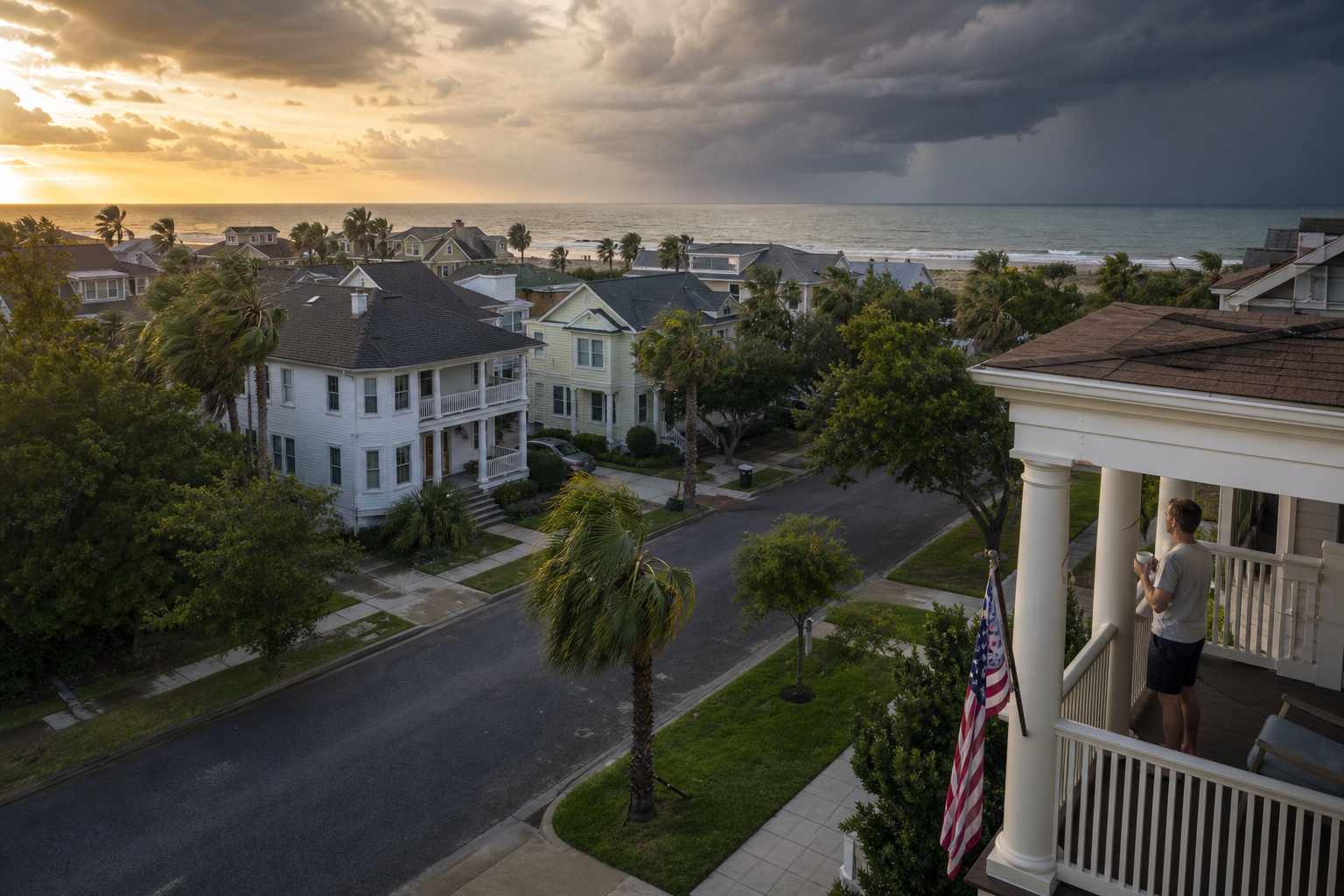
Virginia's geography creates coverage complications that inland states do not have. The five major risks to plan for are hurricanes and tropical storms, flooding, wind and hail, wildfire in rural counties, and older-home issues in Richmond and Northern Virginia.
Hurricane and tropical storm exposure in Hampton Roads
Hampton Roads (Virginia Beach, Norfolk, Chesapeake, Newport News, Hampton, Portsmouth) is one of the most hurricane-exposed metros on the mid-Atlantic. Standard homeowners policies in coastal Virginia carry a separate hurricane or named-storm deductible that is calculated as a percentage of your dwelling coverage rather than a flat dollar amount.
Typical hurricane deductibles in coastal Virginia run 1% to 5% of dwelling coverage, and some carriers apply as high as 10% in the most exposed ZIP codes. On a $400,000 home with a 2% hurricane deductible, you would pay $8,000 out of pocket before wind coverage kicks in.
For a deeper dive on how these percentage deductibles work across states, read our guide to hurricane insurance coverage and deductibles.
Flooding is not covered by standard policies
Every HO-3 policy sold in Virginia excludes flood, storm surge, and rising water. If your home sits in FEMA flood zones A or V (most of Norfolk, parts of Virginia Beach and Chesapeake, and pockets of Richmond along the James River), your mortgage lender will require separate flood insurance through the NFIP or a private flood carrier.
Even outside required zones, flood claims are surprisingly common. About 25% of NFIP claims come from properties in low- and moderate-risk zones. For a coastal Virginia home, expect to pay $700 to $2,000 per year for NFIP coverage.
Wind and hail deductibles for coastal counties
Even without a named hurricane, coastal Virginia policies often carry a separate wind and hail deductible (typically 1% to 2% of dwelling coverage). Inland areas usually keep a flat $500 or $1,000 all-perils deductible. If you live in Virginia Beach, Norfolk, or the Eastern Shore, expect a percentage-based wind deductible on any new policy.
Learn more about coastal home insurance wind deductibles and how they change your out-of-pocket math.
Rural wildfire risk
Wildfire is not top-of-mind in Virginia, but the Shenandoah Valley, Appalachian counties, and rural George Washington and Jefferson National Forest communities do see grass and brush fires each spring and fall. Homes on wooded acreage or with wood-shake roofs may face surcharges or be declined by admitted carriers, especially if the property sits more than five miles from a paid fire department.
The Virginia Property Insurance Association (FAIR Plan)
If private insurers decline your home, the Virginia Property Insurance Association (VPIA) is the state's insurer of last resort, also known as the FAIR (Fair Access to Insurance Requirements) plan. VPIA has provided dwelling and commercial property coverage since 1968 to Virginia property owners who cannot obtain coverage in the voluntary market.
Who qualifies
- You have been declined coverage by one or more private carriers
- Your property meets VPIA's minimum underwriting and inspection standards
- The property is located in Virginia and has an insurable interest
What VPIA covers
VPIA policies are basic and cover named perils such as fire, lightning, wind, hail, explosion, riot, aircraft, vehicles, smoke, and vandalism. Broader HO-3-style coverage and optional liability or theft endorsements may be available on eligible properties, but coverage is generally more limited (and more expensive) than a standard admitted-market policy.
For a broader look at how state-run last-resort plans work, see our guide to high-risk home insurance options.
Home Insurance Costs by Virginia City
Location drives more of your premium than any other factor in Virginia. Here is how the four largest markets compare in 2026 for a mid-range home.
| City | Avg. Annual Premium (2026) | vs. State Average |
|---|---|---|
| Virginia Beach | $3,100 - $3,650 | +40% to +70% |
| Norfolk | $2,300 - $3,150 | +10% to +50% |
| Richmond | $1,700 - $2,300 | Around average |
| Northern Virginia (Arlington) | $1,950 - $2,100 | Slightly below Richmond |
Richmond
Richmond averages roughly $1,700 to $2,300 per year, right around the Virginia state average. The city's main risks are severe thunderstorms, hail, and occasional James River flooding. Older homes in the Fan District and Church Hill can see higher premiums due to knob-and-tube wiring, older plumbing, and slate roofs.
Virginia Beach
Virginia Beach has the highest average premium in the state at roughly $3,095 to $3,650 per year. Every policy in the city carries a hurricane deductible, and homes east of the Lynnhaven River or in Sandbridge often face 5%+ named-storm deductibles plus separate flood insurance requirements.
Norfolk
Norfolk premiums land between Richmond and Virginia Beach at $2,300 to $3,150 per year. Much of the city sits below sea level or in FEMA flood zones, so flood insurance is nearly universal. Frequent nuisance flooding on high-tide days also drives up claims.
Northern Virginia
Arlington, Alexandria, Fairfax, Loudoun, and Prince William County generally run cheaper per dollar of coverage than Richmond, because catastrophe exposure is low. That said, high home values push the total premium up. A $900,000 Fairfax home can easily cost $2,500 to $3,500 per year even at NOVA's favorable base rates. Focus on Nova projects Northern Virginia homeowners will see 6-14% increases in 2026.
How to Save Money on Home Insurance in Virginia
Even in high-cost coastal ZIP codes, there are meaningful ways to lower your annual premium without cutting the coverage that matters.
- Bundle auto and home. Most Virginia carriers offer 10-25% off when you combine policies. State Farm, Nationwide, and Erie offer some of the largest multi-policy discounts in the state.
- Raise your all-perils deductible. Moving from $500 to $2,500 can cut premiums 15-25%. This does not affect your hurricane deductible.
- Fortify your roof. IBHS FORTIFIED roof upgrades can qualify for discounts of 10-35% in coastal Virginia.
- Ask about protective device credits. Central alarms, water leak sensors, and smart smoke detectors typically save 3-8%.
- Improve your credit-based insurance score. Virginia allows credit-based rating, and a strong score can cut premiums by 20% or more.
- Shop your policy every 2-3 years. Loyalty rarely pays. Rates within the same carrier can drift up quickly, and a fresh comparison can uncover $500-$1,500 in annual savings.
For more tactical ideas, see our full guide on how to find cheap home insurance in 2026.
Frequently Asked Questions
Is home insurance required in Virginia?
Virginia law does not require homeowners insurance, but any mortgage lender will require it as a condition of your loan. Even if your home is paid off, going without coverage exposes you to catastrophic loss from fire, wind, or liability claims. Most Virginia homeowners keep at least an HO-3 policy for both mortgage compliance and financial protection.
Does Virginia home insurance cover hurricane damage?
Standard homeowners policies in Virginia cover wind damage from hurricanes, including damage from wind-driven rain that enters through a wind-created opening. However, storm surge, tidal flooding, and rising water are excluded and require a separate NFIP or private flood policy. Coastal policies also apply a percentage-based hurricane deductible (typically 1% to 5% of dwelling coverage) before wind coverage pays out.
How much flood insurance do I need in Hampton Roads?
Most lenders require flood coverage equal to your loan balance, up to the NFIP maximum of $250,000 for the dwelling and $100,000 for contents. In practice, coastal Virginia homeowners should insure to full replacement cost, which may require a private flood policy on top of the NFIP. Rates depend on your flood zone, elevation, and whether the home was built before or after the community joined the NFIP.
Who is the cheapest home insurance company in Virginia?
Main Street America, Cincinnati Insurance, Virginia Farm Bureau, and American Family consistently show the lowest average premiums in Virginia, with rates around $1,000 to $1,200 per year. Among the largest national carriers, State Farm is generally the cheapest at roughly $1,100 to $1,700 per year statewide. Prices vary significantly by ZIP code, so always compare at least three quotes with identical coverage.
Can I get home insurance in Virginia after being declined?
Yes. If private insurers decline your home due to age, condition, prior claims, or coastal exposure, you can apply for coverage through the Virginia Property Insurance Association (VPIA), the state's FAIR plan. VPIA offers basic named-peril coverage for dwellings that cannot obtain insurance in the voluntary market. Premiums are typically higher and coverage is more limited than a standard admitted-market policy, so most homeowners use VPIA as a temporary solution while working to improve insurability.