
Compare Home Insurance Plans in Ohio
Find your best options in less than 2 minutes


What Makes a Home "High Risk" for Insurance?
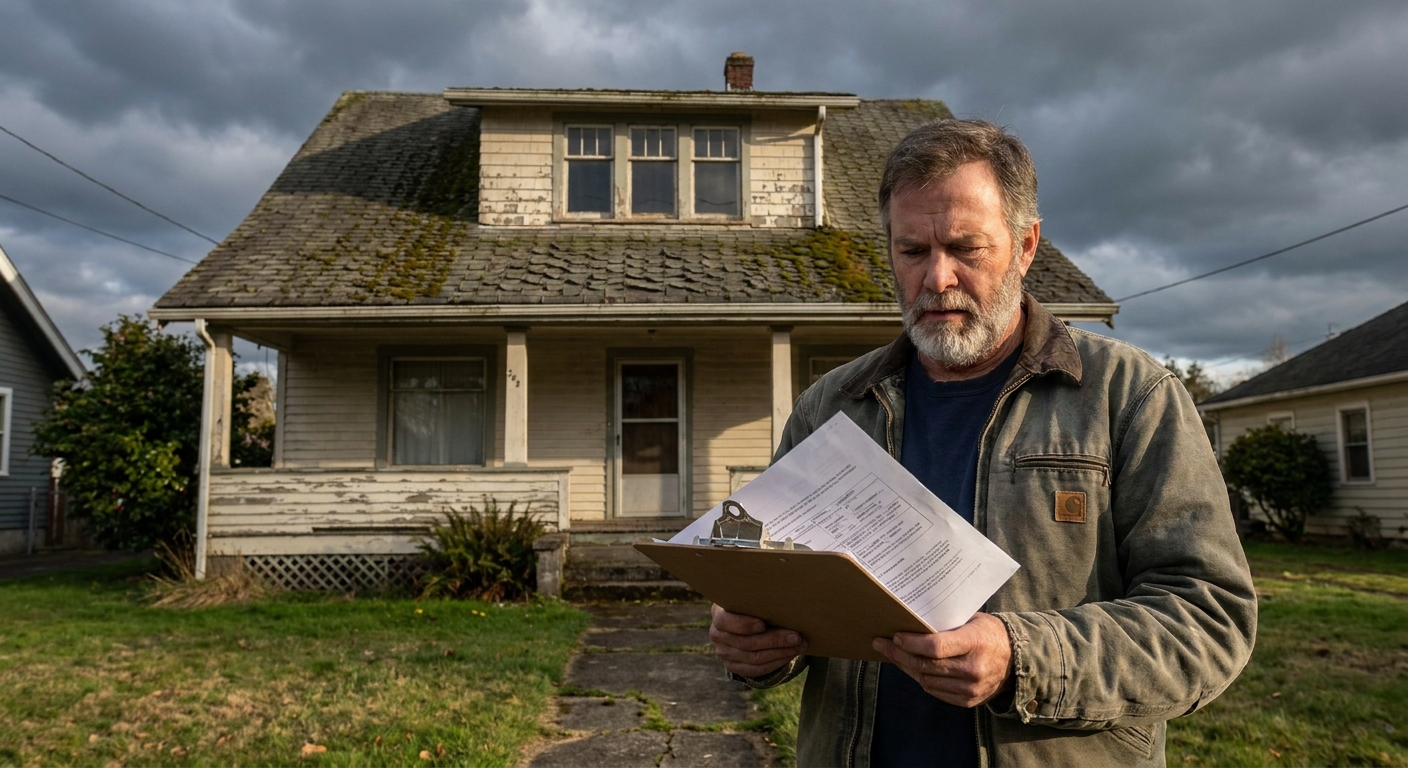
Insurers evaluate every home on a spectrum of risk before agreeing to cover it. When certain red flags stack up, a property can tip into "high risk" territory, making standard coverage difficult or impossible to obtain. Understanding what triggers that classification is the first step to addressing it.
Location-Based Risk Factors
Where your home sits is often the single biggest driver of high-risk status. Insurers use catastrophe models and geographic data to identify homes exposed to:
- Wildfire zones, Homes in or near the Wildland-Urban Interface (WUI) in states like California, Colorado, and Oregon face non-renewals at alarming rates. The January 2025 Los Angeles wildfires drove insured losses in the tens of billions and accelerated carrier pullbacks that continue to shape the 2026 market.
- Coastal and hurricane-prone areas, Properties within miles of the coast in Florida, Louisiana, and the Gulf states carry elevated wind, storm surge, and flooding exposure.
- Flood plains, Homes in FEMA-designated flood zones require separate flood coverage and signal elevated risk to property insurers.
- High-crime areas, Elevated theft and vandalism rates increase expected claims frequency.
According to U.S. Treasury data, consumers living in the 20% of ZIP codes with the highest expected annual losses to buildings from climate-related perils paid premiums roughly 82% higher than those in the 20% of ZIP codes with the lowest climate risk between 2018 and 2022.
Property Condition Risk Factors
Beyond location, the physical state of your home plays a major role in how insurers assess risk. Common property-condition triggers include:
| Risk Factor | Why Insurers Flag It | Typical Insurer Response |
|---|---|---|
| Old or damaged roof | Major driver of wind, hail, and water claims | Denial, surcharge, or ACV-only payout |
| Knob-and-tube or aluminum wiring | Significant fire hazard | Denial or requirement to update before binding |
| Galvanized steel or polybutylene pipes | High leak and burst failure rate | Surcharge or denial |
| Oil furnace or wood stove as primary heat | Fire and carbon monoxide risk | Endorsement required or denial |
| Prior claims history | Predicts future loss frequency | Surcharge, non-renewal, or denial |
| Deferred maintenance / poor condition | General liability and loss amplifier | Denial pending repairs |
For a deeper look at how these factors are evaluated, see our guide on home insurance underwriting and how each detail influences the decision. If your home has multiple property-condition issues, our breakdown of hard-to-insure homes walks through each red flag in detail.

Compare Home Insurance Plans in Ohio
Find your best options in less than 2 minutes
Insurance Options for High-Risk Homeowners
Being labeled high risk doesn't mean you're uninsurable. Several market segments exist specifically to serve homeowners that standard admitted carriers decline.
Admitted Carriers With Restrictions
Some standard admitted insurers will still write policies on high-risk homes, but with notable conditions attached:
- Higher deductibles, Often percentage-based (e.g., 1 to 5% of dwelling value) for windstorm, hail, or named storms rather than a flat dollar amount
- Exclusions for specific perils, A carrier might cover fire but exclude wind or require separate flood coverage
- Required upgrades before binding, They may offer a conditional quote contingent on roof replacement or electrical panel update within 30 to 60 days
If a standard insurer declines you outright, you have three primary alternative pathways. Read what to do when denied home insurance for a step-by-step recovery plan.
Excess & Surplus (E&S) Lines Insurance
Excess and surplus insurance is the private market's answer to hard-to-place risks. E&S carriers are non-admitted, meaning they operate outside standard state rate and form regulations, giving them the flexibility to insure properties that admitted insurers won't touch.
The U.S. E&S market surpassed $100 billion in direct premiums written for the first time in 2025, reaching $105.31 billion, though its growth rate slowed to 7.8%, the lowest in eight years. Homeowners is the fastest-growing corner of that market: direct E&S homeowners premiums rose 29.5% in 2025 to $4.14 billion, making it the fastest-growing domestic E&S segment. Heading into late 2026, the E&S property market is shifting in favor of buyers: surplus capacity is outpacing demand in several segments, delivering rate relief for well-mitigated homes even as high-hazard properties still face tight underwriting. E&S remains the best private-market option for coastal, wildfire-zone, and older homes that admitted carriers decline.
State FAIR Plans and Residual Market Programs
When both admitted and E&S carriers decline, state FAIR Plans serve as the insurer of last resort. These are industry-funded pools, not government agencies, that provide basic property coverage to homeowners with no other options.
Key FAIR Plan limitations to understand:
- Coverage is typically named-peril only (fire, smoke, sometimes windstorm)
- No personal liability protection in most states
- No theft coverage in most states
- No loss of use / additional living expenses in most states
- Higher premiums relative to the narrow coverage provided
Most FAIR Plan policyholders should pair their plan with a Difference in Conditions (DIC) policy to fill in the major gaps. Read our full FAIR Plan insurance guide to understand how this combination works.
State-Specific Residual Market Programs
| State | Program | Primary Risk Covered |
|---|---|---|
| California | CA FAIR Plan (CFPA) | Wildfire / fire perils |
| Florida | Citizens Property Insurance Corp. | Hurricane / wind / all perils |
| Louisiana | Louisiana Citizens Property Insurance | Wind / hurricane |
| Texas | Texas Windstorm Insurance Association (TWIA) | Windstorm / hail (coastal) |
| New York | NY Property Insurance Underwriting Assoc. (NYPIUA) | Fire / basic perils |
| North Carolina | NC Insurance Underwriting Assoc. (Beach Plan) | Wind / coastal |
The California FAIR Plan continues to expand, though growth is finally slowing. As of June 2026, the FAIR Plan's total exposure hit $768 billion (up 250% since September 2022), policies in force reached 696,562 (up 157% since September 2022), and written premium climbed to $2.04 billion. Q2 2026 policy growth slowed to 1.9%, the third consecutive quarter of deceleration and the lowest quarterly increase since 2022, with roughly 24,000 policies leaving the plan in April and May 2026. An average 29.1% rate increase was approved for new and renewal policies starting October 15, 2026, the largest FAIR Plan hike in recent history. Florida's Citizens Insurance is moving the opposite direction: Citizens' policy count fell to 278,196 as of July 31, 2026 (with total exposure of about $78.9 billion), down from a peak of roughly 1.42 million policies in October 2023, a decline of more than 80% from the high-water mark. If your insurer has recently left your state, see our guide on what to do when your insurer leaves.

Protect your home with State Farm
Average Rate:
Homeowners who bundle and save with State Farm save an average of $1,000 per year!

You're in Good Hands® with Allstate
Average Rate:
Get comprehensive home coverage with flexible policy options.

Customize your home coverage
Average Rate:
Only pay for the coverage you need with personalized home insurance.
Smart coverage for your home
Average Rate:
Protect what matters most with award-winning home insurance.
Costs and Coverage Limitations of High-Risk Policies
What High-Risk Home Insurance Costs
High-risk home insurance is significantly more expensive than standard coverage. The 2026 U.S. average home insurance cost is roughly $2,872 per year for $300,000 in dwelling coverage, but rates range from about $738 in Hawaii to $8,471 in Florida. High-risk policies routinely exceed the national average, sometimes dramatically.
| State / Scenario | Example Annual Premium ($300K dwelling) | Vs. U.S. Avg (~$2,872) |
|---|---|---|
| Florida (statewide, high-risk profile) | ~$8,471 | +195% |
| Oklahoma (severe storm/tornado) | ~$4,837 | +68% |
| Louisiana (hurricane/wind) | ~$4,322 | +50% |
| Colorado (wildfire, hail) | ~$3,846 | +34% |
| High-risk via E&S carrier | 20 to 100%+ above standard | Varies by peril |
Insurify projects Florida's average will hit $8,458 by year-end 2026, roughly 181% above the U.S. average, though high-risk areas are still seeing sharper hikes driven by reinsurance costs, rebuild cost inflation, and catastrophe losses. Homeowners in the top 20% of climate-risk ZIP codes continue to pay roughly 82% more than those in the lowest-risk ZIPs. This is part of the broader home insurance affordability crisis hitting homeowners nationwide.
Common Coverage Restrictions in High-Risk Policies
High-risk policies, whether from non-standard carriers, E&S insurers, or FAIR Plans, typically come with meaningful coverage limitations compared to a standard HO-3 policy:
- Percentage deductibles for wind, hail, or named storms (1 to 5% of dwelling value vs. a flat deductible)
- Actual cash value (ACV) payout for roof claims instead of full replacement cost
- Flood and earthquake exclusions requiring separate policies
- No or limited liability coverage (especially FAIR Plans)
- Scheduled personal property required for valuables above low sub-limits
- Ordinance or law exclusions, upgrades required by building codes after a loss may not be covered
For homeowners already stretched thin, being underinsured is a real danger even when you technically have a policy. Always review your coverage limits against your home's actual rebuild cost.
How to Improve Insurability and Return to Standard Coverage
Being in the high-risk market doesn't have to be permanent. Most homeowners can take concrete steps to reduce their risk profile and qualify for standard coverage, often within one to three years.
Upgrades That Reduce Your Risk Profile
The most effective improvements target the specific factors that triggered your high-risk classification:
Steps to Transition Back to Standard Insurance
- Document every improvement. Keep photos, contractor invoices, and permits for all upgrades. Insurers need proof of work completed.
- Work with an independent agent. They have access to multiple markets including surplus lines, non-standard carriers, and admitted insurers, and can guide you toward the right pathway.
- Maintain claims-free status. Every year without a claim improves your risk profile. A 3 to 5 year claims-free record is often what tips the scale back toward standard eligibility. Learn more about how multiple home insurance claims affect your standing.
- Request re-underwriting annually. Ask your agent to re-shop your policy each year. Carrier appetites are visibly shifting in 2026, especially as E&S capacity softens for lower-hazard risks and California's Sustainable Insurance Strategy brings admitted carriers back to wildfire-prone ZIPs.
- Pursue mitigation certifications. Standards like IBHS FORTIFIED (Bronze, Silver, Gold) and IBHS Wildfire Prepared Home can unlock meaningful discounts. In Mississippi, FORTIFIED discounts can reach as high as 55% off the wind portion of a homeowners premium, while California's Department of Insurance now requires insurers to offer discounts ranging from 4% to 40% for qualifying wildfire mitigation actions.
- Bundle policies. If you qualify for auto or umbrella with a carrier, bundling can sometimes open a door to homeowners coverage that wouldn't be available otherwise.
For more on how coverage lapses can compound the challenge, read about continuous home insurance coverage and why maintaining uninterrupted coverage matters even in the high-risk market. Also see how older home insurance strategies apply when property age is your primary risk factor.
Frequently Asked Questions
What makes a home considered high risk for insurance?
Insurers classify homes as high risk based on a combination of location and property condition factors. Location risks include wildfire zones, flood plains, coastal areas, and high-crime neighborhoods. Property factors include old or damaged roofs, outdated electrical wiring (especially knob-and-tube or aluminum), aging plumbing systems, and a history of prior claims. The more of these factors present, the harder the home is to insure through standard admitted carriers.
How much more does high-risk home insurance cost compared to standard?
High-risk policies typically cost 20% to well over 100% more than a standard homeowners policy. In 2026, Florida homeowners average roughly $8,471 annually and Oklahoma around $4,837 for $300,000 in dwelling coverage, compared to a U.S. average of about $2,872. E&S and non-standard carrier policies carry higher premiums than admitted coverage, but they offer the flexibility to cover properties standard markets won't touch at any price.
What is the difference between a FAIR Plan and E&S insurance?
A FAIR Plan is a state-mandated insurer of last resort, an industry-funded pool that provides basic named-peril coverage (usually fire and smoke) when no private market option exists. E&S (Excess & Surplus) insurance is a private, non-admitted market where specialized carriers write flexible policies for high-risk properties at market-driven rates. FAIR Plans offer less coverage but exist in most states, while E&S coverage is broader but varies by carrier and may not be available in all situations.
Can I get standard home insurance again after being classified as high risk?
Yes, transitioning back to standard coverage is achievable for most homeowners with the right strategy. The key steps include making documented property improvements (roof replacement, electrical or plumbing updates), maintaining a claims-free record for 3 to 5 years, and working with an independent agent who shops your risk annually. Even in California, the Sustainable Insurance Strategy is drawing carriers back and some ZIP codes benefit from wildfire non-renewal moratoriums after a governor-declared emergency.
Do I need a special broker to find high-risk home insurance?
You don't need a special license, but you do need to work with the right professional. An independent insurance agent or broker, especially one with access to surplus lines markets, is your best resource. Unlike captive agents who represent a single carrier, independent agents can shop your risk across multiple admitted insurers, E&S carriers, and FAIR Plans to find the best available option. In some states, only licensed surplus lines brokers can place E&S policies, so confirm your agent has that access.