
Compare Home Insurance Plans in Ohio
Find your best options in less than 2 minutes



What Does "Underinsured" Mean for Homeowners?
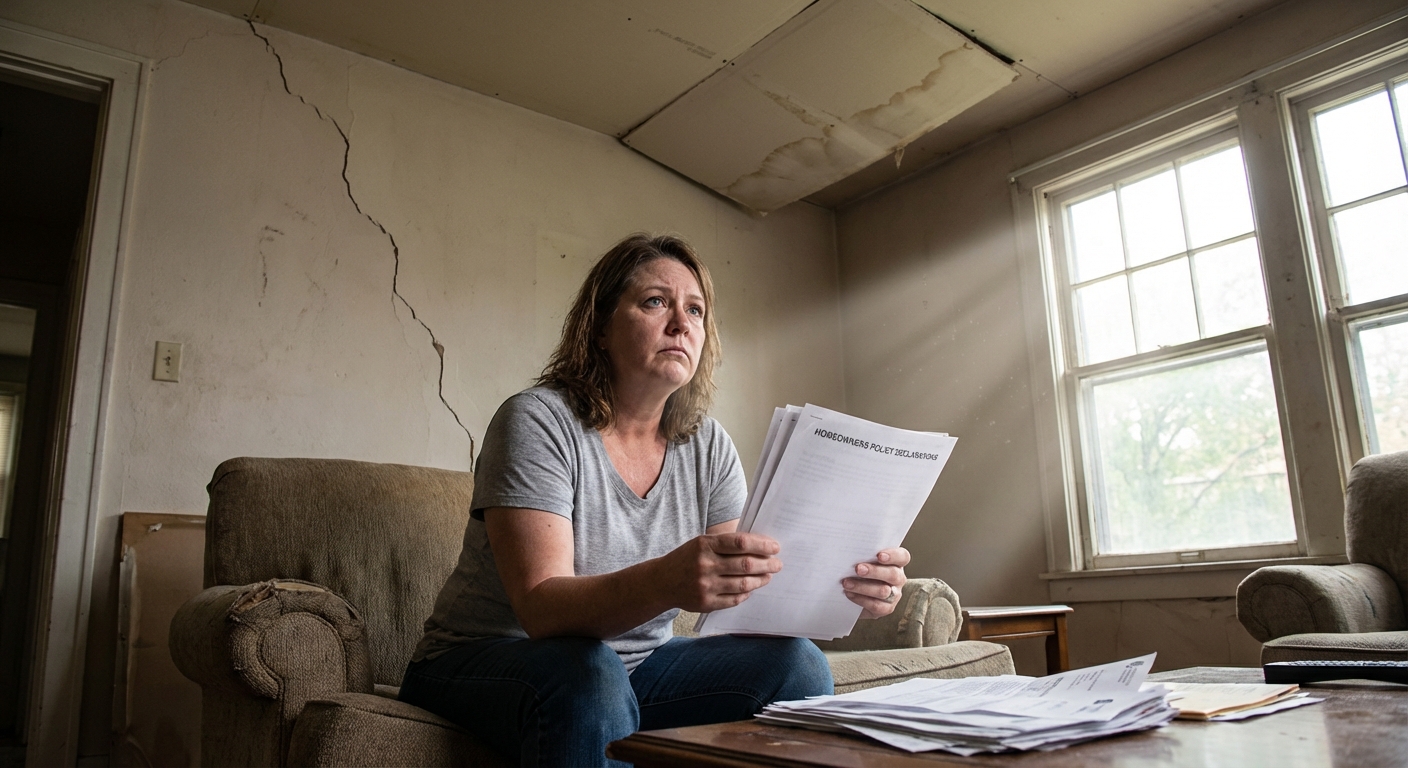
Being underinsured means your home insurance policy is active but does not provide enough coverage to fully pay for rebuilding or repairing your home after a major loss. In other words, the gap isn't that you lack insurance. It's that what you have isn't enough.
This is fundamentally different from being uninsured, where no policy exists at all. An uninsured homeowner has zero financial protection. An underinsured homeowner has a false sense of security: they believe they're protected, but when disaster strikes, they discover their coverage falls thousands of dollars short.
Here's a simple breakdown of the distinction:
For example, if your home would cost $450,000 to rebuild but your policy limit is only $380,000, you are underinsured by $70,000. That $70,000 comes out of your pocket, whether you have the money or not.
How Widespread Is the Problem?
Underinsurance is far more common than most homeowners realize. A 2025 Kin Insurance survey found that 18% of American homeowners say they are "underinsured" because of rising costs, meaning their current policy does not provide enough coverage to fully replace or repair their home in the event of a loss. That represents roughly 42 million people nationwide. Some broader industry analyses suggest the true share could be as high as 50% to 75%, depending on how underinsurance is defined. On top of that, LendingTree's 2026 data shows 12.2 million of the 86.6 million owner-occupied homes (roughly 1 in 7 households, or 14.1%) lack any insurance at all.
A striking real-world example came from the January 2025 Los Angeles wildfires, which destroyed more than 18,000 structures. Munich Re now estimates overall losses at roughly $53 billion, with about $40 billion insured, making it the costliest wildfire event ever recorded. Many homeowners in Pacific Palisades and Altadena learned only after the fact that their coverage limits, set years earlier, would not come close to covering the actual cost to rebuild in a post-disaster market with severe contractor and material shortages.
Home insurance rates have also climbed sharply in recent years. U.S. home insurance rates rose a cumulative 46.8% from 2020 to 2025, and not a single state was spared from an increase. Insurify projects another 4% jump to $3,057 by the end of 2026, after premiums jumped 12% in 2025. As rates rise, many homeowners cut coverage limits to lower their premiums, directly worsening the underinsurance problem.

Compare Home Insurance Plans in Ohio
Find your best options in less than 2 minutes
Common Causes of Being Underinsured
Understanding why homeowners end up underinsured is the first step toward fixing it. Here are the four most frequent culprits in 2026:
1. Inflation and Rising Construction Costs
Construction material and labor costs continue to rise. NAHB data shows building material prices excluding energy climbed 3.7% year-over-year in April 2026 and 4.4% in May, while all inputs to new residential construction were up 5.9% in April and 6.9% in May. Skanska's 2026 outlook places baseline project cost escalation at 4% to 6%, with tariff-driven scenarios pushing metal-intensive trades (steel, copper, aluminum) into the 7% to 10% range. If your policy limits haven't been adjusted in several years, there's a strong chance they no longer reflect what it would actually cost to rebuild today. Learn more about construction cost inflation and home insurance for a deeper look at how these trends affect your coverage.
2. Home Renovations Not Reported to Your Insurer
Did you finish a basement, remodel a kitchen, add a deck, or put in a new bathroom? Every renovation increases the value and rebuild cost of your home. If you didn't notify your insurer and update your policy, your coverage is based on the original home, not the upgraded one. See our guide on home insurance during renovation for what to do before, during, and after major work.
3. Infrequent Policy Reviews
Many homeowners purchase a policy and forget about it for years. Over time, property values shift, construction costs climb, and personal belongings accumulate, none of which are reflected in a stale policy. Kin's 2026 Midyear Homeownership Report found that as of May, 37% of homeowners aren't confident they can maintain adequate home insurance coverage, up from 31% in December, and many respond by raising deductibles or dropping optional coverages without realizing how much risk they're taking on.
4. Coverage Gaps and Policy Misunderstandings
Choosing minimum coverage to save on premiums, relying on actual cash value (ACV) instead of replacement cost value, and overlooking special item riders are all common ways coverage gaps form silently. Many homeowners also confuse market value (what the home would sell for, including land) with replacement cost (what it would cost to rebuild the structure), and insure for the lower market figure. Our guide on rebuild cost vs. home value breaks down this critical distinction.

Protect your home with State Farm
Average Rate:
Homeowners who bundle and save with State Farm save an average of $1,000 per year!

You're in Good Hands® with Allstate
Average Rate:
Get comprehensive home coverage with flexible policy options.

Customize your home coverage
Average Rate:
Only pay for the coverage you need with personalized home insurance.

Smart coverage for your home
Average Rate:
Protect what matters most with award-winning home insurance.
How to Tell If Your Home Is Underinsured
There are no warning lights or notifications when you cross into underinsurance territory. You typically find out only when you file a claim, which is far too late. Here are the most reliable signs to watch for:
| Warning Sign | What to Do |
|---|---|
| Policy hasn't been updated in 3+ years | Request a policy review and rebuilding cost estimate |
| You've completed major renovations | Notify your insurer immediately and update your dwelling limit |
| You have ACV coverage instead of replacement cost | Ask about upgrading to replacement cost coverage |
| High-value items aren't scheduled | Add riders for jewelry, electronics, art, or collectibles |
| You're not sure what your dwelling limit is | Call your insurer and compare it to a rebuild cost calculator |
| You bought minimum coverage to reduce premiums | Recalculate your actual coverage needs with your agent |
The most reliable way to gauge your exposure is to get a professional rebuilding cost estimate or use an online replacement cost calculator to compare your current dwelling limit against what it would actually cost to rebuild your home at today's prices. You can also review our home insurance coverage explained guide to make sure your loss settlement method matches your needs.
The Financial Consequences of Being Underinsured
The moment you file a major claim and discover your coverage is inadequate, the financial impact is immediate and significant. A Wall Street Journal analysis of NAIC data published in May 2026 found that the five largest home insurance providers (Allstate, State Farm, Liberty Mutual, USAA, and Farmers) collectively denied over 44% of claims settled in 2025, up from around 36% a decade earlier. A separate Weiss Ratings analysis reported that 15 large U.S. insurers closed more than half of homeowner claims in 2025 with no payment. That combination of denied claims and inadequate limits makes proper coverage more critical than ever.
Out-of-Pocket Repair Costs
The most direct consequence is the difference between what your insurer pays and what repairs actually cost. If your home suffers $300,000 in damage but your policy cap is $250,000, you must cover that $50,000 gap yourself, on top of your deductible. The home insurance coinsurance clause can further reduce your payout if your coverage falls below 80% of replacement cost.
Partial Repairs and Unfinished Rebuilds
When homeowners can't fund the coverage gap, they are often forced into partial repairs, fixing only what the insurance payout covers. This can leave homes structurally compromised, reduce resale value, and create long-term habitability issues. Research on past wildfire claimants has found that nearly 75% of homeowners had insufficient coverage for their wildfire claims, with more than one-third falling into the "severely underinsured" category.
Long-Term Financial Hardship
Beyond repair bills, underinsurance can lead to debt accumulation, depleted savings, and in severe cases, the loss of the home itself. The emotional weight of navigating a disaster compounds when financial resources fall short of completing recovery.
Understanding how much dwelling coverage you actually need is one of the most important steps you can take to avoid these outcomes.
How to Fix Underinsurance: Practical Solutions
The good news is that underinsurance is entirely preventable. Here are the most effective tools and strategies available to homeowners in 2026.
Replacement Cost Coverage
This is the baseline standard. Unlike ACV policies, replacement cost coverage pays what it actually costs to repair or rebuild using similar materials and quality, without subtracting depreciation. Make sure your policy uses replacement cost, not actual cash value, for both your dwelling and personal property. Compare options in our replacement cost vs. actual cash value guide.
Extended Replacement Cost Coverage
This endorsement adds a buffer, typically 10% to 50% above your dwelling limit (and up to 200% at some carriers), to protect you if rebuilding costs exceed your policy cap after a major disaster. For example, if your dwelling limit is $400,000 and you have 25% extended replacement cost, you're covered up to $500,000. Most mass-market carriers now cap this promise at 125% to 150% of Coverage A.
Guaranteed Replacement Cost Coverage
The gold standard of home insurance protection, guaranteed replacement cost (GRC) pays whatever it takes to rebuild your home to its original condition, regardless of how far costs have exceeded your policy limit. In 2026, true GRC survives mostly at high-net-worth or specialty carriers. Insurers most consistently identified as still offering some form of GRC include Erie, Chubb (Masterpiece), AIG Private Client Group, Cincinnati Insurance (Executive Capstone), PURE, Berkley One, NJM, Openly, Andover, and Acuity, though availability varies by state, home value, and program. Erie stands out as one of the only mass-market carriers still writing GRC as a standard feature on many policies. Our guaranteed replacement cost coverage guide covers who still offers it.
Inflation Guard Endorsements
An inflation guard endorsement automatically increases your dwelling coverage limit each year in line with construction cost inflation. Typical adjustments range from 2% to 8% annually. Given that 2026 residential construction inputs are running 5.9% to 6.9% year-over-year with tariff pressure pushing metals higher, an inflation guard with a 6% or 8% rate is especially valuable now. Learn more in our inflation guard home insurance guide.
Annual Policy Reviews
Committing to a yearly review of your policy at renewal time is one of the simplest and most effective habits a homeowner can build. Use the review to:
- Update coverage for any renovations completed during the year
- Confirm your dwelling limit matches current rebuild estimates
- Check that personal property limits reflect new purchases
- Verify your additional living expenses coverage is adequate
For a broader look at how to select the right amount of protection, see our guide on how much home insurance coverage you really need, or run through our essential home insurance questions checklist before your next policy review. If you already know a claim decision feels wrong, be sure you understand what home insurance doesn't cover so you can spot gaps before they hurt you.
Frequently Asked Questions
What is the difference between underinsured and uninsured for home insurance?
An uninsured homeowner has no policy at all, meaning they bear the full financial cost of any damage entirely out of pocket. An underinsured homeowner has an active policy, but the coverage limits are too low to fully cover the cost of repairing or rebuilding after a significant loss. While both situations are financially risky, underinsurance is arguably more deceptive because homeowners believe they are protected when they actually are not. Discovering an underinsurance gap typically only happens at claim time, when it's too late to fix it.
How do I know if my home is underinsured?
The most reliable method is to compare your current dwelling coverage limit against an up-to-date rebuilding cost estimate for your home. You can use an online replacement cost calculator, ask your insurer for an estimate, or hire a professional appraiser. Key warning signs include a policy that hasn't been updated in several years, home improvements that were never reported to your insurer, and coverage based on your home's market value rather than its actual rebuild cost. Reviewing your policy annually and confirming you have adequate dwelling coverage is the best way to catch a coverage shortfall before it becomes a problem.
What happens if I'm underinsured when I file a claim?
If your claim exceeds your policy's dwelling limit, your insurer will only pay up to that cap, leaving you personally responsible for the difference. For example, if your home sustains $350,000 in damage but your limit is $275,000, you must cover the $75,000 gap yourself. Coinsurance provisions in some policies can further reduce your payout if your coverage falls below a certain percentage of the home's replacement cost, meaning even smaller claims may not be fully paid.
Does homeowners insurance automatically keep up with inflation?
Not necessarily. Standard homeowners policies do not automatically adjust to rising construction costs unless you have an inflation guard endorsement. With 2026 residential construction inputs running 5.9% to 6.9% year-over-year and metal-intensive trades rising even faster due to tariffs, a static dwelling limit can lag actual rebuild costs by 8% to 12% over just two years. Even with an inflation guard, the annual adjustment percentage may not fully keep pace with sharp increases in construction costs, so an annual policy review remains important.
Is guaranteed replacement cost worth the extra premium cost?
For most homeowners, guaranteed replacement cost coverage is one of the most valuable endorsements available, particularly in high-risk areas or regions prone to natural disasters. After events like the 2025 Los Angeles wildfires, demand for contractors and materials can push rebuilding costs far above normal estimates, and GRC ensures you're protected regardless of how high those costs climb. Note that true GRC is no longer offered by most mass-market insurers and survives mostly at high-net-worth carriers like Chubb, PURE, and Cincinnati, plus a handful of regionals like Erie and NJM, so check availability with your carrier before relying on it.