
Compare Home Insurance Plans in Ohio
Find your best options in less than 2 minutes



Why Is Home Insurance So Expensive in Texas?
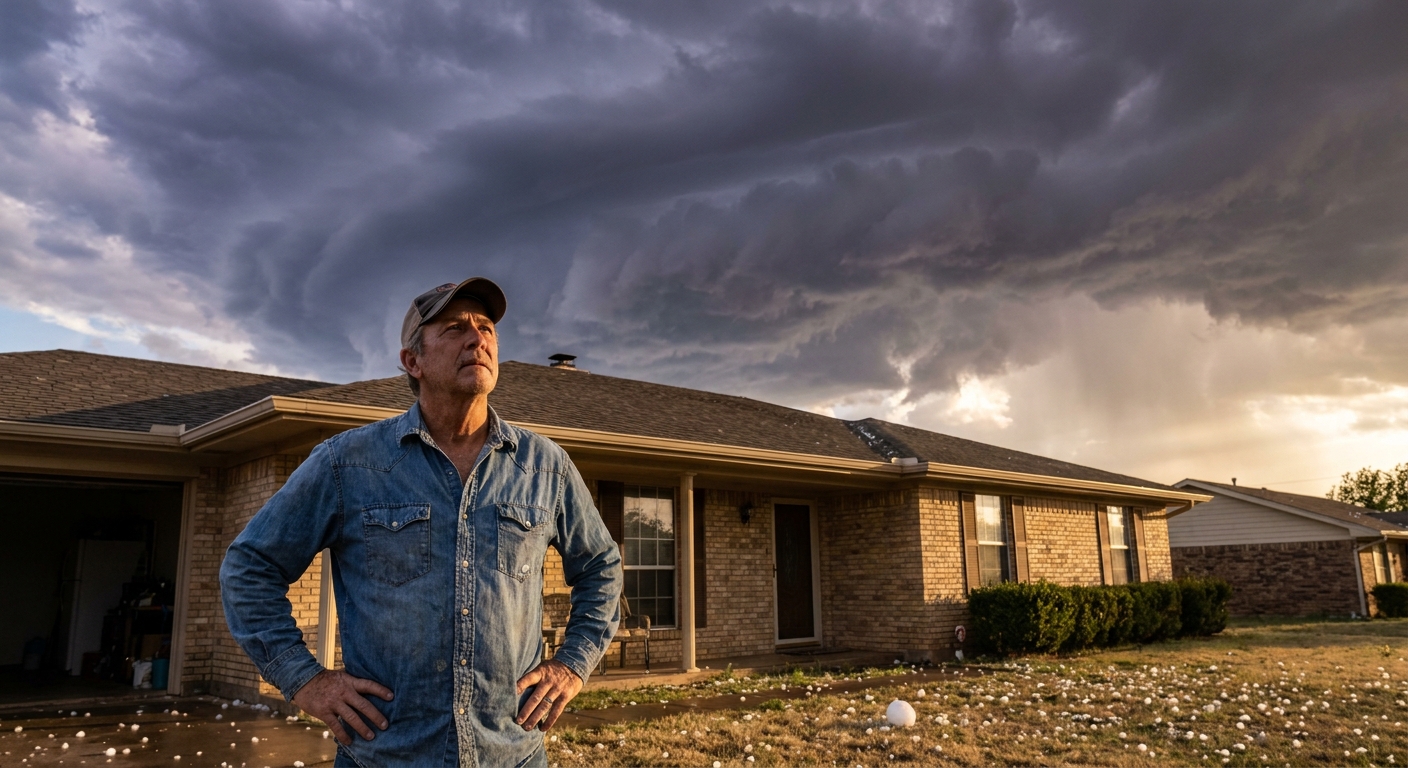
Texas homeowners pay some of the highest insurance premiums in the country, and for good reason. The state is a geographic target for nearly every major weather peril the U.S. has to offer: Gulf Coast hurricanes, relentless hail in North Texas, tornadoes sweeping through the plains, and increasingly severe wildfires in the west. Texas ranks as one of the most disaster-prone states, and insurers price that risk directly into your premium.
Beyond weather, rising construction and labor costs have made it more expensive to rebuild a damaged home, pushing claim payouts (and premiums) higher every year. Texas's rapid population growth has also driven up home values across the board, meaning insurers are on the hook for larger payouts when disaster strikes. The average Texas homeowner now pays $4,585 per year for standard coverage, roughly 117% above the $2,115 national average and rising faster than wages in every major Texas metro. The Dallas Fed reports that Amarillo and the Dallas-Fort Worth metros have the highest insurance burden among Texas metropolitan areas.
The state's regulatory environment under the Texas Department of Insurance (TDI) does provide some consumer protections. Insurers must file rates and justify increases, but Texas is not a prior-approval state, meaning companies can raise rates more freely than in some other states. That has allowed carriers to aggressively respond to loss trends. Learn more about why home insurance keeps rising nationally and how Texas fits into that larger trend.

Compare Home Insurance Plans in Ohio
Find your best options in less than 2 minutes
Texas Home Insurance Rates by Region in 2026
Premiums in Texas are not one-size-fits-all. Your zip code matters enormously. A homeowner in Austin pays hundreds less than someone in Houston for the same coverage. Here's a breakdown of average annual premiums for a standard dwelling policy across major Texas cities in 2026:
| City / Region | Avg. Annual Premium (2026) | Primary Risk |
|---|---|---|
| Austin | $3,950 to $5,140 | Moderate hail, wildfire fringe |
| Dallas | $4,250 to $5,385 | Hail Alley, tornadoes |
| Fort Worth | $4,200 to $5,164 | Hail Alley, tornadoes |
| Houston | $4,600 to $6,132 | Hurricane, flooding, hail |
| San Antonio | $4,100 to $5,315 | Hail, wind |
| Amarillo / Panhandle | $3,200 to $4,400 | Hail, tornadoes, wind |
Statewide averages vary widely by data source. TDI's latest market overview shows an average annual premium of $3,506, while Bankrate and Insurance.com put the average around $3,899 to $4,085 per year for $300,000 dwelling coverage. Insurance Metrics reports Texas averages $4,915 per year, about $410 per month, for a benchmark policy with $400,000 in dwelling coverage, $300,000 liability and a $1,000 deductible. LendingTree reports Texas home insurance costs an average of $4,458 a year, or $372 a month. Either way, Texas remains one of the five most expensive states for home insurance.
The Three High-Risk Zones
🌀 Coastal Hurricane Zone. The 14 first-tier coastal counties stretching from Galveston to Brownsville face the highest premiums in the state. Private insurers routinely exclude wind and hail in these areas, forcing homeowners to piece together coverage from multiple sources. Expect combined premiums of $5,000 to $8,000+ annually in the highest-risk coastal areas once TWIA and flood are layered in.
🌨️ Hail Alley (North Texas). Dallas, Fort Worth, Lubbock, Amarillo, and surrounding areas sit squarely in one of the most hail-prone regions on Earth. Insured losses from severe convective storms have set records for 11 straight years, and Texas is at the epicenter. This corridor is why DFW homeowners pay some of the highest inland rates in the state.
🏙️ Urban vs. Rural Pricing. Urban areas like Houston and Dallas carry higher premiums due to higher property values and repair costs. However, rural West Texas properties face their own challenges: wildfire exposure, longer response times from emergency services, and fewer competing insurers, all of which can push rates higher than you'd expect.
For a side-by-side look at how Texas compares nationally, see our guide on the home insurance affordability crisis and the most expensive states for coverage. Homeowners in nearby hail-prone states like Colorado face very similar pricing pressures from severe convective storms.

Protect your home with State Farm
Average Rate:
Homeowners who bundle and save with State Farm save an average of $1,000 per year!

You're in Good Hands® with Allstate
Average Rate:
Get comprehensive home coverage with flexible policy options.

Customize your home coverage
Average Rate:
Only pay for the coverage you need with personalized home insurance.

Smart coverage for your home
Average Rate:
Protect what matters most with award-winning home insurance.
Understanding Texas-Specific Coverages & Deductibles
Wind & Hail Deductibles: The New 2% Standard
Unlike most other states where a flat dollar deductible applies to all claims, Texas home insurance policies almost universally use percentage-based wind and hail deductibles. This deductible is calculated as a percentage of your home's dwelling coverage limit (Coverage A), not the damage amount.
The biggest change heading into 2026: most Texas carriers now use 2% wind/hail deductibles as standard, and your deductible is based on Coverage A (dwelling amount) rather than damage amount. Carriers have moved away from 1% deductibles due to record hail losses, effectively doubling many homeowners' out-of-pocket exposure. The Texas FAIR Plan Association eliminated the 1% wind and hail deductible option effective July 1, 2026, and all current homeowner's policies with a 1% wind and hail deductible automatically change to 2% at renewal.
| Deductible % | Out-of-Pocket on $400K Home | Premium Impact | Availability |
|---|---|---|---|
| 1% | $4,000 | Highest | Rare, most carriers no longer offer |
| 2% | $8,000 | Moderate | Now the industry standard |
| 3% | $12,000 | Lower | Common in coastal / hail zones |
| 5% | $20,000 | Lowest | High-risk areas, older roofs |
For a deeper look at hail damage claims and how severe convective storms are driving deductibles higher, Texas is ground zero for this trend.
TWIA: What's New for Coastal Properties in 2026 and 2027
If you own a home in one of Texas's 14 designated first-tier coastal counties (including Galveston, Nueces/Corpus Christi, Cameron, Brazoria, and others), your standard homeowners policy almost certainly excludes wind and hail coverage. That's where the Texas Windstorm Insurance Association (TWIA) comes in.
TWIA is a not-for-profit insurer of last resort, created by the Texas Legislature in 1971. Several important updates for 2026 and 2027:
- No rate increase for the fourth straight year. The Texas Windstorm Insurance Association Board of Directors voted to direct staff to file a 0% rate change in the Association's required annual filing with TDI. In August 2026, the board also voted unanimously to direct staff to file a 0% rate change for 2027.
- Rates are actuarially adequate. TWIA's 2026 Rate Adequacy Analysis found that rates are adequate, with a 2026 Residential Rate Indication of -9% and a 2026 Commercial Rate Indication of -4% (negative indications mean rates are adequate).
- New coverage caps. The maximum limits of liability effective January 1, 2026 are $1,773,000 for dwellings, $374,000 for contents of apartments/condos/townhouses, $4,424,000 for commercial risks, $119,000 for manufactured homes, and $4,424,000 for public buildings.
- HB 3689 funding reforms. The 2026 funding structure lowered TWIA's probable maximum loss standard, helping reduce reinsurance costs.
- Statutory rate caps. TDI says TWIA's average rate change is capped at 10% up or down, and any individual rating class is capped at 15% up or down.
To qualify for TWIA, your property must be in the designated catastrophe area, and you'll need proof that at least one private insurer has denied windstorm coverage. Homes built or modified after January 1, 1988 also need a TDI-issued Certificate of Compliance (WPI-8) confirming the structure meets windstorm building codes.
This means most coastal Texas homeowners need at least three separate policies: a standard HO-3 for fire, theft, and liability, a TWIA policy for wind/hail, and often a separate NFIP or private flood policy for storm surge protection. For a deeper dive on the coastal coverage puzzle, read our coastal home insurance guide and our overview of hurricane insurance coverage.
Required vs. Optional Coverages in Texas
Texas does not legally mandate home insurance (unlike auto insurance). However, your mortgage lender will require it. Here's what's standard versus optional:
| Coverage Type | Standard or Optional | Notes |
|---|---|---|
| Dwelling (Coverage A) | Required by lender | Rebuilding your home structure |
| Personal Property (Coverage C) | Standard | Furniture, clothing, electronics |
| Liability (Coverage E) | Standard | Injuries/damage you cause others |
| Wind & Hail (inland) | Standard in HO-3 | Included with 2% deductible in most inland policies |
| Wind & Hail (coastal) | Separate policy required | Must purchase from TWIA or private carrier |
| Flood Insurance | Optional (required in flood zones) | NOT included in standard HO-3 |
| Extended Replacement Cost | Optional | Covers rebuild costs above policy limits |
| Water Backup / Sewer | Optional endorsement | Common and affordable add-on |
Best Home Insurance Companies in Texas for 2026
Choosing the right insurer is about more than just price. Financial strength, customer service, and claims handling all matter significantly in a state as storm-prone as Texas. Here are the top carriers operating in the state based on multiple 2026 rankings from LendingTree, MoneyGeek, ValuePenguin, and Insurance.com:
| Company | Best For | Est. Annual Rate (2026) | AM Best Rating |
|---|---|---|---|
| Mercury | Cheapest overall in Texas | ~$1,453 to $3,025 | A |
| Texas Farm Bureau | Best for most homeowners | ~$1,794 | A |
| Farmers | Best coverage options | ~$4,069 to $5,790 | A |
| USAA | Military families | ~$3,233 to $4,233 | A++ |
| State Farm | Best overall, financial strength | ~$4,455 | A++ |
| Chubb | High-value/luxury homes | ~$2,315+ | A++ |
| Allstate | Discount availability | ~$5,267 | A+ |
| Nationwide | Coverage options | ~$5,268 | A+ |
Rates shown are estimates and vary widely by source, coverage amount, and profile. Mercury usually has the cheapest home insurance in Texas at $1,453/yr on average, and Mercury has the most affordable homeowners insurance in Texas. Your actual quote will differ based on zip code, home age, deductible, and claims history.
A new Texas law requires insurance companies to tell you in writing why they declined, canceled, or didn't renew your auto or home insurance. HB 2067 applies to decisions companies make after January 1, 2026. Later this year, companies will start giving TDI reports summarizing declination, cancellation, and non-renewal reasons. For a comprehensive national comparison, learn how home insurance legislation is changing in 2026, or read our guide on rising home insurance rates.
How to Find Affordable Home Insurance in Texas
Shopping smart can save you hundreds, sometimes over $1,000, per year. Here are the most effective strategies for Texas homeowners in 2026:
- Get at least 3 to 5 quotes. Rates vary dramatically between carriers for the same home. Use an independent agent who can shop multiple markets at once.
- Bundle home and auto. Most major carriers offer 10 to 25% discounts for bundling.
- Upgrade your roof. Impact-resistant (Class 4) shingles can earn credits of 15 to 35% in hail-prone areas. A newer roof also reduces your risk of claim denial.
- Consider your deductible carefully. With 2% now the default, moving to 3% can meaningfully lower premiums if you have an adequate emergency fund. Just make sure you can cover the higher out-of-pocket cost.
- Ask about discounts. Security systems, leak detection devices, gated communities, and non-smoker status can all reduce your rate.
- Check TDI's HelpInsure tool. The Texas Department of Insurance offers a free online tool to compare insurer complaint ratios and find licensed agents.
For more money-saving strategies, see our guide on high-risk home insurance options if you've been denied by multiple carriers, or explore how climate change is driving costs higher across storm-prone regions.
Frequently Asked Questions
What is the average cost of home insurance in Texas in 2026?
The statewide average ranges from approximately $3,506 to $4,915 per year depending on coverage level and data source. TDI's market overview shows $3,506 annually, Insurance.com and Bankrate report roughly $3,900 to $4,085 for $300,000 in dwelling coverage, and Insurance Metrics reports $4,915 for a $400,000 dwelling. Canopy Insurance reports the average Texas homeowner now pays $4,585/year, 117% above the national average. Houston averages roughly $4,600 to $6,132 per year, Dallas around $4,250 to $5,385, and Austin remains competitive at $3,950 to $5,140.
Do I need separate windstorm insurance in Texas?
If you live in one of the 14 designated coastal counties (such as Galveston, Nueces, Cameron, or Brazoria), yes. Standard homeowners policies in those areas typically exclude wind and hail, so you'll need a separate windstorm policy, most commonly through TWIA. Inland homeowners in Dallas, Austin, and San Antonio generally have wind and hail included in their standard HO-3 policy, though a percentage-based wind/hail deductible (now typically 2%) still applies to storm claims.
What is TWIA and did rates change for 2026?
TWIA (Texas Windstorm Insurance Association) is a state-created insurer of last resort that provides wind and hail coverage in designated coastal areas where private insurers won't cover those perils. For 2026, the TWIA Board voted to direct staff to file a 0% rate change, the fourth straight year without an increase, and in August 2026 the board voted unanimously to file another 0% change for 2027. TWIA's 2026 Rate Adequacy Analysis actually found that rates are adequate, with a 2026 Residential Rate Indication of -9% and Commercial Rate Indication of -4%, and new coverage caps took effect January 1, 2026 raising the residential dwelling limit to $1,773,000.
Why did my Texas home insurance rate go up so much?
Texas premiums have surged due to increasingly severe hail, hurricanes, and tornadoes, rising construction and labor costs, higher home replacement values, and surging reinsurance costs passed down to policyholders. Texas homeowners now pay an average of $4,585 per year, 117% above the $2,115 national average and rising faster than wages in every major Texas metro. Insurers are also using new hyper-local ZIP code models to reprice risk block by block. Even homeowners with clean claims histories have seen major increases simply due to their geographic location.
What are my rights if my Texas insurer non-renews my policy?
Under Texas House Bill 1900, insurers must give you at least 60 days' written notice before non-renewing a residential policy. As of January 1, 2026, House Bill 2067 requires insurance companies to tell you in writing why they declined, canceled, or didn't renew your auto or home insurance, and this applies to decisions companies make after January 1, 2026. If your insurer misses the 60-day deadline, they must renew your policy at your request. If two or more carriers decline to cover you, you may access the Texas FAIR Plan Association as a last resort, though coverage is more limited and expensive than standard policies.