
Compare Home Insurance Plans in Ohio
Find your best options in less than 2 minutes



Why Oklahoma Has the Most Expensive Home Insurance in America
Oklahoma consistently ranks as the most expensive state for home insurance in the nation. While the national average sits around $2,395 per year for $300,000 in dwelling coverage, Oklahoma homeowners pay an average of $5,298 annually according to LendingTree's 2026 State of Home Insurance report, roughly 121% above the U.S. average. NerdWallet's higher-coverage analysis pushes the figure to $7,255 for a $400,000 dwelling policy, MoneyGeek puts it at $7,683, and Insurify's data lands at $5,736. Whichever figure you use, the burden is significant.
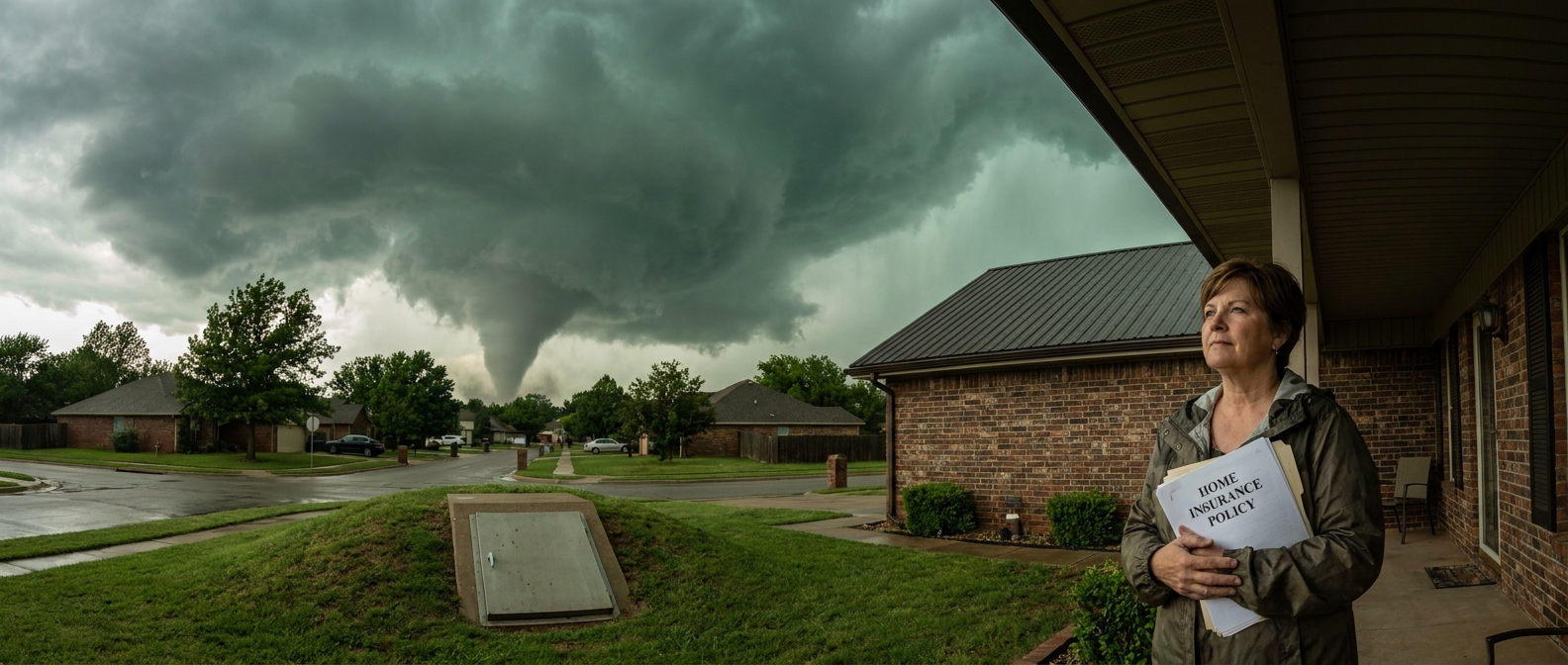
The core reason is geography. Oklahoma sits squarely in Tornado Alley, the corridor of the central United States that produces more violent tornadoes than anywhere else on earth. But tornadoes are just the beginning. Oklahoma is battered year-round by severe convective storms, damaging hail, straight-line winds, and even wildfires in the eastern counties, all of which generate enormous insurance claims. Rising rebuilding costs (lumber, roofing materials, and labor) have added even more pressure to premiums.
Insurers do not raise rates arbitrarily. They raise them because Oklahoma produces more claims, more often, for more money than virtually any other state. In 2026, the state exploded out of the gate with a record-breaking start: 22 tornadoes in March alone (the most on record for that month since 1950), followed by the massive April 23-28 tornado outbreak sequence that produced 108 confirmed tornadoes across the region. By mid-year, Oklahoma had logged 66 confirmed tornadoes and ranked 8th nationally. For a broader look at how Oklahoma stacks up nationally, check out our average home insurance rates by state guide.
Oklahoma's Weather: The Real Driver Behind Your Premium
Tornado Alley and Severe Convective Storms
Oklahoma averages more tornadoes per square mile than any other state. The combination of warm, moist Gulf air colliding with cold, dry air from the Rockies creates a near-perfect environment for supercell thunderstorms from spring through early summer. The 2026 season became the second-deadliest tornado start in decades, with fatalities in Fairview during early March outbreaks and additional casualties during the April 23-28 sequence.
Hail is an equally massive driver of claims. Insurers now cite hail (not tornadoes) as the single biggest factor breaking the Oklahoma market, since damaged shingles often produce far more repair spending than the original tornado damage itself. For deeper context on how these storms drive premiums nationwide, see our guide on severe convective storms and home insurance.
How Oklahoma's Weather Inflates Your Premium
Insurance pricing is based on actuarial risk, and Oklahoma's risk profile is extreme. Here is a snapshot of typical 2026 annual premiums by location (based on $300,000 in dwelling coverage):
| Location | Average Annual Premium |
|---|---|
| Oklahoma City | $5,554+ |
| Edmond | $5,324 |
| Norman | $5,310 |
| Lawton | $4,641 |
| Tulsa | $4,041 |
| State Average (LendingTree) | $5,298 |
| National Average | $2,395 |
Notice even Tulsa, the lowest of the major cities, still vastly exceeds the national average. There is essentially nowhere in Oklahoma where you escape the weather premium. To see how nearby high-risk states compare, our Colorado home insurance guide covers similar dynamics.

Compare Home Insurance Plans in Ohio
Find your best options in less than 2 minutes
Understanding Tornado Coverage and Wind & Hail Deductibles
Does Standard Home Insurance Cover Tornado Damage?
Yes, tornado damage is covered under standard Oklahoma homeowners insurance policies as a windstorm peril. If a tornado damages or destroys your home's structure, your dwelling coverage (Coverage A) pays to repair or rebuild it, up to your policy limit. Coverage also typically extends to:
- Personal belongings damaged or destroyed by the tornado
- Temporary living expenses (loss of use) if your home is uninhabitable
- Fire or smoke damage that occurs as a result of the tornado
- Rain or water intrusion through a tornado-damaged roof or wall
However, there is one critical exclusion: flooding is not covered by standard homeowners insurance, even if it occurs during the same storm event. If a tornado's heavy rainfall overwhelms drainage systems and floods your home, you need a separate flood insurance policy through the NFIP or a private insurer to cover that damage. For a deeper explanation, see our guide on tornado damage coverage.
Wind and Hail Deductibles: What Oklahoma Homeowners Must Know
This is where Oklahoma policies differ dramatically from standard home insurance in other states. Five years ago, a homeowner could often get a flat $1,000 deductible across all perils. Today, virtually every Oklahoma policy carries a separate, percentage-based wind and hail deductible that only applies to wind or hail claims, averaging around 1.97% of Coverage A statewide per Insurify's 2026 data. Learn more about how these percentage deductibles work, as they have become the industry standard across Tornado Alley.
These deductibles typically range from 1% to 5% of your home's insured dwelling value, with 1%, 2%, and 5% being the most common options offered. Here is what that looks like in real dollars:
| Home Insured Value | 1% Deductible | 2% Deductible | 5% Deductible |
|---|---|---|---|
| $250,000 | $2,500 | $5,000 | $12,500 |
| $300,000 | $3,000 | $6,000 | $15,000 |
| $400,000 | $4,000 | $8,000 | $20,000 |
| $500,000 | $5,000 | $10,000 | $25,000 |
A 2% deductible on a $300,000 home means you pay the first $6,000 out of pocket before insurance kicks in after a hail or tornado event. Choosing a higher deductible (like 5%) lowers your annual premium, but dramatically increases your exposure when a storm hits. Most Oklahoma homeowners find the 1% to 2% range offers the best balance between manageable risk and affordable premiums. And remember: this deductible applies per occurrence, so each distinct storm event triggers a new one. For more on the rising deductible trend, see our full analysis.

Protect your home with State Farm
Average Rate:
Homeowners who bundle and save with State Farm save an average of $1,000 per year!

You're in Good Hands® with Allstate
Average Rate:
Get comprehensive home coverage with flexible policy options.

Customize your home coverage
Average Rate:
Only pay for the coverage you need with personalized home insurance.

Smart coverage for your home
Average Rate:
Protect what matters most with award-winning home insurance.
Best Home Insurance Companies Still Writing in Oklahoma
The Oklahoma market has tightened, but it has not collapsed. Commissioner Glen Mulready has emphasized that roughly 109 different insurance companies were actively writing homeowners coverage in Oklahoma as of the latest OID reporting. That said, American National exited the homeowners market in Oklahoma (and eight other states), and Farmers Insurance non-renewed roughly 1,300 policies in eastern Oklahoma citing wildfire risk in McCurtain and Choctaw counties. Foremost has also pulled back on some Oklahoma exposures.
Here are the top options and what makes each worth considering in 2026:
| Company | Best For | 2026 Avg Annual Rate |
|---|---|---|
| State Farm | Overall value | $3,003-$3,220 |
| Allstate | Broad availability | $3,508-$3,736 |
| USAA | Military families | $2,290-$4,656 |
| American Farmers & Ranchers | Independent carrier | $2,484-$3,682 |
| Oklahoma Farm Bureau | Local expertise | Strong shelter discounts |
| Shelter | Regional service | $1,688-$5,501 |
| Travelers | Coverage add-ons | ~$3,360 |
| Chubb | High-value homes | Superior RCV coverage |
The Oklahoma Insurance Department maintains a home insurance rate comparison tool that lets you compare rates from active carriers for your specific home type and location. Use it. The spread between the cheapest and most expensive carrier for the same home can be thousands of dollars per year. Our Missouri home insurance guide and Tennessee home insurance guide cover comparable challenges in neighboring states.
Big Insurers Under Fire: The Oklahoma AG Lawsuits
Oklahoma Attorney General Gentner Drummond has taken the extraordinary step of suing both of the state's largest home insurers. In June 2026, Drummond filed suit against State Farm alleging a coordinated scheme (through a program called "Hail Focus Initiative") to wrongfully deny or underpay legitimate hail and wind damage claims. In July 2026, he filed a similar suit against Allstate, accusing it of running a "Disaster Payment Minimization Scheme" that used secret internal standards to reduce payouts. Both cases seek civil penalties, restitution, and damages on behalf of Oklahoma homeowners. Private homeowner litigation is even bigger: one Oklahoma law firm reports more than 1,000 individual State Farm cases stemming from denied storm claims. This does not mean these carriers are bad choices for every homeowner, but it does mean documentation and independent inspections after a storm matter more than ever. See our hail damage claims guide for how to protect yourself.
New Oklahoma Insurance Laws and Reforms Coming in 2027
Oklahoma lawmakers finally responded to the state's insurance affordability crisis. In May 2026, Governor Kevin Stitt signed House Bill 3781, which for the first time gives the Oklahoma Insurance Department authority to review rate changes before they take effect. The law moves Oklahoma from a "use-and-file" system to a "file-and-wait" system starting July 1, 2027. Under the new rules:
- Competitive markets: insurers must file rates at least 30 days before implementation
- Noncompetitive markets: filings must be submitted at least 60 days in advance
- The Insurance Commissioner can request actuarial data and challenge rates that appear excessive or discriminatory
- Notices and percentage changes for private-passenger auto, homeowners multi-peril, and dwelling-fire filings must be posted publicly on the OID website
The 2026 legislative package from OID and legislators also includes:
- Faster claim decisions: shorter windows for insurers to respond to consumer complaints and claims information requests
- Quarterly P&C Market Stability Statements: insurers must report non-renewals, market withdrawals, and written premium so regulators can track carrier pullbacks
- Mandatory FORTIFIED roof discounts for homes built or retrofitted to IBHS standards
- Roof age fairness: preventing insurers from non-renewing solely because a roof is 15+ years old
- Aerial imagery restrictions: prohibiting denials based solely on drone or satellite images
While relief is coming, most of the biggest protections do not take effect until July 2027.
How to Lower Your Home Insurance Costs in Oklahoma
Oklahoma's high rates are largely driven by factors outside your control, but there are meaningful steps you can take. Our 17 proven ways to lower your home insurance premium covers general strategies. Here are the ones that matter most for Oklahoma specifically.
1. Install a Storm Shelter or Safe Room
This is one of the most impactful discounts available. Insurers in tornado-prone states typically offer 5% to 20% premium reductions for homes with FEMA P-320 certified storm shelters. Oklahoma Farm Bureau offers up to a 20% discount on the wind/hail portion of coverage for homes with FEMA-compliant shelters. Some counties (like Rogers County) and tribal programs (like the Choctaw Nation's) still offer separate shelter grant programs, so check locally.
2. Upgrade to Impact-Resistant Roofing (and Apply for the SOH Grant)
Your roof is the most vulnerable part of your home in an Oklahoma hail or wind storm, and insurers know it. Upgrading to Class 4 impact-rated shingles can trigger significant premium discounts. Better yet, the Strengthen Oklahoma Homes (SOH / OKReady) Program is active statewide in 2026, offering grants of up to $10,000 to upgrade to storm-resistant IBHS FORTIFIED Roof standards.
Demand is intense: OID's first 2026 application window filled all 300 available slots within weeks of opening in January 2026 (distributing more than $2 million in grant funds), and OID opened the next round on July 13, 2026 on a first-come, first-served basis. Homeowners who complete the upgrade save an average of about $750 per year on premiums, with wind/hail discounts of up to 42% now required by Oklahoma law once the FORTIFIED certificate is issued. Grants are paid directly to the licensed contractor after certification. Learn more about the wind damage coverage rules that reward mitigation.
3. Bundle Your Home and Auto Policies
Purchasing home and auto insurance from the same carrier remains one of the simplest and most universally available discounts. Bundling can take 5-25% off your combined premiums depending on the insurer. State Farm, Allstate, and Farmers all offer competitive multi-policy discounts in Oklahoma.
4. Shop and Compare Quotes Annually
Oklahoma's insurance market is volatile. Carriers adjust their pricing models frequently based on recent storm seasons, and the company that was cheapest last year may not be cheapest today. Shopping your policy every 12 months, or after any major weather event, can save you hundreds. The difference between the lowest and highest quote for the same home can easily exceed $2,000 per year.
5. Raise Your Standard Deductible (Carefully)
Increasing your flat-dollar standard deductible (the one that applies to non-wind/hail perils like fire or theft) from $500 to $1,000 or $2,500 can meaningfully reduce your premium. This is separate from your wind/hail deductible. Just make sure you have the cash reserve to cover it if needed.
6. Ask About All Available Discounts
Many homeowners never ask what discounts are available. Common ones in Oklahoma include new home discounts, home security system discounts, claims-free discounts, loyalty discounts (though shopping still often beats loyalty), non-smoker discounts, and retired-homeowner discounts (some carriers).
The Uncomfortable Reality About Oklahoma Rates
It is important to be honest: Oklahoma home insurance rates are unlikely to come down significantly in the near future. Climate trends indicate more frequent and intense severe weather events, not fewer. Rebuilding costs continue to rise, and while HB 3781 gives the state more oversight starting in July 2027, meaningful relief will take years. If you are struggling to afford coverage, review our guide on the home insurance affordability crisis for additional options.
The best strategy is to optimize what you can control: your deductible choices, your home's storm resistance, the carrier you choose, and how frequently you shop, while accepting that some portion of your premium is simply the cost of living in one of the most storm-active regions on earth.
Frequently Asked Questions About Oklahoma Home Insurance
What is the average cost of home insurance in Oklahoma in 2026?
The 2026 average annual cost of home insurance in Oklahoma ranges from approximately $5,010 to $5,298 for a policy with $300,000 in dwelling coverage, compared to the national average of about $2,395. NerdWallet's higher-coverage analysis ($400,000 dwelling) puts the average at $7,255, and MoneyGeek reports $7,683. Rates vary significantly by city, with Oklahoma City averaging around $5,554 and Tulsa residents closer to $4,041.
Does Oklahoma home insurance cover tornado damage?
Yes, standard homeowners insurance in Oklahoma covers tornado damage as a windstorm peril. This includes structural damage to your home, damage to personal belongings, and temporary living expenses if your home becomes uninhabitable. However, flood damage is not covered even if it occurs during the same storm event. For flood protection, you need a separate flood insurance policy through the NFIP or a private insurer.
What is a wind and hail deductible, and how common is it in Oklahoma?
A wind and hail deductible is a separate, percentage-based deductible that applies specifically to damage from wind, hail, or tornadoes. In Oklahoma, these deductibles are now nearly universal, averaging around 1.97% of Coverage A statewide, with most policies carrying 1% or 2% and some going as high as 5%. On a $300,000 home with a 2% deductible, you are responsible for the first $6,000 of any wind or hail claim, and this applies per occurrence.
Which home insurance companies are the cheapest in Oklahoma?
Based on 2026 rate data, State Farm ($3,003-$3,220/yr), USAA ($2,290/yr for eligible military families), American Farmers & Ranchers ($2,484-$3,682/yr), and Allstate ($3,508-$3,736/yr) tend to offer the most competitive rates in Oklahoma. The cheapest carrier depends heavily on your specific home, location, and coverage needs, so comparing quotes from multiple insurers is the only reliable way to find your lowest rate.
How does the Strengthen Oklahoma Homes FORTIFIED roof grant work?
The SOH (OKReady) program offers eligible homeowners up to $10,000 in state grant money to upgrade to an IBHS FORTIFIED Roof, paid directly to a certified contractor. Oklahoma law now requires insurers to apply a wind/hail premium discount of up to 42% once the FORTIFIED certificate is issued, and program participants save an average of about $750 per year. Applications are awarded on a first-come, first-served basis when funding rounds open (the first 2026 round filled 300 slots within weeks; the next round opened July 13, 2026).
Are insurance companies leaving Oklahoma?
Not en masse, but the market is tightening. American National has exited the Oklahoma homeowners market, and Farmers Insurance non-renewed roughly 1,300 policies in eastern Oklahoma citing wildfire risk in McCurtain and Choctaw counties. However, Commissioner Glen Mulready has stated Oklahoma has not seen a California-style pullback, with roughly 109 insurance companies still actively writing homeowners coverage in the state.
Why is the Oklahoma Attorney General suing State Farm and Allstate?
In June and July 2026, AG Gentner Drummond filed separate lawsuits accusing State Farm and Allstate of using internal programs to systematically underpay or deny legitimate wind and hail damage claims from Oklahoma homeowners. The suits allege deceptive claims-handling practices and seek civil penalties, restitution, and damages. Both cases are ongoing, and more than 1,000 individual homeowner lawsuits with similar allegations are also pending across the state.