
Compare Home Insurance Plans in Ohio
Find your best options in less than 2 minutes



How Standard Home Insurance Treats Heating Oil Tanks
If you own one of the millions of homes in the Northeast still heated by oil, your homeowners policy is not the safety net you probably assume it is. A standard HO-3 policy provides only limited protection: it may cover a sudden and accidental discharge that damages the structure or heating equipment, but it usually stops there. Gradual leaks, seepage, corrosion, and the environmental cleanup that follows are almost always excluded under the policy's pollution exclusion.
The New York State Department of Environmental Conservation warns that a leaking underground tank can easily cost tens of thousands of dollars to remediate, and if your policy contains a pollution exclusion clause (most do), you could be stuck with the entire bill.
Above-ground vs. underground tanks
Insurers view these two tank types very differently:
| Tank Type | Typical Location | Insurance View | Cleanup Risk |
|---|---|---|---|
| Above-ground (AST) | Basement or exterior pad | Easier to insure; some carriers include limited coverage | Lower; leaks are visible early |
| Underground (UST) | Buried in yard | Many carriers refuse to write policy, or require removal | High; leaks are hidden until soil is contaminated |
| Abandoned UST | Buried, disconnected | Almost never covered; often triggers non-renewal | Very high; residual oil and corrosion continue |
Underground tanks are the bigger problem. Because leaks can go undetected for years, cleanup costs balloon quickly. If you're navigating other hidden risks that carriers often exclude, our guide on water damage exclusions covers the same "gradual leak" trap that catches oil tank owners.

Compare Home Insurance Plans in Ohio
Find your best options in less than 2 minutes
What Oil Tank Cleanup Actually Costs
The financial exposure is what makes this coverage gap so dangerous. Removal alone is usually manageable, but the moment contamination is discovered, costs escalate fast.
| Scenario | Typical Cost Range |
|---|---|
| Above-ground tank removal | $400 to $1,000 |
| Underground tank removal (no contamination) | $1,500 to $3,600 |
| Minor soil remediation | $4,000 to $15,000 |
| Typical homeowner remediation case | $10,000 to $20,000 |
| Groundwater contamination / major spill | $50,000 to $100,000+ |
| Severe UST cleanup (national average) | $154,000 |
A Long Island homeowner facing a heating oil tank leak commonly spends $4,500 to $15,000 on cleanup, and in most cases homeowners insurance will not pay a dime of it. In Massachusetts, remediation for a serious release has been reported to reach half a million dollars.

Protect your home with State Farm
Average Rate:
Homeowners who bundle and save with State Farm save an average of $1,000 per year!

You're in Good Hands® with Allstate
Average Rate:
Get comprehensive home coverage with flexible policy options.

Customize your home coverage
Average Rate:
Only pay for the coverage you need with personalized home insurance.

Smart coverage for your home
Average Rate:
Protect what matters most with award-winning home insurance.
Endorsements That Close the Gap (Especially in the Northeast)
Because standard policies exclude oil contamination, most Northeast insurers now offer optional endorsements. Names and limits vary by state and carrier, but the coverage falls into three buckets:
- First-party coverage for cleanup of your own property
- Third-party liability for damage to neighbors and groundwater
- Removal costs for a leaking tank
State-by-state options
New Jersey. State law requires insurers to make available optional coverage for removal of a leaking heating oil tank and remediation of the discharge, including damage to your property and to third parties. NJM's HO-76N endorsement, for example, historically offered $100,000 of pollution liability coverage for a special premium.
Massachusetts. Since 2009, insurers have been required to offer an oil-tank endorsement (often called the Escaped Fuel or Escaped Liquid Fuel Endorsement) to owners of one- to four-family homes. Coverage is optional and must be elected. One common structure offers $50,000 for liquid fuel remediation and $200,000 in liquid fuel liability. Tanks generally must meet current code, which usually means passing the state's Form 1A oil-burner technician certification.
New York. No mandatory offer, but many insurers sell an oil tank rider providing limited cleanup or third-party liability coverage. Third-party oil tank protection plans sold by fuel dealers are common in NYC and Long Island.
Connecticut and New Hampshire. Endorsements exist through most standard carriers but are not required to be offered. Ask your agent specifically about a "pollution liability" or "escaped fuel" endorsement.
Active Tanks, Abandoned Tanks, and Neighbor Liability
The distinction between an active and abandoned tank drives both your insurability and your liability.
An active tank is currently in service, connected to a working oil-fired heating system. Insurers may write coverage on it, especially if it's above-ground, newer, and monitored. Some carriers require documentation such as tank age, service records, and monitoring equipment before adding an endorsement.
An abandoned tank has been disconnected or decommissioned but was never properly removed. Residual oil, sludge, and corrosion mean these tanks can still leak years later. Most insurers will not cover them, and many will refuse to write a policy on a home with a known abandoned underground tank. Worse, courts and environmental agencies routinely hold the current property owner responsible for cleanup, regardless of who installed or abandoned the tank.
If oil migrates to a neighbor's property
This is where liability gets expensive. Under statutes like New Jersey's Spill Compensation and Control Act, homeowners can face joint and several liability for contamination they caused or contributed to, even without negligence. If heating oil from your yard reaches a neighbor's soil or well, you can be sued for:
- Their remediation costs
- Loss of property value
- Alternate water supply while wells are affected
- Long-term monitoring costs
Standard homeowners liability coverage almost always excludes pollution claims, which is exactly why the third-party portion of an oil tank endorsement matters. If you also own an older home with layered risks, our overview of lead paint liability exposure explains how similar pollution exclusions catch owners off guard.
State Programs: New Jersey's UST Fund and Others
New Jersey operates the most robust homeowner-facing program in the country. The Petroleum Underground Storage Tank Remediation, Upgrade, and Closure Fund (the UST Fund) is jointly administered by NJDEP and NJEDA and provides grants and loans for both leaking and non-leaking residential heating-oil tanks.
Key features for homeowners:
- Financial assistance can cover up to 100% of eligible project costs
- Grants are capped at $250,000 per site
- Loans are capped at $1,000,000 per site
- Application fee for a residential petroleum UST is $250
- Covers remediation, closure, upgrades, and in some cases replacement
Historical income and net worth limits have applied to certain PUST grant tiers (for example, annual income at or below $250,000 and net worth excluding primary residence at or below $500,000). Confirm current thresholds with NJDEP before you file, because the rules were most recently updated in June 2025.
Other states (Connecticut, New Hampshire, Vermont, and Maine) have had similar reimbursement funds at various points, though several have been suspended or restructured. Check your state DEP or DEC website for the current status.
How to Shop, Inspect, and Reduce Your Risk
You can save thousands by taking the right steps before something goes wrong. Approach this the same way you would any other risk-based coverage decision, similar to how you'd evaluate septic system coverage gaps, which also hinge on gradual-failure exclusions.
Shopping tips
Inspection checklist
- Have any UST swept and pressure-tested every 3 to 5 years
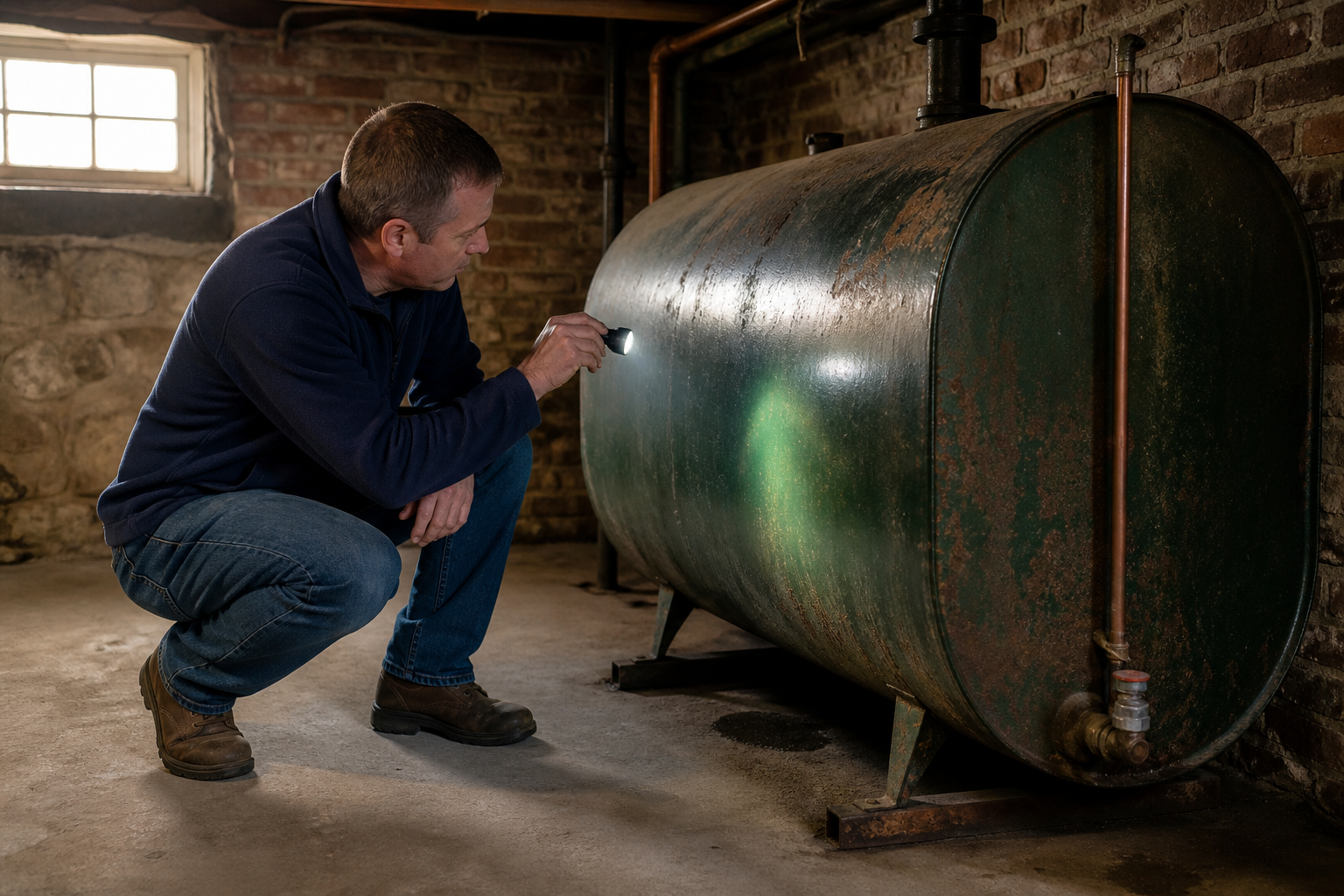
- Inspect above-ground tanks annually for rust, sweating, and pinholes
- Check the fuel line for corrosion where it enters concrete
- Document tank age, size, and manufacturer for your insurer
- Keep receipts for fill-ups (unusual usage can indicate a leak)
Ways to reduce risk
- Replace old single-wall tanks with double-walled tanks (Roth, Granby, or similar). Some manufacturers include their own leak warranty of up to $1,000,000.
- Remove abandoned USTs rather than leaving them buried. Decommissioning in place is cheaper short-term but hurts resale value and insurability.
- Move underground tanks above ground where possible. Insurers strongly prefer ASTs and often offer better rates.
- Install a leak monitoring device on interior tanks.
- Convert to gas or heat pumps if your equipment is due for replacement. This eliminates the risk entirely.
Frequently Asked Questions
Does homeowners insurance ever cover an oil tank leak? Sometimes, but only in narrow circumstances. A sudden and accidental discharge that damages the interior of your home may be covered under a standard HO-3, but the environmental cleanup, soil remediation, and any third-party liability are almost always excluded unless you have purchased a specific oil tank endorsement or rider.
How much does it cost to add oil tank coverage to my policy? Premiums vary widely by carrier and state, but adding an escaped fuel or oil tank pollution endorsement typically runs from about $50 to $300 per year for coverage limits between $50,000 and $200,000. That is a small fraction of a $10,000 to $100,000 cleanup bill, which is why it's one of the highest-value endorsements a Northeast homeowner can buy.
Will my insurer drop me if I have an underground oil tank? Possibly. Many national carriers now decline or non-renew homes with active USTs, and almost all refuse to insure abandoned ones. Regional Northeast carriers are more accommodating, especially if the tank is newer, monitored, and inspected. Removing the tank and switching to an above-ground unit or a different fuel source generally restores full insurability.
Am I liable if oil from my tank contaminates my neighbor's yard? Yes, in most states. Environmental statutes such as New Jersey's Spill Act impose strict, joint, and several liability on property owners whose tanks release oil, regardless of fault. You can be responsible for your neighbor's cleanup, property damage, well replacement, and long-term monitoring, which is why third-party liability coverage in an oil tank endorsement is essential.
Should I remove an abandoned tank before selling my home? In most cases, yes. Abandoned tanks scare off buyers, lenders, and insurers, and any contamination discovered after closing typically becomes the new owner's problem, which is a common source of lawsuits. Professional removal with a clean soil report (a "No Further Action" letter from your state) typically costs $1,500 to $5,000 and can add far more than that to your sale price.