
Compare Home Insurance Plans in Ohio
Find your best options in less than 2 minutes



What Is a Home Insurance Inspection?
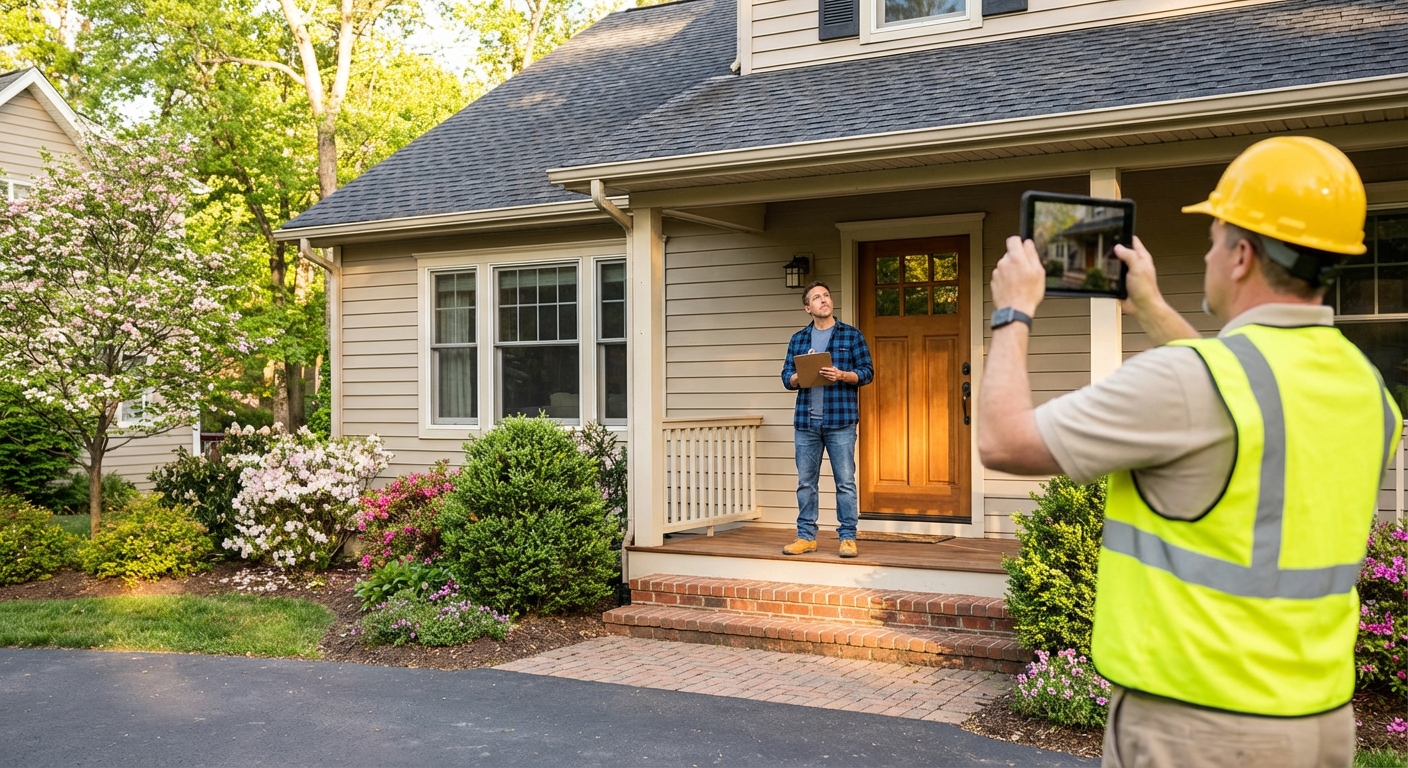
A home insurance inspection is a formal visual assessment of your property carried out by your insurer or a licensed third-party inspector. Its purpose is straightforward: the insurance company wants to verify that the home they're agreeing to cover matches what was described in your application, and that no major risks are lurking that could lead to a costly claim down the road.
Inspectors examine your home's key systems, structural condition, and safety features. The findings help insurers determine your actual risk level, set an accurate replacement cost, and decide whether to approve, modify, or deny your coverage. In 2026, insurers are leaning harder on inspections than ever before. Many carriers are now implementing inspection requirements across entire books of business, not just individual policies, due to higher claim severity and rebuild cost inflation. This is part of a broader home insurance underwriting process that has become more data-driven and granular.
When Are Home Insurance Inspections Required?
Not every homeowner will face a mandatory inspection, but according to 2026 industry data, the share of insurers using some form of inspection (in-person or remote) keeps climbing. Here are the most common triggers:
| Trigger | Why It Prompts an Inspection |
|---|---|
| New policy on an older home | Homes 20 to 30+ years old carry higher risk of outdated systems |
| Switching insurers | Producers report switching carriers "virtually guarantees" an inspection |
| Policy renewal | Insurer re-evaluates risk, especially after local weather events |
| High-value homes | Properties above $750K to $800K often trigger full interior reviews |
| Post-claim review | Insurer checks for additional risk after a filed claim |
| Recent major renovations | Verify permits and updated coverage needs |
| 10+ years since last inspection | Carriers like Progressive cite this as a common trigger |
Inspections typically take place 30 to 90 days after a new policy starts, though some insurers require them before binding coverage. If you have a home insurance non-renewal situation, an inspection is almost always part of what triggered it. Even longtime policyholders are increasingly being reinspected, especially on older homes or in regions hit by recent severe weather.

Compare Home Insurance Plans in Ohio
Find your best options in less than 2 minutes
What Do Home Insurance Inspectors Check?
Understanding what inspectors look for is the first step toward passing without issues. Here are the five main areas of focus:
1. Roof Condition
The roof is typically the first thing inspectors evaluate, and in 2026 it has emerged as one of the strongest indicators of property risk in underwriting. They look for:
- Missing, curling, or damaged shingles
- Signs of leaks, water damage, or rot
- Condition and age of flashing around chimneys and skylights
- Gutter attachment and drainage
- Overall roof age (asphalt shingle roofs over 15 years receive extra scrutiny)
Roof age is a critical factor. Many insurers now decline new policies on homes with asphalt shingle roofs older than 15 years, and roughly 70% of major carriers enforce a 20-year threshold where coverage either switches to actual cash value (ACV) or gets non-renewed altogether. In hail-prone Colorado, some carriers draw the line at just 10 to 15 years for non-impact-resistant asphalt shingles, and Florida carriers commonly stop writing new policies for shingle roofs older than 10 to 15 years. Architectural shingles typically get reviewed at 20 to 25 years, while metal and tile roofs face restrictions only at 30 to 40+ years. Learn more about roof age and home insurance or review the latest roof age eligibility rules for 2026.
2. Electrical System
Inspectors check whether your electrical setup meets modern safety standards:
- Main service panel condition (Federal Pacific and Zinsco panels are frequently flagged)
- Visible wiring condition (no exposed or frayed wires)
- Outlets and fixtures (no burn marks or signs of arcing)
- Outdated systems like knob-and-tube or aluminum branch wiring are red flags
3. Plumbing
Plumbing issues are a leading cause of water damage claims. Inspectors look for:
- Visible leaks under sinks, around toilets, or near appliances
- Pipe material and age (galvanized or polybutylene pipes raise concerns)
- Water heater age and condition (15+ years is a flag for many carriers)
- Signs of water staining, mold, or mildew
4. HVAC System
Heating and cooling systems are reviewed for:
- Furnace age and condition
- Air conditioning unit function (20+ years is a flag for many carriers)
- Clean filters and unobstructed vents
- Signs of carbon monoxide risks or improper ventilation
5. Safety Hazards
This catch-all category covers anything that could lead to a liability or damage claim:
- Working smoke detectors and carbon monoxide alarms (on every level and near bedrooms)
- Condition of stairs, railings, and walkways
- Structural cracks or foundation issues
- Dead or overhanging trees near the home
- Pools, trampolines, or other liability risks

Protect your home with State Farm
Average Rate:
Homeowners who bundle and save with State Farm save an average of $1,000 per year!

You're in Good Hands® with Allstate
Average Rate:
Get comprehensive home coverage with flexible policy options.

Customize your home coverage
Average Rate:
Only pay for the coverage you need with personalized home insurance.

Smart coverage for your home
Average Rate:
Protect what matters most with award-winning home insurance.
Types of Home Insurance Inspections
Not all inspections are created equal. The type required depends on your home's age, value, and location. For homes that are difficult to underwrite, review our guide to home insurance quotes before scheduling.
Exterior-Only Inspection
The most common type for newer homes. The inspector photographs and evaluates the roof, siding, foundation, gutters, walkways, and yard for obvious hazards. No interior access is needed, and you may not even need to be home. Increasingly, these are being replaced entirely by AI-analyzed satellite and drone imagery.
4-Point Inspection
A focused review of the four systems most likely to cause a major claim: roof, HVAC, electrical, and plumbing. This is the go-to inspection for homes 20+ years old, particularly in Florida and other high-risk states. According to 2026 pricing data from HomeGuide, a standalone 4-point inspection runs $75 to $175 nationally, with most homeowners paying around $125. In Florida markets, standalone pricing is closer to $75 to $150, and bundling with a wind mitigation inspection typically runs $125 to $225 for both together (potentially unlocking meaningful premium credits). Coastal Louisiana and Mississippi markets can push $200 to $350 due to lower inspector volume.
Full Home Inspection
A comprehensive evaluation covering both interior and exterior: structure, all major systems, safety features, and everything in between. Expect it to take 1 to 3 hours. Full inspections are most common for high-value homes (above $750K to $800K) or when switching to a new insurer. Standalone pricing typically runs $300 to $600 in 2026, depending on home size and location.
Virtual / Remote Inspection
The fastest-growing format in 2026. Instead of an in-person visit, the homeowner submits photos or completes a guided video walkthrough via a mobile app. Nationwide's partnership with Chrp Technologies, announced December 1, 2025 and live in early 2026 across all states where Nationwide writes homeowners policies, lets selected policyholders complete a smartphone-guided photo survey. Chrp's AI analyzes the images against more than 400 known failure points across plumbing, electrical, and fire risks, then generates a personalized mitigation report. By mid-2026, other carriers like First Mutual Insurance Company are expanding similar Chrp-based self-inspections for home and farm renewals, showing AI virtual inspections are scaling across the industry. Many insurers also use AI-powered drone and satellite tools to analyze property images for risk indicators like roof wear, debris, or tree overhangs without ever knocking on your door. A 2026 Insurance.com survey found that over 21% of homeowners weren't even sure whether an inspection had taken place, a clear sign that unobtrusive remote methods are now the norm. If you're worried about scheduling, learn how to get home insurance without inspection using virtual alternatives.
How to Prepare for a Home Insurance Inspection
Preparation makes a significant difference. Use this checklist before your inspector arrives:
| Area | What to Do |
|---|---|
| Roof & Gutters | Clear debris, check for loose or missing shingles, clean gutters |
| Electrical | Label all breakers, replace burnt outlets, test GFCI outlets |
| Plumbing | Fix any visible leaks, check under sinks, note water heater age |
| HVAC | Replace filters, ensure system turns on, clean vents |
| Safety Devices | Test all smoke/CO detectors, replace dead batteries |
| Exterior | Trim overhanging trees, repair walkways, fix loose railings |
| Interior | Clear access to attic, basement, and utility areas |
| Documentation | Gather receipts for upgrades, permits, and maintenance records |
Being transparent with your insurer about renovations and upgrades is also smart. It helps ensure your replacement cost coverage is accurate, which matters more than ever given ongoing construction cost inflation and rising rebuild expenses. Documenting upkeep also matters for any future claims, since most policies have strict maintenance requirements that can void coverage if ignored. If you've ever filed a claim, keep your records in order and understand how to deal with adjusters so everything is documented properly.
What Happens If You Fail a Home Insurance Inspection?
Failing an inspection doesn't always mean instant cancellation. Encouragingly, a Spring 2026 homeowner survey from Insurance.com found that only 2% of inspected homeowners had their insurance canceled and just 3% were asked to make modifications. Both figures are down sharply from the prior-year survey, when 14% reported a cancellation. Still, the consequences can be serious if issues are left unaddressed.
Possible outcomes include:
- Required repairs with a deadline. The most common outcome. Your insurer gives you 30 to 60 days to fix flagged issues and provide proof (photos and contractor invoices).
- Premium increase or surcharge. If issues are minor but still elevate your risk, expect to pay more. This is one of the main reasons home insurance rates rise at renewal, especially when AI-driven remote inspections flag conditions that would have gone unnoticed a few years ago.
- Policy endorsements or exclusions. The insurer may add exclusions tied to unresolved issues. For example, if your roof fails, the insurer may continue coverage but exclude the roof itself or shift to actual cash value only. Review does home insurance cover roof replacement to understand the RCV vs. ACV difference.
- Policy non-renewal or cancellation. For serious risks (structural damage, condemned systems, uninsurable hazards), the insurer can non-renew or cancel with as little as 10 to 30 days' notice, depending on state law.
The most damaging long-term consequence: once a cancellation appears on your insurance record, you may lose access to standard carriers and be forced into surplus lines, your state's FAIR Plan, or specialty markets, all of which come with significantly higher premiums. If you've already been denied home insurance, an inspection failure can make finding new coverage even harder.
If your policy is canceled or non-renewed due to an inspection failure, getting your mortgage lender notified quickly is essential to avoid force-placed insurance, which is typically more expensive and offers less protection than a standard policy. This is especially common with older homes that have aging roofs or outdated systems.
Frequently Asked Questions
Do all home insurance companies require an inspection?
No, not all insurers require a formal inspection, and decisions are made on a case-by-case basis. However, in 2026 many carriers now order at least an exterior inspection on every home they insure, often using satellite imagery or drones without notifying the homeowner. Newer homes (under 25 years old) in low-risk areas with no prior claims are far less likely to be inspected, but switching carriers virtually guarantees some form of review.
How much does a home insurance inspection cost?
If the insurer orders the inspection, it's typically free to you. If you need to hire an inspector yourself (common with 4-point inspections in Florida), 2026 pricing data shows standalone 4-point inspections cost $75 to $175 nationally, with most homeowners paying around $125. A full home inspection runs $300 to $600, while a 4-point plus wind mitigation combo runs $125 to $225 in most Florida markets, and coastal Louisiana or Mississippi can push $200 to $350.
How long does a home insurance inspection take?
An exterior-only or 4-point inspection usually takes 30 to 60 minutes. A full interior and exterior inspection can take 1 to 3 hours depending on home size. Virtual inspections via app can often be completed in under 30 minutes on your own schedule, which is part of why AI-driven remote tools are taking over routine renewals.
Can I refuse a home insurance inspection?
Technically yes, but it usually backfires. If you refuse, the insurer will likely reject your application or cancel your current policy for failure to comply. In some cases, refusing leads to a higher premium or added coverage exclusions. It's almost always better to allow the inspection and prepare for it properly.
What are the 2026 trends in home insurance inspections?
Two major shifts are reshaping the inspection landscape in 2026. First, AI-driven virtual inspections are now mainstream, with roughly 70% of home insurers using or testing AI and machine learning, and ZestyAI now covers 97%+ of U.S. residential properties with property-level scoring for wildfire, hail, wind, water, and even everyday non-weather fire risk via its new Z-SPARK model launched in March 2026. Second, states are beginning to regulate imagery-only decisions. Louisiana's 2024 law caps imagery age at 24 months, Rhode Island's Bulletin 2025-3 sets a 15-month maximum, Alabama's Bulletin 2025-03 requires physical inspection when imagery is inconclusive, and Colorado's 2026 Bulletin B-5.57 warns insurers that visible conditions should not be the sole basis for non-renewal.