
Compare Home Insurance Plans in Ohio
Find your best options in less than 2 minutes



Covered vs. Not Covered: What Your Policy Actually Says
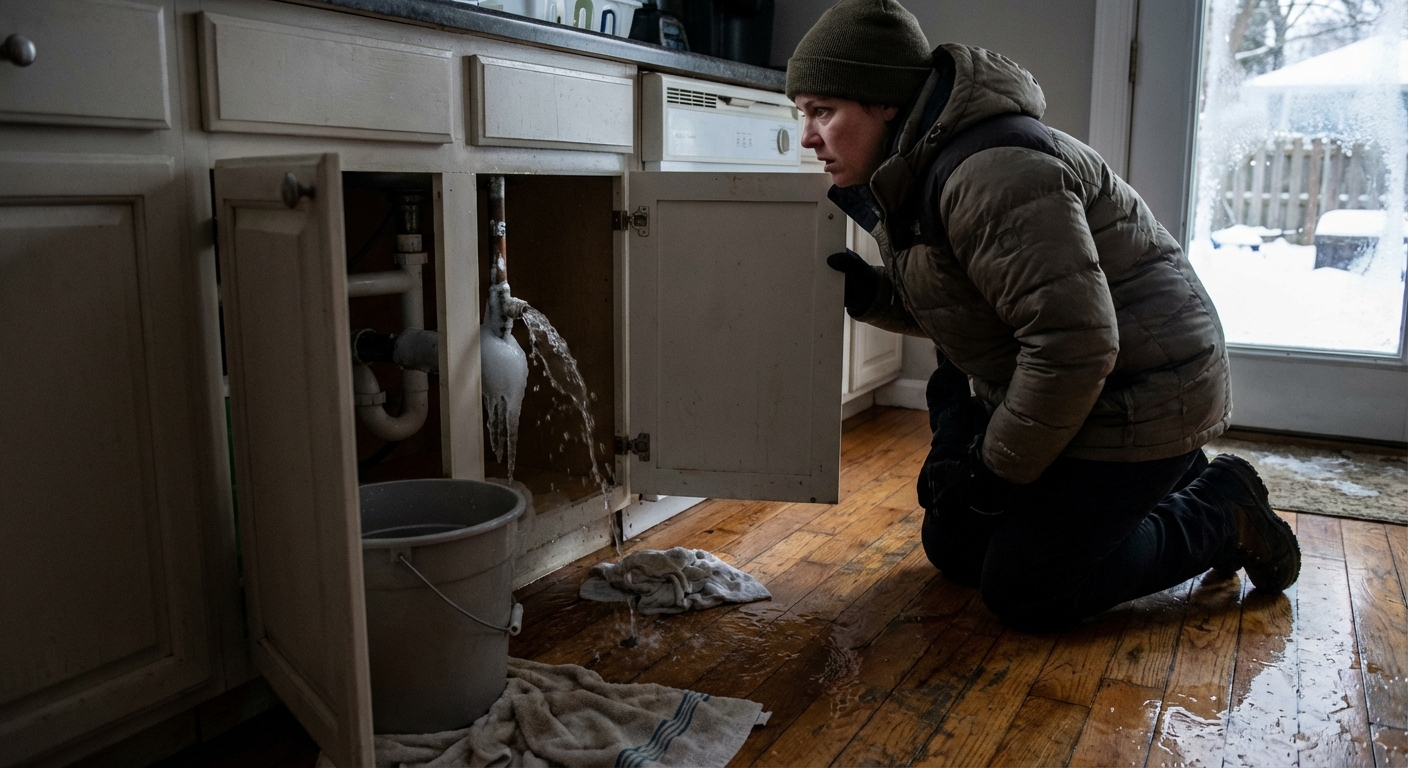
Home insurance does cover burst pipes, but only under specific conditions. The key distinction your insurer makes is whether the damage was sudden and accidental or the result of gradual deterioration and neglect. Regulators like the NAIC and major carriers continue to use the same core standard in 2026: coverage kicks in for a "sudden and accidental discharge from a plumbing system." Nationally, water damage and freezing claims still account for roughly a quarter of all homeowners insurance claims, making this one of the most frequent (and most disputed) categories.
Sudden and accidental events that are typically covered:
| Covered Scenario | Why It Qualifies |
|---|---|
| Pipe bursts due to a sudden freeze | Unexpected event, not foreseeable neglect |
| Water heater ruptures unexpectedly | Accidental failure of a maintained system |
| Pipe bursts behind a wall with no warning signs | Hidden damage, not gradual wear |
| Frozen pipe bursts while home is occupied and heated | Homeowner took reasonable precautions |
Situations that are typically NOT covered:
| Excluded Scenario | Reason for Denial |
|---|---|
| Pipe corrodes slowly and eventually leaks | Gradual damage / maintenance failure |
| Pipes freeze because heat was turned off | Negligence / failure to maintain |
| Vacant home with no winterization | Insurer not notified; duty of care not met |
| Pre-existing known leaks that were ignored | Neglect |
| Repair/replacement of the pipe itself | Most policies only cover resulting water damage |
Understanding what water damage insurance covers is essential before assuming a burst pipe will be a simple claim. It's also worth reviewing homeowners insurance plumbing coverage since burst pipes fall under the broader plumbing damage category.

Compare Home Insurance Plans in Ohio
Find your best options in less than 2 minutes
Frozen Pipes, Vacant Homes & Seasonal Properties
This is where most homeowners get caught off guard. Your standard policy has very specific expectations when it comes to unoccupied or seasonal properties during winter months, and insurers have grown stricter about enforcing them in 2026.
Temperature Maintenance Requirements
Industry guidance (from IBHS, Triple-I, and major carriers) consistently points to 55°F to 65°F as the safe indoor temperature range for preventing frozen pipes. Most carriers, including Travelers and Allstate, require you to keep the thermostat at a minimum of 55°F even when no one is home, while high-value carriers like Chubb recommend keeping the temperature at 65°F or above, day and night, to prevent pipes inside walls from freezing. This applies to:
- Primary residences when you travel
- Seasonal or vacation homes
- Properties listed for sale or undergoing renovation
- Inherited properties not yet occupied
- Guest houses and outbuildings
If you cannot maintain the minimum temperature in a vacant property, insurers typically require that you shut off the main water supply and completely drain all pipes before leaving the property unattended. This "duty to maintain heat" is written directly into the frozen plumbing exclusion of standard ISO policy forms. Pipe failure risk begins climbing sharply when outdoor temperatures stay at or below 20°F for six or more hours, which is why carriers are underwriting winter risk more aggressively.
Seasonal Homes: A Special Case
Seasonal or vacation homes face the highest risk of claim denial for frozen pipe damage. Insurers may:
- Require proof you winterized the property (drained pipes, shut off water)
- Deny claims if inspections show the home was left heated but the thermostat was set too low
- Request utility records to confirm the home was actively heated
- Reduce or eliminate coverage after the home has been vacant for a policy-defined period (typically 30 to 60 consecutive days)
Learning where water damage exclusions apply can help you avoid nasty surprises when you file a claim, and reviewing common home insurance exclusions is a smart way to spot gaps early. Because burst pipes often lead to lower-level flooding, it's also smart to know how basement flooding coverage fits into your overall protection.

Protect your home with State Farm
Average Rate:
Homeowners who bundle and save with State Farm save an average of $1,000 per year!

You're in Good Hands® with Allstate
Average Rate:
Get comprehensive home coverage with flexible policy options.

Customize your home coverage
Average Rate:
Only pay for the coverage you need with personalized home insurance.

Smart coverage for your home
Average Rate:
Protect what matters most with award-winning home insurance.
How to File a Burst Pipe Claim (Step-by-Step)
Acting quickly and documenting everything are the two most important things you can do to protect your claim.
Step 1: Shut Off the Water Immediately
The moment a pipe bursts, find your main water shut-off valve and turn it off. Every second that water flows means more damage and a potentially larger, more contested claim. After shutting off the supply, open faucets throughout the home to drain remaining water from the lines.
Step 2: Document Everything Before Cleanup
Before you mop up a single drop of water:
- Take photos and videos of all affected areas: walls, ceilings, flooring, and belongings
- Record a narrated walk-through video of the entire damage zone
- Photograph the burst pipe itself (close-up and wide shots)
- Note any visible ice on the pipe (supports a "sudden freeze" claim)
- Save thermostat records or smart-home logs proving you maintained heat
Step 3: Call Your Insurer Within 24 to 48 Hours
Notify your insurer as soon as possible. Have the following ready:
| What You'll Need | Details |
|---|---|
| Policy number | On your declarations page |
| Date and time of discovery | Be as accurate as possible |
| Description of the event | Stick to facts; avoid speculation |
| Plumber's written report | Confirms sudden cause of burst |
| Repair estimates | From licensed contractors |
| Damage inventory | List of damaged personal property with values |
Step 4: Prepare for the Adjuster Visit
Be present when the claims adjuster inspects the property. Walk them through the damage, share your documentation, and provide the plumber's report. If the settlement offer seems low, you have the right to request a second opinion or hire a public adjuster to negotiate on your behalf.
Average Insurance Payouts for Burst Pipe Claims (2026)
According to 2026 industry data (Insurance Information Institute, Forbes Advisor, and ConsumerAffairs), the average paid claim for water damage and freezing is roughly $10,000 to $12,500, with frozen pipe events specifically averaging $10,000 to $15,000. State Farm's most recent data covering January 2024 through June 2025 showed more than 20,000 frozen pipe and winter water damage claims totaling over $628 million in paid losses, with the average non-tenant closed claim payment exceeding $30,000. The five states with the highest total frozen pipe losses were Illinois, Oregon, Washington, Texas, and Tennessee. The early 2026 winter catastrophe season pushed those numbers higher still, with State Farm reporting over 20,000 additional home and auto claims from a single February 2026 event centered on Tennessee, Louisiana, Mississippi, Georgia, and Texas.
| Damage Severity | Estimated Payout Range |
|---|---|
| Minor (contained to one area) | $2,800 to $4,500 |
| Moderate (multi-room, flooring damage) | $8,500 to $15,800 |
| Severe (structural damage, displacement) | $15,000 to $30,000+ |
| Extreme (long-undetected in vacant home) | $30,000 to $50,000+ |
Payouts are after your deductible is applied. Most homeowners carry a $1,000 to $2,500 deductible.
How to Prevent Frozen Pipes (And Protect Your Coverage)
Preventing frozen pipes isn't just smart home maintenance. It's often a condition of your insurance coverage. Here's how to stay protected all winter long.
Winter Pipe Prevention Checklist
- ✅ Keep thermostat at 55°F or higher, even when away (65°F is safer for high-value homes)
- ✅ Insulate pipes in unheated areas: attics, garages, basements, and crawl spaces
- ✅ Allow faucets to drip slowly during extreme cold below 28°F
- ✅ Open cabinet doors under sinks on exterior walls to allow warm air to circulate
- ✅ Seal drafts around windows, doors, and pipe entry points
- ✅ Know where your main water shut-off valve is located
- ✅ Drain exterior hose bibs and shut off their water supply before first freeze
- ✅ For vacant properties: shut off water supply and drain all lines, OR keep heat above 55°F
- ✅ Have a trusted person check your vacant property regularly
- ✅ Document your preventive steps to support your claim if a freeze still occurs
Smart Devices That Can Lower Premiums
In 2026, many carriers now offer 3% to 15% homeowners insurance discounts for approved smart water and freeze protection devices, with some whole-home setups earning even higher credits. Whole-home leak detection systems with automatic shutoff earn the biggest discounts because they can actually stop water damage, not just alert you. Qualifying devices commonly include:
- Automatic water shutoff systems (Flo by Moen, Phyn Plus, FloLogic, Leak Defense, StreamLabs)
- Smart water leak sensors (First Alert, Honeywell Home, Samsung SmartThings, YoLink)
- Freeze sensors placed near vulnerable pipes
- Smart thermostats with freeze alerts (Ecobee, Nest) that notify you before pipes freeze
- Backup generators that keep heating systems running during outages
Insurer-specific programs in 2026 include USAA's Connected Home (activated by connecting at least two First Alert or Honeywell Home leak detectors, saving an average of $133 per year and up to 8% off homeowners premiums), Nationwide's Smart Home program (which pairs a free LeakBot device with a 10% discount on water and theft coverages in California and a 5% discount across all perils in Washington, plus a 15% discount on Phyn's product suite), Amica's water damage mitigation discount, and premium partnerships from Chubb (Leak Defense, StreamLabs), PURE (Flo by Moen, Phyn, FloLogic), and the new Moen and Stand Insurance program that pairs the Moen Flo Shutoff with catastrophe-hardened coverage. Some carriers, like UPC, publish tiered discounts of 5% for sensor-only detection, 10% for automatic shutoff, and 15% for flow-based whole-home systems.
Taking prevention seriously not only keeps your home safe, it's the difference between a paid claim and a denied one. If you're unsure what your policy covers, reviewing the details of what's covered and what's not or your sewer line repair options can help you identify gaps before they become costly. Adding a water backup endorsement is another affordable way to close a common coverage gap. Homeowners with older heating systems should also check HVAC and furnace coverage, since a heating failure during a cold snap is one of the fastest paths to a frozen pipe claim. It's also worth understanding how ice dam damage claims work, since freeze events often cause both problems at once.
Frequently Asked Questions
Does homeowners insurance cover all burst pipe damage?
Not entirely. Standard homeowners insurance covers the water damage resulting from a sudden burst pipe, including ruined flooring, damaged walls, soaked furniture, and temporary living expenses if your home becomes uninhabitable. However, most policies will not cover the cost to repair or replace the broken pipe itself, unless it requires tearing open walls to access. Gradual leaks, corrosion, and damage resulting from neglect are also excluded.
Will my insurance cover frozen pipes if I was away on vacation?
Yes, but only if you took reasonable precautions before leaving. Most insurers expect you to maintain your home's temperature at 55°F or higher (Chubb recommends 65°F) while away, or to shut off and drain your plumbing system. If the adjuster determines you left the home unheated or failed to winterize, the claim can be denied. Always have a neighbor or property manager check your home during extended absences in winter.
What happens if I have a seasonal home or vacation property that freezes?
Seasonal homes are a high-risk scenario for coverage denial. Insurers typically require that seasonal properties be either maintained at or above 55°F or have their plumbing system fully drained before the property is left for the season. Most policies limit or exclude coverage once a home is vacant for 30 to 60 consecutive days, and some courts have upheld these clauses as hard deadlines regardless of whether the vacancy caused the loss. If you own a seasonal home, it's worth reviewing your policy or purchasing a separate vacant home policy for full protection.
How quickly should I file a burst pipe insurance claim?
You should notify your insurer within 24 to 48 hours of discovering the damage. Most policies require "prompt notification," and delays can complicate or reduce your claim. More importantly, you need to begin water mitigation immediately, since mold growth typically starts within 24 to 48 hours. Delaying cleanup or repairs can give your insurer grounds to reduce your payout for failure to mitigate damages.
What can I do if my burst pipe claim is denied?
If your claim is denied, don't give up without a fight. Start by requesting a written explanation of the denial that identifies the exact policy language, then gather counter-evidence like maintenance records, thermostat logs, weather data, photos showing you took precautions, and your plumber's report. You can file a formal appeal with your insurer, hire a public adjuster to negotiate on your behalf, or consult a property insurance attorney if the denial seems unjustified. Your state insurance commissioner can also investigate bad-faith claim denials.