
Compare Car Insurance Rates in Ohio
See if you qualify for a lower rate in less than 2 minutes



The Four Rideshare Insurance Coverage Periods
Every time you get behind the wheel for Uber or Lyft, your insurance protection changes based on what you're doing at that exact moment. The industry divides rideshare driving into four distinct coverage periods — and which period you're in determines whether you're fully covered, partially covered, or dangerously exposed.
Understanding these periods isn't just an insurance technicality. It's the difference between a denied claim and full protection. Here's a breakdown of what each period means and who is responsible for covering you.
| Period | App/Ride Status | Who Covers You |
|---|---|---|
| Period 0 | App is OFF | Your personal auto insurance only |
| Period 1 | App ON, waiting for a ride request | Limited contingent TNC liability (or nothing) |
| Period 2 | Ride accepted, en route to pick up | Uber/Lyft $1M primary coverage |
| Period 3 | Passenger in your car | Uber/Lyft $1M primary coverage |
Period 0: App Off — Personal Insurance Only
Period 0 is the simplest of all four stages. Your rideshare app is off, and you're driving like any other private motorist. Your personal auto insurance policy applies in full, just as it would on any errand or road trip.
There are no rideshare complications here. Your insurer sees you as a regular driver, and your policy behaves accordingly.
Period 1: App On, No Ride Accepted — The Danger Zone
Period 1 is where most drivers get blindsided. The moment you turn on the rideshare app and start waiting for a request, your personal insurance often steps back — and the platform's coverage hasn't fully stepped in yet.
What Uber and Lyft provide in Period 1:
- Third-party liability only (contingent — kicks in only if your personal insurer denies the claim)
- $50,000 per person / $100,000 per accident for bodily injury
- $25,000 for property damage
What's NOT covered in Period 1:
- Collision or comprehensive damage to your own vehicle
- Medical payments for you or your passengers
- Uninsured/underinsured motorist coverage (in most states)
The contingent nature of Period 1 coverage is critical: Uber and Lyft's limited liability only applies if your personal insurer denies the claim first. If your personal policy partially covers it, the TNC's limits may not supplement the difference. Learn more about closing the rideshare coverage gap and why this period catches so many drivers off guard.

Compare Car Insurance Rates in Ohio
See if you qualify for a lower rate in less than 2 minutes
Period 2 & 3: Accepted Ride and Passenger On Board
Once you accept a ride request, the picture changes dramatically. Both Uber and Lyft activate their primary commercial insurance policies, which provide significantly stronger protection.
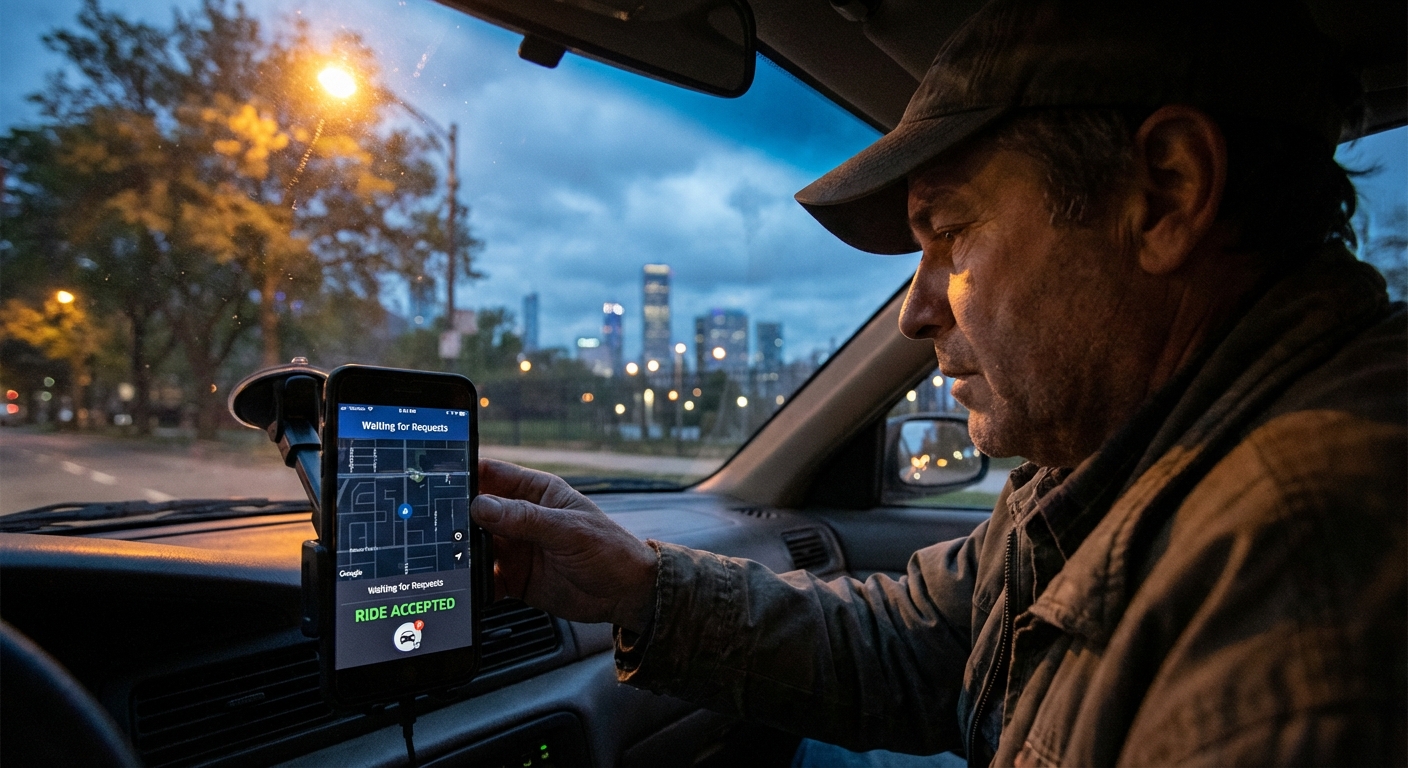
Period 2: Ride Accepted, En Route to Passenger
The moment you tap "Accept" on a ride request, Uber and Lyft's full coverage kicks in as the primary insurer — your personal policy takes a back seat entirely.
Coverage provided in Period 2:
- $1,000,000 in third-party liability
- $1,000,000 in uninsured/underinsured motorist coverage (varies by state)
- Contingent comprehensive and collision (subject to deductible)
The deductible catch: Both Uber and Lyft carry a $2,500 collision deductible during Periods 2 and 3 — a significant out-of-pocket cost if you're involved in an at-fault accident. A rideshare insurance endorsement from your personal insurer can help bridge this deductible gap.
Period 3: Passenger In the Car — Full Commercial Coverage
Period 3 mirrors Period 2 in terms of coverage levels. The same $1 million liability policy applies from the moment your passenger buckles in until they exit the vehicle.
The $1M coverage in Periods 2 and 3 provides solid protection for third-party claims — but the $2,500 deductible gap and lack of full medical coverage for drivers remain real concerns. This is why rideshare insurance for Uber and Lyft drivers has become an essential add-on rather than an optional luxury.

Protect your car with Farmers
Average Rate:
Find coverage options that fit your budget.

The insurance savings you expect.
Average Rate:
Enjoy personalized policies, comprehensive coverage & more.

See how much you could save today!
Average Rate:
Drivers who switch their auto insurance and save with State Farm save $764 on average!

Safe Drivers Save with Allstate®
Average Rate:
Get rewarded with savings for having a clean driving record.
How Rideshare Endorsements Fill the Gaps
A rideshare endorsement is a low-cost add-on to your existing personal auto policy that extends your personal coverage to apply during rideshare activity — most importantly during Period 1, where the gap is largest. Many major insurers now offer these, and they're far more affordable than a full commercial auto policy.
Top Insurer Rideshare Endorsements (2026)
| Insurer | Approx. Monthly Cost | Period 1 Coverage | Deductible Gap Help |
|---|---|---|---|
| State Farm | $42–$65 | ✅ Yes (all periods) | ✅ Yes |
| Allstate | As low as $6 | ✅ Yes | ✅ Up to $2,500 |
| Progressive | As low as $6 | ✅ Yes | ✅ Yes |
| GEICO | ~$42 | ✅ Yes (select states) | ✅ Yes |
| Mercury | ~$27/mo | ✅ Yes (11 states) | ✅ Yes |
| USAA | Starting at $6 | ✅ Yes | ✅ Yes |
The average annual premium increase for adding a rideshare endorsement is around $94/year — a small price compared to the financial exposure of a denied claim. Drivers interested in car insurance for food delivery and rideshare should note that many endorsements also cover delivery platform driving.
State-Specific Rideshare Requirements
Rideshare insurance is not a one-size-fits-all system. State laws dictate the minimum coverage platforms must maintain, and some states impose significantly higher requirements than others.
| State | Period 1 Minimum | Periods 2/3 Liability | Notable UM/UIM Rule |
|---|---|---|---|
| California | $50K/$100K/$30K | $1M | UM/UIM reduced to $60K per person / $300K per incident (SB 371, Jan 2026) |
| New Jersey | $50K/$100K/$25K | $1M | $1.5M UM/UIM required |
| New York | $50K/$100K/$25K | $1M | $1.25M UM/UIM required |
| Colorado | $50K/$100K/$25K | $1M | $200K/$400K UM/UIM |
| Georgia | $50K/$100K/$25K | $1M | $100K/$300K UM/UIM |
| Florida | $50K/$100K/$25K | $1M (Periods 2 & 3) | PIP applies; SB 632 died — $1M Period 2 protection remains |
California note: Senate Bill 371, effective January 1, 2026, dramatically reduced the UM/UIM coverage requirement for TNCs from $1 million down to just $60,000 per person / $300,000 per incident. Liability coverage during an active ride remains at $1 million, but the UM/UIM reduction means California riders and drivers have significantly less protection from uninsured motorists than they did in 2025.
Florida note: SB 632, which would have cut Period 2 coverage to match Period 1 minimums, died in the 2026 legislative session without a House hearing. Florida's $1M coverage requirement for both Period 2 and Period 3 remains intact under Florida Statute § 627.748.
Drivers in high-UM/UIM states like New Jersey and New York face even more reason to carry a rideshare endorsement, since the gap between state-mandated platform coverage and real-world costs can be enormous. Learn more about personal vs. commercial coverage options to find the right fit for your situation.
Frequently Asked Questions
Does my personal auto insurance cover me when the rideshare app is on?
In most cases, no. The majority of personal auto insurance policies include a commercial use exclusion, meaning the moment your rideshare app is active, your personal policy may not apply. This is exactly why the Period 1 gap is so dangerous — you're neither fully covered by your personal insurer nor by Uber or Lyft's contingent policy. Adding a rideshare endorsement to your personal policy is the most effective way to eliminate this risk.
What's the difference between contingent coverage and primary coverage?
Primary coverage pays your claim first, regardless of any other policies. Contingent coverage only kicks in when your primary insurer denies the claim or can't cover the full amount. In Period 1, Uber and Lyft's liability coverage is contingent — it only applies if your personal insurer refuses the claim. In Periods 2 and 3, the TNC's $1M policy is primary, meaning it pays first.
Do I need rideshare insurance if I only drive occasionally?
Yes — even part-time drivers are at risk. Insurance coverage gaps don't care how many hours a week you drive. The moment your app is on and you're in an accident, you're in Period 1 territory, and your personal insurer may deny the claim. Rideshare endorsements are inexpensive (as low as $6/month) and provide continuous protection whether you drive 5 hours a week or 50. Learn more about your options in our rideshare insurance for drivers guide.
What deductible will I pay in Period 2 or Period 3 if I'm in an accident?
Both Uber and Lyft carry a $2,500 collision deductible during Periods 2 and 3. This means you'll pay $2,500 out of pocket before the platform's contingent coverage activates for vehicle damage. Some rideshare endorsements from personal insurers like Allstate offer deductible gap coverage — paying the difference between your personal deductible and the TNC's $2,500 threshold, saving you significant money after an at-fault accident. Check out our rideshare insurance guide for more details on managing this cost.
Can Uber or Lyft cancel my driver account if I don't have rideshare insurance?
While Uber and Lyft don't actively audit your personal insurance type, driving without proper coverage puts you at serious financial and legal risk. If your personal insurer discovers you've been driving for a TNC without disclosing it, they can cancel or non-renew your policy — which could then affect your driver account status, as platforms require valid insurance on file at all times. Transparency with your insurer and carrying the right coverage protects both your finances and your ability to keep earning. Learn more about gig worker insurance options to stay fully protected.