
Compare Car Insurance Rates in Ohio
See if you qualify for a lower rate in less than 2 minutes



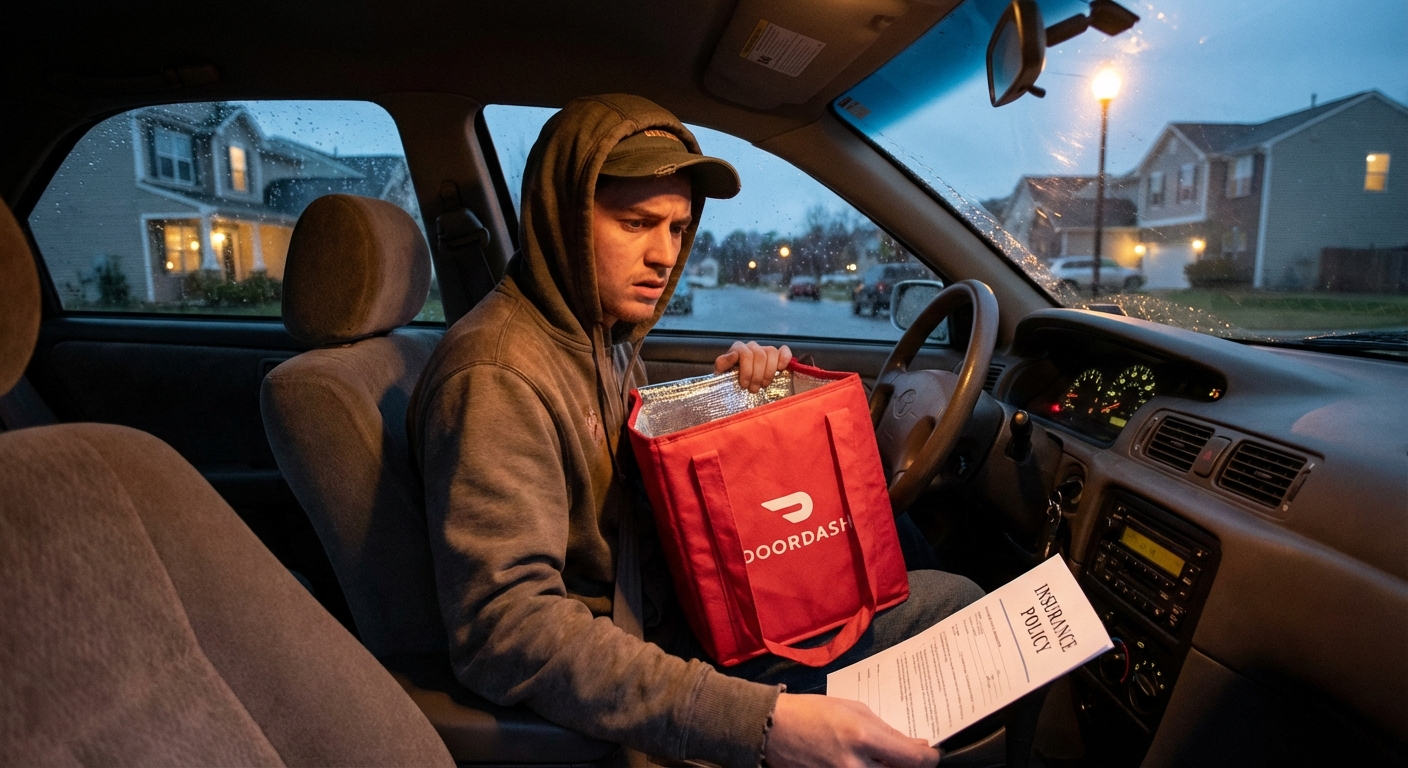
Why Personal Auto Insurance Doesn't Cover Food Delivery
If you're earning money delivering for DoorDash, Uber Eats, Grubhub, or Instacart, your standard personal auto insurance policy likely won't protect you while you're on the job. Insurance companies classify food delivery as commercial use, which is explicitly excluded from most personal policies. The moment you accept an order and hit the road, you're operating in a gray zone that your personal insurer considers outside the scope of your coverage.
Standard personal auto policies are designed for commuting, errands, and leisure driving — not for using your vehicle as a business tool. When an insurer discovers you were making a paid delivery at the time of an accident, they have grounds to deny your claim entirely, even if the collision was minor. This isn't a technicality buried in fine print — it's a core policy exclusion that affects tens of thousands of gig workers every year. Learn more about how personal vs. commercial coverage works for delivery drivers.
The Three Phases of Delivery Coverage (And Where the Gaps Are)
Understanding when you are — and aren't — covered requires looking at delivery driving in three distinct phases:
| Phase | Your Personal Policy | Platform Coverage | Risk Level |
|---|---|---|---|
| App Off | ✅ Full personal coverage | ❌ None | Low |
| App On / Waiting for Order | ❌ Excluded (commercial use) | ⚠️ Limited contingent liability only | High |
| Active Delivery (en route / dropping off) | ❌ Excluded | ✅ Third-party liability (up to $1M on some platforms) | Medium |
The most dangerous phase for drivers is Phase 2 — when the app is on but no order has been accepted yet. Platforms like DoorDash offer minimal contingent coverage here (typically $50,000 bodily injury per person / $25,000 property damage), and it only kicks in after your personal insurer formally denies the claim. Meanwhile, your personal policy won't respond because you're in commercial-use territory. That leaves you personally exposed for vehicle damage, medical bills, and liability.

Compare Car Insurance Rates in Ohio
See if you qualify for a lower rate in less than 2 minutes
What Coverage Do the Major Platforms Actually Provide?
DoorDash Insurance Coverage
DoorDash provides up to $1 million in third-party liability coverage for bodily injury and property damage — but only during the active "Delivery Service Period" (after you've accepted an order and until it's completed or canceled). This coverage is secondary to your personal policy and only activates after your own insurance is exhausted or formally denies the claim.
DoorDash also provides occupational accident insurance at no cost to all U.S. Dashers, which includes up to $1,000,000 in medical expense coverage, up to $500/week in disability benefits, and up to $150,000 in survivor benefits. This is not auto insurance, but it does offer meaningful protection if you're injured on the job.
Critically, DoorDash's auto coverage does not include:
- Damage to your own vehicle (unless you carry personal collision coverage — contingent coverage may then apply)
- Coverage during the "waiting for orders" phase in most states
- Primary coverage — your personal insurer must deny the claim first
In a handful of states (Indiana, Kentucky, North Dakota, and West Virginia), DoorDash does extend some coverage to the waiting period — but this is the exception, not the rule.
Uber Eats Insurance Coverage
Uber Eats offers tiered coverage that activates in phases. When you're online and available (app on, waiting for an order), Uber Eats provides limited contingent liability coverage — typically $50,000/$100,000 for bodily injury and $25,000 for property damage, contingent on your personal insurer first denying the claim. In some states, this period may also include uninsured/underinsured motorist (UM/UIM) coverage or personal injury protection (PIP). When actively delivering, they provide:
- Third-party liability up to $1 million per incident
- Contingent comprehensive and collision up to actual cash value, subject to a $2,500 deductible (only if your personal policy also carries this coverage)
- Uninsured/underinsured motorist (UM/UIM) protection during active deliveries
- Optional Injury Protection in most states for medical expenses, disability, or survivor benefits
Note that Uber Eats does not cover vehicle repairs as a primary insurer, and the $2,500 deductible on contingent collision can represent a significant out-of-pocket expense after an accident.
Grubhub & Instacart Insurance Coverage
Both Grubhub and Instacart offer the least protection of the major platforms. Neither provides commercial auto insurance for their drivers. Grubhub requires drivers to carry their own valid auto insurance but does not supplement it for accidents — the only exception is an occupational accident insurance policy offered at no cost, which covers medical expenses and lost wages for driver injuries during deliveries but provides no vehicle damage or third-party liability protection.
Instacart similarly offers no commercial auto coverage; its drivers are expected to maintain their own personal policies, which in most cases will not cover delivery-related accidents. No changes to either platform's auto coverage policies have been reported for 2025–2026. For a broader look at how platforms compare to traditional policies, see our guide on car insurance for gig workers.

Protect your car with Farmers
Average Rate:
Find coverage options that fit your budget.

The insurance savings you expect.
Average Rate:
Enjoy personalized policies, comprehensive coverage & more.

See how much you could save today!
Average Rate:
Drivers who switch their auto insurance and save with State Farm save $764 on average!

Safe Drivers Save with Allstate®
Average Rate:
Get rewarded with savings for having a clean driving record.
Your Insurance Options as a Delivery Driver
Option 1: Rideshare / Delivery Endorsement
A rideshare or delivery endorsement is an add-on to your existing personal auto policy that extends your personal coverage to include app-based commercial use. It's the most affordable and convenient solution for part-time delivery drivers.
- Cost: Approximately $15–$50/month added to your existing premium (varies by provider and state); typically a 15–20% increase to your overall premium
- Best for: Part-time drivers doing a limited number of deliveries per week (generally fewer than 30 hours/week)
- Coverage: Fills the app-on / waiting-for-order gap; extends your personal liability, collision, and comprehensive to delivery periods
- Availability: Offered by State Farm, Progressive, Allstate, GEICO, Erie, Travelers, and others — but not all insurers in all states
| Provider | Est. Monthly Starting Rate | Notes |
|---|---|---|
| State Farm | ~$102/month | Available in all 50 states; +15–20% to premium; accident forgiveness available |
| Progressive | ~$106/month | Broad food delivery coverage; available in most states |
| Travelers | ~$106/month | Strong accident protection; tailored food delivery endorsements |
| GEICO | ~$118/month (full coverage ~$215) | Full-phase delivery coverage; available in 40+ states |
| Erie / USAA | ~$92/month | USAA for military/families only; both strong for DoorDash drivers |
Option 2: Commercial Auto Insurance
A commercial auto insurance policy is a standalone policy designed specifically for business vehicle use. It's the gold-standard protection for full-time delivery drivers or anyone using their vehicle for business purposes beyond occasional app-based gigs.
- Cost: Approximately $200–$800/month for delivery use, depending on coverage level, location, vehicle type, and driving history; passenger vehicles used part-time for delivery may fall on the lower end ($120–$250/month)
- Best for: Full-time drivers, multi-platform workers, or drivers whose insurers don't offer rideshare or delivery endorsements
- Coverage: Comprehensive business use protection including liability, collision, comprehensive, medical payments, and uninsured motorist coverage
- Top providers: Progressive Commercial, The Hartford, State Farm, Travelers, GEICO, Erie Insurance
For a full breakdown of when a commercial policy makes more sense than an endorsement, read our guide on delivery driver coverage options.
Consequences of Driving Without Proper Coverage
The financial and legal consequences of delivering without proper insurance can be severe — and they extend well beyond a denied claim.
What Happens After an Uncovered Accident
If you cause an accident while delivering without proper coverage:
- Your personal insurer denies the claim (commercial use exclusion)
- The platform's coverage may only partially apply, leaving significant gaps
- You become personally liable for all vehicle repair costs, medical bills, and any legal judgments
- Victims of the accident can sue you directly, potentially resulting in wage garnishment or liens against personal assets
You're an Independent Contractor — Not an Employee
All major delivery platforms classify their drivers as independent contractors, not employees. This means:
- You are not eligible for workers' compensation if you're injured on the job
- Your medical costs after an accident fall entirely on your own health insurance or PIP coverage — if you carry it
- Without proper auto coverage, there is no safety net
Understanding insurance options for gig workers is critical to protecting your finances and assets. You can also review our breakdown of rideshare insurance for Uber and Lyft drivers to see how similar coverage gaps apply across the gig economy.
Regulatory Developments to Watch
State legislatures are beginning to address gig delivery insurance gaps directly. Missouri's Delivery Network Company Insurance Act (HB1789/SB915) is currently working through the 2026 legislative session. If enacted, it would take effect for accidents occurring on or after October 1, 2026, requiring delivery platforms to provide minimum liability insurance for drivers both while waiting for orders ("delivery availability period") and during active deliveries ("delivery service period") — making platform insurance primary in that state. The law would also formally codify that personal auto policies can exclude claims for delivery-related accidents during these periods.
As of April 2026, the House bill passed committee 8-0 but neither bill has been signed into law. The Senate version (SB915) remains under review, and opposition from platform companies over cost and scope continues to be a factor. Drivers in all states should not wait for legislation and should secure proper coverage now. Explore your commercial auto insurance options to understand what full business-use protection looks like.
Your Policy Could Be Canceled
If your insurer discovers you've been making paid deliveries without disclosing it, they can cancel your policy mid-term or refuse to renew it. A cancellation on your record makes future insurance significantly more expensive and harder to obtain.
Frequently Asked Questions
Do I need special insurance to drive for DoorDash?
Yes. A standard personal auto policy will not cover accidents that occur while you are actively delivering for DoorDash or any other platform. At a minimum, you should add a rideshare or delivery endorsement to your personal policy. DoorDash provides third-party liability coverage during active deliveries and occupational accident insurance at no cost to all Dashers, but it does not cover your own vehicle and only activates after your personal insurer denies a claim. Full-time Dashers are better served by a commercial auto policy from providers like Progressive Commercial, State Farm, or Travelers.
Does rideshare insurance cover food delivery drivers?
In most cases, yes — a rideshare or delivery endorsement can extend to food delivery platforms like DoorDash and Uber Eats, filling critical coverage gaps that exist when the app is on but no order has been accepted. However, coverage varies by insurer and state, so you should confirm with your provider that the endorsement explicitly covers delivery use. State Farm and Erie are highly rated for food delivery drivers, while GEICO offers broader phase coverage across 40+ states. Learn more about rideshare and delivery coverage options before making a decision.
How much does insurance for food delivery drivers cost?
The cost depends on the type of coverage you choose. A rideshare or delivery endorsement added to your personal policy typically adds 15–20% to your premium, with starting rates around $92–$118/month from major carriers. Full commercial auto policies for delivery use average $200–$800/month depending on coverage level, with passenger vehicles and part-time delivery use often falling in the $120–$250/month range. Shopping multiple quotes is essential — rates vary widely by location, driving history, and vehicle type.
Does Instacart provide insurance for its shoppers?
Instacart does not provide commercial auto insurance for its independent contractor shoppers. Drivers are expected to maintain their own valid personal auto insurance, which in most cases will not cover delivery-related accidents due to the commercial use exclusion. Instacart shoppers are strongly advised to obtain a delivery endorsement or commercial auto policy to avoid uncovered claims during active shopping trips. Grubhub drivers are in the same position — only occupational accident insurance is provided for driver injuries, with no auto liability or vehicle damage protection.
What happens if I get in an accident while delivering without proper insurance?
Your personal insurer will likely deny the claim by citing the commercial use exclusion. The platform's coverage — if applicable — may only cover third-party liability during active deliveries and will not pay for your vehicle repairs or your own medical bills. You become personally responsible for all costs, which can include vehicle repairs, medical expenses, and legal judgments from lawsuits. A court judgment against you can result in wage garnishment or liens on your personal assets to satisfy the debt.