
Compare Car Insurance Rates in Ohio
See if you qualify for a lower rate in less than 2 minutes



What Is Micro Auto Insurance?
Micro auto insurance, also called on-demand, pay-as-you-go, or short-term car insurance, is a flexible coverage model that lets drivers pay for protection by the day, week, or even by the mile rather than locking into a traditional 6- or 12-month policy. Instead of paying a large lump sum upfront, policyholders make smaller, more frequent payments that align with how often (or how little) they actually drive.
This emerging segment of the insurance market has gained significant momentum alongside the gig economy and the rise of app-based financial services. Research firms estimate the global usage-based insurance (UBI) market at anywhere from $34.8 billion to $106 billion in 2026, with long-term CAGRs of 15% to 25% pointing toward mainstream adoption. Policies are typically purchased and managed entirely through a smartphone app, with near-instant activation, same-day coverage, and flexible cancellation. Learn more about on-demand car insurance and how flexible, pay-as-you-go coverage works.
How Micro Insurance Payments Work
The mechanics behind micro insurance vary slightly by provider, but they all share the same core principle: you only pay for the coverage you use.
Here's a breakdown of the most common micro insurance payment models:
| Payment Model | How It Works | Best For | Estimated Cost |
|---|---|---|---|
| Daily / Unlimited | Activate coverage via app; runs continuously until canceled | Infrequent or weekend drivers | Varies by state and driver profile |
| Weekly | Short-term 7-day policy, purchased and renewed | Borrowing a car, travel, temp needs | $17 to $300/week |
| Bi-Weekly / Paycheck-Aligned | Premiums sync with your pay cycle, no large deposit | Budget-conscious drivers | $43 to $150 first payment |
| Pay-Per-Mile | Fixed base rate + small fee per mile driven | Low-mileage drivers (<10K miles/year) | Base ~$35 to $60/mo + $0.05 to $0.12/mile |
Spotlight: Key Micro Insurance Providers
- Hugo – One of the most prominent micro-insurance apps in the U.S., currently active in about 13 states for its core Basic (liability) plan: Alabama, Arizona, Florida, Georgia, Illinois, Indiana, Mississippi, Ohio, Pennsylvania, South Carolina, Tennessee, Texas, and Virginia. Hugo discontinued its original Flex (on/off) plan in March 2025 and replaced it with Unlimited Basic (state-minimum liability) and Unlimited Full, although independent 2026 reviews confirm that only the Basic plan is reliably available for purchase in most states, with Full coverage restricted to Illinois. Payments can be made in flexible intervals (3, 7, 14, 30, or 180 days) with no down payment, no credit check, and an auto-reload feature. Hugo requires drivers to log fewer than 36,000 miles per year and does not support SR-22 filings or rideshare use. A 2026 partnership with Root now brings Root-backed full coverage to Hugo's platform in a broader 16-state footprint.
- OCHO – Designed with budget-conscious and high-risk drivers in mind. OCHO is an insurance agency (not a carrier) that offers interest-free financing to eliminate large upfront deposits, enabling bi-weekly payment plans with $0 down for qualifying customers. Available in 8 states: Arizona, Georgia, Illinois, Missouri, New Mexico, Texas, Washington, and Wisconsin. OCHO handles SR-22 filings through select carriers in Texas, Illinois, and Arizona. First-month premiums typically run $43 to $150, then break into smaller installments aligned with your paycheck.
- Root Insurance – Fully app-centric, Root prices coverage based primarily on your actual driving behavior. As of March 2026, Root is available in 36 states plus the District of Columbia, having added Washington in September 2025 to complete its West Coast footprint. Root's pricing engine draws on more than 36 billion miles of driving data collected through 17+ million app downloads. In California, however, telematics-based pricing is not used due to state regulations. It's a strong option for safe drivers looking to pay less based on how they drive.

Compare Car Insurance Rates in Ohio
See if you qualify for a lower rate in less than 2 minutes
Who Micro Insurance Is Built For
Micro insurance was not designed with the typical 9-to-5 commuter in mind. It targets three key groups who are poorly served by traditional auto insurance models:
Gig Workers
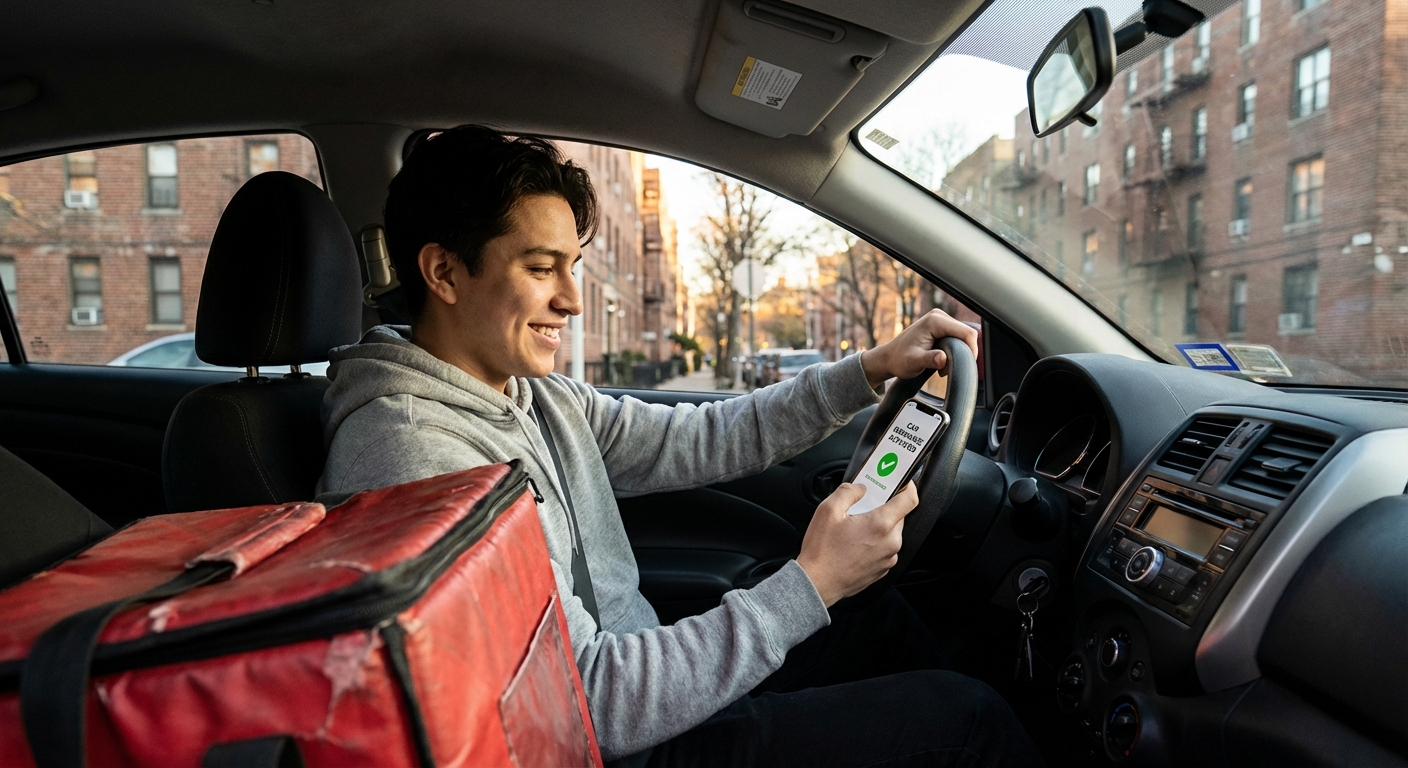
Rideshare drivers, food delivery couriers, and freelance transportation workers face a unique insurance challenge: their income (and driving activity) is irregular. Standard policies charge the same flat rate regardless of whether you drove 500 miles or 5,000 miles that month. However, most personal micro insurance policies do not cover commercial use. When the rideshare or delivery app is active but no trip has been accepted (Period 1), neither your personal policy nor the platform's coverage typically applies in full.
Rideshare endorsements that address this critical Period 1 gap provide limited liability coverage (typically $50K per person / $100K per accident / $25K property damage from Uber and Lyft) and cost roughly $6 to $30 per month for most drivers, with USAA starting near $6/month for eligible military members, Mercury around $27/month, and State Farm about $28/month.
Micro insurance can supplement your personal coverage, but gig drivers still need a rideshare endorsement or commercial policy. Explore our commercial auto coverage guide for the critical coverage gaps every gig driver should understand.
Infrequent and Low-Mileage Drivers
Some people own a car but rarely use it, including retirees, remote workers, city dwellers who primarily use public transit, or college students who leave their vehicle at home. For these drivers, paying for a full 12-month policy is essentially paying for coverage they never use. Pay-per-mile car insurance is a natural fit here, charging a base rate plus a small fee for every mile actually driven.
Low-Income Consumers
The biggest barrier to car insurance for lower-income households is the upfront cost. Many traditional insurers require a down payment equivalent to one or two months of premiums before coverage begins. OCHO can eliminate this barrier with $0 down via interest-free financing, making legal, state-minimum coverage more accessible to drivers who would otherwise go uninsured. For a broader look at affordable options, review our guide to finding affordable local coverage.

Protect your car with Farmers
Average Rate:
Find coverage options that fit your budget.

The insurance savings you expect.
Average Rate:
Enjoy personalized policies, comprehensive coverage & more.

See how much you could save today!
Average Rate:
Drivers who switch their auto insurance and save with State Farm save $764 on average!

Safe Drivers Save with Allstate®
Average Rate:
Get rewarded with savings for having a clean driving record.
Cost Comparison: Micro vs. Traditional Auto Insurance
The cost-effectiveness of micro insurance depends heavily on how often you drive. Here's how the numbers typically compare in 2026.
When Micro Insurance Saves You Money
As of 2026, the national average full coverage auto insurance costs roughly $186 to $216 per month ($2,237 to $2,578 per year), while state-minimum liability averages around $52 to $68 per month ($627 to $820 per year). For a driver who only uses their car on weekends or a few days each month, even that liability-only rate may be more than they need to pay.
Consider a pay-per-mile policy with a base rate of $35 to $60/month and a $0.06 to $0.08 per-mile fee. At 800 miles/month, your total is roughly $83 to $124/month, a meaningful savings over the full-coverage average. Drive fewer miles, and the savings grow even larger. Nationwide SmartMiles is now available in 44 states (all except Alaska, Hawaii, Louisiana, North Carolina, New York, and Oklahoma), includes a 250-mile daily cap so road trips do not create unexpectedly large bills, and Nationwide reports that SmartMiles drivers saved an average of 33% compared to similar Nationwide drivers not using the program.
| Provider | Avg. Monthly Cost | Per-Mile Rate | States Available |
|---|---|---|---|
| Nationwide SmartMiles | ~33% avg. savings vs. standard | ~$0.05 to $0.12/mile | 44 states |
| Allstate Milewise | Varies by usage | $0.04 to $0.15/mile | 20+ states + DC |
| Root Insurance | Behavior-priced | N/A (telematics-based) | 36 states + D.C. |
| Hugo Unlimited Basic | ~$121 to $190/mo (liability avg.) | N/A (flat/flexible) | 13 states |
| OCHO | $43 to $150 first payment | N/A (bi-weekly) | 8 states |
When Traditional Insurance Is the Better Deal
Micro insurance is not always the cheaper option. For drivers who commute daily or rack up 1,000+ miles per month, the per-mile or per-day charges can accumulate quickly, potentially exceeding the cost of a flat annual premium. Additionally, some micro insurance providers charge small convenience fees for the payment flexibility. See the full breakdown of car insurance coverage types to compare micro rates against traditional premiums in your state.
Coverage Limitations and App-Based Providers
What Micro Insurance Typically Covers (and What It Doesn't)
This is one of the most important things to understand before switching to a micro insurance plan. Most micro and on-demand auto insurance products are built around state-minimum liability coverage, meaning they cover damage you cause to others, but often not damage to your own vehicle. Learn more about the different types of car insurance coverage and what those limits really mean for you.
Here's what you typically get and what you may be missing:
| Coverage Type | Micro Insurance | Traditional Insurance |
|---|---|---|
| Bodily Injury Liability | ✅ Usually included | ✅ Included |
| Property Damage Liability | ✅ Usually included | ✅ Included |
| Collision (your vehicle) | ❌ Often excluded | ✅ Available |
| Comprehensive (theft, weather) | ❌ Often excluded | ✅ Available |
| Uninsured Motorist | ❌ Varies by provider | ✅ Available |
| Medical Payments / PIP | ❌ Often excluded | ✅ Available |
Beyond coverage gaps, keep these limitations in mind:
- State availability is limited. Hugo operates in about 13 states for its Basic plan, OCHO in 8 states, and Root Insurance in 36 states + D.C. as of 2026.
- Hugo's Flex plan is gone. As of March 2025, Hugo discontinued its on/off daily toggle feature. The current Unlimited plans run continuously, and canceling coverage now ends the policy entirely rather than pausing it.
- Hugo's Full plan is very restricted. While Hugo advertises "Unlimited Full" coverage, independent 2026 reviews find it is only truly purchasable in Illinois, with Root now providing full coverage through Hugo's platform via partnership.
- Short-term policies may cost more per day than an equivalent annual policy broken down daily. For pay-per-mile plans, the breakeven with traditional coverage is typically around 13,000 miles/year.
- Claims processes may be less established than those of major national carriers with decades of experience.
- Hugo's mileage cap: Hugo requires drivers to drive fewer than 36,000 miles per year, an important restriction for higher-mileage drivers.
Top App-Based Micro & Flexible Insurance Platforms
The most relevant app-based platforms for flexible, micro-style coverage include:
- Hugo – Unlimited Basic and (restricted) Full plans; flexible micropayments (3 to 180 days); no down payment; liability focus; 13 states for Basic; 36,000-mile annual cap
- OCHO – Bi-weekly payment plans, $0 down via interest-free financing; SR-22 support through select carriers in TX, IL, AZ; available in 8 states
- Root Insurance – Behavior-based pricing via smartphone telematics; 36 states + D.C.; expanded to Washington in September 2025; California customers rated without telematics
- Nationwide SmartMiles – Leading pay-per-mile option in 44 states; ~$0.05 to $0.12/mile; 250-mile daily cap; ~33% average savings; up to 10% additional safe-driving discount at renewal
- Allstate Milewise – Daily billing pay-per-mile; available in 20+ states plus D.C.; integrates with Allstate Drivewise for additional safe-driving bonuses
- GEICO DriveEasy – Up to 25% discount via telematics app; broad state availability
- Progressive Snapshot – Usage tracking for habit-based discounts; strong for younger drivers
- State Farm Drive Safe & Save – Up to 30% savings; nationwide availability
For a deeper look at how telematics programs track your driving to lower your rate, see our guide on subscription-based car insurance and monthly flexible plans. Drivers exploring short-term coverage alternatives should also compare temporary car insurance options to find the best fit for their situation. Curious about newer models entirely? Explore parametric auto insurance to see how trigger-based payouts differ from traditional and micro insurance.
Frequently Asked Questions
Is micro auto insurance legal and valid in all states?
Micro and on-demand auto insurance policies are legal where they are offered, but not every provider operates in every state. You must still meet your state's minimum liability requirements regardless of which policy type you choose. Always verify that the provider is licensed in your state before purchasing. As of 2026, Hugo actively serves about 13 states, OCHO 8 states, and Root Insurance 36 states plus D.C.
Can I get full coverage (collision + comprehensive) with micro insurance?
Most micro insurance products currently offer liability-only coverage, which meets legal minimums but will not pay for damage to your own vehicle. Hugo advertises an Unlimited Full plan but independent 2026 reviews confirm it is only truly available in Illinois, with broader Root-powered full coverage now offered through Hugo's platform via partnership. If you need guaranteed collision or comprehensive protection, review our full guide to car insurance coverage types before making a decision.
Is micro insurance a good option for Uber and Lyft drivers?
Micro insurance can supplement your personal coverage, but it typically does not cover commercial driving activity. Standard personal auto policies, including most micro insurance plans, exclude coverage when you are actively using the vehicle for hire. Rideshare endorsements that address the critical Period 1 gap typically cost $6 to $30 per month, with USAA near $6, Mercury around $27, and State Farm about $28. Review our commercial auto coverage guide for a full breakdown of coverage periods and endorsement options.
Will canceling my micro insurance create a coverage gap on my record?
Yes, especially with Hugo's current Unlimited plans, which replaced the on/off Flex plan in March 2025. Canceling coverage now terminates the policy entirely rather than pausing it, and a lapse can be reported to the DMV, potentially triggering higher premiums or registration issues. If continuous coverage is important to your rate history, consider a bi-weekly model like OCHO, which maintains uninterrupted coverage without large lump-sum payments. Bridging with temporary car insurance is another way to avoid a reported lapse.
How does micro insurance compare to pay-per-mile insurance?
Both models are designed for low-mileage or infrequent drivers, but they work differently. Pay-per-mile insurance charges a base monthly rate plus a small fee per mile driven, tracked via a plug-in device, app, or odometer photo. Nationwide SmartMiles, for example, is now available in 44 states and delivers an average savings of 33% for low-mileage drivers. Micro insurance charges by flexible intervals (days, weeks) and typically requires manual management, so your best choice depends on whether your driving is predictably low-mileage or genuinely sporadic.