
Compare Car Insurance Rates in Ohio
See if you qualify for a lower rate in less than 2 minutes



How Telematics Insurance Works
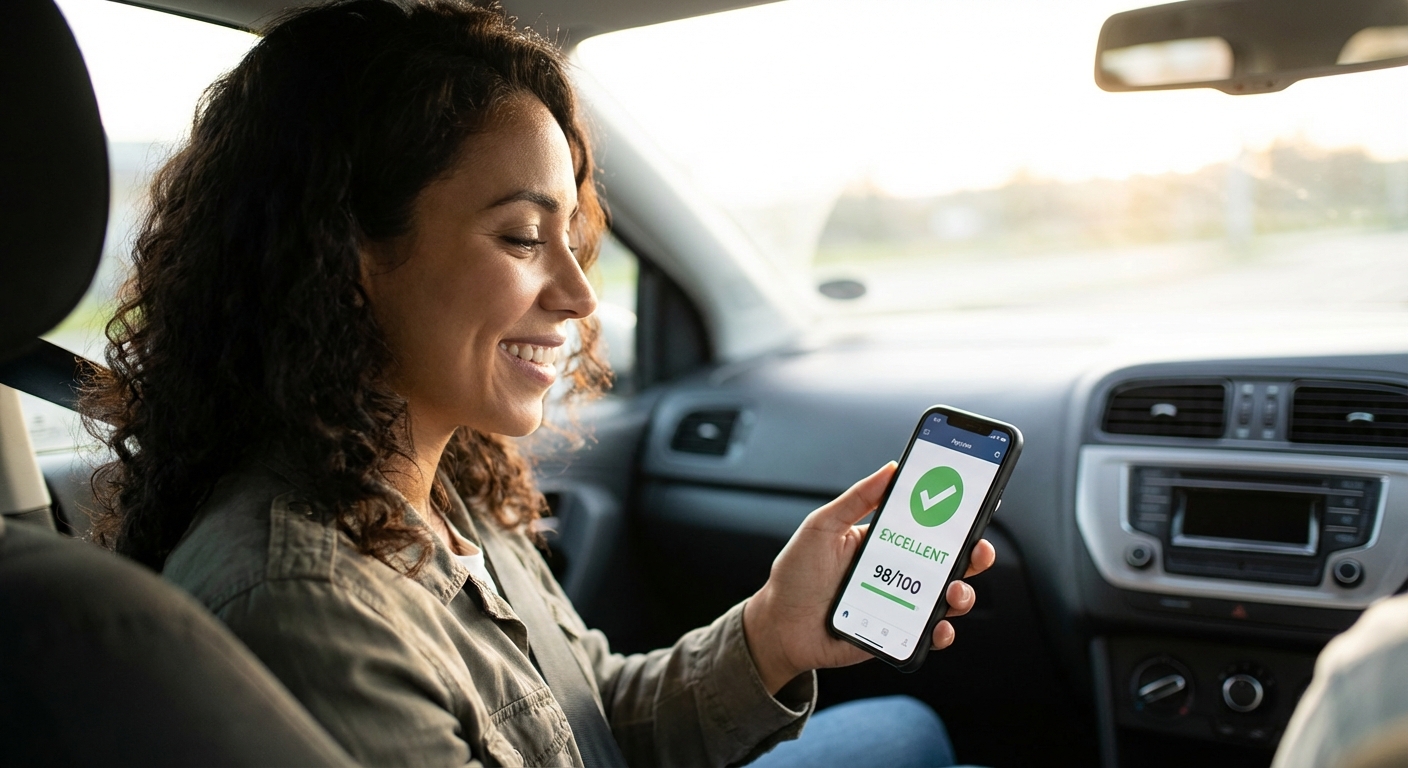
Telematics insurance, also known as usage-based insurance (UBI), relies on technology to track your actual driving habits rather than relying solely on demographic factors like age and location. Insurance companies collect real-time data through either smartphone apps or small devices that plug into your vehicle's diagnostic port. This data collection period typically lasts three to six months before your personalized rate is calculated. In 2026, AI-powered risk scoring is making these programs more precise than ever — analyzing behavioral patterns in real time to build highly personalized driver profiles, and even incorporating video telematics and computer vision to assess contextual driving behaviors. The industry is rapidly shifting from traditional usage-based insurance (UBI) to more granular behavior-based insurance (BBI) models.
Data Collection Methods
Modern telematics programs offer multiple ways to monitor your driving:
Smartphone Apps: Most insurers now provide mobile apps that use your phone's GPS and accelerometer to track driving behavior. These apps run in the background and automatically detect when you're driving. Popular programs using this method include Allstate Drivewise, State Farm Drive Safe & Save, and Progressive Snapshot. Smartphone-based telematics is the fastest-growing segment, driven by low hardware costs and quick onboarding, with a projected CAGR of nearly 30% through 2031.
Plug-in Devices: Traditional telematics devices connect to your vehicle's OBD-II port (typically located under the dashboard). These devices directly access vehicle data and transmit information to the insurance company. OBD-II dongles still account for roughly 37% of all telematics deployments in 2026. Many drivers prefer them for reliability and because they typically collect less personal data than smartphone apps.
Built-in Systems: Some newer vehicles come with telematics capabilities integrated directly into the car's operating system. State Farm Drive Safe & Save accepts data directly from FordPass and LincolnWay for 2020+ Ford and Lincoln vehicles, and Nationwide SmartRide works with eligible Toyota vehicles (2018 and newer), eliminating the need for additional devices or apps.

Compare Car Insurance Rates in Ohio
See if you qualify for a lower rate in less than 2 minutes
What Telematics Devices Track
Telematics programs monitor several key metrics to assess your driving risk profile. Understanding what's being tracked can help you maximize your potential savings. In 2026, AI continuously monitors more data points than ever before — including following distance, fatigue detection, lane deviation alerts, and phone distraction patterns.
Core Tracking Metrics
| Metric | What It Measures | Impact on Rates |
|---|---|---|
| Hard Braking | Sudden stops or aggressive braking patterns | The #1 accident predictor; frequent hard braking significantly raises risk scores |
| Rapid Acceleration | How quickly you speed up from stops | Aggressive acceleration suggests risky driving behavior |
| Speeding | Miles driven over posted speed limits | Includes speed-for-conditions, not just limit violations |
| Mileage | Total miles driven during the monitoring period | Lower mileage typically results in better rates |
| Time of Day | When you drive (rush hour, late night, daytime) | Driving late at night (midnight–4am) increases risk scores |
| Phone Use | Distracted driving detection (some programs) | Involved in a significant share of crashes; impacts scores |
| Following Distance | Gap between your vehicle and others | AI now monitors this continuously in advanced 2026 programs |
| Fatigue/Lane Deviation | Signs of driver fatigue or lane wandering | AI-driven metric emerging in advanced 2026 programs |
| Cornering | How sharply you take turns | Aggressive cornering patterns may indicate risky behavior |
The data is analyzed using AI-driven platforms that provide real-time feedback through your app, allowing you to adjust your habits during the monitoring period. Insurers are also integrating driver coaching features, crash detection with automatic emergency notifications, predictive maintenance alerts, and even video-based computer vision that can reconstruct incidents for claims purposes — adding safety benefits well beyond just premium savings. Learn more about how AI is reshaping car insurance pricing and what it means for your rates.

Protect your car with Farmers
Average Rate:
Find coverage options that fit your budget.

The insurance savings you expect.
Average Rate:
Enjoy personalized policies, comprehensive coverage & more.

See how much you could save today!
Average Rate:
Drivers who switch their auto insurance and save with State Farm save $764 on average!

Safe Drivers Save with Allstate®
Average Rate:
Get rewarded with savings for having a clean driving record.
Major Telematics Insurance Programs
Several major insurance companies offer telematics programs with varying features and potential savings. Here's a comprehensive comparison of the top programs available in 2026.
Progressive Snapshot
Progressive's Snapshot program is one of the most well-known telematics options. Progressive has distributed over $1.2 billion in Snapshot discounts overall, with safe drivers averaging around $322 per year in renewal savings. About 20% of participants may see rate increases based on their driving data. The program is available in most states (not available in California) and tracks hard braking, rapid acceleration, time of day (especially midnight to 4 AM), phone use while driving, and total mileage via either a mobile app or plug-in device.
Key Features:
- Average sign-up savings of ~$164–$169 at enrollment
- Six-month monitoring period
- About 80% of users earn some discount
- Real-time driving feedback through the app
- Optional crash detection available
State Farm Drive Safe & Save
State Farm's app-based program offers discounts up to 30% for safe drivers and is available in nearly all states (excluding California, Massachusetts, and Rhode Island). It monitors your driving patterns via its mobile app, OnStar system, or connected car data (FordPass, LincolnWay for 2020+ Ford/Lincoln vehicles), and provides personalized feedback throughout the monitoring period. Importantly, State Farm does not increase your rates based on poor driving data. Discounts are adjusted every six months at renewal, with an initial 5–10% discount applied after the first 90 days.
Key Features:
- Rewards low mileage and smooth braking
- Tracks safe driving times
- Fully integrated into the main State Farm app
- No rate increases for poor driving behavior
- Steer Clear add-on available for drivers under 25
Allstate Drivewise
Allstate's Drivewise program provides a small initial discount just for enrolling, with maximum advertised savings up to 40%, though typical real-world discounts range from 5–16%. The app tracks mileage, speed, hard braking events, and nighttime driving. Discount eligibility is reviewed after 50 trips, with updated rates applied at renewal. Allstate does not increase rates based on telematics data. However, Allstate and its analytics arm Arity have been at the center of significant 2025–2026 privacy litigation (see Privacy section below).
Key Features:
- Small participation enrollment discount
- Detailed trip-by-trip feedback
- Integration with pay-per-mile options in some states
- Open to non-Allstate customers via the Drivewise app
Nationwide SmartRide
Nationwide's SmartRide stands out as one of the most consumer-friendly telematics programs available, offering up to a 40% renewal discount with an immediate 15% enrollment discount in most states. Crucially, Nationwide never increases your rates based on telematics data — it only lowers them. SmartRide has earned back-to-back top rankings in J.D. Power's UBI satisfaction studies, scoring 698 out of 1,000 in 2025.
Key Features:
- 15% instant enrollment discount
- 4–6 month monitoring period
- App, plug-in device, or connected car (Toyota 2018+) options
- Rates never increase based on driving data
- Ranked #1 in J.D. Power Auto Insurance UBI Study (back-to-back)
Other Major Programs
| Program | Sign-Up Discount | Max Savings | Rate Increase Risk |
|---|---|---|---|
| Liberty Mutual RightTrack | Up to 10–15% | Up to 30% | Yes |
| Travelers IntelliDrive | Varies | Up to 30% | Yes |
| GEICO DriveEasy | None specified | Up to 25% | Yes |
| American Family KnowYourDrive | Enrollment bonus | Up to 20% | No |
| USAA SafePilot | Up to 10% | Up to 30% | Yes (military families only) |
Potential Savings and Discount Ranges
The financial benefits of telematics insurance vary significantly based on your driving habits, demographics, and the specific program you choose. With car insurance rates averaging $1,900–$2,500 per year for full coverage in 2026, telematics savings are more valuable than ever. The global insurance telematics market now has 278 million active UBI premiums in 2026, growing toward a projected 988 million by 2031 — reflecting just how mainstream these programs have become.
Realistic Savings Expectations
The median annual savings for telematics users ranges from $120 to $324 per year, depending on the program. Your actual savings depend on multiple factors:
By Driver Age:
- Drivers under 45: Median $145 annual savings
- Policies with young drivers: Median $245 annual savings
- Ages 45–59: Median $102 annual savings
- Ages 60–69: Median $115 annual savings
- Ages 70+: Median $93 annual savings
By Program:
- Two in three telematics users saw decreased monthly premiums after enrolling
- Median savings among those who saved: $27/month ($324/year)
- Progressive Snapshot renewal discount: average $322/year for safe drivers
- A 10% discount on an average $2,200/year premium = $220/year savings
- A 30% discount on the same premium = $660/year savings
Factors That Maximize Your Savings
To maximize your telematics discount:
- Drive less than 10,000 miles per year
- Avoid driving between midnight and 4 AM
- Focus on reducing hard braking (the #1 score reducer)
- Maintain smooth acceleration and stay within posted speed limits
- Minimize phone use while driving (if tracked)
- Drive primarily during safer daytime hours
- Consolidate trips where possible to reduce total mileage
Sign-Up Bonuses and Initial Discounts
Many programs offer immediate discounts just for enrolling:
- 15% instant discount: Nationwide SmartRide
- 5–15% instant discount: State Farm, Liberty Mutual, Farmers
- ~$164–$169 average sign-up savings: Progressive Snapshot
- Guaranteed no rate increase: Nationwide, State Farm, Allstate, American Family
After the initial monitoring period (typically 3–6 months), your full personalized discount is applied based on your actual driving data. You can also explore pay-per-mile insurance as a complementary alternative if you drive infrequently.
Privacy Concerns and Data Protection
The convenience and potential savings of telematics come with significant privacy considerations that every driver should understand before enrolling. Surveys show that nearly 70% of drivers worry about data sharing — and a wave of high-profile lawsuits and regulatory actions in 2025–2026 have validated many of those concerns. Learn more in our deep dive on telematics privacy concerns.
What Data Is Collected
Telematics programs collect extensive information about your driving habits:
- Precise GPS location and routes traveled
- Exact times and duration of every trip
- Detailed speed data throughout each journey — sometimes every 3 seconds
- Acceleration, braking, and cornering patterns
- Phone usage and distraction indicators (some programs)
- Following distance and other advanced behavioral metrics
How Your Data Is Used
Insurance companies use telematics data primarily for risk assessment and premium calculation. However, the data landscape extends well beyond your insurer:
Third-Party Data Brokers: Companies like LexisNexis and Verisk collect driving data from vehicle manufacturers and apps, creating driver scores that are sold to multiple insurance companies. This often happens without clear consumer understanding of the data flow.
De-Identified Data Sales: Even when insurers claim they don't sell your personal data, many sell "de-identified" data to third parties. Privacy experts warn this data can often be re-identified when combined with other commercially available information.
Major 2025–2026 Enforcement Actions
- FTC vs. General Motors / OnStar — Finalized January 14, 2026: After announcing the action in January 2025, the FTC finalized its 20-year consent order against GM and OnStar. The order bans disclosure of geolocation and driver behavior data to consumer reporting agencies for five years, requires affirmative express consent before data collection, and mandates data minimization, retention schedules, and consumer deletion rights. The FTC found GM used misleading enrollment processes and bundled consent to secretly collect and sell precise driving data recorded as frequently as every three seconds.
- California AG & CPPA vs. GM — $12 Million Penalty (May 2026): California's Attorney General, county district attorneys, and the CPPA reached a settlement in which GM paid a $12 million civil penalty — a record for connected-vehicle data privacy — for unlawfully selling OnStar subscriber driving and location data to data brokers including LexisNexis and Verisk, which then shared it with insurers. GM allegedly earned approximately $20 million from selling this data.
- Texas AG vs. Allstate and Arity (January 2025): Texas filed the first lawsuit under the Texas Data Privacy and Security Act (TDPSA) against Allstate and its telematics analytics partner Arity, alleging they unlawfully collected and sold driving data from over 45 million Americans through apps including Life360, violating multiple Texas privacy and insurance laws.
- Federal Class Action vs. Allstate / Arity (March 2025–Ongoing): A Chicago federal court allowed claims to proceed under the Federal Wiretap Act and Fair Credit Reporting Act, consolidating lawsuits spanning approximately 20 states. The case alleges Arity illegally collected cellphone tracking data — including location, speed, braking, and phone use — without consent, by embedding tracking software into apps like GasBuddy, Life360, and Routely.
- Record Privacy Fines (2025): Total U.S. privacy fines reached a record $3.45 billion in 2025 — exceeding the prior five years combined — signaling a dramatic acceleration in enforcement that directly impacts the telematics space.
Learn more about car manufacturer insurance programs and how automakers handle telematics data.
Data Protection: Regulatory Momentum in 2026
Significant regulatory activity is building across the country:
- FTC 20-Year Consent Order (GM/OnStar): Sets a national benchmark for how connected vehicle data must be collected, disclosed, and protected.
- California CPPA: Following the record $12 million GM penalty in May 2026, connected vehicles and telematics remain a top enforcement priority in the state.
- California AB 1833 (Consumer Driving Data Protection Act): Would authorize voluntary opt-in to telematics, bar insurers from conditioning discounts solely on participation, and restrict data use to auto insurance rating only. As of May 2026, the bill has had a committee hearing canceled and remains in the legislature — not yet enacted.
- Oregon (2025): Extended its privacy law to explicitly cover motor vehicle manufacturers and affiliates, targeting personal data from vehicle use including telematics shared with insurers.
- DC Proposed Regulation: Would limit telematics data use to underwriting, rating, and claims only — banning monetization entirely.
- Federal Legislation: The DRIVER Act and the ADPA Act would require manufacturers to provide full owner access to vehicle-generated data and restrict unauthorized collection. No comprehensive federal telematics privacy law has yet been enacted.
Minimizing Privacy Risks
If you're concerned about privacy but want to explore telematics savings:
- Read the complete privacy policy before enrolling
- Ask specific questions about data sharing and third-party access
- Choose plug-in devices over apps where possible — they typically collect less personal data
- Understand your state's specific data rights
- Be aware that built-in vehicle telematics may share data even without insurer enrollment
- Check whether popular third-party apps you use may already be collecting driving data
Who Benefits Most from Telematics Insurance
Telematics insurance isn't equally beneficial for all drivers. Understanding which driver profiles gain the most advantage can help you decide whether participation makes sense for your situation. Learn more about how telematics programs compare before deciding.
Ideal Candidates for Telematics Programs
Low-Mileage Drivers: If you drive fewer than 10,000 miles per year, you're an ideal candidate. Programs specifically reward reduced mileage, and pay-per-mile programs can reduce your base premium dramatically.
Safe, Defensive Drivers: Drivers who naturally practice smooth acceleration, gentle braking, maintain safe speeds, and avoid aggressive maneuvers will see the highest discounts. Telematics lets you quantify habits that traditional insurance ignores. The broader car insurance industry trends are moving toward behavior-based AI pricing, making these distinctions increasingly consequential.
Parents of Teen Drivers: Teen drivers typically face very high insurance rates, but telematics programs provide real-time feedback that can help young drivers develop safer habits while potentially reducing premiums. Families with young drivers see a median savings of $245 per year through telematics programs. State Farm's Steer Clear add-on is specifically designed for drivers under 25. Notably, 78% of drivers aged 17–20 received cheaper quotes with telematics versus traditional insurance.
Infrequent Drivers: If you primarily work from home, use public transportation, or have a second vehicle you rarely drive, telematics programs can significantly reduce your costs.
Who Should Avoid Telematics
High-Mileage Commuters: If you drive more than 15,000 miles annually, especially during rush hours, your rates could increase rather than decrease with some programs. See our guide on high-risk vs. standard car insurance pricing for context on how risk segmentation is affecting drivers in 2026.
Night Shift Workers: Programs penalize driving between midnight and 4–5 AM, making telematics a poor fit if your schedule requires late-night driving.
Aggressive Drivers: If you have a history of speeding tickets, tend to accelerate quickly, or frequently brake hard, telematics will document these behaviors and could result in higher premiums with some providers.
Privacy-Conscious Individuals: If you're uncomfortable with constant location tracking and detailed monitoring of your driving habits, the potential savings may not justify the trade-off — especially given the 2025–2026 enforcement actions highlighting real data misuse by insurers and automakers.
Urban Drivers: Dense city traffic often requires harder braking and more reactive driving, which telematics programs may interpret negatively even when it's appropriate for conditions.
When Rates Could Increase
Is Telematics Insurance Worth It?
Deciding whether to participate requires weighing the potential financial benefits against privacy concerns and your personal driving patterns. For most safe drivers looking for ways to maximize car insurance discounts, telematics is worth exploring — especially as 60% of drivers are open to switching to UBI according to recent industry surveys and the global market continues to surge.
Evaluating Your Personal Situation
Ask yourself these questions before enrolling:
- Do I drive less than 10,000 miles per year? If yes, you're more likely to benefit significantly.
- Are my driving habits naturally safe? If you rarely brake hard, don't speed, and drive defensively, telematics will reward you.
- When do I typically drive? Daytime drivers save more than those who frequently drive late at night or during peak hours.
- How much am I paying for insurance now? The national average is $1,900–$2,500/year — higher current premiums mean larger potential dollar savings.
- How concerned am I about data privacy? Given the 2025–2026 lawsuits and enforcement actions, this deserves careful thought.
- Does the program guarantee my rate won't increase? Look for programs like Nationwide SmartRide, State Farm, and Allstate that protect you from rate hikes.
Making the Decision
For most safe, low-mileage drivers, telematics programs offer genuine opportunities to reduce insurance costs. The median savings of $120–$324 per year can be substantial — and when combined with enrollment bonuses and the potential for higher discounts up to 40%, the financial benefits add up considerably over time. Review the usage-based insurance programs guide to compare your options across both traditional and telematics programs.
Tips for Success
If you decide to enroll in a telematics program:
- Review your driving feedback regularly through the app
- Focus on reducing hard braking events — the single biggest score factor
- Avoid driving late at night (midnight–4 AM) whenever possible
- Keep your speed within posted limits at all times
- Consider consolidating trips to reduce total mileage
- Choose a plug-in device over the app if privacy is a concern
- Ask about the appeals process if you believe data was recorded incorrectly
The bottom line: telematics insurance represents a fundamental shift toward personalized, behavior-based pricing. For drivers willing to be monitored and who maintain safe habits, the programs offer real, measurable savings. For others — particularly those who drive at night, rack up high miles, or value their data privacy — traditional insurance may remain the better choice. You can also explore the pros and cons of telematics programs in depth to decide which option fits your lifestyle.
Frequently Asked Questions
What exactly is telematics car insurance and how does it differ from traditional insurance?
Telematics car insurance uses technology to track your actual driving behavior through smartphone apps or plug-in devices, monitoring metrics like speed, braking, mileage, time of day, and even following distance. Unlike traditional insurance that bases rates primarily on demographic factors like age, location, and credit score, telematics creates personalized rates based on how you actually drive. This means safe drivers can prove their low-risk status and receive significant discounts. In 2026, AI-powered scoring — including video-based computer vision, fatigue detection, and real-time coaching — makes these programs more precise and individualized than ever, representing a shift from usage-based to behavior-based insurance models.
Can my insurance rates actually increase if I participate in a telematics program?
Yes, some telematics programs can increase your rates if your driving data reveals risky behaviors, though policies vary significantly by insurer. Progressive Snapshot, GEICO DriveEasy, Liberty Mutual RightTrack, and USAA SafePilot are known to penalize poor driving with higher premiums at renewal — roughly 20% of Progressive Snapshot users see rate increases. However, programs like Nationwide SmartRide, State Farm Drive Safe & Save, Allstate Drivewise, and American Family KnowYourDrive guarantee that your rate will never increase based on driving data. Before enrolling, always ask whether the program offers rate-increase protection.
How much can I realistically expect to save with telematics insurance?
The median annual savings for telematics users ranges from $120 to $324 per year, depending on the program and your driving habits. Insurers advertise maximum discounts up to 40%, but typical real-world discounts run 10–25% of your premium. A survey of over 1,200 drivers found two in three telematics users saw monthly premium decreases, with median savings of $27/month ($324/year). Low-mileage drivers who avoid late-night and rush-hour driving tend to approach the higher discount ranges, and young safe drivers can see particularly strong returns — 78% of drivers aged 17–20 received cheaper quotes with telematics than with traditional insurance.
What are the privacy risks associated with telematics insurance programs?
Telematics programs collect extensive data including your precise GPS location, travel routes, exact driving times, and detailed behavioral patterns — sometimes as frequently as every three seconds. This data may be shared with third-party data brokers like LexisNexis and Verisk without your clear understanding or consent. The landmark 2026 enforcement actions — including the FTC's finalized 20-year consent order against GM/OnStar (January 2026), a record $12 million California penalty against GM (May 2026), and an ongoing federal class action against Allstate/Arity spanning 20 states — highlight the real-world scale of these privacy risks. Currently, no comprehensive federal law broadly governs telematics data protection, though state-level momentum via California AB 1833, Oregon's new law, and proposed DC regulations is accelerating.
Which types of drivers benefit most from participating in telematics programs?
Low-mileage drivers (under 10,000 miles annually), safe drivers with smooth braking and acceleration habits, infrequent drivers, and daytime drivers benefit most from telematics programs. These programs are also highly valuable for parents of teen drivers — 78% of drivers aged 17–20 received cheaper quotes with telematics, and families with young drivers save a median of $245 per year. Conversely, high-mileage commuters, night shift workers who regularly drive between midnight and 4–5 AM, aggressive drivers, and privacy-conscious individuals are generally better served by traditional insurance options.