
Compare Car Insurance Rates in Ohio
See if you qualify for a lower rate in less than 2 minutes



Why Insurance Companies Exit State Markets
When a major insurer announces it is leaving a state, it is rarely a sudden decision. It is the result of mounting financial pressures that make operating in that market unprofitable or unsustainable. Understanding why insurers exit helps you anticipate risk, act faster, and make smarter coverage decisions.
The Three Core Reasons for Market Withdrawal
1. Catastrophic Losses from Climate Events
The most prominent driver in 2025 and 2026 is climate-related disaster exposure. Global insured losses from natural catastrophes hit roughly $107 billion in 2025, the sixth consecutive year that figure has topped $100 billion. Secondary perils (wildfires, severe convective storms, floods) drove a record share of those global insured losses. The January 2025 Los Angeles Palisades and Eaton wildfires alone generated roughly $40 billion in insured losses, a new wildfire loss record. When claims spiral beyond what collected premiums can cover, insurers have no choice but to reduce exposure or leave entirely.
2. Regulatory Restrictions That Cap Rates
In many states, insurance departments must approve rate increases before they can take effect. California's Proposition 103 historically created lengthy delays on rate hikes, meaning insurers were paying out far more in claims than they could legally collect in premiums. Multiple standard carriers have paused or exited California's property market as a result, though the state's Sustainable Insurance Strategy is now working to bring them back. Understanding how car insurance rates get approved at the state level can help you anticipate future market shifts before they hit your wallet.
3. Reinsurance Shortages and Rising Costs
Insurers purchase their own insurance (called reinsurance) to cover catastrophic loss events. As reinsurers pulled back from high-risk states, primary insurers lost the financial backstop they need to stay solvent after major disasters. Combined with persistent inflation driving vehicle repair costs above pre-pandemic levels, plus ongoing 25% tariff pressures on auto parts, the math simply stops working for many carriers. The good news for 2026: global reinsurer capital hit a record level and property-catastrophe rates softened at the mid-year renewals, which should slow the pace of future exits.
State-Specific Examples: California, Florida & Louisiana
The insurance availability crisis has hit three states especially hard, though the picture in 2026 is now mixed:
| State | Key Issue | Notable Developments (2025 to 2026) |
|---|---|---|
| California | Wildfires, Prop 103 rate restrictions | Safeco exiting specialty lines in 2026; Tokio Marine and Trans Pacific exiting homeowners and umbrella; FAIR Plan exposure hit $768B (up 250% since 2022) with 696,562 policies |
| Florida | Hurricanes, litigation | Tort reforms attracting new carriers; State Farm, Progressive, USAA, and Florida Farm Bureau all filed 2026 rate cuts; Florida saw the biggest Q1 2026 average premium drop nationally at roughly 19% |
| Louisiana | Storm damage, high litigation | 2025 tort reform taking effect; more than 20 carriers filed rate reductions, private auto down about 5.8% in 2025 |
California's situation remains the most acute on the property side. As of June 2026, the FAIR Plan's total exposure hit $768 billion (an 11% increase since September 2025 and a 250% increase since September 2022), and the plan now covers 696,562 policies in force with $2.04 billion in written premium. The California Department of Insurance approved a 29.1% average FAIR Plan rate increase, effective October 15, 2026 at renewal, driven by the surge in policies plus the LA wildfire losses. About half of policyholders will see increases between 40% and 55%, while roughly a quarter (mostly in lower-risk urban ZIP codes) will actually see decreases. California's SB 1107 mandate (effective January 2025) also doubled minimum liability limits from $15,000/$30,000 to $30,000/$60,000 and tripled property damage minimums from $5,000 to $15,000, adding further pressure to auto premiums.
On the auto side, Safeco (a Liberty Mutual subsidiary) is exiting specialty vehicles, motorcycles, and non-good-driver auto products in California starting in 2026. Tokio Marine America and Trans Pacific Insurance have both filed to stop offering homeowners and personal umbrella coverage in California. Several Kemper subsidiaries have been non-renewing preferred auto policies, CSE Insurance Group has wound down California coverage, GEICO closed its California retail offices, and Progressive significantly reduced its California marketing footprint. There is one bright spot: Slide Insurance entered the California market on May 4, 2026, suggesting the state's Sustainable Insurance Strategy is beginning to attract fresh capacity.
Louisiana and Florida are now the good-news story. Data from the Louisiana Department of Insurance shows private auto insurance premiums dropped roughly 5.8% in 2025, generating more than $340 million in statewide savings. Recent 2026 approvals include State Farm's 5.9% cut effective January 1, 2026 (covering more than one million policyholders), Progressive Security's 6.6% cut and Progressive Paloverde's 4% decrease (nearly 470,000 policyholders combined), Louisiana Farm Bureau's 11.8% reduction, Southern Farm Bureau Casualty's 10.6% cut saving 39,332 drivers about $16 million a year, and Allstate subsidiaries with reductions of nearly 8% and 15%. Effective January 1, 2026, Louisiana also bars any claimant found 51% or more at fault from recovering damages, and uninsured drivers are barred from recovering the first $100,000 in bodily injury or property damage under the expanded "No Pay, No Play" law. For a broader view of how car insurance costs vary by state, including which states are seeing the biggest rate swings, see our full state-by-state affordability guide.

Compare Car Insurance Rates in Ohio
See if you qualify for a lower rate in less than 2 minutes
How You'll Be Notified and Your Rights
What the Non-Renewal Notice Means
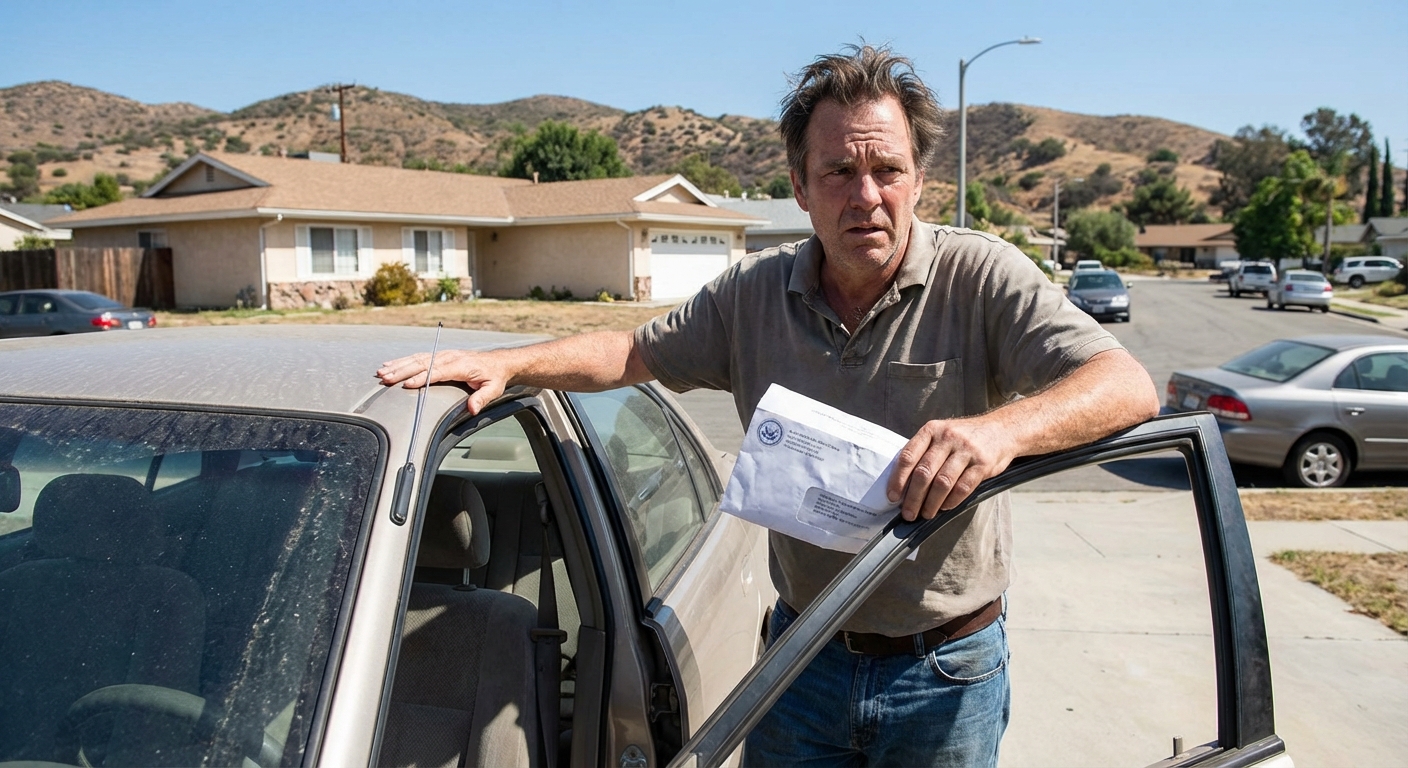
When your insurer decides not to continue your policy, whether due to a full market exit or individual underwriting decisions, they are required by law to send you a non-renewal notice in writing. This is different from a mid-term cancellation: your coverage continues uninterrupted until the policy expiration date, giving you a critical window to find new coverage.
The notice will typically include:
- The effective date your coverage ends
- The reason for non-renewal (required in most states)
- Information about your rights and recourse options
State-Mandated Notice Timelines
Notice requirements vary by state. Here is what you can generally expect based on the latest 2026 rules:
| Notice Period | States / Notes |
|---|---|
| 10 to 30 days | Ohio (30 days for non-renewal), Georgia (30 for auto), and most other states with a baseline standard |
| 45 days | Florida, Maryland, Massachusetts, New Hampshire, Vermont, Virginia, Washington, West Virginia |
| 60 days | California, Connecticut, Iowa, Minnesota, Nebraska, New Jersey, New York, North Carolina, Rhode Island, South Carolina, Texas, Wisconsin |
| 75 days | Kentucky |
| 120 days | Alabama |
Texas made a significant change effective January 1, 2026. Under HB 2067, insurance companies must now automatically explain in writing why they declined, canceled, or did not renew your auto or home policy. Previously, Texas consumers had to formally request a written explanation. Insurers must also submit periodic summary reports to the Texas Department of Insurance beginning April 1, 2026, and TDI will publish that aggregate data so consumers can see market withdrawal patterns in their area. Georgia also enacted legislation extending property-policy non-renewal notice from 30 to 60 days effective January 1, 2026, though personal auto notice in Georgia remains at 30 days.
If your insurer fails to provide the required advance notice in your state, your coverage may legally remain in effect until proper notice is delivered. Review the rules for moving between state insurance markets to know exactly what your insurer is obligated to do where you live.
Your Consumer Rights
You do not have to simply accept a non-renewal without recourse. Here is what you are entitled to:
If you believe the non-renewal was issued improperly (for example, without adequate notice), contact your state insurance commissioner immediately. You can also review when and how to switch car insurance companies to better understand your policy timeline and avoid being caught off guard.

Protect your car with Farmers
Average Rate:
Find coverage options that fit your budget.

The insurance savings you expect.
Average Rate:
Enjoy personalized policies, comprehensive coverage & more.

See how much you could save today!
Average Rate:
Drivers who switch their auto insurance and save with State Farm save $764 on average!

Safe Drivers Save with Allstate®
Average Rate:
Get rewarded with savings for having a clean driving record.
How to Find New Coverage After a Market Exit
Act Fast: Your Step-by-Step Response Plan
When your insurer exits your state, time is your most valuable asset. The moment you receive a non-renewal notice, the clock starts. Here is how to move strategically:
Step 1: Gather Your Policy Details
Pull together your current declarations page, coverage limits, deductibles, and driving history. This speeds up the quoting process significantly.
Step 2: Shop 3 to 5 Carriers Immediately
Do not rely on a single quote. In a tight insurance market, rates vary dramatically between carriers. Insurify's mid-2026 data pegs the national full-coverage average at about $2,237/year, while Forbes puts the average closer to $2,434, NerdWallet at $2,356, Experian at roughly $2,266, and The Zebra at $2,256. High-cost states include Louisiana (roughly $3,481 to $4,180 depending on the source), Florida ($2,746 to $3,916), Washington D.C. ($3,209 to $3,880), and Michigan ($3,229). Cheap-state numbers include Vermont, Idaho, Maine, and New Hampshire. Because rankings shift based on ZIP code and driver profile, always get multiple quotes. If standard carriers turn you down, our guide on high-risk driver reconsideration strategies walks through your next moves.
Step 3: Know Your State's Current Minimum Requirements
State minimums have changed significantly in recent years. California updated its minimums to 30/60/15 in January 2025. North Carolina moved to 50/100/50 in July 2025. On January 1, 2026, New Jersey raised standard minimums from 25/50/25 to 35/70/25 (with matching UM/UIM limits), and Hawaii jumped to 40/80/20. Make sure your new policy meets current requirements before signing anything, and review what to do when moving between states if your relocation is part of the picture.
Step 4: Don't Drop Below Adequate Coverage
One of the most common and costly mistakes drivers make in a hard market is stripping their policy down to state minimums just to afford premiums. Review your full coverage downgrade risks before cutting anything.
Step 5: Lock In the New Policy Before Canceling the Old One
Always have your new coverage active before your old policy expires. This preserves your continuous coverage history, which directly impacts your rates with the new insurer. Understand why insurers cancel policies so you do not accidentally create a gap, and read our guide on what to do after your car insurance lapses if a gap already occurred.
The Assigned Risk Pool: Your Last Resort
If you have been rejected by multiple private insurers, every U.S. state operates an assigned risk pool (also called a residual market). This state-supervised program requires all licensed insurers to accept a share of high-risk or hard-to-place drivers based on their market share, guaranteeing that no licensed driver is left completely without options.
The assigned risk pool is not a permanent solution, it is an expensive safety net. Assigned risk premiums typically run 50 to 100% higher than equivalent standard market rates, with no discounts for safe driving or bundling. New York's NYAIP alone approved a 19.2% personal auto rate hike effective October 1, 2026, and Texas TAIPA has a TDI-approved rate increase effective November 1, 2026. For a deep dive on how these programs work, how long you may remain in them, and how to exit sooner, see our full guide on assigned risk auto insurance.
Once you establish a clean driving record and maintain continuous coverage, you can transition back to the standard market and significantly lower your premium. If you are denied through standard channels, also explore what to do after being denied car insurance before defaulting to the pool. A reconsideration letter with the right documentation can sometimes reverse a denial.
Will My Rates Go Up?
Almost certainly, at least in the short term. When insurers leave a state, competition decreases and remaining carriers can charge more. The Zebra pegs the national average at $2,256/year in 2026 (up about 3% year over year), while Forbes puts the full-coverage average at $2,434 and Insurify at $2,237, with Insurify projecting rates will rise in 32 states by year-end 2026. Understanding the car insurance affordability crisis in your state can help you benchmark whether your new quote is reasonable or inflated.
Louisiana and Florida offer a hopeful counterexample. State officials credit both tort reform and reduced accident frequency for driving down Louisiana rates, and Insurance Commissioner Tim Temple expects more decreases as the 2025 reforms fully take effect. In fact, Forbes reported that Florida saw the biggest average monthly premium drop nationally in Q1 2026 at roughly 19%, with Oregon and New York close behind. The key is to:
- Maintain continuous coverage to avoid the lapse penalty
- Review your policy annually and re-shop when your situation improves
- Ask about all available discounts including bundling, telematics, good driver, and loyalty discounts
Frequently Asked Questions
How much notice is required before my insurer can stop covering me?
Most states require insurers to provide 30 to 120 days of written notice before a non-renewal takes effect, depending on the state and policy type. For example, Florida requires 45 days, Texas and Wisconsin require 60 days, Kentucky requires 75 days, and Alabama requires 120 days. Texas also now requires insurers to automatically provide a written reason for non-renewal as of January 1, 2026 under HB 2067, with periodic summary reporting to TDI starting April 1, 2026. If your insurer fails to provide adequate notice, your coverage may remain in effect until proper notification is delivered.
Can I be denied car insurance after my company exits my state?
Yes, but you cannot be left without options. If multiple standard insurers reject you, which can happen in very restricted markets, you have the legal right to apply to your state's assigned risk pool. Every state operates one, and licensed insurers are required by law to participate. Coverage through the pool is more expensive and more limited, but it ensures you can legally drive. You can also explore reconsideration strategies after a denial before resorting to the pool.
Will a market exit show up on my insurance history and hurt my rates?
A market exit will not appear as a negative mark on your personal insurance record. It is a business decision made by the insurer, not an action tied to your individual risk profile. However, if the non-renewal causes a coverage lapse because you waited too long to find a new policy, that lapse will affect your rates significantly. Acting quickly is essential. For a detailed look at what is at stake, read about why insurance companies cancel policies so you are never caught off guard.
What states are most at risk for further insurance market pullbacks?
Climate-exposed states face the greatest ongoing risk. California, Florida, Louisiana, Texas, Nevada, and Hawaii are currently the most vulnerable to continued insurer pullbacks due to wildfire, hurricane, and severe storm exposure. Global insured natural disaster losses hit approximately $107 billion in 2025, with the U.S. driving the majority of that total. If you live in one of these states, it is wise to proactively review your coverage options annually and understand your state's last-resort program before you receive a non-renewal notice.
Is there anything I can do to prevent being non-renewed again in the future?
While you cannot control an insurer's business decision to exit a market, you can make yourself a more attractive risk to carriers and reduce the likelihood of individual non-renewal. Maintain a clean driving record, avoid lapses in coverage, keep your credit score healthy, and proactively bundle policies. If you live in a high-risk area, consider mitigation improvements such as a fire-resistant structure or storm-rated garage that some insurers factor into underwriting decisions. Understanding your snowbird coverage rules can also help you anticipate future market shifts if you split time between states.