
Compare Car Insurance Rates in Ohio
See if you qualify for a lower rate in less than 2 minutes



What Is High-Risk Car Insurance?
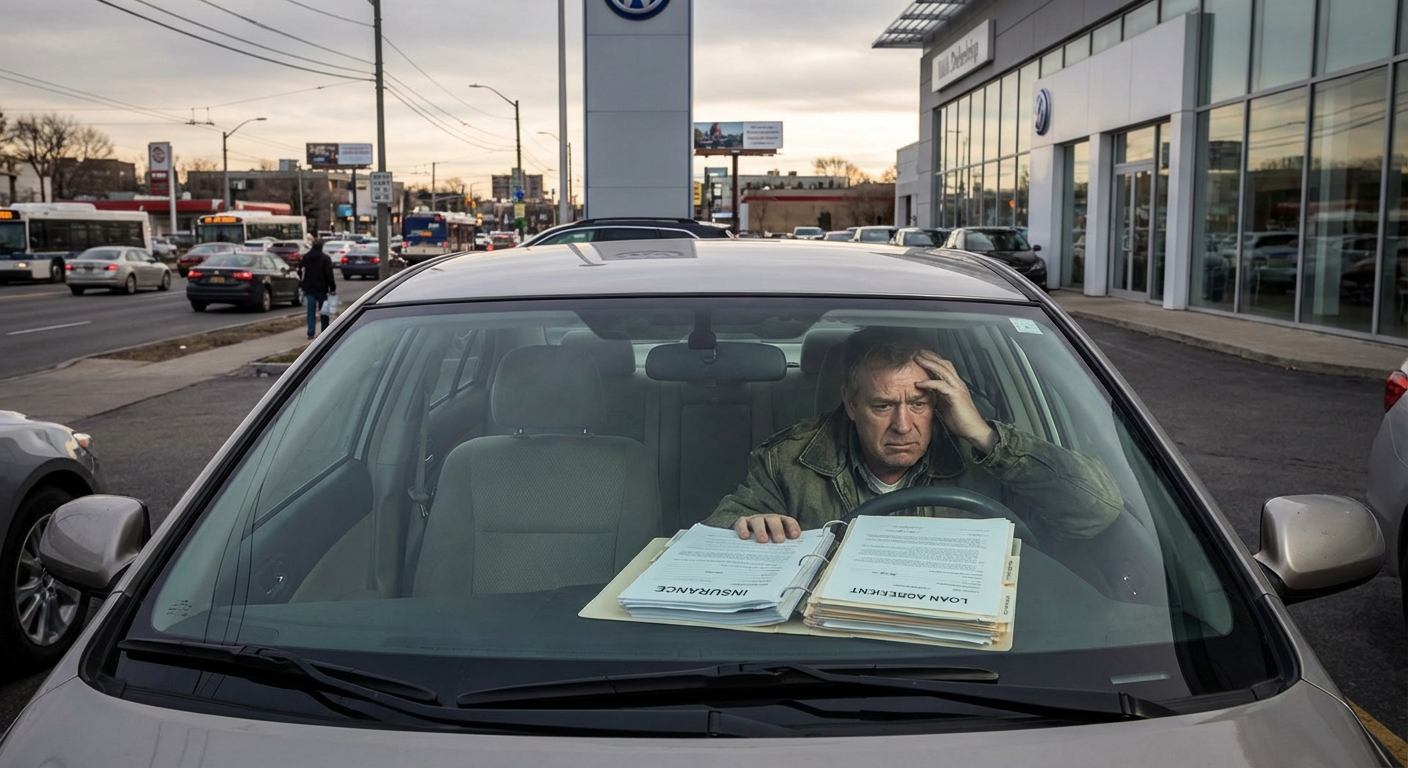
High-risk car insurance, also called non-standard auto insurance, is a specialized category of coverage designed for drivers that insurers consider more likely to file claims. There is no single universal definition of "high-risk," and different companies set their own thresholds. However, the label generally applies when your driving record, personal history, or vehicle type suggests an elevated probability of accidents or costly claims.
Most major insurers either charge significantly higher premiums for high-risk drivers or decline to cover them altogether. That's where non-standard carriers step in. Understanding where you stand can help you make smarter decisions about your coverage and your path back to affordable rates. For a deeper look at the non-standard market, see our guide on non-standard auto insurance.
Am I a High-Risk Driver?
Insurers look at a combination of factors when deciding whether to label you high-risk. Here are the most common triggers:
| Risk Factor | Details |
|---|---|
| DUI / DWI Conviction | One of the highest-risk flags; can affect rates for 3 to 10 years, with California retaining a DUI on record for 10 years |
| Multiple At-Fault Accidents | Two or more accidents signal a pattern of unsafe driving |
| Serious Traffic Violations | Reckless driving, street racing, excessive speeding |
| Suspended or Revoked License | History of license issues raises major red flags |
| Lapse in Coverage | Gaps in your insurance history suggest financial instability |
| Poor Credit Score | In most states, low credit can push premiums 70% or higher |
| Young or Inexperienced Driver | Drivers under 25 are statistically more accident-prone |
| Certain Vehicle Types | High-performance, exotic, or heavily modified vehicles |
| SR-22 Requirement | A court- or state-mandated SR-22 filing signals prior serious violations |
It's worth noting that insurers also consider your location. Living in a high-traffic urban area can push you closer to non-standard territory even without any violations. Understanding how car insurance underwriting works can help you anticipate how these factors are evaluated.

Compare Car Insurance Rates in Ohio
See if you qualify for a lower rate in less than 2 minutes
How Much Does High-Risk Car Insurance Cost?
High-risk drivers pay dramatically more than standard policyholders. As of 2026, national averages for full-coverage insurance sit around $2,237 to $2,578 per year for clean-record drivers depending on the source. A driver with a single DUI now averages roughly $4,461 to $4,692 per year, an 88 to 96% jump over the pre-DUI baseline, driven by increasingly precise AI-powered risk segmentation that widens the gap between standard and high-risk rates.
Rate Increases by Risk Factor
| Risk Factor | Estimated Premium Increase | Notes |
|---|---|---|
| Clean record (standard) | Baseline (~$2,237 to $2,578/yr) | National average range for 2026 |
| One at-fault accident | +40 to 50% | Roughly $900 to $1,400 more per year |
| DUI conviction | +88 to 96% | National average premium of ~$4,461 to $4,692/yr after one DUI |
| Multiple DUIs | ~$5,620/yr or more | Roughly $468/month on average |
| Poor credit score | +70% or more | Banned in CA, HI, MA, MI |
| Teen driver (under 21) | Up to 3 to 4x standard | One of the costliest risk profiles |
| Multiple violations | Up to 3x standard | Depends on severity and state |
A DUI is one of the most expensive risk flags. Nationally, insurance premiums jump by an average of about 88 to 96% after a DUI (from roughly $208/month to $391/month), and state-level increases range from about 51% in Oklahoma to over 300% in North Carolina. Michigan drivers face the harshest hit, with post-DUI full coverage reaching up to $670/month. For a full breakdown of post-DUI rates by insurer, check our guide on car insurance after a DUI.
Your credit score also plays a major role in most states. Drivers with poor credit can pay 70% or more above what good-credit drivers pay, effectively adding hundreds to thousands per year to your annual premium. Even dropping just one credit tier can meaningfully raise your rate. Note that California, Hawaii, Massachusetts, and Michigan ban the use of credit scores in insurance pricing entirely. Learn more about what affects car insurance rates and the best strategies to overcome them, or dive into how your credit score impacts rates.
Several states also updated their minimum liability limits in 2025 and 2026. California moved to 30/60/15 effective January 1, 2025 (its first update since 1967), Virginia to 50/100/25, North Carolina to 50/100/50 (effective July 1, 2025), Utah to 30/65/25, New Jersey to 35/70/25 (effective January 1, 2026), and Hawaii to 40/80/20. These higher minimums push required coverage costs even higher for high-risk drivers and assigned risk pool enrollees.

Protect your car with Farmers
Average Rate:
Find coverage options that fit your budget.

The insurance savings you expect.
Average Rate:
Enjoy personalized policies, comprehensive coverage & more.

See how much you could save today!
Average Rate:
Drivers who switch their auto insurance and save with State Farm save $764 on average!

Safe Drivers Save with Allstate®
Average Rate:
Get rewarded with savings for having a clean driving record.
High-Risk Car Insurance Companies & State Risk Pools
Best Companies for High-Risk Drivers in 2026
Several companies consistently rank as the top options for high-risk drivers based on affordability, SR-22 support, and customer satisfaction. Both major national carriers and non-standard specialists serve this market.
- Progressive – Ranked "Best for DUI/DWI" by CNBC Select in 2026, with SR-22 support, accident forgiveness, and telematics discounts. A go-to for drivers with serious violations, with typical high-risk annual premiums running $2,400 to $4,200.
- Geico – Rated 5.0/5 by NerdWallet for high-risk auto insurance in 2026, with average high-risk premiums around $2,372/year. Competitive pricing across many risk profiles including tickets, accidents, and moderate credit issues.
- State Farm – A top pick for drivers with an at-fault accident and strong customer service. Also offers a defensive driver discount and a Drive Safe & Save telematics program with up to 30% savings at renewal.
- National General – Reported by MoneyGeek in 2026 as the cheapest high-risk car insurance for drivers with a DUI at roughly $66/month ($703/year) for minimum coverage, saving drivers about $660/year vs. other high-risk carriers.
- USAA – Ranked by Forbes as the cheapest high-risk insurer overall at ~$2,486/year, though eligibility is limited to military-affiliated individuals.
- Travelers – MarketWatch's 2026 top pick for cheap high-risk auto insurance, thanks to low overall rates and broad coverage selection.
- Dairyland – CNBC Select's "Best for high-risk drivers" in 2026, specializing in non-standard coverage for drivers with multiple accidents, DUIs, or bad credit.
- The General, Direct Auto & Kemper – Purpose-built non-standard insurers that accept a wide range of high-risk profiles. Read our dedicated The General car insurance review for a deeper look at Sentry's non-standard flagship.
If you have a suspended license and want to understand your options before shopping, see our guide on car insurance without a driver's license. Florida drivers convicted of a DUI should also review FR-44 insurance requirements specific to that state, which mandate significantly higher liability limits than a standard SR-22.
State Assigned Risk Pools
If every private insurer has turned you down, you still have options. Every state maintains an assigned risk pool (also called a State Automobile Insurance Plan or SAIP) as a last resort for drivers who legally must carry insurance but cannot obtain it in the private market.
Here's how it works:
- You apply through your state's assigned risk plan
- The state assigns you to a participating licensed insurer
- That insurer is legally required to cover you
- You receive state-minimum liability coverage at above-market rates
Costs in an assigned risk pool are typically 30 to 100% higher than comparable private-market policies, and coverage is usually limited to bare-minimum liability. It's a safety net, not a long-term solution. For a deeper look at how these programs operate, including the 2026 NYAIP 19.2% rate hike effective October 1, 2026, California's new EASI MFA requirements (effective May 4, 2026), and Texas HB 2067's written-reason requirement, see our guide on assigned risk auto insurance.
Drivers without a vehicle should also explore non-owner car insurance, which can maintain continuous coverage history (a critical factor in exiting high-risk status).
How to Get Out of High-Risk Insurance
How Long Does High-Risk Status Last?
The good news: high-risk status is not permanent. Most incidents age off your record within 3 to 5 years, though DUI convictions can affect your rates for up to 10 years depending on your state and insurer. The table below reflects typical lookback windows:
| Incident | Typical Impact Duration |
|---|---|
| Minor traffic violations (speeding, etc.) | 3 to 5 years |
| At-fault accidents | 3 to 5 years |
| DUI / DWI | 3 to 10 years (California retains DUIs for 10 years) |
| License suspension/revocation | 3 to 7+ years |
| Claims history | 3 to 5 years |
| Coverage lapses | 1 to 3 years |
| Poor credit (if applicable in your state) | Improves as credit improves |
Insurers typically look back at your last 3 to 5 years of driving history when pricing your policy. That means once a violation clears the lookback window, your rates should begin to drop, sometimes significantly. SR-22 requirements, where applicable, generally last 3 years in most states, with a range from 1 year (North Dakota, Connecticut, Kansas, and Oregon per SB 840 effective January 2026, plus Ohio per HB 29) to 5 years (Nebraska and Tennessee DUI cases). Texas requires 2 years for most cases and up to 3 for DUI-related filings.
The gap between standard and high-risk rates has widened significantly in 2026 as AI-powered underwriting allows insurers to price risk with greater precision, making active record improvement more financially critical than ever.
Steps to Improve Your Status
1. Maintain a Clean Driving Record
This is the single most powerful thing you can do. Every month without a ticket, accident, or claim moves you closer to standard market rates. Many insurers offer substantial discounts for 3+ years of accident-free driving. Learn more about how an accident affects your rates and what to expect as violations age off.
2. Take a Defensive Driving Course
A state-approved defensive driving course can earn you a 5% to 30% discount on your premium depending on your state and insurer. In some states, completing an approved course can also remove a minor violation from your record entirely. Check your state DMV for approved programs. Common providers include the National Safety Council and Defensive Driving by IMPROV.
3. Improve Your Credit Score
In most states, your credit score directly impacts your insurance rates. Drivers with poor credit can pay 70% or more above what good-credit drivers pay. Paying down debt, resolving collections, and keeping credit utilization low are the most effective levers. Keep in mind that California, Hawaii, Massachusetts, and Michigan don't allow credit as a rating factor. Learn more about how car insurance with bad credit works and which insurers are most forgiving.
4. Enroll in a Telematics Program
Many major insurers offer telematics-based discounts of up to 40% for safe driving behavior. Nationwide's SmartRide program leads with a 10% instant enrollment discount and up to 40% at renewal, and Nationwide explicitly does not raise your rate based on program data. State Farm's Drive Safe & Save caps at around 30% (with a 10% initial participation discount), and USAA's SafePilot offers up to 30%. For high-risk drivers rebuilding their record, telematics is one of the fastest ways to earn meaningful discounts.
5. Maintain Continuous Coverage
A lapse in coverage, even a short one, resets your standing with insurers. Keep your policy active, even at minimum levels. If you don't own a car, a non-owner car insurance policy is an affordable way to maintain continuous coverage history and avoid the penalty for coverage gaps.
6. Shop for New Quotes Every 6 to 12 Months
As your record improves, re-shop your coverage aggressively. Your current insurer may not automatically reward you for your progress, but a new one might. The transition back to the standard market often happens by switching to a mainstream carrier like Progressive, Geico, or State Farm once your violations have aged off. Looking for cheap car insurance in 2026? Check our guide for the best strategies.
Frequently Asked Questions
What makes someone a high-risk driver?
There's no single definition, but common triggers include DUI or DWI convictions, multiple at-fault accidents, serious traffic violations like reckless driving, a suspended or revoked license, lapses in insurance coverage, poor credit scores (in most states), and being a young or first-time driver. The type of vehicle you drive, particularly high-performance or exotic cars, can also contribute to a high-risk classification. Even living in a densely populated urban area can push you toward non-standard territory without any violations on your record. Insurers each set their own thresholds, so one company may decline you while another offers a moderate surcharge.
How much more does high-risk car insurance cost?
High-risk drivers typically pay significantly more than the standard rate depending on the severity of their record. The 2026 national average full-coverage premium ranges from about $2,237 to $2,578 per year for clean-record drivers. A single DUI raises premiums by roughly 88 to 96% on average (to about $4,461 to $4,692 per year), and drivers with multiple DUIs average $5,620/year or more. Poor credit can add 70% or more in states where credit-based pricing is permitted.
What are the best companies for high-risk car insurance?
For 2026, CNBC Select ranks Progressive as best for DUI/DWI drivers and Dairyland as best for high-risk drivers overall, while Geico earned a 5.0/5 rating from NerdWallet for high-risk coverage. Travelers is MarketWatch's top pick for cheap high-risk auto insurance, and National General offers competitive minimum-coverage pricing after a DUI at roughly $66/month. For those declined by standard carriers entirely, non-standard specialists like The General, Kemper, Direct Auto, and Dairyland accept a wider range of high-risk profiles.
What is a state assigned risk pool and how do I apply?
A state assigned risk pool (also called a State Automobile Insurance Plan or SAIP) is a government-mandated program that provides auto insurance to drivers rejected by all private insurers. You apply after being turned down by the private market, get assigned to a participating insurer, and receive state-minimum liability coverage. Premiums are typically 30 to 100% higher than comparable private-market options and coverage is very limited, but it ensures you remain legally insured. Multiple states including California, Virginia, North Carolina, Utah, New Jersey, and Hawaii raised their minimum liability limits in 2025 or 2026, increasing costs for pool participants even further.
How do I get out of the high-risk category?
The fastest path back to standard insurance combines time with deliberate action. Maintain a spotless driving record, take a state-approved defensive driving course, improve your credit score, and enroll in a telematics safe-driving program (with no rate-increase risk, like Nationwide SmartRide) to earn discounts while your record heals. Once violations age off (minor violations within 3 to 5 years, DUIs within 3 to 10 years depending on the state), actively shop quotes with standard-market insurers like Progressive, Geico, or State Farm, which will often offer significantly lower rates than your current non-standard carrier.