

Compare Home Warranty Options in Ohio
See what plans you qualify for in less than 2 minutes
How Home Warranty Companies Decide: Repair or Replace?
When you file a claim with your home warranty company, you might assume that a broken appliance will simply be swapped out for a new one. In reality, the decision is far more nuanced, and it usually favors the cheapest option for the company, not the most convenient one for you. Understanding how the claims process works and specifically how the repair vs. replace decision is made can help you set realistic expectations and advocate for yourself when needed.
The Decision-Making Process: What Factors Are Weighed
After you submit a claim, your home warranty provider dispatches a licensed technician to assess the broken item. The technician submits a diagnostic report to the warranty company, which then reviews it and approves a course of action. The final call rests with the company, not the technician, and not you.
Here are the four primary factors that drive the repair vs. replace decision in 2026:
1. Cost Comparison
This is the most influential factor. Warranty companies will almost always choose the least expensive option that still falls within your coverage limits. If patching a compressor costs $400 but replacing the refrigerator costs $1,500, expect a repair order.
2. Age of the Item
Older appliances and systems are a gray area. Some providers like American Home Shield will cover items regardless of age without requiring maintenance records, and they will even cover problems caused by rust, corrosion, and sediment that many competitors exclude. Others may use advanced age as justification to deny replacement, citing pre-existing deterioration or obsolete components. If you own an older home, review our guide on the best warranty options for older homes.
3. Parts Availability
If replacement parts are available, even refurbished or used components, most companies will pursue a repair first. Only when parts are genuinely unavailable or the cost to source them becomes prohibitive does replacement become a serious option. This is especially relevant in 2026 as the R-410A refrigerant phase-out continues to reshape HVAC parts availability. The EPA's May 2026 final rule removed the January 1, 2026 installation deadline, allowing pre-2025 R-410A inventory to continue being installed until supplies run out.
4. Repair Feasibility
If the item cannot be restored to working condition through reasonable repairs, or if a repair would cost more than the item's functional value, a replacement may be authorized. This is where the commonly cited 50% rule comes into play: if the repair cost exceeds roughly half the price of a comparable new unit, replacement becomes the smarter and often approved option.
Home Warranty Replacement Value: What You Actually Get
Many homeowners are surprised, and frustrated, to discover that even when a replacement is approved, they don't receive the full retail cost of a brand-new unit. Here's how replacement value is actually calculated in 2026.
How Payout Caps Work
Home warranty companies set per-item coverage caps in your contract. These caps represent the absolute maximum they will pay, regardless of what a replacement actually costs in the market. Most contracts also include an annual aggregate cap. American Home Shield, for example, uses a $50,000 total agreement-term limit on both its ShieldGold and ShieldPlatinum plans. Common 2026 coverage caps include:
| Item | Typical 2026 Coverage Cap |
|---|---|
| HVAC System | $2,000 – $6,500 per system |
| Refrigerator | $2,000 – $4,000 |
| Washer/Dryer | $2,000 – $7,000 |
| Water Heater | $500 – $1,500 |
| Dishwasher | $500 – $2,000 |
| Plumbing System | $500 – $1,500 per claim |
If the replacement cost exceeds the cap, you pay the difference out of pocket. This gap has widened dramatically in 2026: a full HVAC replacement now averages around $13,000 installed, with most homeowners paying between $11,000 and $15,000, while most plans cap HVAC payouts between $2,000 and $5,000. That leaves a significant shortfall. For a deeper breakdown, see our guide on home warranty payout limits.
Cash-Out vs. Direct Replacement
Some companies offer a cash-out option where they pay you the depreciated or wholesale value instead of arranging a replacement directly. Choice Home Warranty's contract, for example, explicitly reserves the right to offer cash back at the company's actual cost, which they acknowledge "may be less than retail." Before accepting any cash settlement, read our guide on the home warranty cash-out option and our detailed cash buyout comparison to understand whether it's worth negotiating for more.
Why Companies Keep Repairing Instead of Replacing
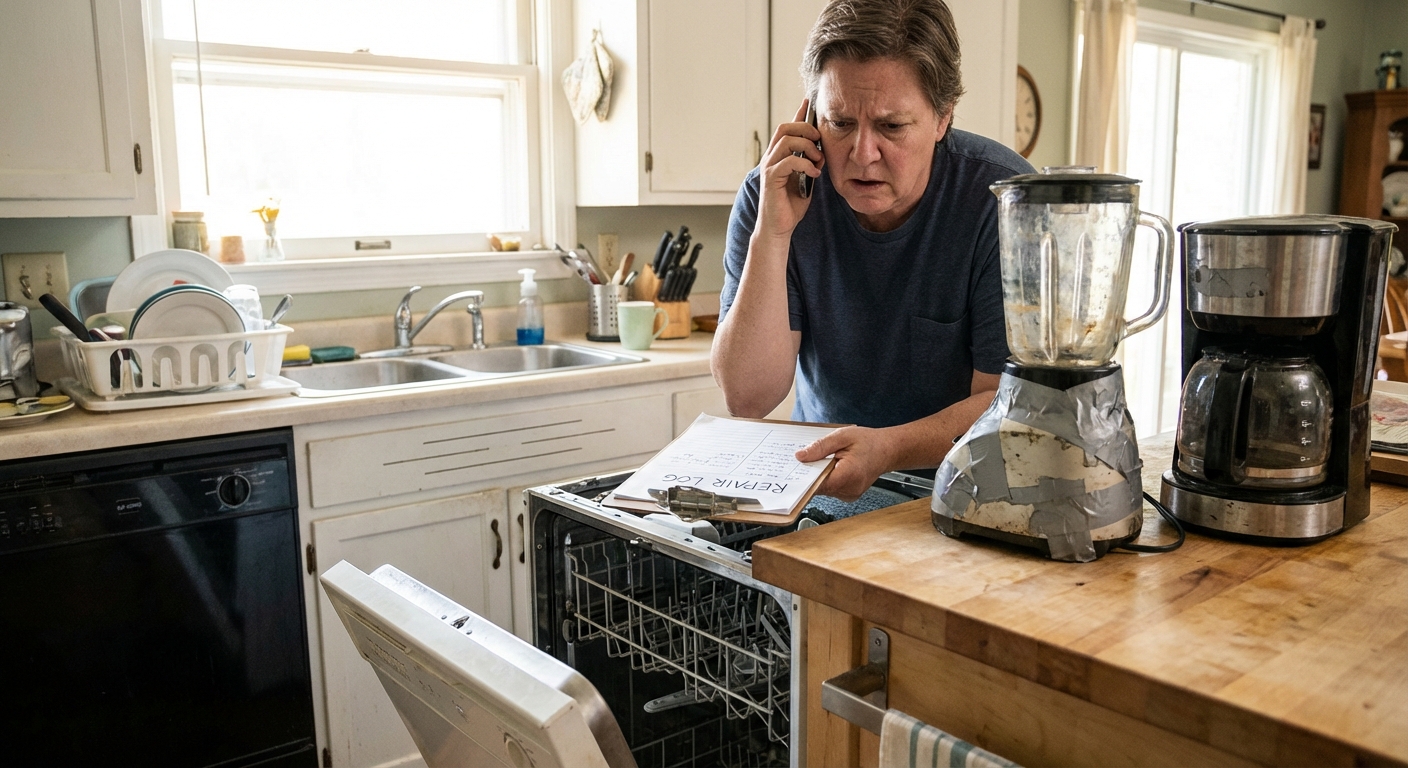
If you feel like your home warranty company is sending technicians out for the same problem over and over again, you're not alone. This is one of the most common consumer complaints in the industry. Understanding why companies favor repeated repairs helps you push back more effectively.
The Business Case for Repeated Repairs
Home warranty companies are service contract businesses, not charities. Every repair that avoids a full replacement represents direct cost savings on their end. Even when it seems obvious that an aging appliance should be replaced, companies may continue authorizing smaller repairs as long as each individual repair cost stays within policy limits. Meeting your preventive maintenance requirements is critical here, since any gap in upkeep gives them another reason to keep patching instead of replacing.
Typical Thresholds Where Replacement Becomes More Likely
While no universal industry standard exists, several common scenarios push providers toward replacement in 2026:
- The repair cost approaches or exceeds the item's coverage cap. If the cap is $2,000 and a repair quote comes in at $1,600 or more, replacement may be authorized instead
- The same component has failed multiple times within a short period
- The technician explicitly recommends replacement in their diagnostic report
- Replacement parts are no longer manufactured for the item (especially relevant for aging HVAC systems as R-410A supplies tighten)
- The overall system is deemed beyond cost-effective repair by the assigned contractor
Which Companies Have Better Replacement Policies?
Not all home warranty providers treat replacements the same way. Here's how the top companies compare in 2026 when it comes to replacement-friendly policies:
| Company | HVAC Replacement Cap | Appliance Cap | Notable Replacement Policy Feature |
|---|---|---|---|
| American Home Shield | Up to $5,000 per system | $2,000 (Gold) / $4,000 (Platinum) | $50,000 annual aggregate; covers items regardless of age, plus rust and corrosion |
| First American Home Warranty | Unlimited on most repairs | Up to $7,000 per appliance (Premium) | Covers improper installation & code violations on Essential/Premium plans |
| 2-10 Home Buyers Warranty | Up to $5,000 per system | Up to $2,000 per appliance | Strong structural and enhanced coverage options |
| Cinch Home Services | Plan-dependent | Plan-dependent | Industry-leading 180-day workmanship guarantee |
| Choice Home Warranty | ~$3,000 per system (Total Plan) | ~$3,000 per item | Reserves right to offer cash at actual cost, often below retail |
For a full breakdown of these providers side by side, see our guide on the best HVAC coverage options for 2026. You can also drill into specific categories with our refrigerator coverage guide and appliance coverage overview.
Your Rights & How to Fight Back: Documenting Repeated Repairs
If your home warranty company keeps sending out technicians for the same unresolved issue, you have real recourse, but it requires thorough documentation and a clear escalation strategy.
How to Document Repeated Issues
Building a paper trail is your most powerful tool when pushing for a replacement instead of yet another patch job. Here's how to do it effectively:
- Log every service visit: date, technician name, company, diagnosis, and repair performed
- Photograph the malfunction each time it recurs, including date stamps where possible
- Save every invoice, work order, and claim confirmation from the warranty company
- Record the name and ID of every representative you speak with by phone or chat
- Request the technician's diagnostic report in writing after each visit
- Track your cumulative repair costs against the item's estimated replacement cost
Escalating to a Replacement
Once you have documented evidence of a pattern, typically two or more failed repairs of the same issue within a contract year, take these steps:
- File a formal written escalation citing all prior claim numbers, dates, and costs
- Request a second-opinion inspection and submit that technician's report to the warranty company
- Reference the workmanship guarantee in your contract if the same repair has failed
- Contact your state's consumer protection office or department of insurance if the company refuses to engage
- Invoke the Magnuson-Moss Warranty Act where it applies. This federal law covers written warranties on consumer products and requires that if a product cannot be fixed after a reasonable number of repair attempts, the consumer must be offered a refund or replacement. It also lets prevailing consumers recover attorney's fees. Note that many home warranty plans are technically service contracts, so this law is most powerful when combined with a manufacturer's written product warranty
Frequently Asked Questions
Does a home warranty repair or replace covered items?
A home warranty can do either, depending on which option is more economical according to the company's assessment. The service technician diagnoses the issue and submits a report, and the warranty company makes the final call. In most cases, repair is strongly preferred because it costs the company less. Replacement is authorized when repairs are not feasible, parts are unavailable, or costs approach or exceed your coverage caps.
How does a home warranty decide between repair vs. replacement?
The decision comes down to four main factors: the cost of repair vs. replacement, the age and condition of the item, the availability of replacement parts, and whether the repair is technically feasible. Many companies also apply an informal "50% rule" where if the repair costs more than half the price of a comparable new unit, replacement becomes more justifiable. Your policy's per-item coverage cap also plays a major role, since it limits what the company will pay in either direction.
What happens when my home warranty keeps repairing instead of replacing?
When a home warranty company repeatedly repairs the same item without resolving the underlying problem, it's often a cost-containment strategy rather than a genuine fix. Your best recourse is to document every repair visit, reference the workmanship guarantee in your contract, and file a formal written escalation citing the repair history. If the company remains unresponsive, filing a complaint with the BBB, your state's insurance department, or invoking the Magnuson-Moss Warranty Act are all effective escalation paths.
Which home warranty companies have the best replacement policies in 2026?
American Home Shield and First American Home Warranty stand out for replacement-friendly policies in 2026. American Home Shield covers items regardless of age with a $50,000 annual aggregate, HVAC caps up to $5,000, and appliance caps up to $4,000 on ShieldPlatinum. First American provides unlimited coverage on most HVAC and plumbing repairs plus appliance caps up to $7,000 on its Premium plan. 2-10 Home Buyers Warranty also performs strongly with $5,000 HVAC caps and $2,000 per-appliance limits. Always compare plans and read the full contract before purchasing.
How do I document repeated repairs to push for a replacement?
Start by creating a chronological log of every service visit: date, technician, diagnosis, and repair performed. Save all invoices, claim confirmations, and written communications, and photograph the malfunction each time it recurs. Always request the technician's diagnostic report in writing, since this is what the warranty company uses to make decisions. Once you have two or more documented failures of the same issue, submit a formal written escalation referencing all prior claim numbers and your maintenance history to close off any denial angles.