

Compare Home Warranty Options in Ohio
See what plans you qualify for in less than 2 minutes
The Most Common Reasons Home Warranty Claims Are Denied
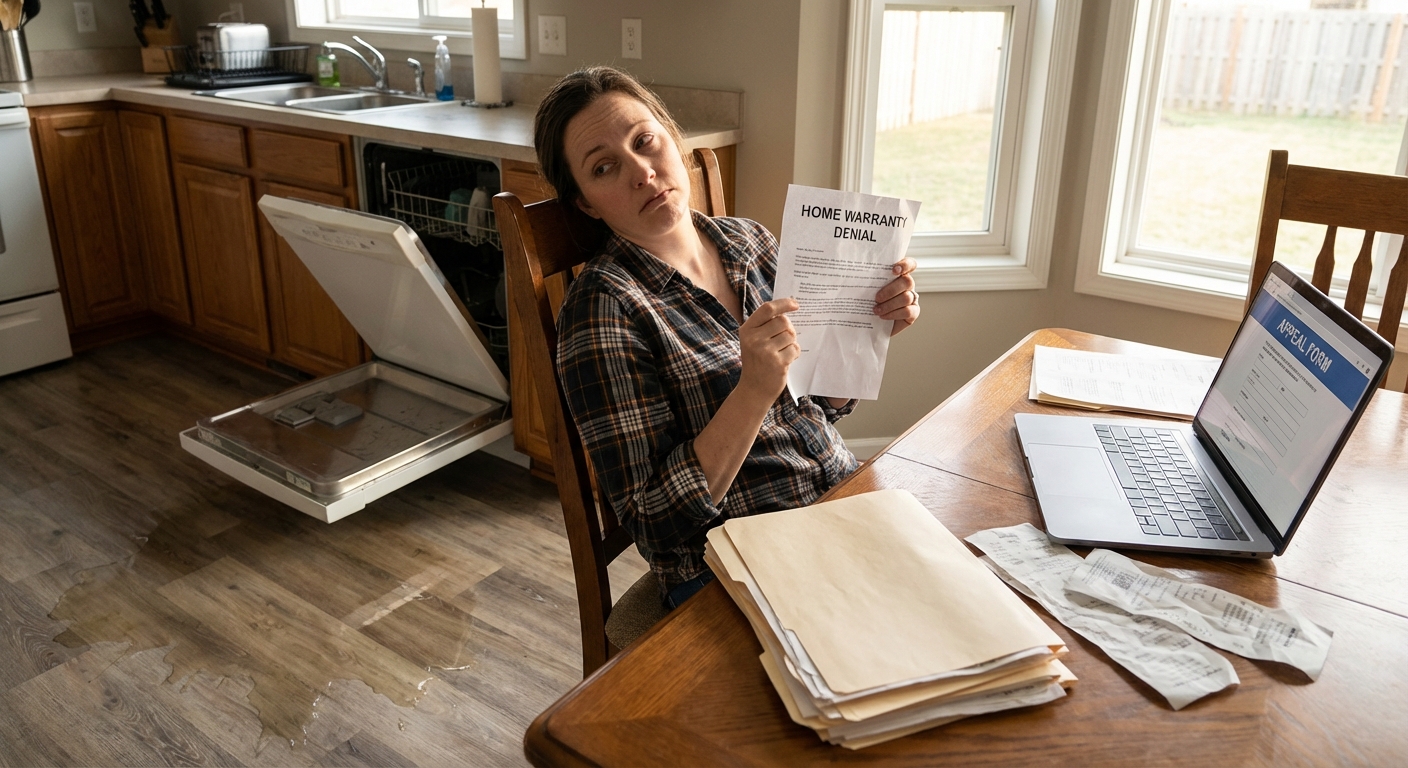
Getting your home warranty claim denied is frustrating, but it happens far more often than most homeowners expect. Understanding why companies reject claims is the first step to either preventing a denial or successfully fighting one. According to the 2026 This Old House survey of homeowners, the four leading reasons for denial are pre-existing conditions (29%), items not covered under the plan (29%), repair costs exceeding coverage limits (20%), and lack of maintenance (13%). Independent BBB-based analysis in 2026 pegs the industry approval average at about 74% across the top six providers, with American Home Shield leading at roughly 85%, First American in the mid-70s, and Choice Home Warranty near 72%. Below is a breakdown of each major denial trigger.
Pre-Existing Conditions
Home warranty plans are designed to cover new and unforeseen breakdowns that occur after your coverage begins. If a home warranty company determines that an appliance or system had a defect or needed repair before you purchased the policy, they can (and typically will) deny the claim entirely. This single reason accounts for nearly 3 in 10 denials in 2026, making it the most common cause of rejection alongside non-covered items. In fact, one fact-checked industry statistics compilation notes that up to 90% of all denied claims trace back to either pre-existing conditions or non-covered items.
Pro tip: Always get a professional home inspection before purchasing a warranty. Issues flagged in an inspection report can be addressed upfront, reducing your risk of a pre-existing condition denial later.
Lack of Maintenance or Neglect
Home warranty companies require that covered systems and appliances receive routine upkeep. If the company's inspector determines that your failure to maintain the item contributed to the breakdown, your claim will likely be denied. This applies to HVAC filters not being changed regularly, water heaters not being flushed annually, or a dishwasher damaged through misuse.
Learn more about home warranty maintenance requirements to understand exactly what's expected of you as a homeowner.
Improper Installation
If a covered item was installed incorrectly, whether by a previous homeowner or an unlicensed contractor, the warranty company may deny the claim on the grounds that the failure wasn't caused by normal wear and tear. Always verify that any installation work in your home was performed by a licensed professional and that permits were pulled where required.
Non-Covered Items & Policy Exclusions
Many denials come down to a simple mismatch: the homeowner assumed something was covered, but it wasn't. Home warranty policies are filled with exclusions, from cosmetic components to structural elements to specific parts within a covered appliance. For a deep dive into what's typically left out, see our guide on home warranty exclusions.
Exceeding Coverage Limits
Even when a claim is valid, your payout may be capped. In 2026, most providers cap HVAC coverage between $2,000 and $5,000 per system. American Home Shield now offers $5,000 per HVAC system across all three plans (Silver, Gold, and Platinum) with a $50,000 total agreement-term limit. Appliance caps generally run $500 to $2,000 per item on standard plans, while premium tiers like AHS ShieldPlatinum go up to $4,000 per appliance and include $1,000 in roof leak repair and unlimited AC refrigerant. About 20% of denied claims in 2026 were rejected because repair costs exceeded those limits. Review home warranty coverage limits so you know your financial exposure before a breakdown happens.
Other Common Denial Triggers
| Denial Reason | What It Means |
|---|---|
| Unauthorized Repairs | Using non-approved technicians voids coverage |
| Code Violations | Repairs not compliant with local building codes |
| Delayed Reporting | Waiting too long to file after an issue occurs |
| Animal / Pest Damage | Excluded as not a direct mechanical breakdown |
| Secondary Damage | Damage resulting from a covered failure may not be covered |
| Lapsed Premiums | Missed payments give the company no obligation to pay |
How to Dispute a Denied Home Warranty Claim
A denial is not always the final word. Many homeowners successfully overturn decisions by following a structured appeal process with solid documentation. Based on BBB and state regulator data, roughly 40% to 60% of formal appeals in 2026 end up reversed or at least partially paid, so persistence pays off.
Step 1: Review the Denial Letter Carefully
Read the denial notice thoroughly and identify the exact reason given. Then pull out your warranty contract and compare the stated reason against your actual policy language. Look for inconsistencies, vague wording, or clauses that may actually support your position. Never accept a vague reason like "pre-existing condition." Instead, demand in writing that the company cite the specific contract clause and the specific evidence supporting that determination. Understanding how the claims process works will help you spot discrepancies faster.
Step 2: Gather Your Documentation
Strong documentation is the backbone of a successful appeal. Compile the following before contacting your provider:
- Warranty contract and denial notice (in writing)
- Maintenance records including receipts, service logs, and technician notes
- Photos and videos of the damaged item and surrounding area
- Purchase receipts or installation records for the item in question
- The company's initial inspection report
- A second opinion from an independent, licensed contractor
Step 3: Submit a Formal Written Appeal
Contact your home warranty provider and request their official appeal process and required forms. Most contracts set a formal appeal deadline of around 30 days from the denial date, so calendar it immediately. Submit everything in writing via email and certified mail, and never rely solely on phone conversations. Include all supporting documents, reference specific contract language that supports coverage, and be factual and concise. Most providers respond to formal appeals within 14 to 21 business days, though full resolution can stretch to 30 days or more. If you had to hire your own technician in the meantime, review the reimbursement rules for out-of-pocket repairs to recover those costs.
Step 4: Follow Up Persistently
Appeals can take time. Follow up regularly, document every interaction (name, date, time, summary), and don't let the process go cold. Persistence matters since many claims are approved after a homeowner pushes back with new evidence. If you're stuck cycling through repeated repairs instead of a proper replacement, our guide on how companies decide repair vs. replace explains the 50% rule and how to invoke it.
When to Escalate: Management, Regulators & Legal Action
If your internal appeal fails, you have several escalation options, each progressively stronger. Knowing your legal options and rights before escalating is critical.
Escalate to Senior Management
Before going external, ask to speak with a supervisor or claims manager, or request an "Office of the President" or executive resolutions review if the company offers one. Sometimes a denial is reversed simply because a higher-level employee re-reviews the file with fresh eyes. Be calm, professional, and come armed with your documentation.
File a Complaint With Regulatory Agencies
After exhausting the provider's internal process, file complaints with the right state agency, which varies based on how your state classifies home warranties:
- State Insurance Department (e.g., California, Florida) where warranties are regulated as home protection contracts
- State Real Estate Commission (e.g., Texas) where warranties are overseen as service contracts
- Department of Financial Services (e.g., New York) for states that regulate them as service contracts
- Attorney General's Consumer Protection Division which works in nearly every state (Arizona's $11.8M consent judgment against Choice Home Warranty is a recent example, with a claim deadline of August 1, 2026)
- The Better Business Bureau (BBB) to create public pressure (American Home Shield alone has logged nearly 19,500 BBB complaints in the last 3 years, and Choice Home Warranty has over 10,300)
When to Consider Legal Action
Legal action should be a last resort, but it's sometimes warranted. Under the Federal Arbitration Act, most consumer warranty disputes are pushed toward individual arbitration rather than class action, though small claims court often remains available. Consider consulting a consumer protection or contract attorney if:
- Internal appeals and arbitration (if required) have been exhausted
- The company clearly denied a claim that your contract covers
- The dollar amount justifies legal costs (typically $3,000+)
- You have clear evidence of a contract breach or bad-faith practices
For issues with chronically bad providers, our guide on home warranty companies to avoid can help you identify patterns of systemic denials. You can also learn more about suing in small claims court, where 2026 state limits now range from $2,500 to $25,000, or explore the full arbitration process if your contract requires it.
How to Prevent Home Warranty Claim Denials
The best dispute is the one you never need to have. Taking proactive steps dramatically reduces your risk of a denial.
Read Your Policy Before You Need It
Most homeowners don't read their warranty contract until after a claim is filed, by which point it's too late. Review your policy when you first purchase it, identify every exclusion, note all coverage caps, and understand exactly what maintenance is required to keep your coverage valid. Our guide on how to read a home warranty contract walks you through every section. If a plan's exclusions are excessive, compare options in our claim approval rates guide which ranks providers by approval rates.
Keep a Maintenance Log
Routine maintenance is your best protection against denial. Keep a running log of every service, inspection, and repair performed on your home's major systems and appliances. Store receipts, invoices, and technician reports in a dedicated folder, physical or digital.
| System / Appliance | Recommended Maintenance Frequency |
|---|---|
| HVAC (filter change) | Every 1-3 months |
| HVAC (professional tune-up) | Annually |
| Water Heater (flush) | Annually |
| Plumbing (inspection) | Every 2 years |
| Roof (inspection) | Annually |
| Refrigerator (coil cleaning) | Every 6-12 months |
Use Approved Contractors Only
Never hire an outside technician to diagnose or repair a covered item without first getting authorization from your home warranty company. Using unauthorized contractors is one of the fastest ways to have a claim denied, even if the work was done correctly. If you must pay out of pocket in a true emergency, review the full claims process so you understand what you can recover.
Report Issues Promptly
File your claim as soon as a problem arises. Most policies have windows for reporting, and delays can be used as grounds for denial. When you file, be specific: describe the symptoms, when they started, and the item's make, model, and serial number.
If you're evaluating whether a home warranty is even the right financial move at an average of $73 per month in 2026 (range $28 to $191) with a $108 average service fee, understanding multiple claims limits and caps can help you decide before you renew.
Frequently Asked Questions
Can a home warranty deny a claim for a pre-existing condition on a newly purchased home?
Yes. Home warranty companies can and do deny claims for pre-existing conditions even on newly purchased homes, and this reason accounts for roughly 29% of all denials in 2026. If the inspector determines that a system or appliance showed signs of wear, damage, or malfunction before your coverage began, the claim is typically considered ineligible. The best protection is a thorough home inspection before purchasing your home and your warranty, so that known issues can be documented and addressed upfront.
What documentation do I need to appeal a denied home warranty claim?
You'll want to gather your warranty contract, the written denial notice with the specific contract clause cited, maintenance logs and service receipts, photos and videos of the damaged item, the company's inspection report, and any purchase or installation records for the item. If the denial cites improper maintenance or installation, a second opinion from an independent, licensed contractor is especially valuable. The stronger your documentation, the better your chances of reversing the decision, and BBB and state regulator data show 40% to 60% of formal appeals get reversed or partially paid in 2026.
How long does the home warranty appeal process take?
Timelines vary by provider, but most companies respond to formal appeals within 14 to 21 business days of receiving your submission. If internal escalation, arbitration, or mediation are involved, the process can stretch to 30 to 90 days. Most contracts also require you to file your formal appeal within 30 days of the denial, so calendar the deadline right away and follow up regularly to keep your case from stalling.
What happens if my repair costs exceed my home warranty coverage limit?
If your repair or replacement cost exceeds your plan's coverage cap, you are responsible for paying the difference out of pocket. In 2026, HVAC caps typically run $2,000 to $5,000 per system (American Home Shield offers $5,000 per HVAC system across all three plan tiers), while appliance caps run $500 to $2,000 per item on standard plans and up to $4,000 on premium tiers like AHS ShieldPlatinum. Always check your plan's per-item limits and annual aggregate cap (AHS caps at $50,000 per agreement term) before a breakdown so you're not caught off guard.
When should I consider switching home warranty companies after a denial?
If your claim was denied based on vague or overly broad exclusions, if the company has a pattern of denying legitimate claims, or if customer service has been consistently unresponsive, it may be time to switch. Look for providers with high BBB ratings, transparent contract language, and strong independent reviews. ConsumerAffairs' 2026 data shows Choice Home Warranty at 4.0 out of 5 stars and American Home Shield at 3.7 across 111,000+ reviews. Before switching, make sure you understand your cancellation rights including any fees or prorated refund policies.