

Compare Home Warranty Options in Ohio
See what plans you qualify for in less than 2 minutes
What Are Pre-Existing Conditions in Home Warranty Terms?
A pre-existing condition in a home warranty contract is any defect, malfunction, or deterioration in a home system or appliance that existed before your coverage began. Think of it as the warranty version of a health insurance exclusion: the company won't pay to fix something that was already broken when you enrolled. Common examples include a failing HVAC compressor, a slow plumbing leak behind walls, an aging water heater with sediment buildup, or an electrical issue that hadn't yet caused a visible problem. Importantly, a defect can qualify as pre-existing even if you weren't aware of it, as long as a professional technician could have detected it through visual or basic mechanical inspection.
Home warranty companies exclude these conditions for one straightforward reason: financial risk management. If they covered problems that already existed, homeowners could simply purchase a warranty the day a system starts failing, collect the repair payout, and cancel. The pre-existing exclusion prevents that type of abuse and allows companies to price their plans based on normal wear-and-tear risk rather than guaranteed repairs. Learn more about common home warranty exclusions to get a full picture of what your plan may not cover.
Known vs. Unknown Pre-Existing Conditions
Not all pre-existing issues are treated equally. Home warranty companies distinguish between two distinct categories, and the difference has major financial consequences for you as a homeowner.
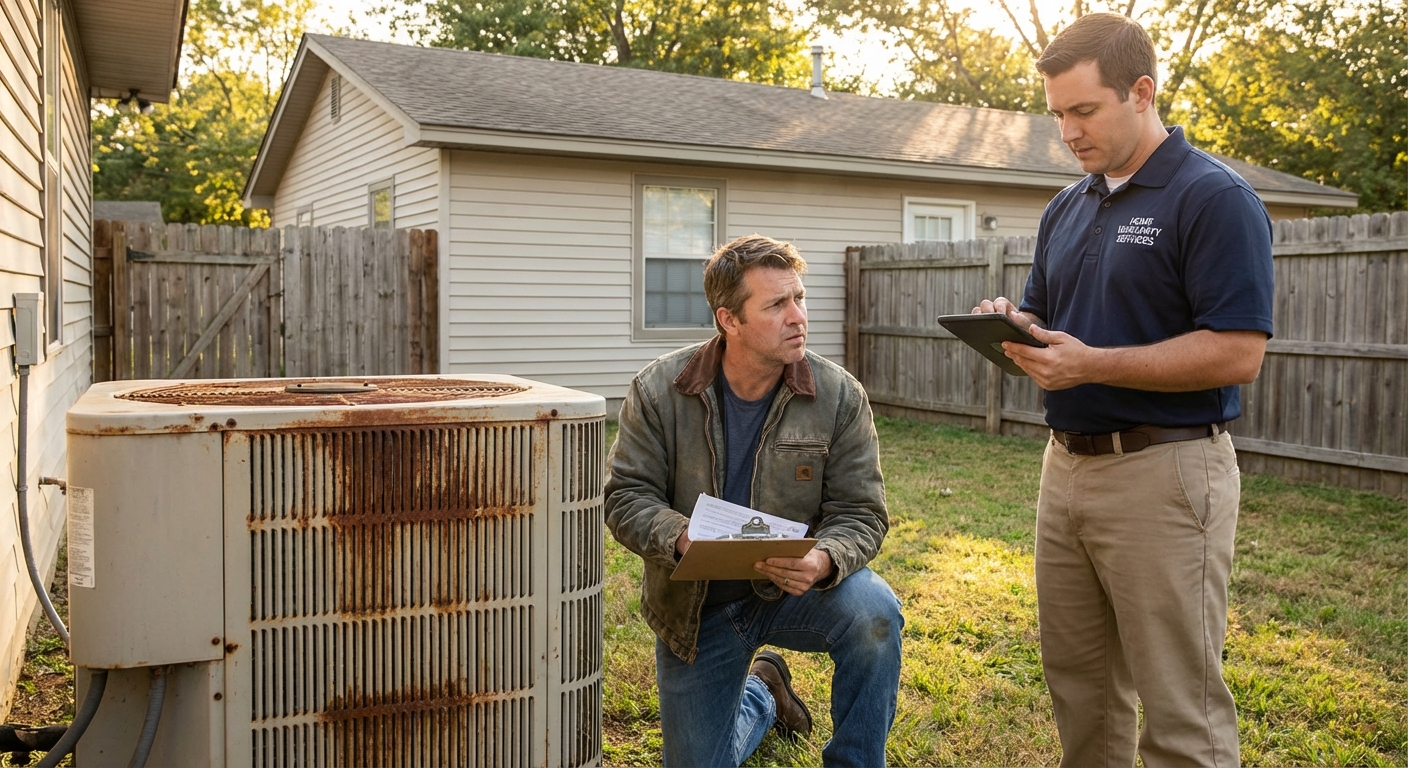
Known pre-existing conditions are visible, disclosed, or detectable through a basic inspection or simple operational test. If a home inspector noted that your HVAC system had excessive rust, or if the seller disclosed a recurring plumbing issue, those are known conditions. Warranty companies almost universally deny claims for these.
Unknown (or undetectable) pre-existing conditions are hidden defects that wouldn't have been apparent during a standard inspection, such as a hairline crack in a heat exchanger or internal corrosion inside a water heater. A select group of 2026 providers explicitly covers undetectable pre-existing conditions, most notably American Home Shield through its "Shield Assurances," along with Cinch Home Services, 2-10 Home Buyers Warranty, and First American Home Warranty. Each requires that the item passed a visual inspection (no missing parts, no obvious damage) and a basic mechanical on/off test without smoke, noise, or irregular operation. Always read your policy carefully or review how different home warranty plans are structured before assuming you're covered.
How Companies Identify Pre-Existing Conditions
When you file a claim, the warranty company dispatches a licensed technician to inspect the failed item. This person isn't just there to fix it. They're also evaluating whether the failure was sudden (covered) or the result of gradual deterioration that predated your coverage (potentially excluded). Here's what technicians look for:
- Wear patterns that suggest long-term deterioration beyond normal aging
- Rust, corrosion, or mineral buildup consistent with years of neglect or deferred maintenance
- Physical damage such as cracks, missing components, or evidence of prior amateur repairs
- Operational history clues like burn marks, fraying, or signs of overheating over an extended period
- Refrigerant leaks, faulty compressors, or improper installation in HVAC systems
- Corroded pipes, calcified heat exchangers, or known sewer line issues in plumbing systems
If the technician's report indicates a gradual failure consistent with a pre-existing defect, the warranty company will use that as grounds for denial. This is by far the most common reason home warranty claims get denied. It's also one of the hardest to fight without documentation.
The Role of Home Inspections
A professional home inspection report is your single most powerful defense against a pre-existing condition denial. When a licensed inspector tests every system and appliance and documents that they were functioning properly at the time of purchase, it creates a timestamped baseline of condition. If something fails after coverage begins and your inspection report shows it was clean, the warranty company has a much harder case to make.
A standard home inspection typically costs between $300 and $500 in 2026, with a national average around $343. Homes over 2,500 square feet, older properties, or homes in higher-cost coastal markets often run $500 to $700 or more. Some warranty providers flag any items noted in your inspection report as known conditions and exclude them, but items that passed inspection have documented proof of functionality. Always save a copy of your home inspection report and submit it to your warranty provider proactively when purchasing a home warranty as part of a real estate transaction. Learn more about home warranty inspection requirements and which providers waive them.
Waiting Periods and How They Connect to Pre-Existing Exclusions
Home warranty waiting periods and pre-existing condition exclusions work as a two-part shield for warranty companies. The waiting period is the mandatory gap between when you purchase the plan and when you can file your first claim. In 2026, the industry standard is 30 days, used by virtually every major provider including American Home Shield, First American, Choice, Cinch, and Select Home Warranty.
| Waiting Period | Typical Scenario |
|---|---|
| Waived (immediate) | Real estate transaction at closing |
| Waived (immediate) | Continuous renewal with no lapse in coverage |
| 30 days | Industry standard for standalone homeowner plans |
| 30 to 60 days | Liberty Home Guard (with a 90-day reduced-limit window for plumbing/electrical) |
| 60 to 90 days | Some providers for older homes or non-purchase plans |
The logic is simple: if something breaks during the waiting period, it's treated as a pre-existing condition. The item presumably couldn't withstand even a month of normal use, suggesting the failure was already in progress. Home buyers who activate a warranty at closing through escrow can have the waiting period waived entirely. So can homeowners who renew without a lapse. Read our full guide on home warranty waiting periods to understand exactly when your coverage kicks in.
Once an item successfully passes the waiting period and operates normally, future failures are more defensible as covered events. That said, if a technician later determines that a failure was due to gradual deterioration that predates the policy, the company can still deny it even after the waiting period ends. Maintenance records become critical in these cases. Learn what home warranty maintenance requirements typically look like.
Documentation, Dispute Tips & What to Do After a Denial
According to 2026 industry data, pre-existing conditions are consistently the top denial category, accounting for roughly 29% to 32% of all rejected claims depending on the source. Items not covered under the plan follow at nearly 29%, repair costs exceeding coverage limits at 20%, and lack of maintenance at around 13% to 24%. Strong documentation is your best defense against being grouped into that top denial bucket.
Documentation That Proves Items Were Working
The more paper trail you have showing systems and appliances were functional, the harder it is for a warranty company to claim a condition was pre-existing. Gather the following before and during coverage:
| Document Type | Why It Helps |
|---|---|
| Home inspection report | Establishes professional baseline of condition at purchase |
| Seller disclosure forms | Confirms seller was unaware of any defects |
| Service & maintenance receipts | Shows items were routinely serviced and working |
| Manufacturer warranty docs | Implies items were functioning under original warranty terms |
| Dated photos or video | Visual proof of operational condition at a specific time |
| Prior repair invoices | Shows any past issues were properly repaired |
Tips for Avoiding Pre-Existing Denials When Buying a Home
- Get a comprehensive home inspection before closing, and share it with your warranty company on day one
- Request the seller repair known issues rather than offer credits. A repaired item has less grounds for a pre-existing denial than a credited-but-unrepaired one
- Activate your warranty at closing when inspection documentation is freshest and the waiting period is automatically waived
- Choose a provider that explicitly covers unknown pre-existing conditions (American Home Shield, Cinch, 2-10, and First American all offer some form of this coverage in 2026). This is a key differentiator between the best home warranty companies
- Keep maintenance logs from day one. Tune-ups, filter changes, and service calls all build your documentation case
Older homes carry especially high risk. Systems and appliances have had more time to develop gradual deterioration. With HVAC systems lasting 15 to 20 years and water heaters 8 to 12 years, an aging system showing signs of wear is far more likely to be classified as pre-existing. If you're buying or own an aging property, read up on home warranty coverage for older homes to understand how age-related limitations compound the pre-existing problem.
What to Do If Your Claim Is Denied for Pre-Existing Conditions
A denial isn't necessarily final. In fact, industry data shows first-level appeal reversal rates of 40% to 50%, and supervisor-level reversals as high as 55% to 60%. Here's a step-by-step path to challenging it:
- Read your contract's exact definition. "Pre-existing condition" must generally be both pre-existing and reasonably observable before coverage began. Latent or hidden defects that passed the visual and mechanical test may not legally qualify for exclusion.
- Request the full claim file including the technician's notes, photos, and the specific reason the adjuster labeled the issue pre-existing.
- Gather counter-evidence. Pull your inspection report, seller disclosures, maintenance records, and any service history showing the item was functional.
- Get an independent technician's opinion. Hire a licensed contractor (not the one the warranty company sent) to provide a written assessment stating the failure was sudden, due to normal wear and tear, not gradual deterioration.
- Submit a formal written dispute. Outline your evidence, reference the specific contract language, and demand the denial be reversed. Note that if the company accepted your premiums without performing a pre-coverage inspection, they assumed the risk that covered systems might fail.
- File a state insurance complaint. Report the denial to your state's Department of Insurance or the NAIC. This often prompts faster, more serious review.
- Consult a consumer protection attorney. Some states have strong laws governing warranty contract enforcement. An attorney can advise whether the denial constitutes a bad-faith insurance practice.
Watch for companies that have a pattern of using pre-existing condition denials as a blanket policy. These are among the red flags of home warranty companies to avoid. You can also compare provider performance in our guide on home warranty claim approval rates, where American Home Shield leads at 85% approval and the industry average sits around 74%.
Frequently Asked Questions
Do home warranties ever cover pre-existing conditions?
Yes, but only in specific circumstances. A select group of providers (American Home Shield, Cinch Home Services, 2-10 Home Buyers Warranty, and First American Home Warranty in 2026) will cover undetectable pre-existing conditions, meaning defects that were hidden and couldn't be found through a standard visual inspection or basic on/off mechanical test. Known conditions, where the damage was visible, disclosed in a seller's form, or documented in a home inspection report, are almost universally excluded. Always check your specific contract language and look for explicit "undetectable" or "unknown pre-existing" coverage before committing to a plan.
How long does a system need to be working before it's no longer considered pre-existing?
Most companies look to whether an item was functioning properly at the time coverage began. If a system successfully operates through the 30-day waiting period without breaking down and then fails later under normal use, it generally qualifies as a covered breakdown. However, if a technician determines that the failure stems from gradual long-term deterioration that predated the policy, the company can still deny the claim even well after the waiting period ends. This is why understanding how the claims process works helps set realistic expectations.
Can a seller's pre-existing condition become the buyer's problem?
Absolutely. If a system or appliance had a defect when the seller owned the home, even if undisclosed, that defect carries over. The home warranty company doesn't care who caused the problem, only whether it existed before your coverage started. This is the primary reason why requesting the seller make actual repairs before closing is better than accepting credits. Credits leave the defect in place, while repairs eliminate the grounds for a pre-existing denial. Learn more about buying a home with a home warranty to protect yourself during the transaction.
What is the standard waiting period for home warranties in 2026?
The industry standard waiting period in 2026 is 30 days, used by virtually every major provider including American Home Shield, First American, Choice, Cinch, and Select Home Warranty. Some plans may extend to 60 or 90 days for older homes or non-purchase situations, and Liberty Home Guard runs 30 to 60 days with a special 90-day reduced-limit window for plumbing and electrical. The 30-day waiting period is automatically waived for warranties placed through real estate transactions at closing and for renewals without a lapse in coverage. See our complete home warranty waiting period guide for a full breakdown by provider.
What happens if my home inspection missed a defect that later causes a breakdown?
If your inspector failed to identify a problem that later causes a system or appliance to fail, the warranty company may still deny the claim, arguing the defect existed before coverage regardless of whether the inspector caught it. In that scenario, your recourse may lie with the home inspector themselves for professional negligence rather than with the warranty company. This is why hiring a certified, experienced inspector with errors and omissions (E&O) insurance is so important. It also reinforces the value of choosing a warranty provider like American Home Shield, Cinch, 2-10, or First American that specifically covers undetectable pre-existing conditions, which takes the burden of detection off your shoulders.