
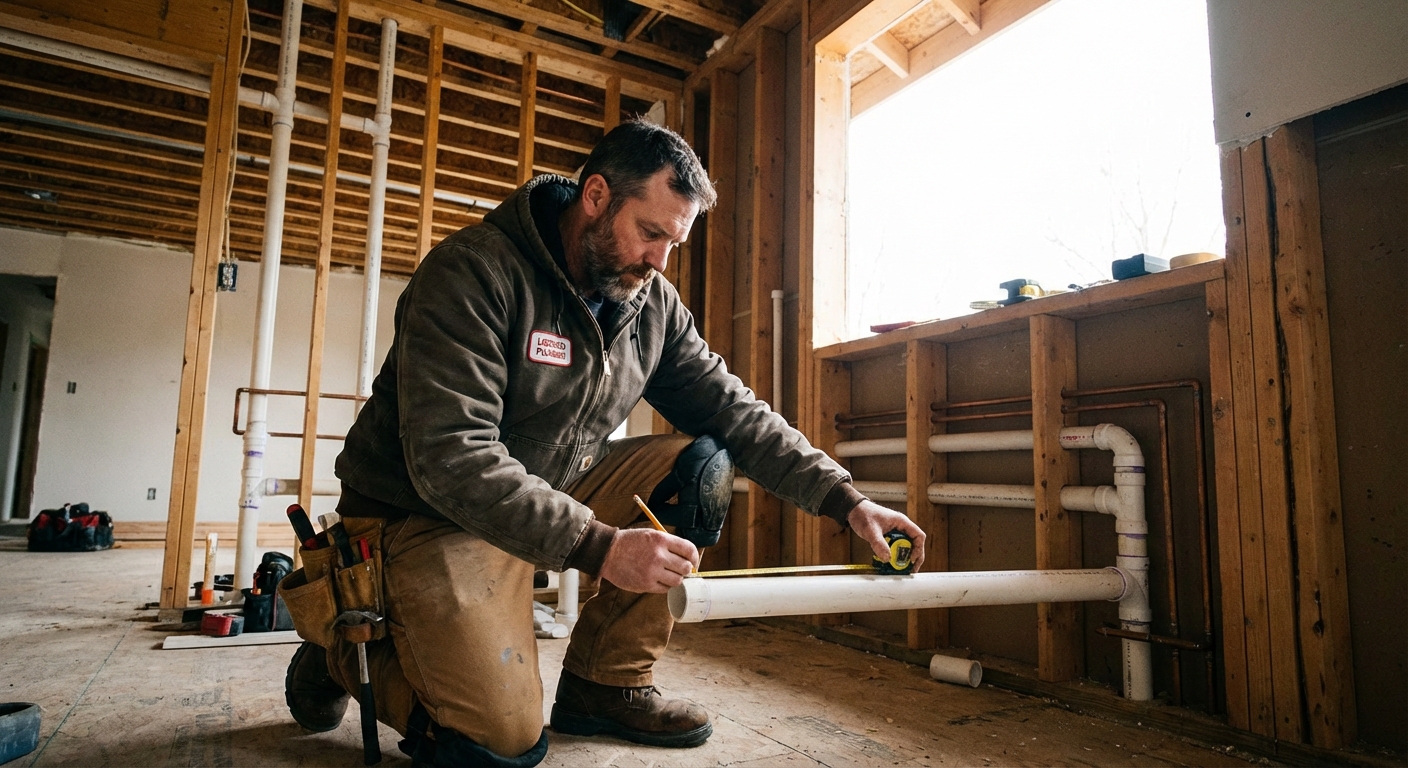
What Is Plumbing Rough-In?
Rough-in plumbing is the foundational phase of any plumbing system. It's the installation of all the pipes, drains, vents, and water supply lines that will eventually be hidden behind your walls, floors, and ceilings. Think of it as building the skeleton of your home's water system before the skin goes on. No fixtures are connected at this stage; instead, pipes are run to their final destinations and capped off, ready for finish plumbing once construction wraps up.
This phase happens right after the framing is complete but before drywall, insulation, or flooring is installed. That timing is deliberate. Open walls give plumbers free access to drill through studs, lay drain lines with proper slope, and run supply pipes without tearing anything apart later.
The 5 Stages of the Rough-In Plumbing Process
The rough-in process follows a logical sequence that ensures every pipe is in the right place, at the right angle, and passes inspection before anything gets sealed up.
1. Planning and Layout The plumber reviews the architectural plans, maps out fixture locations, determines pipe sizes, and selects materials (PEX, PVC, or copper). Centerlines for toilets, sinks, and showers are marked on the subfloor.
2. Underground and Slab Work For slab foundations, drain lines must be trenched and laid before the concrete is poured. This is one of the most critical steps because errors here require jackhammering the slab to fix.
3. Supply and Drain Line Installation Water supply lines (hot and cold) and drain-waste-vent (DWV) pipes are run through the framing. Drain lines must maintain a slope of ¼ inch per foot to allow wastewater to flow freely.
4. Vent Stack Installation Vent pipes run vertically through the home and out through the roof. They prevent sewer gases from entering the living space and allow air into the drainage system to keep water flowing smoothly. Learn more about proper vent stack installation and sizing before you start.
5. Pressure Testing Before any walls close, the entire system is pressure-tested. DWV systems are typically water-tested with a 10-foot head for 15 minutes, or air-tested at 5 psi for 15 minutes. Under the 2024 IPC, inspectors in adopting jurisdictions can now accept a vacuum test that holds negative 5 psi (or negative 10 inches of mercury) for 15 minutes as an alternative.
If you're building from scratch, be sure to read our guide on new construction plumbing for a full breakdown of all plumbing phases from underground work through final fixtures.

Find Trusted & Licensed Plumbers in Ohio
Get matched with companies for your specific needs
Rough-In Plumbing Costs in 2026
Rough-in plumbing is one of the larger line items in any new build or remodel. Costs vary based on home size, number of fixtures, pipe materials, and whether you're dealing with an open layout or a finished space that needs to be opened up.
Cost Per Square Foot
For 2026 new construction, industry estimating guides put the range at $4 to $10 per square foot, with roughly $6 per square foot as the mid-range planning number for most standard two- to three-bathroom homes. A typical 2,000 square foot house lands between $8,000 and $20,000 all-in, with most standard builds falling in the $11,000 to $16,000 range.
| Home Size | 2026 Rough-In Cost Range |
|---|---|
| 1,000 sq ft | $4,000 – $8,000 |
| 1,500 sq ft | $6,000 – $12,000 |
| 2,000 sq ft | $8,000 – $16,000 |
| 2,500+ sq ft | $10,000 – $20,000+ |
Multi-story homes, more bathrooms, or copper piping push costs toward the higher end.
Cost Per Fixture
| Fixture | 2026 Rough-In Cost |
|---|---|
| Sink | $350 – $500 |
| Toilet (basic) | $350 – $600 |
| Shower | $1,500 – $3,500 |
| Bathtub | $500 – $2,750 |
| Dishwasher hookup | $400 – $650 |
| Clothes washer hookup | $300 – $1,500 |
| Water heater connections | $400 – $1,800 |
Pipe Material Costs
Material choice has a huge impact on the final bill. Here are the 2026 installed price ranges most contractors are quoting:
| Material | Installed Cost (per linear foot) | Best Use |
|---|---|---|
| PEX | $1.50 – $4 | Hot/cold supply (fastest install) |
| CPVC | $1.50 – $3.25 | Hot/cold supply where permitted |
| Copper (Type L) | $4 – $12 | Supply lines, exposed runs |
| PVC | Cheapest per foot | Drain-waste-vent only |
For a full 2,000 sq ft home, a PEX supply system typically runs $4,000 to $7,000 installed, while copper often runs $8,000 to $12,000 or more. PEX installs 40 to 60% faster than copper, which is a big reason it now dominates new construction.
For remodels and home additions, a single bathroom rough-in typically runs $3,000 to $6,500, with the wider Angi range hitting up to $20,000 when drain lines need to be relocated or slab work is involved. Learn more about plumbing for home additions to understand what factors drive prices up.
Bathroom vs. Kitchen Rough-In: Key Differences
While both spaces involve supply lines, drain pipes, and vent connections, bathroom and kitchen rough-ins have distinct requirements driven by fixture types, clearances, and usage patterns.
Bathroom Rough-In Dimensions
Bathrooms follow stricter standardized measurements since fixtures like toilets and showers require specific clearances for both function and code compliance. For a deeper look, see our guide on bathroom plumbing layout planning.
| Fixture | Standard Rough-In Dimension |
|---|---|
| Toilet drain (center from finished back wall) | 12 inches (12.5" from studs) |
| Toilet supply height | 7 to 8.25 inches above floor |
| Toilet supply offset | 6 inches to left of drain center |
| Toilet side clearance (min) | 15 inches from centerline |
| Toilet front clearance (IPC) | 21 inches minimum |
| Toilet front clearance (UPC) | 24 inches minimum |
| Bathroom sink drain height | 18 to 20 inches above floor |
| Shower head supply height | 72 to 80 inches above floor |
| Tub faucet height | 20 to 22 inches above floor |
| ADA sink rim height | 34 inches |
Older homes may use a 10-inch or 14-inch toilet rough-in, so always verify before purchasing a toilet. Explore more on plumbing fixture height standards to nail every dimension.
Kitchen Rough-In Layout
Kitchen rough-ins are less about rigid heights and more about aligning supply and drain locations with your cabinet layout. Key elements include:
- Kitchen sink: Larger drain (1.5 to 2 inches), dual hot/cold supply lines, and space for a garbage disposal connection
- Dishwasher: Supply line and drain connection stubbed out under the sink cabinet
- Refrigerator/ice maker: Dedicated ¼-inch cold water line roughed in at approximately 42 inches above the floor
For a deeper dive into remodel-specific plumbing decisions, see our kitchen remodel plumbing guide.
Common Mistakes to Avoid
Inspectors see the same rough-in errors again and again. Being aware of these upfront can save your project from a failed inspection.
Rough-In Inspection & Why Professionals Matter
What Does the Rough-In Inspection Cover?
Before any walls are closed, a licensed building inspector must sign off on the rough-in plumbing. This inspection is required in virtually every jurisdiction in the U.S. and typically covers:
- DWV System: Correct ¼-inch-per-foot slope on horizontal drains, proper trap installation (P-traps at all fixtures), no prohibited S-traps, and cleanouts at required locations (base of stacks, changes in direction, and every 100 feet of horizontal drain)
- Supply Lines: Hot and cold lines properly supported and sized for the fixture units they serve
- Vent System: Vents tied in above the trap weir and centerline of the drain, proper sizing per fixture units, and vent stacks extended above the roofline
- Pressure Tests: DWV water-tested at 10-foot head for 15 minutes, air-tested at 5 psi for 15 minutes, or vacuum-tested at negative 5 psi under the 2024 IPC. Supply lines held under pressure with no drop for at least 15 minutes
- Pipe Support: Plastic pipes supported at minimum every 4 feet, copper roughly every 6 feet
- Protection Plates: Steel nail plates installed on any stud or plate where a pipe passes close to the face, protecting against drywall screws
- Slab and Underground Work: No pipes embedded directly in concrete without protection; pipe trenches offset at least 45 degrees from footing bearing lines under UPC
2026 Code Updates to Watch For
Several updates in the 2024 IPC and 2024 UPC (now being adopted by states through 2026) are showing up on inspection checklists:
- Vacuum test option for DWV systems under IPC Section 312.4
- Expansion tanks now effectively mandatory for water heater replacements on closed water systems in most jurisdictions
- Mixing valves becoming required on water heaters in a growing number of areas
- Georgia's 2026 IPC amendment packet updates water heating unit requirements as of January 1, 2026
- EPA Lead and Copper Rule Improvements may trigger service line inspections during remodels
For a broader view of the rules inspectors are enforcing, see our guide on common plumbing code violations.
Rough-In vs. Finish Plumbing
| Aspect | Rough-In Plumbing | Finish Plumbing |
|---|---|---|
| Timing | After framing, before drywall | After walls, floors, and tile are done |
| Visibility | All pipes exposed, ends capped | Fixtures fully visible and operational |
| Primary Focus | Code compliance, drainage slope, venting | Precise connections, leak testing, aesthetics |
| Key Tasks | Install DWV, supply lines, vent stacks | Connect toilets, sinks, faucets, showers |
| Inspection | Required before enclosing walls | Final sign-off before occupancy |
| Duration (2,000 sq ft) | 2 to 5 days | 1 to 3 days |
Why Professional Installation Matters
Rough-in plumbing is not the place to cut corners or test DIY skills. Unlike finish plumbing, where a leaky faucet is visible and easy to fix, rough-in errors get buried inside walls and floors. The consequences of a bad rough-in job can include:
- Structural water damage from concealed leaks inside walls
- Sewer gas infiltration from improperly vented drain lines
- Failed inspections that delay your entire project and trigger costly rework
- Non-compliant pipe materials that insurance companies or future buyers flag during home sales
Licensed plumbers understand current IPC and UPC code requirements, coordinate with framing and HVAC trades to avoid conflicts, and carry the liability insurance necessary if something goes wrong. If you'd like a look at how the trades work together, see our guide on plumbing and HVAC coordination. Before hiring, you may also want to review the plumbing permits process to make sure your project is properly documented.
Frequently Asked Questions
What is plumbing rough-in, and what does it include?
Rough-in plumbing is the installation of all supply lines, drain-waste-vent (DWV) pipes, and vent stacks before walls, floors, and ceilings are finished. It does not include installing fixtures like toilets, sinks, or faucets. Those come during finish plumbing. The rough-in phase establishes all the connections those fixtures will eventually attach to, and every pipe end is capped until the finish phase begins.
How much does rough-in plumbing cost for a new house in 2026?
For new construction, rough-in plumbing typically costs $4 to $10 per square foot, or roughly $8,000 to $16,000 for a standard 2,000 square foot home with two to three bathrooms. A useful mid-range planning number is $6 per square foot. Costs vary based on pipe material (PEX is cheaper than copper), home size, number of fixtures, and regional labor rates. Remodels cost more due to demolition and possible slab work.
What happens during a rough-in plumbing inspection?
An inspector verifies that all hidden pipes are properly installed, correctly sloped, and code-compliant before walls are closed. This includes checking ¼-inch-per-foot drain slopes, P-trap installations, vent pipe placement, protection plates, pipe support intervals, and pressure test results. Failing this inspection means corrections must be made and re-inspected before construction can continue.
What is the standard toilet rough-in distance?
The most common toilet rough-in distance is 12 inches from the finished wall to the center of the drain flange. When measured from stud walls (before drywall), plan for 12.5 inches to account for ½-inch drywall. Some older homes use a 10-inch or 14-inch rough-in, so always verify the rough-in dimension before purchasing a toilet to ensure it will fit properly.
Can I do my own rough-in plumbing to save money?
While some states allow homeowners to plumb their own primary residence, rough-in plumbing is highly technical work that must pass a code inspection. Common DIY errors include incorrect drain slope, using sanitary tees on horizontal-to-horizontal drains (an automatic fail), missing vents, and skipping protection plates. In most cases, the cost of professional rough-in plumbing is well worth the investment to avoid failed inspections, structural damage, or health hazards from sewer gas exposure.