
Where Is the Main Water Shut Off Valve?
The main water shut off valve is always located along the path of your incoming water supply line, but exactly where that is depends on your home's foundation type, climate, and age. Knowing your home's layout is the first step to finding it fast when you need it most.
Common Locations by Home Type
| Foundation Type | Most Likely Location |
|---|---|
| Basement | Front foundation wall, a few feet from where the pipe enters |
| Crawl Space | Along the water line entry point under the home |
| Slab Foundation | Utility/laundry room, near water heater, or under the kitchen sink |
| Garage | Where the main line enters the wall or ceiling |
| Exterior/Meter Box | In a covered concrete box near the curb or street (requires a key tool) |
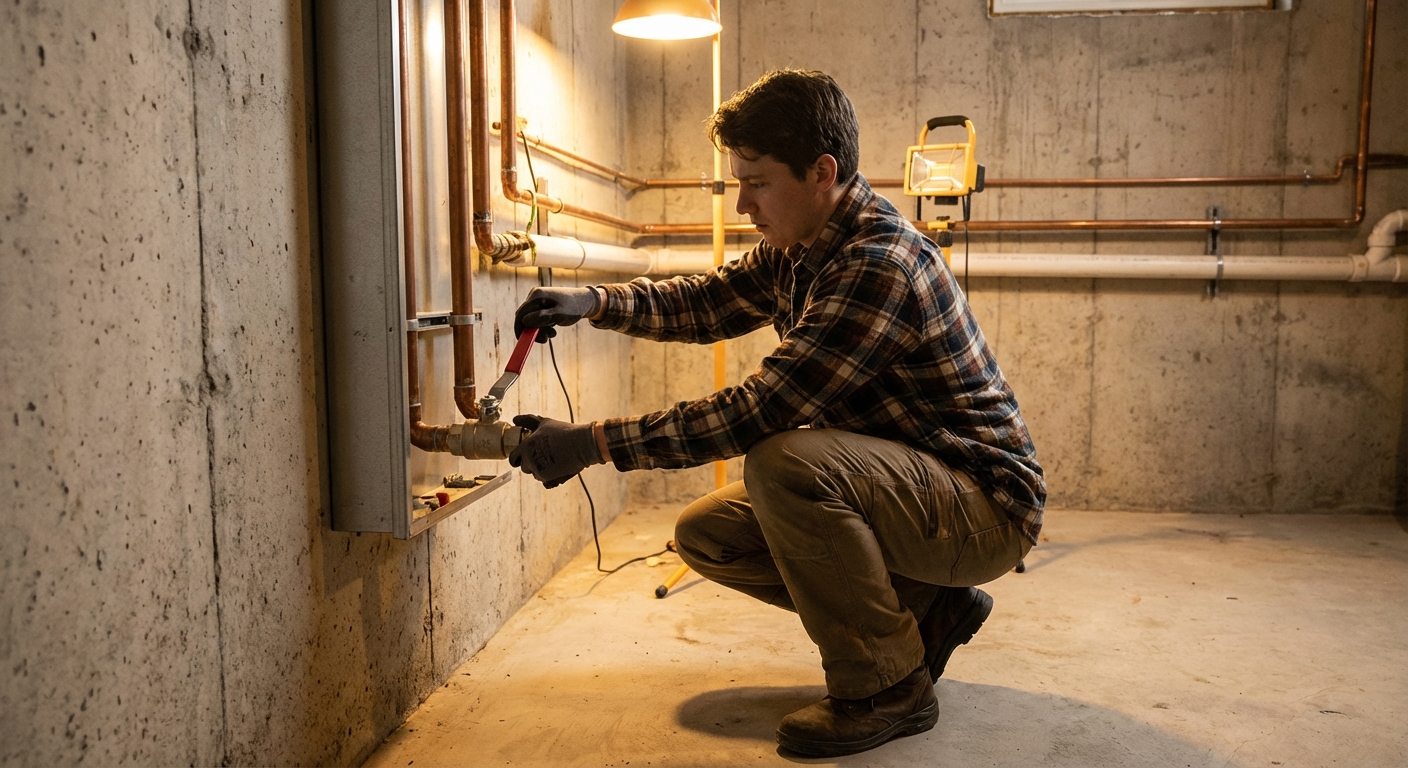
- Basement homes: The valve is typically on the front foundation wall, right where the water main enters from the street, usually within a few feet of where the pipe comes through the floor or wall.
- Slab foundation homes: Look in the utility room, mechanical room, laundry room, or near the water heater. Some slab homes have it under the kitchen sink.
- Crawl space homes: It's usually accessible from the crawl space entry point. Many experts recommend adding a secondary interior valve in the garage or living space for easier access.
- Outdoor meter box: In warmer climates, your shut off may be in a concrete or plastic in-ground box near the street. This is sometimes called a curb stop valve and may require a special key to operate. Your local utility company typically controls this valve.

Find Trusted & Licensed Plumbers in Ohio
Get matched with companies for your specific needs
How to Identify & Operate Your Main Valve
Once you've found the valve, you need to know what type it is, because gate valves and ball valves are operated very differently.
Gate Valve vs. Ball Valve
How to Turn Off the Main Water Valve: Step-by-Step
- Locate the valve using the location guide above.
- Open a nearby faucet (basement sink or a first-floor tap) to relieve pressure and confirm water stops flowing.
- Turn it off:
- Gate valve: Turn the wheel-shaped handle clockwise with steady, even pressure. It takes many full rotations. Stop when it won't turn anymore, and never stop midway.
- Ball valve: Rotate the lever 90 degrees clockwise (it will go from parallel to the pipe to perpendicular to the pipe).
- Confirm shut off: Check that water flow stops completely at your open faucet.
- After repairs: Turn the valve counterclockwise to restore flow. Expect a brief burst of air from faucets, which is normal.
If you're ever dealing with a burst pipe or another plumbing emergency, shutting off the main valve is always your first priority before the plumber arrives. For pipe-specific damage, see our full burst pipe repair guide for next steps.
When to Use It & Common Problems to Watch For
When You Should Shut Off the Main Water Valve
- 🚨 Emergencies: Burst pipes, major leaks, flooding, or any situation where water can't be controlled at the fixture level.
- 🔧 Plumbing repairs: Replacing a toilet, water heater, or major fixture, especially when a localized shut off isn't available or isn't working. See our guide on water heater leaks for examples.
- ✈️ Vacations: Turn it off if you're leaving for more than 2-3 days. Even a slow 1-gallon-per-hour leak can waste 168+ gallons per week and cause serious water damage while you're away. Learn more in our vacation home plumbing guide.
- 🥶 Winter weather: Shut it off and drain your pipes if the home will be unoccupied in freezing temperatures to prevent burst pipes. Our winter plumbing tips walk through the full winterization process.
Common Main Water Valve Problems
1. Valve Is Stuck or Seized
This is one of the most common issues, especially in older homes. Infrequent use allows mineral deposits, rust, and corrosion to build up and freeze the handle in place. Fix: Apply penetrating lubricant and wait. Don't force it. If it won't move, it needs to be replaced.
2. Leaking Around the Valve Stem
A dripping valve stem is often caused by worn packing or deteriorated seals. Fix: Try gently tightening the packing nut. If that doesn't stop the leak, the valve needs professional attention.
3. Valve Won't Fully Close
Water still trickles through even when the valve is "off." This is usually caused by sediment or debris preventing a full seal, or internal wear on an aging gate valve. Fix: Cycle it open and closed several times to flush debris. If it still won't seal, replacement is needed.
4. Corrosion and Mineral Buildup
Rust, lime, and minerals accumulate over time, especially in areas with hard water. Heavily corroded valves can crack under pressure. If your valve is more than 10-15 years old and shows visible corrosion, have it inspected. Understanding your main water line condition can also help you identify whether the problem goes deeper than just the valve.
5. Frozen Valves in Winter
If water sits beyond a shut off valve in an unheated space during a cold snap, it can freeze and damage the valve or connected pipes. See our full guide on how to prevent frozen pipes for regional prevention tactics.
Replacement Costs & When to Call a Plumber
Main Water Shut Off Valve Replacement Cost (2026)
Replacing a main water shut off valve is not a typical DIY job. It often requires turning off the street-side curb valve, soldering or pressing new fittings, and permits in most municipalities.
| Scenario | Estimated Cost Range (2026) |
|---|---|
| Accessible valve (basement, utility room) | $250 – $600 |
| National average (typical replacement) | ~$425 |
| Buried or in-wall valve | $500 – $1,200 |
| Curb stop / deep excavation required | $800 – $3,000+ |
| Ball valve hardware only | $50 – $150 |
| Gate valve hardware only | $40 – $120 |
| Labor (0.5-2 hours at $75-$200/hr) | $100 – $400 |
| Permits and municipal fees | $50 – $500 |
| Trenching (per linear foot) | $75 – $150 |
Signs You Need a Replacement (Not Just a Repair)
- The valve is more than 15-20 years old and shows visible corrosion
- It won't fully stop water flow even when completely closed
- The handle spins freely without engaging (broken stem)
- There is a persistent leak at the valve body that can't be resolved by tightening
- You have an older gate valve and want to upgrade to a more reliable ball valve
If your shut off valve is failing and you suspect damage extends to the supply line itself, read our guide on main water line repair costs to understand what you might be facing. For true emergencies where flooding is involved, always follow the steps outlined in our plumbing emergency guide to limit damage before the plumber arrives.
Smart Automatic Shut Off Valves: Are They Worth It in 2026?
Traditional manual valves only help if you're home and awake when disaster strikes. Smart automatic shut off valves solve that problem by monitoring water flow 24/7 and closing the main line themselves when they detect a leak. Given that the average burst pipe insurance claim now exceeds $30,000, many homeowners are finding the math easy.
How They Work
Inline smart valves (like Phyn Plus 2nd Gen and Flo by Moen) install on your main supply line and use ultrasonic sensors and flow analytics to detect abnormal usage patterns, including hidden pinhole leaks that traditional sensors miss. Sensor-based kits (like Guardian Leak Prevention or the AAA Smart Water Shutoff Kit) place moisture sensors near appliances and trigger a valve to close when water is detected.
2026 Pricing
| System Type | Device Cost | Installed Cost |
|---|---|---|
| Sensor-only leak kits | $80 – $300 | $150 – $500 |
| Retrofit actuator (motorized turner) | $120 – $400 | $300 – $700 |
| Inline smart valve (Phyn, Moen Flo) | $400 – $900 | $600 – $1,500+ |
Who Should Install One?
- Homeowners who travel frequently or own vacation properties
- Homes in freeze-prone climates
- Older homes with aging plumbing (copper, galvanized, or original supply lines)
- Two-story or finished-basement homes where a leak could damage multiple levels
- Anyone whose insurer offers a premium discount for approved devices
For a broader look at prevention strategies, our preventive plumbing maintenance guide covers when smart devices pay off versus routine inspections.
Frequently Asked Questions
How do I know if my main water shut off valve is working properly?
The best way to test it is to turn it off completely, then check a faucet in your home to confirm water stops flowing. If water still trickles through after the valve is fully closed, the valve is failing and likely needs to be replaced. Plumbers now recommend testing once or twice a year on a weekday morning, especially before winter. If it feels stiff or hard to turn, have a plumber inspect it and don't wait for an emergency.
Can I replace my main water shut off valve myself?
Most plumbing professionals advise against DIY replacement of the main shut off valve unless you have advanced plumbing experience. The process typically requires shutting off the curb stop (street valve), which may need your water utility's involvement, and often involves soldering or pressing pipe fittings. Most 2026 municipal codes require permits ($50-$500) and inspections for main valve work. Mistakes can lead to flooding, code violations, or costly pipe damage, so hiring a licensed plumber is the safest approach.
What should I do if the main water valve won't turn off during an emergency?
If the indoor main valve is stuck and you have a water emergency, immediately contact your local water utility or municipality to shut off the curb stop valve at the street. Do not force a stuck valve, as this can break the stem and make the situation worse. While waiting for help, try to redirect water away from electrical panels and valuables. Once the situation is controlled, have the stuck valve replaced before the water is restored.
How long does a main water shut off valve last?
Gate valves, which are common in older homes, typically last 20-30 years but are more prone to corrosion and seizing over time. Ball valves, which are standard in modern plumbing, can last 25-40 years when properly maintained. The key to a long lifespan is exercising the valve at least once a year by opening and closing it fully. A valve that sits untouched for many years is far more likely to seize or fail when you need it most.
Is it safe to turn off the main water valve when going on vacation?
Yes, and it's strongly recommended, especially for trips longer than 2-3 days. Shutting off the main water supply before a vacation eliminates the risk of undetected leaks or burst pipes causing major water damage while you're away. Before you leave, turn off the valve, then open a faucet to drain residual pressure from the lines. When you return, restore the valve slowly and check under sinks and around appliances for any signs of dripping before assuming all is well.
Will homeowners insurance cover damage if my shut off valve fails?
Insurance typically covers sudden and accidental water damage, like an unexpected burst pipe or valve failure, but not damage from long-standing leaks the homeowner knew about and ignored. State Farm alone paid over $628 million on more than 20,000 water damage claims from 2024 through mid-2025, with the average claim above $30,000. To keep coverage intact, document valve testing annually and address known issues promptly. Installing an approved smart shut off can also qualify you for premium discounts.