
Compare Home Insurance Plans in Ohio
Find your best options in less than 2 minutes



The Link Between Trade Policy and Your Insurance Premium
Most homeowners don't think of tariffs and insurance premiums as related. But in 2026, the connection is real, direct, and showing up in renewal notices across the country. When the U.S. imposes import duties on building materials (lumber from Canada, steel and aluminum from abroad, cabinets and specialty goods from various countries), the cost to rebuild a damaged home rises. And when reconstruction costs rise, insurers raise premiums to match.
The current tariff landscape has intensified through mid-August 2026. Canadian softwood lumber still carries a combined effective duty of roughly 45% at the border, a 50% Section 232 rate on steel, aluminum, and copper articles took effect on June 8, 2026, and a new 50% Section 338 tariff on roughly $20 billion of Canadian goods (including cement, plywood, wood panels, and fiber cable) is scheduled to take effect just days from now, on August 19, 2026. Insurify data scientists project the average U.S. home insurance premium will climb another 4% in 2026 to about $3,057, following a 12% jump in 2025, with construction cost inflation (much of it tariff-driven) cited as a primary driver. The National Association of Home Builders estimates recent tariff actions add roughly $10,900 to the cost of a typical new home, and the Joint Economic Committee cites analyses putting the added cost at more than $17,000 per home over the coming years.
Understanding why this is happening, how much it's costing you, and what you can do about it is the first step to making smarter decisions about your coverage. For a broader breakdown of every force squeezing homeowners this year, see our deep dive on construction cost inflation and home insurance.

Compare Home Insurance Plans in Ohio
Find your best options in less than 2 minutes
How Replacement Cost Coverage Gets Calculated
When you buy a homeowners insurance policy, the most important number is your dwelling coverage limit (Coverage A), the maximum your insurer will pay to rebuild your home after a total loss. Critically, this is based on replacement cost, not your home's market value or what you paid for it.
Insurers use specialized valuation tools that factor in:
- Square footage and home design (custom finishes cost more to reproduce)
- Local labor rates (vary significantly by region)
- Current material costs (updated periodically using construction cost databases)
- Local building codes (post-disaster rebuilds often require code upgrades)
As tariffs push up the price of lumber, steel, roofing, and fixtures, these valuation tools reflect the higher costs, and your required coverage limit increases accordingly. Higher limits mean higher premiums, even if nothing else about your risk profile has changed.
The gap between rebuild cost and market value has widened significantly in recent years. Your home might be worth $350,000 on the real estate market but cost $475,000 to fully rebuild from scratch. Learn more about this critical difference in our guide on rebuild cost vs. home value.

Protect your home with State Farm
Average Rate:
Homeowners who bundle and save with State Farm save an average of $1,000 per year!

You're in Good Hands® with Allstate
Average Rate:
Get comprehensive home coverage with flexible policy options.

Customize your home coverage
Average Rate:
Only pay for the coverage you need with personalized home insurance.

Smart coverage for your home
Average Rate:
Protect what matters most with award-winning home insurance.
Tariff Breakdown: What's Actually Getting More Expensive
Canadian Softwood Lumber
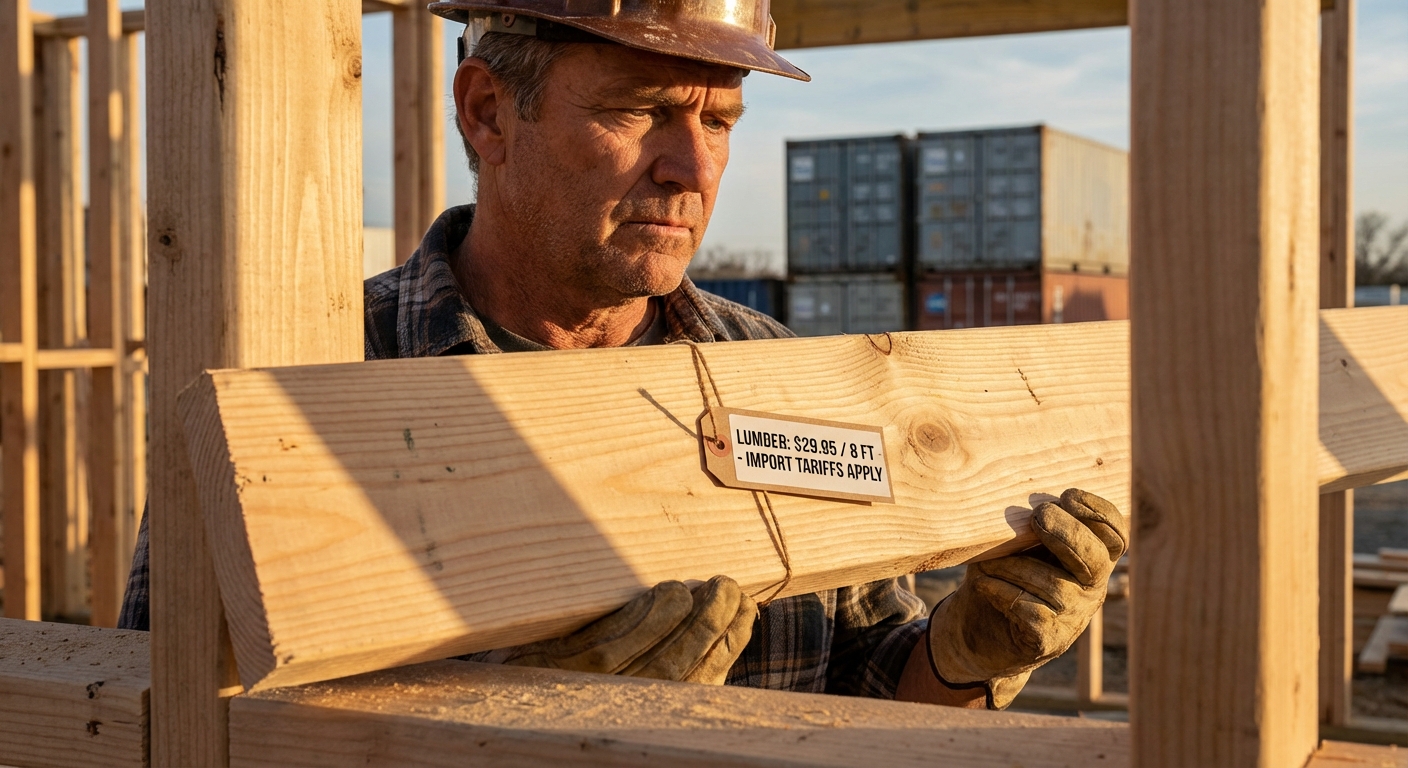
Canada is by far the largest supplier of softwood lumber into the U.S., which is why lumber tariffs have such a big influence on rebuild costs. As of mid-August 2026, the operative duty burden is built from anti-dumping (AD) duties, countervailing duties (CVD), and a separate 10% Section 232 tariff that stacks on top.
| Tariff Type | Rate ("All Others") | Status (August 2026) |
|---|---|---|
| Anti-Dumping (AD) Duties | ~20.53% | AR6 rate still in effect |
| Countervailing Duties (CVD) | ~14.63% | AR6 rate still in effect |
| Section 232 National Security | 10% | In effect since Oct 14, 2025 |
| Combined Effective Duty | ~45% | Operative at the border |
The Section 232 tariffs on softwood timber and lumber (applied under national security authority) took effect at 10% on October 14, 2025 and continue to stack on top of the existing AD and CVD duties for Canadian producers.
A potential silver lining: The U.S. Department of Commerce released preliminary results of its seventh administrative review (AR7) in April 2026 that would cut the combined AD+CVD rate for "all others" producers from 35.16% to about 24.83%, followed by post-preliminary CVD results on June 30, 2026. However, both Commerce and Global Affairs Canada have confirmed that these post-preliminary results do not change current cash deposit rates at the border. Final AR7 results were originally targeted for August 12, 2026 but are now expected in October 2026 for most companies. As of mid-August, final results remain pending, so the operative combined burden stays at roughly 45% (35.16% AD+CVD plus the 10% Section 232 tariff).
Steel, Aluminum, and Structural Materials
Section 232 tariffs on metals were expanded again by a June 2026 presidential proclamation. Under the current rules effective June 8, 2026, articles made entirely or almost entirely of steel, aluminum, or copper are subject to a 50% tariff on their full customs value, while covered derivative articles carry a 25% tariff (with a temporarily reduced 15% rate for certain residential HVAC and industrial products through December 31, 2027). Those duties feed into:
- Roofing materials (steel panels, metal flashing)
- Structural beams and connectors
- HVAC systems and ductwork
- Windows and door frames (aluminum-intensive)
- Copper wiring and plumbing (also at 50%)
These aren't minor cost additions. According to Associated General Contractors of America data, the producer price index for aluminum mill shapes surged 33% year over year in early 2026, steel mill products jumped roughly 21%, and copper and copper products climbed nearly 25%. Roofing alone can represent 15 to 20% of a total home rebuild cost, so when the raw material feeding into these products becomes more expensive, the replacement cost estimate on your policy follows.
Specialty Materials: Cabinets, Vanities, and Fixtures
Under the September 2025 Section 232 proclamation, imported kitchen cabinets and vanities carry a 25% tariff throughout 2026, and imported upholstered wooden furniture carries the same 25% duty. Both were originally scheduled to jump on January 1, 2026 (to 50% on cabinets and 30% on upholstered furniture), but a December 31, 2025 proclamation delayed those increases by one year to January 1, 2027. NAHB has confirmed the 25% duty on cabinets, vanities, and furniture remains in effect through the rest of 2026. That delay gives homeowners and builders a temporary reprieve from the steepest escalation, but the current 25% duty is still baked into today's replacement cost estimates.
A kitchen rebuild that previously factored $28,000 for cabinetry is now more likely to be priced closer to $35,000, directly inflating the overall replacement cost estimate used by your insurer.
New Section 338 Canada Tariffs (Effective August 19, 2026)
A new wrinkle arrived in mid-2026: on July 20, 2026, the White House signed three proclamations invoking Section 338 of the Tariff Act of 1930 (a Depression-era statute never before used to impose duties), adding a 50% tariff on roughly $20 billion of Canadian goods effective at 12:01 a.m. ET on August 19, 2026. The tariff applies even to goods that would normally qualify for preferential treatment under USMCA, and it stacks on top of existing duties.
The covered list includes Portland cement, gypsum and plaster boards, plywood and veneered wood panels, particle board, MDF and fiberboard, wooden mouldings and millwork, wooden doors and frames, and fiber cable. Softwood lumber and timber products already covered by the separate Section 232 action are excluded from Section 338, but the other affected materials touch virtually every residential construction project, adding another layer of rebuild cost pressure right at the start of policy renewals.
Regional Variations: Where Tariff Impacts Hit Hardest
Tariff impacts on home insurance premiums aren't uniform across the country. Several factors determine how severely a given state feels the effect:
- Proximity to major construction markets (more active building = higher tariff exposure)
- Existing high rebuild costs (luxury homes and coastal markets)
- Compound pressure from climate risk (states already seeing rate increases from weather events)
States like Florida face a perfect storm of compounding costs. Already the most expensive home insurance market in the country (with average premiums running roughly $9,449 to $10,240 per year depending on the study), Florida homeowners face tariff-driven rebuild cost inflation layered on top of hurricane risk, litigation costs, and reinsurance pressures. Our home insurance affordability crisis guide goes deeper on the hardest-hit states.
By contrast, LendingTree's 2026 State of Home Insurance pegs the national average at about $2,395 per year for a standard policy, NerdWallet reports $2,490, and The Zebra reports about $2,966. Insurify's higher $3,057 projected 2026 average reflects a fuller replacement cost profile and includes the tariff-driven construction inflation baked into carrier rate filings. For a more granular view, our home insurance rate increase guide breaks down what homeowners are paying now.
What Homeowners Should Do Right Now
Rising reconstruction costs and the tariffs driving them aren't going away quickly. But there are concrete actions you can take today to make sure you're protected without overpaying. For a broader playbook, see why home insurance rates keep rising in 2026.
1. Review Your Dwelling Coverage Limit Annually
Your replacement cost estimate should be revisited every year, especially in an environment where material costs are shifting rapidly. Ask your insurer or agent to run an updated replacement cost calculation using current 2026 construction cost data. If your limit hasn't been updated recently, it may be inadequate. This is especially important if you've done any renovations. Learn more in our comprehensive guide on dwelling coverage explained.
2. Add an Extended or Guaranteed Replacement Cost Endorsement
Standard replacement cost coverage pays up to your policy limit, but if a major disaster drives up local labor and material costs (a post-disaster "demand surge"), that limit may not be enough. Homeowners who don't add this buffer are at real risk of being underinsured after a total loss.
3. Add Inflation Guard Protection
An inflation guard endorsement automatically increases your dwelling coverage limit each year by a set percentage (typically 4%, 6%, or 8%) to keep pace with rising construction costs. In a tariff-driven cost environment, this is one of the most cost-effective protections available and typically adds only 2% to 4% to your premium.
4. Document All Renovations and Upgrades
Every improvement you make (a kitchen remodel, a new roof, an addition) increases your home's rebuild cost. If these upgrades aren't reported to your insurer, your coverage limit may be dangerously low. Keep photos, receipts, and contractor invoices, and update your policy after any significant work.
5. Shop Your Policy Annually
Even as rates rise industrywide, there can be significant variation between carriers. Comparing quotes once a year (particularly at renewal) can reveal meaningful savings. Our guide on home insurance rates for 2026 and how to save covers proven tactics to reduce what you pay without cutting essential coverage.
When Will Rates Stabilize? The 2026 to 2027 Outlook
The pace of home insurance rate increases is finally moderating. After a 12% national average increase in 2025, Insurify projects a much smaller 4% national increase in 2026 to about $3,057, and most regions are expected to see increases under 10%. But tariff escalation and climate losses continue to push several states into double digits.
Key forecasts for context:
| Source | 2026 Projection | Notes |
|---|---|---|
| Insurify (national) | +4% to ~$3,057 | Down sharply from 2025's 12% |
| Insurify (California) | +16% | Wildfire recovery driving hikes |
| Insurify (Nebraska) | +13% | Severe weather compounding tariffs |
| Insurify (New Mexico) | +11% | Regional cost pressures |
| Insurify (Georgia) | +10% | Storm losses plus construction costs |
| The Zebra (national avg.) | ~$2,966/yr | Most regions under 10% increase |
Rate stabilization hinges on several variables that remain unresolved:
- Trade negotiations: Commerce's preliminary AR7 ruling could cut Canadian AD+CVD duties from 35.16% to 24.83% if finalized in October 2026, though the 10% Section 232 tariff would still remain in place.
- New Section 338 tariffs: The 50% duties on cement, plywood, wood panels, and fiber cable from Canada taking effect August 19, 2026 will add fresh cost pressure to rebuild estimates over the next several renewal cycles.
- Domestic lumber capacity: U.S. lumber production has grown, but cannot fully replace Canadian imports in the short term.
- Catastrophe losses: The remainder of the 2026 hurricane and wildfire seasons remain wildcards that can reset any moderation in pricing.
For a broader picture of the forces driving rates higher right now, see our deep dive on why home insurance premiums keep rising and our 2026 home insurance market stabilization outlook.
Frequently Asked Questions
How exactly do tariffs cause home insurance rates to go up?
Tariffs on imported building materials (lumber, steel, aluminum, copper, and specialty goods) raise the cost of construction. Insurers base your dwelling coverage limit on what it would cost to rebuild your home using current material and labor prices. When those costs go up due to tariffs, insurers must increase coverage limits and premiums proportionally to remain solvent in the event of a major claim. The connection is direct: higher rebuild cost equals higher required coverage equals higher premium.
How much have tariffs added to the average home insurance premium in 2026?
Insurify projects the average U.S. home insurance premium will rise about 4% in 2026 to roughly $3,057, following a 12% jump in 2025, with construction cost inflation (much of it tariff-driven) cited as a primary driver alongside climate losses and reinsurance. The NAHB estimates recent tariffs add about $10,900 to the cost of a typical new home, and the Joint Economic Committee cites analyses reaching $17,000+ per home over the coming years, all of which flow into replacement cost estimates. Homeowners in high-cost states like Florida (averaging $9,449 to $10,240 per year) feel far larger dollar impacts than low-cost states like Vermont or Hawaii.
Is my home currently underinsured because of tariff-driven cost increases?
It's possible, especially if your policy hasn't been updated recently. If your insurer's replacement cost estimate was calculated before the major tariff escalations of late 2025, the June 2026 Section 232 metals update, or the August 19, 2026 Section 338 rollout, it may not reflect current lumber, roofing, or cabinet prices. Review your dwelling limit with your agent, request an updated replacement cost calculation, and consider adding an extended replacement cost endorsement as a buffer.
Are tariffs the biggest driver of home insurance increases in 2026?
Tariffs are a significant and growing factor, but they're not the only driver. Climate-related disasters, reinsurance cost increases, and regional litigation pressures also play major roles. Home insurance premiums rose a cumulative 46.8% from 2020 to 2025, forcing insurers to raise rates well before the current tariff regime. Tariffs are adding a layer of cost pressure on top of those trends. For the full picture, see our climate change and home insurance guide.
Will home insurance rates come down if tariffs are removed or reduced?
Potentially yes, but not immediately. Insurers price in forward-looking risk, and construction cost databases take time to update when material prices fall. If Commerce finalizes the preliminary AR7 ruling in October 2026, combined AD+CVD duties on Canadian lumber could drop by roughly 10 percentage points, though the 10% Section 232 tariff and the new 50% Section 338 duties on other Canadian goods would still remain in place. Other drivers of rate increases (climate risk, reinsurance costs, demand surges after disasters) would continue to exert upward pressure even in a lower-tariff scenario.