
Compare Home Insurance Plans in Ohio
Find your best options in less than 2 minutes



What Is Scheduled Personal Property Coverage?
Scheduled personal property coverage is an optional endorsement you add to your homeowners or renters insurance policy that provides individualized, enhanced protection for specific high-value items. Rather than lumping your belongings into a single broad coverage bucket, a scheduled endorsement lists each qualifying item by name, description, and agreed-upon value, so you know exactly what you'll receive if something goes wrong.
Standard personal property coverage (Coverage C) automatically covers most of your belongings up to your policy's overall limit, typically 50% to 70% of your dwelling coverage. The problem? It also imposes sub-limits on high-value categories. Under the current ISO HO-3 form, jewelry, watches, furs, and precious stones are capped at just $1,500 total for theft (some carriers offer up to $2,500), firearms at $2,500, silverware and goldware at $2,500, and money, coins, and bullion at just $200. If you own a $7,000 engagement ring and it's stolen, standard coverage typically pays $1,500 to $2,500 at most, leaving you with a $4,500 to $5,500 out-of-pocket loss.
Scheduling that ring closes the gap entirely. Learn more about how home insurance sublimits work and why they exist.

Compare Home Insurance Plans in Ohio
Find your best options in less than 2 minutes
What Items Should Be Scheduled?
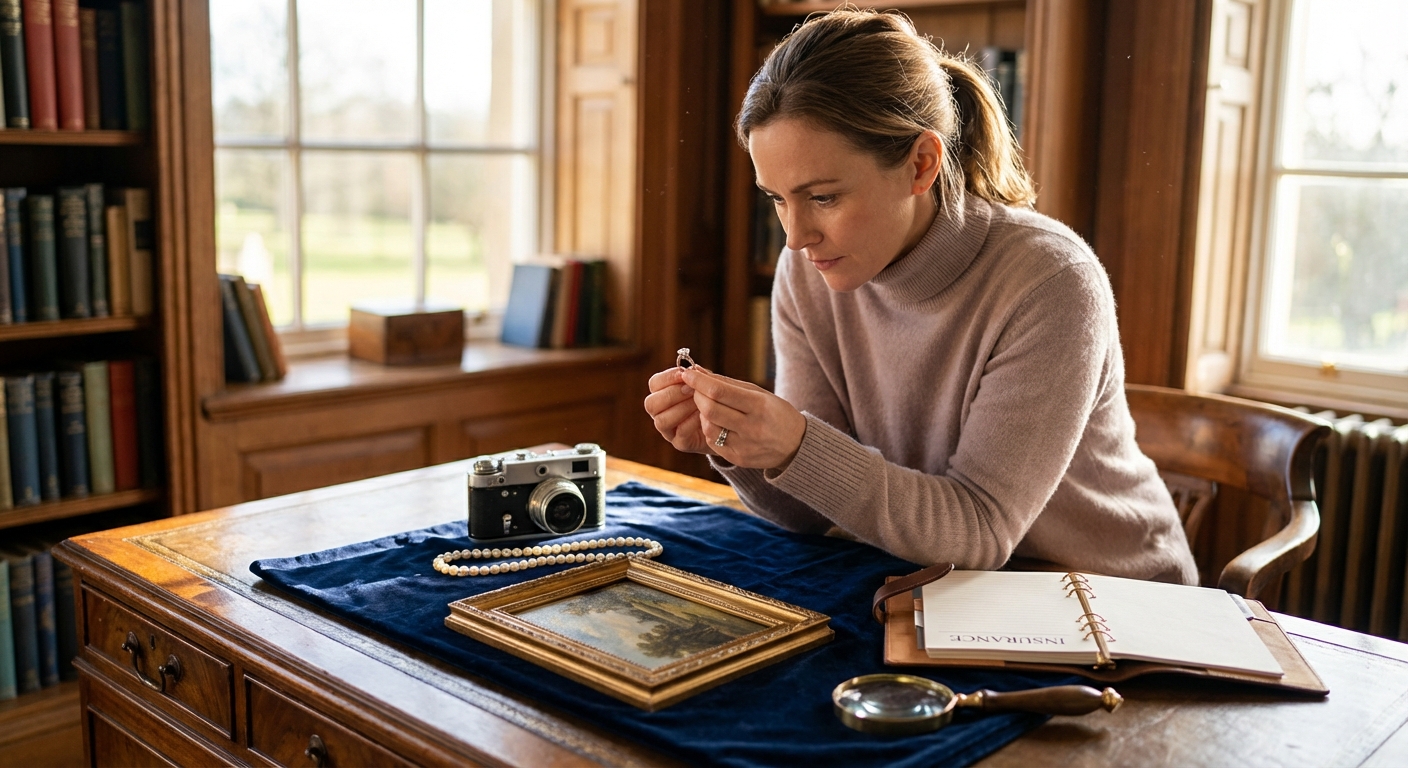
Not everything in your home needs to be individually listed. Everyday items like furniture, clothing, and standard electronics are generally well-covered under a base policy. The items below, however, routinely exceed standard sub-limits and are the most common candidates for scheduling in 2026:
| Item Category | Typical 2026 Sub-Limit | Why Scheduling Matters |
|---|---|---|
| Jewelry (rings, watches, furs) | $1,500 total (theft-only under ISO HO-3) | 2026 average engagement ring is $5,200 to $6,842; state averages top $10,000 in WA |
| Fine Art & Paintings | No uniform sub-limit; scheduling expected | Original works can be worth tens of thousands |
| Musical Instruments | $1,000 to $2,500 | Vintage guitars, grand pianos, and professional gear |
| Cameras & Photography Equipment | $1,000 to $2,000 | Pro-grade camera bodies and lens kits are costly |
| Collectibles (coins, stamps, cards) | $1,000 to $2,500 | Rare collections can be worth far more |
| Furs | Included in $1,500 jewelry sub-limit | Designer furs frequently exceed coverage caps |
| Firearms | $2,500 total for theft | Custom or collector firearms easily surpass this |
| Cash & Coins | $200 total | Currency and rare-coin collections almost never covered |
| Silverware & Goldware | $2,500 total for theft | Family sets and collections routinely exceed the cap |
Note that jewelry sub-limits apply as an aggregate per claim, not per item. A $1,500 jewelry theft cap means your entire jewelry collection (rings, watches, necklaces, and furs combined) shares that one bucket, no matter how large your overall Coverage C limit is.

Protect your home with State Farm
Average Rate:
Homeowners who bundle and save with State Farm save an average of $1,000 per year!

You're in Good Hands® with Allstate
Average Rate:
Get comprehensive home coverage with flexible policy options.

Customize your home coverage
Average Rate:
Only pay for the coverage you need with personalized home insurance.

Smart coverage for your home
Average Rate:
Protect what matters most with award-winning home insurance.
How Scheduled Personal Property Coverage Works
The Key Benefits Over Standard Coverage
A scheduled personal property endorsement doesn't just raise your dollar limits, it fundamentally changes how your items are protected. Under ISO's homeowners program, the current endorsement is HO 04 61 (Scheduled Personal Property Coverage), with ISO's 2022 filing consolidating scheduling by withdrawing the old HO 04 62 form (all information can now be scheduled on HO 04 61). Here's a side-by-side comparison:
Higher Limits at Replacement Cost
Each item is covered at its individually appraised or agreed-upon value, typically on a replacement cost basis with no depreciation applied. A $12,000 violin is covered for $12,000, period. No sub-limits apply. Note that the ISO HO 04 61 form pays repair or replacement cost up to the scheduled limit, while its sister form HO 04 60 pays on an agreed-value basis for total losses. Ask your agent which form your carrier uses.
Broader Perils (Open Perils)
Standard policies only cover named perils. Scheduled items are typically covered under open perils (also called all-risk), meaning any cause of loss is covered unless specifically excluded. Under HO 04 61, this typically includes accidental drops, breakage, and mysterious disappearance (like losing a ring while traveling) with no proof of theft required. Coverage for mysterious disappearance is not universal. Most major carriers include it, but a handful of insurers still exclude unexplained loss, so always confirm the endorsement wording with your carrier.
Little to No Deductible
One of the most compelling benefits: most insurers offer a $0 deductible on scheduled personal property claims. With a standard policy, you'd subtract your $500 to $2,500 deductible from every claim. Not so with scheduled items.
Full Off-Premises Protection
Whether your camera is stolen from your car or your engagement ring slips off your finger at a hotel, scheduled coverage follows your item anywhere in the world at full value. To see how off-premises coverage works on a base policy, read our personal property coverage guide where the gaps become clear.
How Much Does Scheduled Personal Property Cost in 2026?
The cost of scheduling personal property remains surprisingly affordable in 2026. Most insurers charge approximately 1% to 2% of the item's insured value per year for jewelry, or roughly $10 to $20 annually for every $1,000 of coverage. Fine art is typically cheaper, often running just 0.2% to 0.5% of value per year in most carrier programs (some quote up to about 1%). Engagement rings and fine jewelry typically run 1.3% to 1.4% of value, while luxury watches often land between 1.5% and 2%. Rates can be reduced with a home safe, central-station alarm, or bank vault storage.
Real-World 2026 Cost Examples
| Item | Appraised Value | Estimated Annual Cost |
|---|---|---|
| Engagement Ring | $6,842 (2026 median) | $89 to $137/year |
| Vintage Guitar | $4,000 | $40 to $80/year |
| Camera Kit | $3,500 | $35 to $70/year |
| Fine Art Collection | $15,000 | $30 to $150/year |
| Fur Coat | $5,000 | $50 to $100/year |
Rates vary by insurer, item type, ZIP code, and storage conditions. Items with higher theft risk (like jewelry stored in urban areas) may carry a slightly higher rate than items like fine art kept at home. For broader context on policy add-ons, see our guide on home insurance endorsements.
The Appraisal Process
Before you can schedule an item, your insurer needs proof of value. Here's how the process typically works in 2026:
- Contact your insurance agent. Confirm what documentation your specific carrier requires and whether they accept receipts in lieu of formal appraisals for recently purchased items.
- Hire a qualified appraiser. Use a credentialed professional (a certified gemologist for jewelry, a fine art specialist for paintings). The Appraisal Foundation's Personal Property Appraiser Qualification Criteria set the baseline for members of Foundation Partners: 120 classroom hours of appraisal-specific education, 30 semester credit hours from an accredited college (or an associate degree in any field), and 700 hours of USPAP-compliant personal property appraisal experience, plus additional market or specialization experience. Insurers increasingly expect appraisers credentialed through ISA, ASA, or another Foundation Partner that meets these standards.
- Prepare your documentation. Gather photos, serial numbers, receipts, certificates of authenticity, and any maker marks. The more detail, the better. A well-organized home inventory makes this much easier.
- Submit the appraisal to your insurer. Your carrier reviews the report and adds the item to your policy as a scheduled endorsement.
- Update periodically. Appraisals can become outdated, especially with 2026's elevated gold and precious-stone pricing. Plan to reappraise high-value items every 3 years (or sooner if values are rising rapidly) to account for market changes.
Scheduled vs. Unscheduled Personal Property: Full Comparison
Some policies offer a middle-ground option called unscheduled (or blanket) personal property coverage, which raises the coverage limit for an entire category without itemizing each piece. Here's how all three options stack up:
| Feature | Standard Coverage | Unscheduled/Blanket | Scheduled Endorsement |
|---|---|---|---|
| Per-item limit | Sub-limit applies | Category limit raised | Full appraised value |
| Deductible | Standard deductible | Standard deductible | Often $0 |
| Perils covered | Named perils | Named perils | Open perils |
| Mysterious disappearance | Not covered | Usually not covered | Usually covered |
| Off-premises | Partial only | Partial only | Full value worldwide |
| Appraisal required | No | No | Yes |
| Best for | Everyday items | Moderate-value collections | Single high-value items |
Unscheduled coverage can be useful if you own a collection of moderately valued items in a single category (for example, 20 pieces of jewelry each worth $300 to $500). But for individual items of significant value, nothing beats a fully scheduled endorsement. For a deeper look at jewelry specifically, read our guide on jewelry coverage limits.
When Should You Add Scheduled Coverage?
You should seriously consider scheduling your personal property if any of the following apply:
- You own jewelry, a watch, or an engagement ring worth more than $1,500 (the standard aggregate cap)
- You own professional-grade camera equipment, musical instruments, or sporting gear
- You collect fine art, antiques, coins, stamps, or rare items
- You travel frequently with valuables
- You've recently received an inheritance, wedding gift, or purchased a luxury item
Renters benefit too. If you carry renters insurance, the same low sub-limits apply, and scheduling is just as important. Concerned about theft specifically? Our guide on whether home insurance covers theft breaks down how claim payouts work in the real world. And if you're worried about drops, spills, or breakage, our accidental damage coverage guide explains where standard policies fall short.
Frequently Asked Questions
What is the difference between scheduled and unscheduled personal property?
Scheduled personal property lists individual items by name and appraised value, giving each one full replacement coverage under open perils. Unscheduled (blanket) coverage raises the dollar limit for an entire category, like all your jewelry, without itemizing each piece. Scheduled coverage is more comprehensive, typically includes mysterious disappearance, usually has no deductible, and covers items off-premises at full value. Unscheduled coverage is simpler but leaves more gaps for high-value individual items.
How much does it cost to add a scheduled personal property endorsement in 2026?
Most insurers charge 1% to 2% of a jewelry item's appraised value per year, or about $10 to $20 per $1,000 of coverage. Fine art is typically cheaper, often in the 0.2% to 0.5% range. A $6,842 engagement ring (the 2026 median) might cost roughly $89 to $137 annually to schedule. Factors that affect cost include item type, value, your ZIP code, storage conditions (safe or vault discounts apply), and the insurer.
Do I need an appraisal to schedule personal property on my homeowners policy?
In most cases, yes, especially for high-value jewelry, fine art, antiques, and collectibles. Your insurer needs documented proof of value to set the coverage amount, and carriers increasingly expect appraisals from credentialed professionals who meet the Appraisal Foundation's Personal Property Criteria (120 hours of qualifying education and 700 hours of USPAP-compliant experience). For recently purchased items (typically within 1 to 2 years), many carriers will accept the original sales receipt instead. Note that appraisals more than 3 years old may need to be refreshed before your insurer will accept them.
Is there a deductible on scheduled personal property claims?
One of the key advantages of scheduled personal property coverage is that most policies offer a $0 deductible for scheduled items. This is a major benefit compared to standard homeowners coverage, which applies your policy deductible (commonly $500 to $2,500) to every claim. The no-deductible option is not universal, so confirm with your insurer when adding the endorsement.
Does scheduled personal property coverage work outside my home?
Yes, this is one of the strongest arguments for scheduling valuables. Scheduled items are covered at full appraised value anywhere in the world, whether you're traveling, at work, or on vacation. Standard homeowners coverage for personal property away from home is typically limited to just 10% of your total Coverage C limit, which is rarely enough for a high-value item. If you travel frequently with jewelry, cameras, or other valuables, scheduled coverage is especially important.