
Compare Home Insurance Plans in Ohio
Find your best options in less than 2 minutes



What Is Other Structures Coverage (Coverage B)?
Other structures coverage, formally called Coverage B, is the section of your standard homeowners insurance policy that protects detached buildings and structures on your property. While dwelling coverage (Coverage A) handles your primary home, Coverage B steps in when separate, freestanding structures are damaged or destroyed by a covered peril.
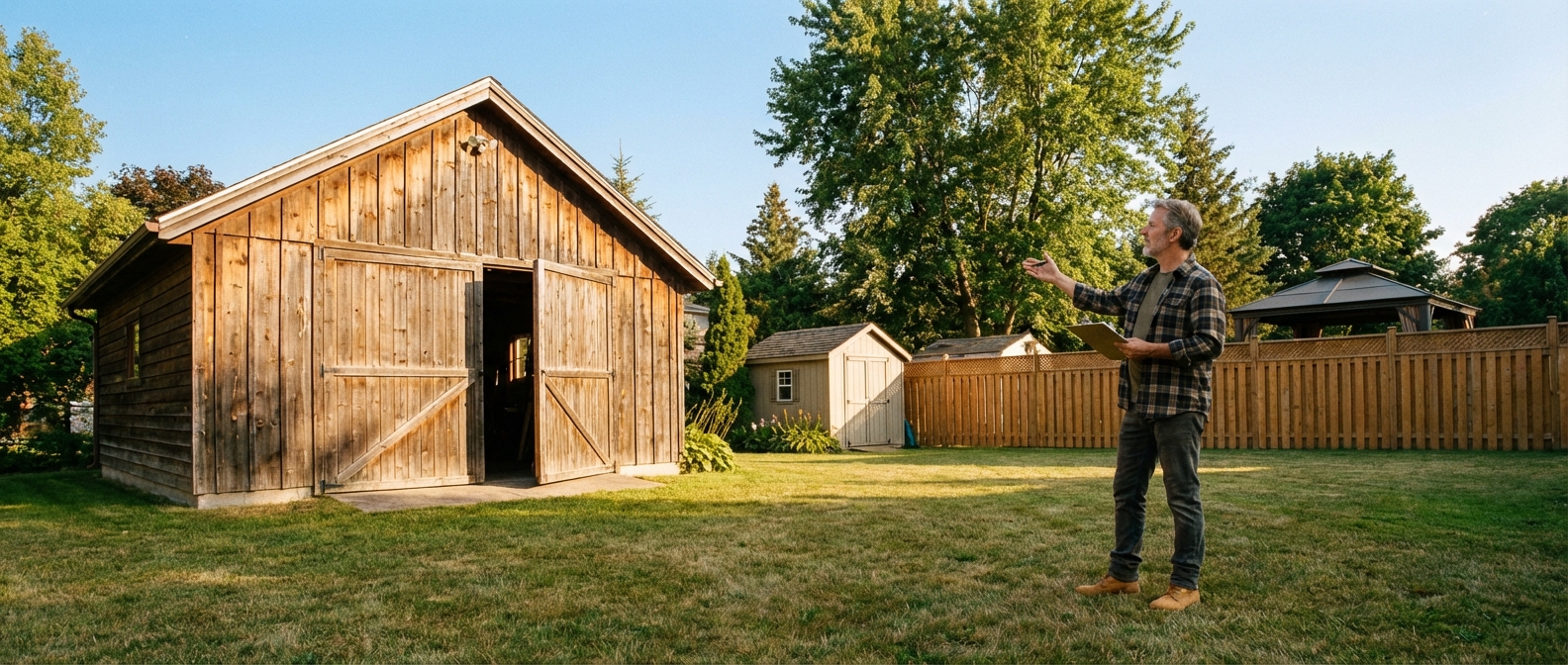
To qualify as an "other structure," a building or feature must be physically separated from the main home by clear space, or connected only by a fence, utility line, or wall. An attached garage, for example, is part of your dwelling. A detached garage sitting 20 feet away in your backyard falls under Coverage B.
Coverage B is automatically included in most standard HO-3 homeowners policies. It covers damage from the same perils as your dwelling policy (think fire, windstorms, hail, lightning, vandalism, falling objects, and vehicle damage), but it does not cover flooding or earthquakes unless you carry separate policies for those risks. For a broader look at how all the coverages fit together, see our complete guide to homeowners coverages A through F.
What Qualifies as an "Other Structure"?
Coverage B casts a fairly wide net when it comes to eligible structures. Here's a breakdown of what typically qualifies:
Commonly Covered Structures
| Structure | Notes |
|---|---|
| Detached garage | Most common Coverage B claim; shares the same deductible as dwelling |
| Garden shed / storage building | Covered for fire, wind, hail, and other named perils |
| Privacy fence / gates | Includes wooden, vinyl, and chain-link fences |
| Gazebo / pergola / carport | Covered if not attached to the main home |
| Pool house / cabana | Detached pool structures and equipment enclosures |
| Guest house / in-law suite | Covered unless rented to non-residents or used for business |
| Driveways / walkways | Retaining walls and pavement are typically included |
| In-ground swimming pool | Treated as a detached structure in most standard policies |
| Playground equipment | Swing sets and similar fixed outdoor structures |
| Outdoor kitchens | Covered if freestanding and not connected to the home |
What Coverage B Does NOT Cover
- Attached structures (decks, attached garages, covered patios built onto the home) are covered under Coverage A
- Personal property inside detached structures is protected by personal property coverage (Coverage C) instead
- Rental structures: if you rent out a guest house to someone who doesn't live in your primary home, Coverage B typically won't apply and you'll need dedicated guest house or ADU coverage
- Business use: a detached workshop, backyard office, or converted Airbnb shed may be excluded
- Flooding & earthquakes: separate policies are needed for these perils

Compare Home Insurance Plans in Ohio
Find your best options in less than 2 minutes
How Much Other Structures Coverage Do You Have?
The standard Coverage B limit is 10% of your dwelling coverage (Coverage A). This percentage is automatically built into most HO-3 policies without requiring any action from you, and the 10% default has actually held steady on ISO forms since the 1950s. The baseline hasn't changed in 2026, but many insurers now offer more flexibility, with some carriers allowing Coverage B to be adjusted upward by endorsement (commonly to 20%, 30%, or a specific dollar amount) for a modest premium bump.
Keep in mind: that limit applies in the aggregate across every detached structure combined, not per structure. If your policy gives you $30,000 in Coverage B and you have a detached garage, a shed, and a fence, they all share that same $30,000 pot.
Coverage B Limit Examples
| Dwelling Coverage (A) | Standard Other Structures Limit (B) |
|---|---|
| $200,000 | $20,000 |
| $300,000 | $30,000 |
| $400,000 | $40,000 |
| $500,000 | $50,000 |
| $700,000 | $70,000 |
| $800,000 | $80,000 |
When 10% Isn't Enough
The default 10% limit works fine for homeowners with a basic shed and a standard fence. But it can fall dangerously short if you have:
- Multiple high-value detached structures: a large detached garage, a guest house, and a pool house combined can easily exceed the 10% aggregate default
- Custom-built or specialty structures: unique construction materials, plumbing, or custom finishes drive up replacement costs significantly, especially with residential construction inflation still elevated in 2026
- Accessory dwelling units (ADUs): in-law suites and detached guest houses with full kitchens and bathrooms are expensive to rebuild. On a $400,000 home, the standard 10% only provides $40,000 in coverage, which falls far short of the $150,000 or more it typically costs to rebuild a habitable ADU
- Expensive outdoor features: premium fencing, outdoor kitchens, and high-end pergolas add up quickly
To increase Coverage B, contact your insurance agent and request a higher limit or ask for a specific scheduled endorsement for high-value structures like ADUs. Because Coverage B is priced as a small slice of your overall dwelling premium, most carriers describe the bump as inexpensive relative to the added protection. You can also add endorsements for perils like water backup for structures with plumbing.

Protect your home with State Farm
Average Rate:
Homeowners who bundle and save with State Farm save an average of $1,000 per year!

You're in Good Hands® with Allstate
Average Rate:
Get comprehensive home coverage with flexible policy options.

Customize your home coverage
Average Rate:
Only pay for the coverage you need with personalized home insurance.

Smart coverage for your home
Average Rate:
Protect what matters most with award-winning home insurance.
How Coverage B Claims Work
Wind and hail damage remains the leading driver of homeowners claims. Wind and hail together accounted for 41.39% of homeowners insurance claims in 2024, up slightly from 40.74% in 2023, and about 1 in 36 insured homes files a wind or hail claim each year. Even though wind loss cost declined roughly 50% in 2025 and hail loss cost fell 38.4% from its seven-year high, non-catastrophic wind and hail roof claims still climbed from 17% to 25% of all residential claims between 2022 and 2024. State Farm alone paid out $5.6 billion in hail claims in 2025, with $1.4 billion in Texas. Detached structures like garages, sheds, and fences remain especially vulnerable to storm damage.
Filing a Coverage B claim for a detached structure follows a process similar to any structural damage claim. Here's what to expect.
Step-by-Step Claims Process
1. Document the damage immediately Take photos and video of all visible damage to the structure before any cleanup or temporary repairs. Note the date and cause of the damage.
2. Contact your insurance company Report the claim as soon as possible. Most insurers have 24/7 claims hotlines or online portals. Be ready to describe the structure, the cause of damage, and the estimated extent of loss.
3. Meet with a claims adjuster Your insurer will send a claims adjuster to inspect the damaged structure and assess the repair or replacement cost. The adjuster verifies whether the damage was caused by a covered peril. Claim severity hit a seven-year high in 2025 with a record 42% of claims tied to catastrophic events, so expect closer scrutiny of every line item on your estimate.
4. Receive your settlement Coverage B pays for the physical structure itself (the repair or rebuilding of the detached garage, shed, fence, etc.) up to your Coverage B limit, minus your deductible. Personal belongings inside the structure are handled separately under your personal property coverage.
5. Make repairs or rebuild Use your settlement funds to restore the structure. Keep all receipts, as your insurer may require documentation.
Covered vs. Not Covered Quick Reference
Frequently Asked Questions
Does homeowners insurance cover a detached garage?
Yes, a detached garage is one of the most common structures covered under Coverage B. It's protected against covered perils like fire, windstorms, hail, vandalism, and vehicle damage. Coverage typically equals 10% of your dwelling coverage, though you can increase this limit if your garage is large or custom-built. Given that building a 2-car detached garage now runs about $28,800 to $54,000 (and premium detached builds can push $60,000 plus), many homeowners find the default limit inadequate.
Is an in-ground swimming pool covered under Coverage B?
In most standard homeowners policies, yes. An in-ground swimming pool is usually treated as a detached structure and falls under Coverage B. This means it's covered for damage from perils like falling objects, windstorms, and vandalism. However, flooding and earthquake damage are typically excluded, and some insurers classify permanent pools under Coverage A instead. Always confirm with your specific policy or agent, since pool treatment varies by carrier.
Does Coverage B cover my driveway?
Yes, driveways, walkways, and retaining walls are generally covered under Coverage B as detached structures on your property. If a storm causes a tree to fall and crack your driveway, or a vehicle damages your retaining wall, Coverage B would typically apply, subject to your deductible. Keep in mind that gradual wear, settling, or poor installation are not covered, since these are considered maintenance issues. Learn more about driveway damage coverage before filing a claim.
What's the difference between Coverage A and Coverage B?
Coverage A (dwelling coverage) protects the physical structure of your primary home, including the walls, roof, floors, and anything permanently attached like an attached garage or built-in deck. Coverage B protects separate, freestanding structures on your property that are not physically connected to the main home. The key distinction is physical separation: if a structure is connected to your home by more than just a fence or utility line, it likely falls under Coverage A. Understanding the difference between dwelling coverage and other structures coverage is essential to making sure you're fully protected.
Can I increase my other structures coverage beyond 10%?
Yes, and in many cases you should. If you have a large detached garage, a guest house, or multiple valuable outbuildings, the standard 10% aggregate limit may not be enough for a full rebuild. Contact your insurance agent to request an increased Coverage B limit or a scheduled endorsement for a specific structure. Your insurer may also offer policy endorsements that add targeted protection or extend coverage to perils like water backup for structures with plumbing.
Are ADUs and detached guest houses covered under Coverage B?
Detached ADUs and guest houses can often be covered under Coverage B, but only if they're used as incidental residential space for you or close family. If you rent the unit to non-family tenants, or use it for a business or short-term rental, most insurers will require a separate landlord or dwelling policy. Even when Coverage B does apply, the 10% default limit is usually far too low to rebuild a full ADU (which can cost $150,000 or more), so a specific endorsement or higher limit is often necessary. For fence damage claims, similar rules apply about deductibles and depreciation.