
Compare Car Insurance Rates in Ohio
See if you qualify for a lower rate in less than 2 minutes



The Golden Rule: Repair Cost vs. Total True Cost
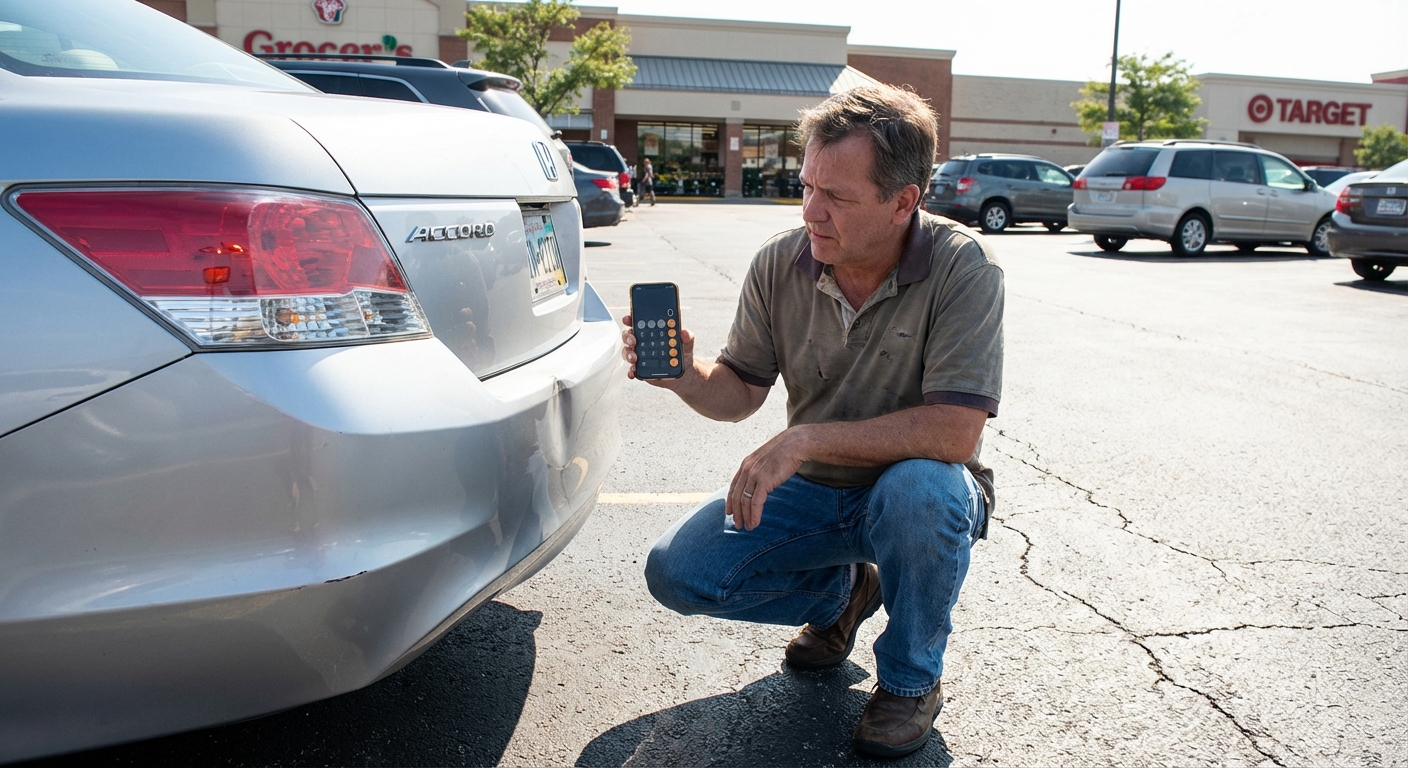
The instinct to file a claim the moment your car gets a scratch is understandable — after all, that's what insurance is for. But filing a small claim can be one of the most expensive financial mistakes a driver makes. The reason comes down to a simple rule: if what insurance actually pays you (repair cost minus your deductible) is less than what you'll pay in rate increases over the next 3–5 years, you're better off paying out of pocket.
Here's the break-even formula every driver should know:
Pay out of pocket if: (Repair Cost − Deductible) < (Annual Premium Increase × 3 Years)
Example in action:
| Variable | Amount |
|---|---|
| Repair Cost | $1,200 |
| Your Deductible | $500 |
| Insurance Payout | $700 |
| Estimated Rate Increase (25%/year on $1,400 premium) | $350/year |
| Rate Increase Over 3 Years | $1,050 |
| Net Loss if You File | −$350 |
In this scenario, filing the claim actually costs you $350 more than just paying for the repair yourself. The math is often not in your favor for small incidents.

Compare Car Insurance Rates in Ohio
See if you qualify for a lower rate in less than 2 minutes
How Rate Increases Work — And How Long They Last
Understanding how much your rates can rise after a claim is critical to making the right call. At-fault collision claims are by far the most damaging to your premium.
At-Fault vs. Comprehensive Claims
At-fault and collision claims — think fender benders, backing into a pole, or a multi-car crash where you're at fault — carry the steepest penalty. A single at-fault accident can raise your annual premium by 30% to 50% or more for up to five years. On a $1,600/year policy, that's $480–$800 in additional costs every year.
Comprehensive claims (theft, hail damage, flooding, hitting an animal) are treated very differently. Because they aren't caused by driver behavior, insurers typically raise rates by 0–5% for a single comprehensive claim — sometimes not at all. That said, repeated comprehensive claims can still cause increases over time, so don't treat them as completely free.
Learn more about how claims affect your rates and the full surcharge timeline after an accident.
Claim Frequency: The Hidden Danger
It's not just the dollar amount of a claim that matters — it's how many claims you file. Insurers look at your claim history over a 3-to-5-year lookback window, and multiple claims in that period can trigger steep consequences.
| Claims in 3–5 Years | Likely Outcome |
|---|---|
| 0–1 claims | Minimal impact; may retain discounts |
| 2 claims | Moderate rate hike (20–50%); flagged as higher risk |
| 3+ claims | Significant hike (100%+); possible non-renewal or coverage restrictions |
High-frequency, low-severity claims — like repeated minor fender benders — are actually the most alarming to underwriters. They predict future risk even more than a single large claim. Learn more about how many claims are too many before you file.

Protect your car with Farmers
Average Rate:
Find coverage options that fit your budget.

The insurance savings you expect.
Average Rate:
Enjoy personalized policies, comprehensive coverage & more.

See how much you could save today!
Average Rate:
Drivers who switch their auto insurance and save with State Farm save $764 on average!

Safe Drivers Save with Allstate®
Average Rate:
Get rewarded with savings for having a clean driving record.
When to File vs. When to Pay Out of Pocket
Not every scenario is the same. Here's a practical breakdown of when filing makes sense — and when it clearly doesn't.
Scenarios: Skip the Claim
Minor fender bender under $1,500: If your deductible is $500 and repairs are $900, your insurer would pay $400. But if your premium jumps by $350/year for three years, you'll pay an extra $1,050 — making the $400 payout a very expensive "savings." Pay out of pocket.
Major theft or total loss: This is exactly what insurance is designed for. A stolen $28,000 vehicle or a total-loss accident absolutely warrants a claim. The rate impact, while real, is far outweighed by the financial protection. Always file. You can read more about how insurance handles repair vs. total loss decisions.
The other driver is at fault: If the other driver caused the accident and has insurance, file through their liability coverage, not your own. This keeps your claims history clean. Learn how collision coverage works and when to use it.
The Comprehensive Claim Exception
Because comprehensive claims (hail, theft, weather, animal strikes) rarely trigger significant rate increases, the calculus shifts. For a $3,000 hail damage repair with a $500 deductible, filing is almost always worth it. The $2,500 insurance payout far exceeds any likely premium surcharge.
However, if you're filing for a $400 cracked windshield and your deductible is $500 — don't file. Insurance pays nothing, but the claim is still recorded. Understanding your car insurance comprehensive deductible options can help you avoid this situation entirely.
Strategies to Protect Your Claims History
Being strategic about your claims isn't just about one incident — it's about protecting your long-term insurability and premium costs.
1. Raise Your Deductible
A higher deductible means lower monthly premiums and naturally raises the threshold before filing a claim makes financial sense. Moving from a $500 to a $1,000 deductible can lower your premium by 15–40%. Explore the full breakdown of $500 vs $1,000 deductible options to find your sweet spot.
2. Build a Car Repair Emergency Fund
Setting aside $1,000–$2,000 in a dedicated fund means you'll rarely need to file for minor damage. Think of it as self-insuring the small stuff while your policy protects you from catastrophic losses.
3. Ask About Accident Forgiveness
Many insurers offer accident forgiveness programs that prevent your first at-fault accident from raising your rates. If you don't have this, ask your agent — it may be available as an add-on or built into loyalty programs.
4. Shop Your Rate After a Claim
If you've already filed and your rates increased, don't just accept the new premium. Insurers price risk differently — another carrier may view your history more favorably. The best time to shop is right before your renewal date. Understand how car insurance deductibles and premiums interact when comparing new policies.
5. Get Estimates Before You Decide
You can get repair quotes from body shops or online tools like RepairPal, Kelley Blue Book, or YourMechanic without ever contacting your insurer. Knowing the actual repair cost first gives you the information you need to run the break-even calculation and make a confident decision.
Frequently Asked Questions
Will a small car insurance claim always raise my rates?
Not always — it depends on the claim type and your insurer. At-fault collision claims almost always trigger a rate increase of 30–50% or more. Comprehensive claims (theft, hail, weather) often result in little to no rate increase for a single occurrence. Your state, insurer, and prior claims history all factor into the final surcharge amount.
What is the minimum claim amount worth filing for car insurance?
There's no universal threshold, but a practical rule is to only file if the insurance payout (repair cost minus deductible) is greater than the estimated rate increase over 3 years. For most drivers with a $500 deductible, that means repairs generally need to exceed $1,500–$2,000 before filing makes clear financial sense. Always run the break-even calculation first.
Does filing a claim affect my insurance even if it's not my fault?
In most cases, not-at-fault claims have a smaller rate impact than at-fault claims, and some states restrict insurers from raising rates for not-at-fault accidents. However, frequent not-at-fault claims can still signal elevated risk to some insurers and may result in modest increases. When the other driver is at fault, always try to file through their liability insurance to keep your own record clean.
How long does a car insurance claim stay on my record?
Most insurers look back 3 to 5 years when evaluating your claims history, though this varies by carrier and state. At-fault accident surcharges typically last the full 3–5 years before dropping off. Once a claim ages out of the lookback window, it no longer affects your premium — making your past claims less relevant over time.
Can I report an accident to my insurer without officially filing a claim?
Yes — you can notify your insurer of an incident without formally opening a claim. This is sometimes called a "courtesy report" or inquiry. However, be aware that some insurers may still log the report, which could appear on your loss history report (CLUE report) even without a formal claim. It's worth asking your agent exactly how your insurer handles reported-but-not-filed incidents before you call.