
Compare Car Insurance Rates in Ohio
See if you qualify for a lower rate in less than 2 minutes



Understanding Parking Lot Accident Liability
Determining fault in parking lot accidents differs significantly from typical roadway collisions. Unlike public roads with clear traffic laws, parking lots operate as private property where standard right-of-way rules may not apply as strictly. However, insurance companies and courts still rely on established negligence principles to assign liability.
Common Fault Scenarios in Parking Lots
Several typical situations occur repeatedly in parking lots, and each has generally accepted fault determinations. When one driver backs out of a parking space and collides with a vehicle traveling through the main lane, the backing driver is almost always at fault — they have a duty to ensure the path is clear before reversing.
Rear-end collisions follow similar rules in parking lots as they do on roads — the driver who hits the rear of another vehicle typically bears responsibility. This principle holds even at low speeds. Left turns into parking spaces also place fault on the turning driver, who must yield to oncoming traffic.
Shared Fault and Comparative Negligence
When two vehicles back out of opposing parking spaces simultaneously, both drivers typically share fault equally. Each driver has a responsibility to check for hazards before reversing. Similarly, excessive speed in a parking lot can shift some percentage of fault to an otherwise blameless driver who couldn't react in time.
Most states use comparative negligence systems to apportion liability. Under pure comparative negligence (used in about 12 states including California and New York), you can recover damages even if you're 99% at fault — though your recovery is reduced by your fault percentage. Modified comparative negligence, used by the majority of states, bars recovery if you're 50% or 51% or more at fault depending on the state. Notably, Florida switched from pure to modified comparative negligence in March 2023, meaning plaintiffs 50% or more at fault receive zero compensation. As of 2026, no additional states have changed their core comparative negligence laws. A small number of states plus Washington D.C. still use contributory negligence, which bars any recovery if you're even 1% at fault — Alabama, Maryland, North Carolina, Virginia, and D.C. all follow this rule. The stakes are high: even a 1% difference can determine whether you receive any compensation at all.
Evidence plays a crucial role in shared fault determinations. Security footage, witness statements, photos of vehicle positions, damage patterns, and skid marks all help establish each party's percentage of responsibility. Learn more about collision insurance coverage and how deductibles work when filing claims.

Compare Car Insurance Rates in Ohio
See if you qualify for a lower rate in less than 2 minutes
What to Do If You Hit a Parked Car
Hitting a parked car creates specific legal obligations that apply in all states. Failing to meet these requirements can transform a simple fender bender into serious criminal charges with lasting consequences.
Immediate Legal Requirements
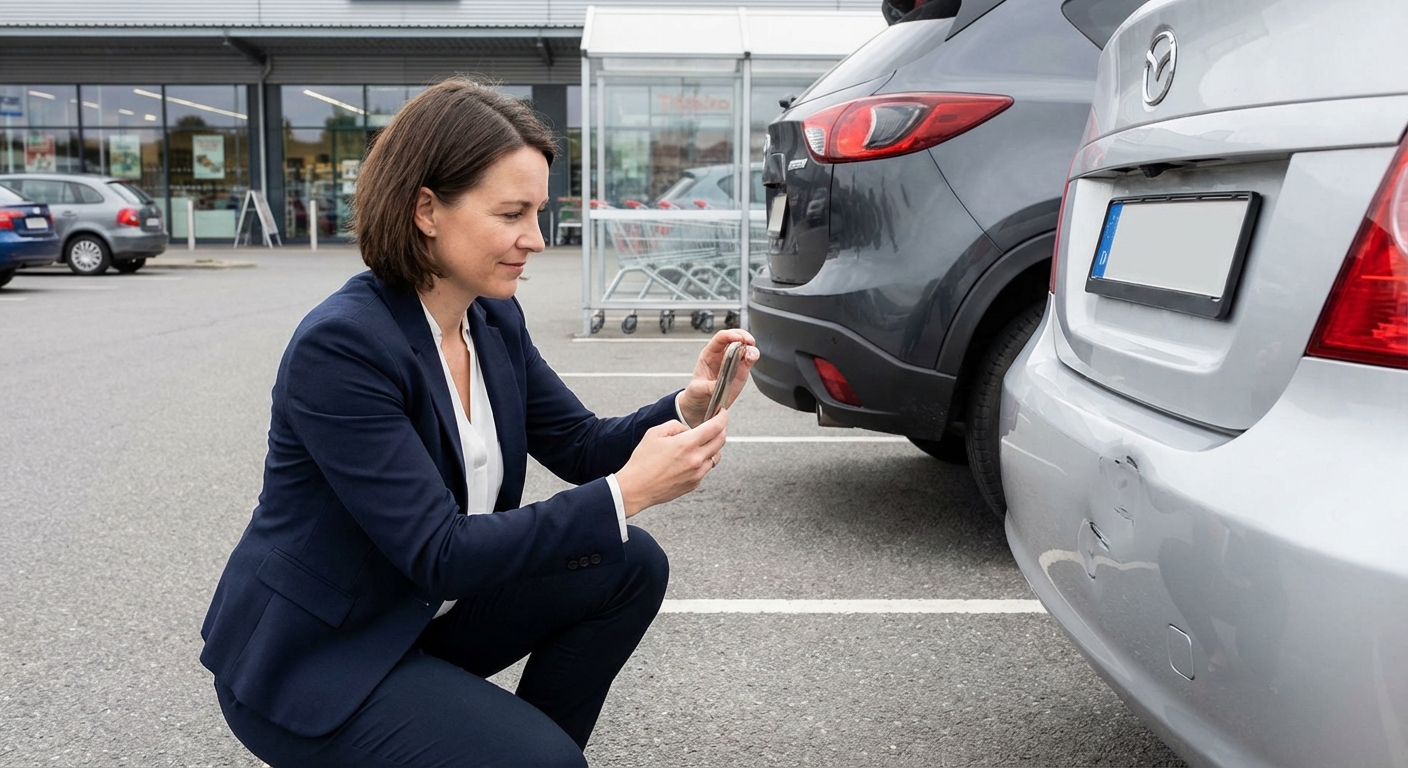
The moment you hit a parked vehicle, stop immediately. Don't drive away, even if the damage appears minor or you're running late. Wait a reasonable time — typically 15–30 minutes — for the owner to return. Look around for witnesses and begin documenting the scene with your phone camera.
If the owner doesn't appear, you must leave a conspicuous note. Place it under the windshield wiper or in another highly visible location where it won't blow away. Your note must include your full name, phone number, email or mailing address, insurance company name and policy number, and a brief description of what happened including the time.
Many states require you to file a police report, especially if damage exceeds a certain threshold — often $500 to $2,000 depending on jurisdiction. Contact local law enforcement even if you're unsure whether a report is mandatory. This creates an official record that protects you from false claims later.
Notifying Your Insurance Company
Contact your insurance company within 24 hours, regardless of fault. Most policies require prompt notification, and delays can jeopardize coverage. Your insurer needs to know about potential claims even if you plan to pay out of pocket.
When you call, provide factual information without admitting fault. Describe what happened, where, when, and any injuries or property damage. Ask about your policy's property damage liability coverage, which pays for damage you cause to others' property.
Consider whether to file through insurance or pay directly. For minor damage under $1,000, paying out of pocket might save you from a significant premium increase at renewal. Minor at-fault parking lot claims typically trigger a 15–25% premium increase, while general at-fault accidents nationally average 44–49% in increased premiums — surcharges that can last 3–5 years. Review information about how claims affect your rates and whether filing a small claim is worth it before making that decision.

Protect your car with Farmers
Average Rate:
Find coverage options that fit your budget.

The insurance savings you expect.
Average Rate:
Enjoy personalized policies, comprehensive coverage & more.

See how much you could save today!
Average Rate:
Drivers who switch their auto insurance and save with State Farm save $764 on average!

Safe Drivers Save with Allstate®
Average Rate:
Get rewarded with savings for having a clean driving record.
Filing a Parking Lot Accident Insurance Claim
The claims process for parking lot accidents follows standard procedures with some unique considerations. Proper documentation and timely action maximize your chances of a favorable settlement.
Step-by-Step Claims Process
Start by ensuring everyone's safety and checking for injuries. Move vehicles only if they create a traffic hazard — otherwise, leave them in position for documentation. Call 911 if anyone is injured or if significant property damage occurred.
Exchange information with all drivers involved. Collect their full name, phone number, email, driver's license number, license plate number, vehicle make and model, and insurance details. If witnesses are present, get their contact information. For hit-and-run situations, note the time, location, and any partial license plate information you observed.
Document everything with photos and videos. Capture multiple angles of all vehicle damage, the accident scene showing parking lot layout and signage, and any visible injuries. Request security camera footage from the property owner immediately — many systems overwrite recordings within days. Learn how hit-and-run insurance claims work when the at-fault driver flees.
Working with Insurance Adjusters
Contact your insurance company promptly with all gathered information. Most insurers offer multiple filing methods including phone calls, mobile apps, and online portals. Provide your policy number and complete documentation.
An adjuster will be assigned to inspect vehicle damage and review evidence. Cooperate fully by providing additional information requested, but don't give recorded statements without understanding your rights. The adjuster will review police reports, interview witnesses if applicable, and determine fault percentages.
Property damage-only car accident claims nationally average around $6,770 per the Insurance Information Institute's most recent data, while bodily injury claims average approximately $28,278 — and pedestrian injury claims in parking lots can reach $50,000 or higher depending on severity. Disputed liability or injury claims extend resolution timelines significantly. For a complete walkthrough, see our guide on parking lot fault and coverage.
Collision vs. Comprehensive Coverage for Parking Lot Damage
Understanding which coverage applies to different parking lot scenarios prevents confusion when filing claims and helps you choose appropriate protection levels.
When Collision Coverage Applies
Collision coverage pays for damage when your vehicle impacts another vehicle or stationary object. In parking lots, collision coverage handles situations where you back into a pole or curb, hit another car while maneuvering into a space, scrape against a concrete pillar, strike a fence or barrier, or are hit by another driver who flees the scene. For hit-and-run accidents specifically, your collision coverage steps in when the at-fault driver can't be identified.
The key characteristic is physical impact with another object. You'll pay your deductible first — the most common amount is $500, though options typically range from $250 to $2,000. Increasing your deductible from $500 to $1,000 can reduce your collision premium by roughly 10–20% annually, making it a smart move if you have solid emergency savings. See our collision coverage guide for help choosing the right deductible amount.
When Comprehensive Coverage Applies
Comprehensive coverage protects against non-collision events, often called "acts of God" or theft-related incidents. In parking lots, comprehensive coverage handles vandalism like keying or broken windows, theft of the vehicle or parts, falling objects such as tree branches or shopping carts blown by wind, damage from weather events including hail, and animal-related damage. Learn more about what comprehensive coverage includes to make sure you're properly protected.
The distinction matters because comprehensive coverage typically costs less than collision. In 2025–2026, full coverage (collision + comprehensive) averages roughly $2,124–$2,697 annually nationwide depending on the source and your driver profile, with a $500 deductible. Comprehensive alone typically runs $150–$400 annually, while collision averages $300–$900. For vehicles that are financed or leased, lenders typically require both coverages. Once your car is paid off and older, you might consider dropping these optional coverages — learn when to drop full coverage on older vehicles to avoid overpaying.
Coverage Comparison Table
| Parking Lot Scenario | Coverage Type | Who Pays Deductible |
|---|---|---|
| You back into another car | Collision (your car) / Liability (their car) | You pay collision deductible |
| Unknown driver hits your parked car | Collision | You pay your deductible |
| Someone keys your paint | Comprehensive | You pay comprehensive deductible |
| Shopping cart dents your door (wind-blown) | Comprehensive | You pay comprehensive deductible |
| You hit a parking lot light pole | Collision | You pay your deductible |
| Tree branch falls on your car | Comprehensive | You pay comprehensive deductible |
Understanding how collision insurance works in full detail — including when it's worth keeping — is equally important for protecting your finances.
Common Parking Lot Accidents and Prevention
Certain collision types occur repeatedly in parking lots due to limited visibility, tight spaces, and driver distraction. Over 20% of all US vehicle accidents occur in parking lots, resulting in more than 60,000 injuries and approximately 500 fatalities annually. Research shows two-thirds of drivers admit to distracted behavior — such as texting, using social media, or programming GPS — while navigating parking lots at low speeds.
Backing Collisions
Backing accidents represent the most frequent parking lot incident type. They account for roughly 40% of all parking lot crashes and occur when drivers reverse out of spaces without adequately checking blind spots. Modern backup cameras help but don't eliminate risks entirely — studies show they reduce backing crashes by about 17%. Pedestrians walking behind reversing vehicles face particular danger, with about 9% of pedestrian deaths in parking areas stemming from backup accidents.
To prevent backing collisions, turn your head and visually check all blind spots before reversing, use backup cameras as a supplement rather than a replacement for direct observation, and reverse slowly to allow time for reaction. If two cars back out simultaneously, both drivers typically share fault equally under comparative negligence rules.
Door Ding Damage
Door dings happen when adjacent parked vehicles open their doors into your car. While frustrating, these incidents rarely involve insurance unless damage is substantial. Many states consider door dings civil matters requiring the responsible party to pay for repairs directly.
If someone dings your door, document the damage immediately and request the other party's insurance information. For minor damage under $500, consider whether filing a claim justifies potential premium increases. Minor at-fault claims can trigger a 15–25% premium increase at renewal — surcharges that typically last 3–5 years. Review when NOT to file a car insurance claim before deciding whether to file.
Through-Lane Collisions
Accidents in main driving lanes occur when drivers fail to yield, speed excessively, or become distracted. One vehicle may pull out of a parking space into the path of another, or two cars may reach an unmarked intersection simultaneously.
Right-of-way generally favors vehicles already traveling in through lanes over those entering from parking spaces. Both drivers, however, have a duty to maintain reasonable speed and watch for hazards. Evidence like witness statements and parking lot layout diagrams establish fault percentages. See our guide on car insurance differences by state to understand how your state's rules may affect fault and recovery.
Pedestrian Involvement
Parking lots present unique risks to pedestrians, who may walk unpredictably between cars. Drivers bear primary responsibility to watch for pedestrians, but walkers must also exercise reasonable caution. If you strike a pedestrian, serious liability and potential injury claims arise — average pedestrian injury settlements in parking lots can reach $50,000 or more.
Your property damage liability coverage limits become critical in pedestrian accidents. Minimum state requirements often fall short of covering serious injuries. Consider carrying 100/300/100 limits ($100,000 per person, $300,000 per accident for bodily injury, $100,000 for property damage) as a baseline for adequate protection. Explore not-at-fault accident insurance options to ensure your limits are sufficient.
Should You File Small Claims for Parking Lot Damage?
Sometimes resolving parking lot damage through small claims court makes more sense than filing an insurance claim. Understanding when to pursue this option protects your rights while avoiding unnecessary premium increases.
When Small Claims Makes Sense
Consider small claims court when the at-fault driver's insurance denies your claim despite strong evidence, the other driver is uninsured or underinsured, you have clear proof of fault such as security footage or witness statements, or damages fall within your state's small claims limit. State limits as of 2025–2026 include:
- California: $12,500 for individuals
- Texas: $20,000
- New York: $10,000 in NYC; $5,000 in most city/district courts; $3,000 in town/village courts
- Florida: $8,000
- Illinois: $10,000
- Pennsylvania: $12,000 for individuals
- Ohio: $6,000
Small claims works best for clear-cut cases with documented evidence. If you took photos showing the other driver's car clearly at fault, obtained witness contact information, and have repair estimates from licensed shops, you have a strong case. Courts require proving damages by a preponderance of evidence. Learn more about the full parking lot fault and coverage process before deciding which path to take.
However, avoid small claims when liability is genuinely disputed without clear evidence, damages exceed state small claims limits, the other driver's insurance is cooperating reasonably, or you lack time for court appearances and paperwork.
Insurance vs. Small Claims Decision Matrix
| Factor | File Insurance Claim | File Small Claims |
|---|---|---|
| Damage Amount | Over $1,000–$2,000 | Under $1,000 or near deductible |
| Fault Clarity | Disputed or unclear | Clear with strong evidence |
| Other Driver | Insured and cooperative | Uninsured or denying responsibility |
| Time Available | Limited time/patience | Can attend court hearings |
| Claims History | No recent claims | Recent claim on record |
| Premium Impact | Acceptable | Want to avoid increases |
Frequently Asked Questions
Is fault always 50/50 in parking lot accidents?
No, the 50/50 fault rule is a common myth. While some parking lot accidents do result in shared liability — particularly when both vehicles back out simultaneously — many situations have clear fault. Drivers backing out who hit vehicles in through lanes bear full responsibility. Rear-end collisions place fault on the following driver. Insurance adjusters and courts examine evidence including witness statements, security footage, vehicle positions, and damage patterns to determine actual fault percentages ranging from 0% to 100%.
What happens if I leave the scene of a parking lot accident?
Leaving a parking lot accident scene without providing information constitutes hit-and-run. For property damage only, it is typically a misdemeanor with fines and potential jail time depending on the state. For accidents involving injuries, penalties are far harsher — Florida classifies injury hit-and-runs as a 2nd-degree felony with up to 15 years in prison. Virtually every state imposes driver's license suspension and mandatory points on your record, plus dramatically increased insurance premiums or policy cancellation.
Does comprehensive or collision coverage apply if someone hits my parked car?
If another driver hits your parked car and flees (hit-and-run), your collision coverage applies — not comprehensive. Collision covers impacts with other vehicles or objects regardless of whether you're driving or parked. You'll pay your collision deductible, and your insurer may pursue the at-fault driver later through subrogation if identified. If someone intentionally damages your parked car — such as keying the paint — comprehensive applies. Understanding this distinction prevents filing claims under the wrong coverage type and potentially delaying your payout.
How long do I have to file a parking lot accident claim?
Insurance policy deadlines for reporting accidents typically range from "immediately" to 30 days, though most insurers recommend notification within 24–72 hours for best results. State statutes of limitations for filing lawsuits extend much longer — usually 2–6 years for property damage claims depending on jurisdiction. Prompt reporting strengthens your claim by preserving evidence, allowing timely investigation, and demonstrating good faith. Note that Florida shortened its general negligence statute of limitations to 2 years in 2023 for causes of action accruing after that date.
Should I get a police report for a minor parking lot fender bender?
Yes, obtaining a police report is advisable even for minor parking lot accidents. Many states require reports when damage exceeds $500–$2,000 — thresholds easily met in today's repair environment, where the national average property damage claim now exceeds $6,700 per the Insurance Information Institute. Police reports create official documentation of the incident including date, time, location, parties involved, and officer observations, preventing disputes when memories fade. Some jurisdictions don't dispatch officers for property-damage-only accidents on private property, but you can still file a report at the station directly.