
Compare Car Insurance Rates in Ohio
See if you qualify for a lower rate in less than 2 minutes



How Glass Coverage Works Under Car Insurance
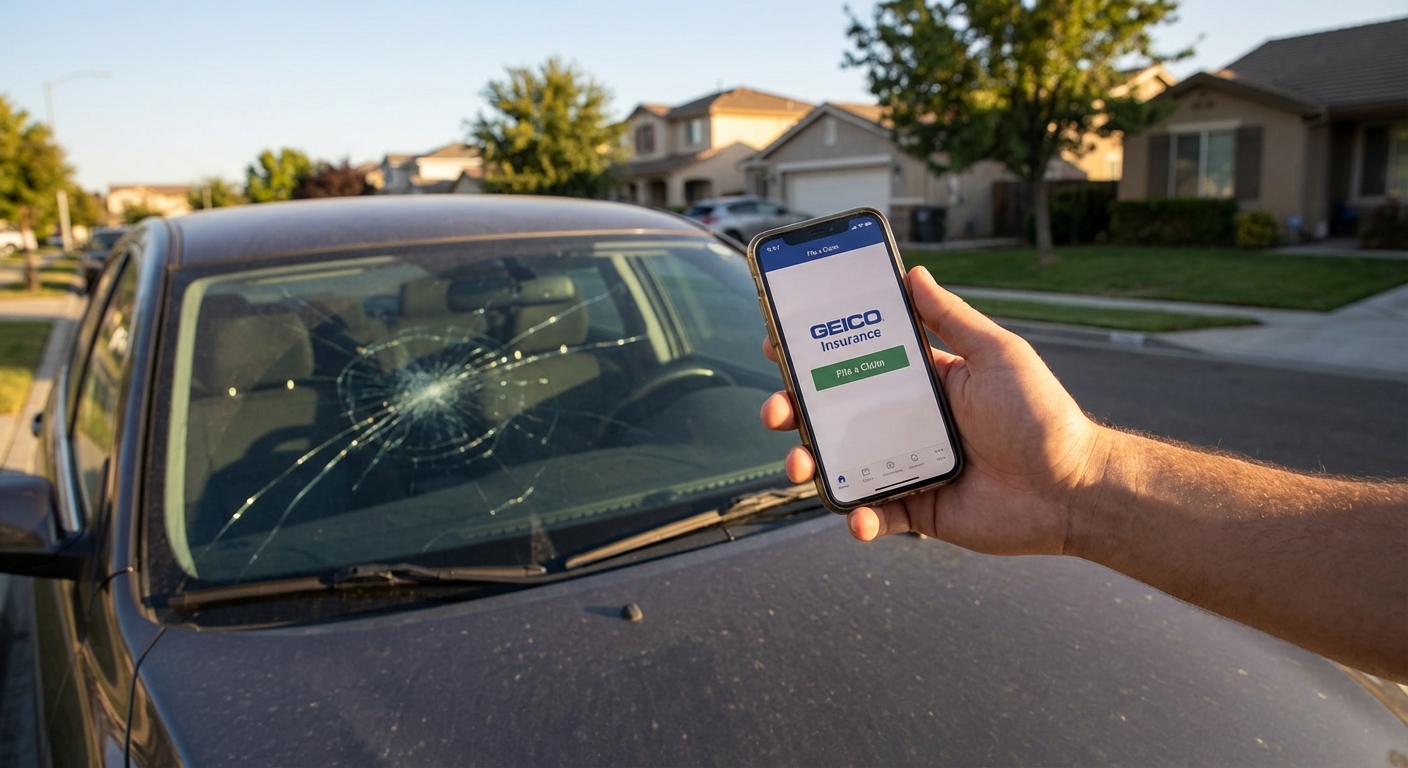
Glass damage is one of the most common car insurance claims drivers file — and one of the most misunderstood. Whether it's a rock chip on the highway or a shattered side window from a break-in, the coverage that pays for your auto glass repairs falls almost entirely under comprehensive coverage. This is the portion of your policy that handles non-collision damage, including theft, vandalism, weather events, and flying road debris.
Comprehensive coverage applies to your windshield, side windows, rear window, and sunroof. If a rock cracks your windshield during your morning commute, your comprehensive policy kicks in after you pay your deductible. If a storm shatters your sunroof, same story. The key catch? You must actually carry comprehensive coverage. If you only have liability-only insurance, glass damage to your own vehicle is entirely out of pocket. According to the Insurance Information Institute's analysis of NAIC data, approximately 80% of insured U.S. drivers carry comprehensive coverage — meaning most drivers are already protected.
What Does Comprehensive Glass Coverage Actually Cover?
Here's a breakdown of the types of auto glass damage that fall under comprehensive coverage:
| Glass Type | Covered Events | Coverage Notes |
|---|---|---|
| Windshield | Rock chips, cracks, storm debris | Repairs often have $0 deductible; replacements may require deductible |
| Side Windows | Vandalism, break-ins, debris | Treated as tempered glass; deductible typically applies |
| Rear Window | Weather damage, vandalism | Covered under comprehensive; deductible may apply |
| Sunroof/Moonroof | Hail, falling objects, storm damage | Included under comprehensive; same deductible rules |
One thing to note: if glass breaks during a collision with another vehicle, that claim falls under collision coverage, not comprehensive. The distinction matters because the two coverages often carry different deductibles. Learn more about how collision coverage differs from comprehensive and what it costs.
Repair vs. Replacement: Which Does Insurance Cover?
Not every crack calls for a full windshield swap — and your insurer knows this. Insurance companies distinguish between repairs (small chips and cracks) and full replacements (extensive damage), and the financial difference is significant.
When a repair is covered:
- The damage is a chip or crack smaller than a dollar bill
- There are fewer than 3 cracks
- The damage is not in the driver's direct line of sight
When a full replacement is required:
- Cracks exceed 6 inches in length
- There are 3 or more cracks
- Damage is in the acute area directly in front of the driver
- The structural integrity of the glass is compromised
Cost Comparison: Repair vs. Replacement (2026)
| Service | Typical Out-of-Pocket Cost | With Insurance |
|---|---|---|
| Rock chip / minor crack repair | $40 – $180 | Often $0 (deductible frequently waived) |
| Standard windshield replacement (sedan) | $200 – $600 | Cost minus your deductible |
| Standard windshield replacement (SUV/truck) | $280 – $700 | Cost minus your deductible |
| ADAS-equipped windshield replacement | $400 – $1,400+ | Cost minus your deductible |
Most insurers voluntarily waive the deductible for repairs because it's cheaper than paying for a full replacement later. So if your chip can be fixed, you'll likely pay nothing — even without a special glass endorsement. This is one reason why it's almost always worth calling your insurer before reaching for your wallet. Learn more about how your comprehensive deductible directly affects your out-of-pocket costs on glass claims.

Compare Car Insurance Rates in Ohio
See if you qualify for a lower rate in less than 2 minutes
Full Glass Coverage Endorsements & the $0 Deductible Option
Standard comprehensive coverage requires you to pay your deductible before insurance covers the rest. For many drivers, that deductible runs between $250 and $1,000 — and a significant share of customers now carry deductibles of $1,000 or more. Even a basic windshield replacement can feel expensive. That's where full glass coverage (also called a glass endorsement or glass deductible waiver) comes in.
This optional add-on eliminates your deductible specifically for auto glass claims. You pay your regular annual premium for the endorsement, and in return, every windshield repair or replacement — including side windows and sunroofs — is covered at $0 out of pocket. The endorsement typically costs just a few dollars per month, or roughly $20 to $60 per year, though rates vary by state, vehicle, and insurer.
Full Glass Coverage vs. Standard Comprehensive
Whether the endorsement is a smart investment depends on your deductible and how often you drive on roads where debris is common. Understanding how your comprehensive coverage is structured is the key first step in making this decision wisely. For drivers with newer ADAS-equipped vehicles, this add-on is more valuable than ever. You can also explore our dedicated guide on full glass coverage to see if the add-on is right for your vehicle.
States That Require Free Windshield Replacement by Law
As of 2026, the landscape of state-mandated zero-deductible windshield laws has changed significantly. Florida's SB 1002 eliminated the state's longstanding automatic zero-deductible mandate, leaving Kentucky and South Carolina as the only two states that currently require insurers to waive glass deductibles by law — though South Carolina's mandate is now also under threat.
| State | What's Covered for Free | Status |
|---|---|---|
| Florida | Previously mandated; now optional zero-deductible | ⚠️ Mandate eliminated — zero-deductible is no longer automatic |
| Kentucky | All vehicle glass | ✅ Active mandate |
| South Carolina | All safety glass | ⚠️ Mandate under review — see note below |
Other states — including Arizona, Connecticut, Massachusetts, Minnesota, and New York — allow drivers to opt into zero-deductible glass coverage, but it's not automatically applied. You typically need to elect it when setting up your policy.
⚠️ South Carolina Update (2026): House Bill 4817 has passed the SC House and cleared the Senate Banking and Insurance Committee (April 30, 2026). If enacted, starting in 2027, insurers would no longer be required to waive glass deductibles — though they would still be permitted to offer zero-deductible glass coverage, and initial repairs would remain deductible-free. The maximum deductible for replacements would be capped at $100. The SC General Assembly was scheduled to adjourn May 7, 2026; the final Senate vote outcome is pending. South Carolina drivers should monitor this legislation closely and consider adding a full glass coverage endorsement before any mandate changes take effect.

Protect your car with Farmers
Average Rate:
Find coverage options that fit your budget.

The insurance savings you expect.
Average Rate:
Enjoy personalized policies, comprehensive coverage & more.

See how much you could save today!
Average Rate:
Drivers who switch their auto insurance and save with State Farm save $764 on average!

Safe Drivers Save with Allstate®
Average Rate:
Get rewarded with savings for having a clean driving record.
Safety Glass, ADAS, and Why Modern Windshields Cost More
Today's vehicles are far more technologically complex than they were even a decade ago. As of 2026, the vast majority of new U.S. vehicles are equipped with at least some form of Advanced Driver Assistance Systems (ADAS) — including cameras, sensors, and radar components integrated into or mounted directly behind the windshield. Features like forward collision warning and automatic emergency braking now appear in over 94% of new vehicles, making ADAS-equipped windshields the norm rather than the exception.
When one of these windshields breaks, you're not just replacing glass. You're replacing a precision-calibrated safety component that must be professionally recalibrated after installation. Recalibration comes in two forms — static (in-shop using targets, typically $150–$300) and dynamic (road-based at specific speeds, typically $100–$250) — with some models requiring both, pushing total calibration costs to $250–$600. This is why ADAS-equipped windshield replacements now cost $400 to $1,400 or more for mainstream vehicles, and can reach $2,100+ for luxury or specialty models. By comparison, a standard non-ADAS sedan windshield typically runs $200 to $600. Learn more about ADAS repair costs and how they affect your insurance coverage.
Standard Glass vs. ADAS Safety Glass
| Feature | Standard Windshield | ADAS Safety Glass |
|---|---|---|
| Replacement Cost | $200 – $800 | $400 – $2,100+ |
| Recalibration Required | No | Yes (sensors must be re-aligned) |
| Calibration Adds | N/A | $100 – $600 in labor |
| Covered by Comprehensive | ✅ Yes | ✅ Yes |
| Worth Adding Full Glass Coverage | Possibly | Strongly recommended |
As of 2025, 35.6% of all collision repair estimates now require ADAS recalibration — up from 26.9% just a year prior — and analysts project this figure will approach 50% by 2026 as newer ADAS-equipped vehicles make up a larger share of the road. This is one of the strongest arguments for adding a full glass endorsement if your vehicle has ADAS features. A few dollars a month that eliminates a $1,000+ deductible-subject claim is a much easier math problem. You can explore how ADAS technology affects your insurance rates and claims in more detail.
Does Filing a Glass Claim Raise Your Insurance Rates?
This is one of the most common concerns drivers have — and the answer in 2026 is more nuanced than it used to be. Because glass damage is considered a not-at-fault, comprehensive claim, most insurers have traditionally treated it differently than collision claims. A single glass claim almost never raises your rates. However, the landscape is shifting as replacement costs rise.
Here's what you need to know:
- Minor chip repairs are frequently not even recorded as formal claims — especially when your deductible is waived. These have virtually zero impact on your premiums.
- Full replacements are recorded as comprehensive claims, but a single claim rarely triggers a rate increase since the damage is not your fault.
- Multiple glass claims are increasingly drawing scrutiny. Filing 2 or more glass claims in a short period can signal higher risk to insurers and may result in premium adjustments or loss of claims-free discounts.
- Some states — including Kentucky, South Carolina, California, and Oregon — prohibit or restrict rate increases for glass claims under their consumer protection laws.
When to File vs. When to Pay Out of Pocket
| Situation | Recommendation |
|---|---|
| Repair costs less than your deductible | Pay out of pocket |
| Repair costs more than your deductible | File a claim |
| You've had 2+ glass claims recently | Consider paying out of pocket |
| You have a $0 deductible glass endorsement | Always file — it costs you nothing |
| You live in KY | Always file — it's free by law |
| You live in SC | File now while mandate is still active |
Before filing any claim, it's worth a quick call to your agent to understand how your specific insurer handles glass claims. Some companies are more lenient than others, and your agent can tell you if a claim will affect your record before you commit. Understanding how car insurance deductibles work can also help you decide whether filing makes financial sense. You may also want to review how ADAS calibration coverage is handled under your policy before scheduling any windshield service.
Frequently Asked Questions
Is glass coverage the same as comprehensive coverage?
Not exactly. Glass damage is covered under comprehensive insurance, but they're not the same thing. Comprehensive covers a wide range of non-collision damage including theft, fire, hail, and animal strikes — glass is just one component of it. Some insurers offer a separate full glass endorsement that specifically waives the deductible for glass claims while leaving your standard comprehensive deductible intact for other claim types. It's worth asking your agent whether you currently have this add-on on your policy.
Does insurance cover a cracked windshield from a rock?
Yes — if you carry comprehensive coverage, a cracked or chipped windshield from road debris is a covered event. The damage is considered a road hazard or act of nature, not driver negligence. Whether you pay a deductible depends on your policy, your state, and whether the damage qualifies for a repair (which often carries a $0 deductible) or a full replacement. In Kentucky, the deductible is waived by law. South Carolina's mandate remains active for now but may change in 2027, and Florida's automatic zero-deductible mandate was eliminated by SB 1002.
Is it worth getting a separate glass coverage add-on?
It depends on your situation, but it's increasingly worthwhile in 2026. If your comprehensive deductible is $500 or more and you frequently drive on highways, a full glass coverage endorsement costing just $20 to $60 per year can easily pay for itself with one claim. It becomes even more valuable if you drive a newer vehicle with ADAS sensors, where windshield replacements with recalibration can routinely cost $400 to $1,400 or more. Drivers with low deductibles or minimal highway mileage may find it less essential, but the growing ADAS adoption trend makes this add-on more worthwhile than ever.
Will a windshield claim show up on my insurance record?
A full windshield replacement filed through comprehensive insurance will typically appear on your claims record. However, minor chip repairs — especially those with a waived deductible — are often not reported as formal claims. Either way, a single glass claim on its own rarely causes a premium increase since it's a not-at-fault event. That said, multiple claims in a short period are increasingly drawing insurer scrutiny, so it's smart to weigh the cost of the repair against the long-term impact on your rates.
What if my car has ADAS sensors in the windshield — does insurance still cover it?
Yes, insurance covers ADAS-equipped windshields under comprehensive coverage just like standard glass. The key difference is cost — and it's a significant one. With ADAS features now found in over 94% of new vehicles, replacing and recalibrating a sensor-integrated windshield can cost $400 to $1,400 for mainstream vehicles, and $2,100+ for luxury models. If your deductible is $500 or $1,000, you're still paying a substantial amount out of pocket — which is exactly why adding a full glass endorsement or understanding your ADAS calibration coverage is especially worth considering for any vehicle manufactured after 2018.